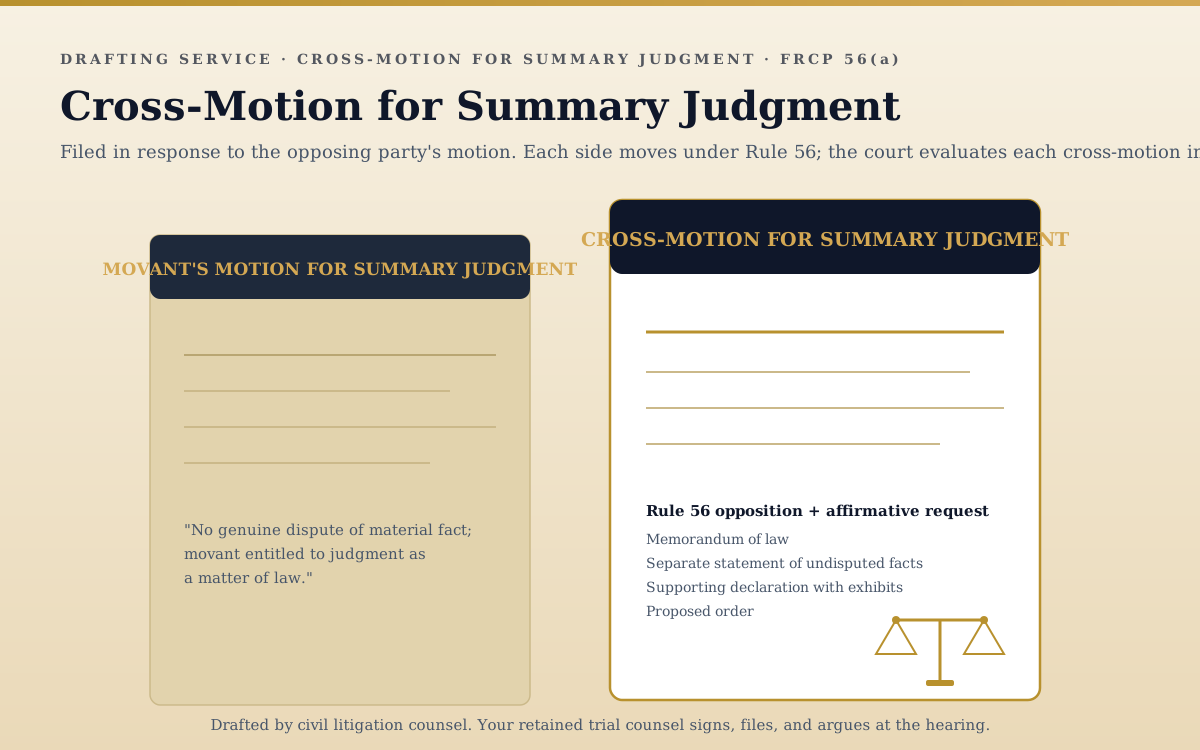
A cross-motion for summary judgment is the affirmative motion the opposing party files in response to the moving party’s summary judgment motion, asking the court to enter judgment in its favor under Rule 56(a) rather than merely deny the first motion. We draft that cross-motion, the paired Rule 56 opposition, and every supporting paper the court expects, then hand the sign-ready package to your retained trial counsel to file.
Cross-Motions for Summary Judgment We Draft
We draft four related Rule 56 instruments, and the right one depends on your record and your goal. When the evidence entitles you to judgment, we build the affirmative cross-motion for summary judgment. When the goal is to keep a claim alive, we draft the Rule 56 opposition. A motion for partial summary judgment targets one claim or element so a granted order narrows the trial, and the separate statement of undisputed facts is the document that lets the presiding judge rule from one place.
Affirmative Cross-Motion for Summary Judgment
Filed when the opposing party moved first and the record entitles you to judgment as a matter of law on a claim. The drafted cross-motion argues the Rule 56(a) standard from your side while the paired opposition defeats the movant's showing.
Motion for Partial Summary Judgment
A motion for partial summary judgment targets one claim, one defense, or one element rather than the entire case. We frame the order so a granted partial judgment narrows the trial to the open issues and, where you intend it, is positioned for a Rule 54(b) certification.
Rule 56 Opposition Brief
When the goal is to keep a claim alive for trial, we draft the opposition that demonstrates a genuine dispute of material fact, with record citations the court can verify against the depositions, declarations, and documents on file.
Separate Statement of Undisputed Facts
Federal local rules and state courts such as California require a separate statement keyed to the supporting evidence. We prepare the statement and the responsive separate statement so the presiding judge can rule from a single document.
What Is Included in Our Cross-Motion Package
Every attorney-drafted engagement ships the same six components, formatted to the local rule of the court that will hear the motion and delivered in PDF and editable Word. The memorandum of law applies the Rule 56(a) standard to your record, and the proposed order is written so the court clerk can enter it without redrafting.
Notice of Cross-Motion and the Cross-Motion
Caption, parties, hearing date placeholder, and the operative request for judgment as a matter of law. Formatted to the local rule of the court that will hear the motion, with the relief stated against the claim or element targeted.
Memorandum of Law
The memorandum of law applies the Rule 56(a) standard to your record, with controlling authority for the circuit, including the trilogy of Celotex, Anderson, and Matsushita where the absence-of-evidence or reasonable-jury framing controls.
Separate Statement and Responsive Statement
A statement of undisputed material facts keyed to the evidence, plus the responsive statement that answers the movant's facts. Built to the format the local rule or state code requires so nothing is stricken on a technicality.
Supporting Declaration With Exhibits
A sworn declaration authenticating the depositions, documents, and electronically stored information the cross-motion relies on. Exhibits are tabbed and indexed for the docket and the certificate of service is prepared.
Proposed Order Granting the Cross-Motion
A separate, signature-ready proposed order entering judgment on the targeted claim. Where you are seeking partial summary judgment, the order is drafted so the court clerk and the presiding judge can enter it without redrafting.
Reply Brief Where the Schedule Allows One
When the consolidated briefing schedule provides for replies on the cross-motion, the reply is folded into the package rather than scrambled after the opposition lands. Delivered in PDF and editable Word for filing.
The cross-motion package is calibrated to the vehicle you actually need. If your client never contested the case and the other side simply failed to respond, summary judgment is not the right tool, and you should read how a motion for default judgment lets the plaintiff secure relief after the clerk enters default. If a judgment was already entered against your client, the next move is post-judgment relief through Post-Judgment Drafting for a Motion to Vacate a Judgment Based on Fraud or Excusable Neglect, and the doctrinal background sits in Answering What Is Motion to Vacate and When Courts Set Aside a Judgment.
Strategic Reasons Counsel Order This Draft
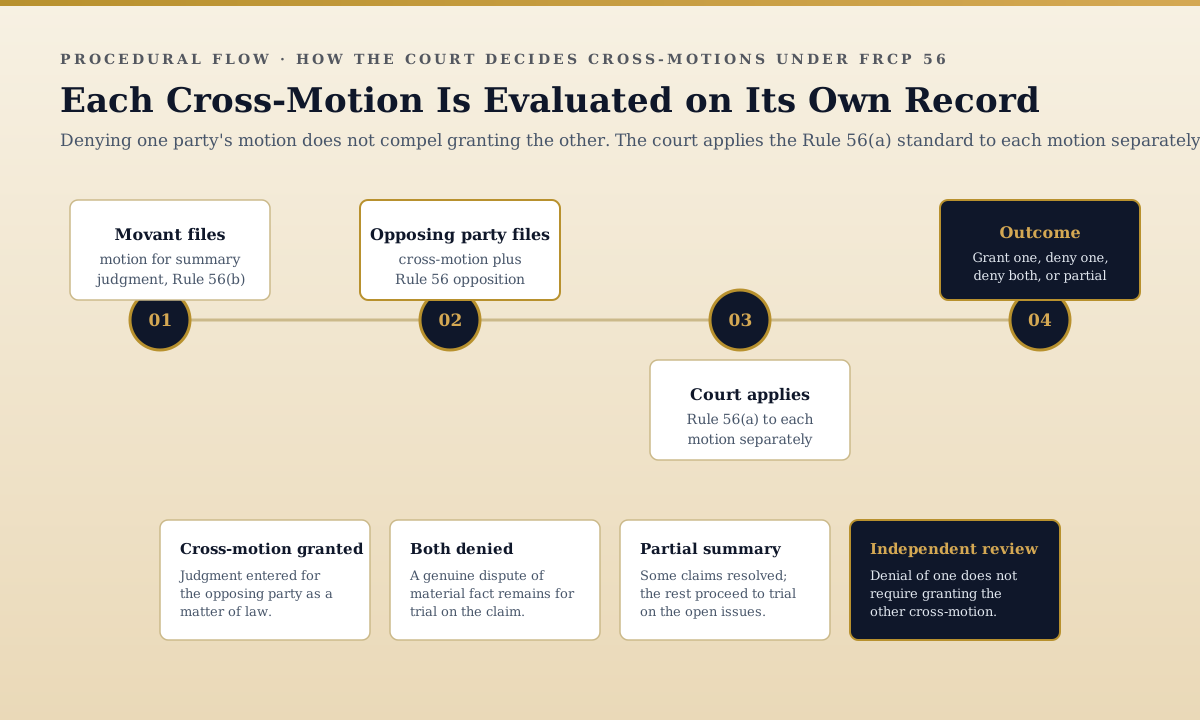
Filing a cross-motion is a tactical choice, not a reflex. Counsel order the affirmative draft when the movant’s own record proves the opposite of what the movant argues, when the goal is a ruling rather than a denial, or when partial summary judgment will reshape the trial. Because the court reviews each cross-motion independently, your motion for partial summary judgment can be granted even where the movant’s motion is denied.
Only Tries to Defeat the Movant
An opposition argues that a genuine dispute of material fact exists, so the claim should go to trial. If it succeeds, the claim simply returns to the calendar and the cost and risk of trial remain. It never asks the court to rule for the opposing party.
Asks the Court to Enter Judgment for You
The cross-motion satisfies the Rule 56(a) standard on its own record and asks the presiding judge to enter judgment as a matter of law in your favor. We draft it alongside the opposition so the plaintiff or defendant on our side advances and defends in the same filing.
The Record Already Entitles You to Judgment
When the movant's own deposition admissions and documents establish your defense or your claim, a plain opposition leaves money on the table. The cross-motion converts a defensive posture into a request for judgment as a matter of law on your side of the case.
You Want the Court to Decide, Not Just Deny
Defeating the movant's motion only returns the claim to the trial calendar. A cross-motion asks the presiding judge to enter judgment for you instead, ending or narrowing the claim now. Because each cross-motion is reviewed independently, the court can grant yours even after denying theirs.
Partial Judgment Narrows an Expensive Trial
A motion for partial summary judgment knocks out a claim, a defense, or a damages theory before trial. Removing one element from the case can collapse the settlement posture or shorten the trial enough to justify the drafting cost many times over.
Inside Our Drafting Pipeline
Five steps separate intake from the sign-ready package. The drafting attorney tests your record against the Rule 56(a) standard first, drafts the full cross-motion and Rule 56 opposition next, and delivers it with a filing checklist matching the local rule. Every engagement is read, framed, and prepared by a bar-admitted civil litigation attorney; we do not appear in court.
Intake: You Submit the Motion and the Record
Upload the movant's motion for summary judgment, the operative pleadings, the deposition transcripts, the document productions, and the scheduling order through the secure intake. The drafting attorney reads the full record before any prose is committed.
Attorney Assesses Whether the Cross-Motion Is Worth Filing
A civil litigation attorney tests your record against the Rule 56(a) standard and tells you, in writing, whether the record supports an affirmative cross-motion or whether a Rule 56 opposition is the better play. You approve the framing before drafting begins.
Draft the Full Cross-Motion and Opposition Package
The drafting attorney prepares the cross-motion, the memorandum of law, the separate statement, the responsive statement, the supporting declaration with exhibits, and the proposed order. The opposition to the movant's motion is drafted in the same pass so the two read as one coordinated filing.
Your Review and One Revision Round
You read the draft and send written comments. The drafting attorney incorporates your edits in a single revision pass at no additional cost to the engagement. We turn the standard package inside the deadline your scheduling order sets.
Sign-Ready Package Delivered for the Engaging Firm
You receive the final PDF and editable Word package plus a one-page filing checklist matching the controlling rule. Your retained trial counsel signs, serves, files, and argues at the hearing. We draft the documents; we do not appear in court and we do not sign the filed motion.
Attorney-Drafted, Not Outsourced
A civil litigation attorney with summary-judgment experience drafts every attorney-tier package. The AI skeleton tier is labeled and priced separately, so you always know which one you are buying.
Federal and State Coverage
We draft under Federal Rule of Civil Procedure 56 and the state analogs, including California Code of Civil Procedure section 437c and New York CPLR 3212, with the separate statement each forum requires.
Flat Fee on the Deadline
The drafting cost is fixed before we start and the standard package turns inside your scheduling order. Your retained trial counsel files and argues on their own rate; our cost is the drafting only.
The pipeline is the same whether you are moving first or cross-moving in response. If you are the party filing the original motion rather than the cross-motion, see our companion build for Building a Motion for Summary Judgement Template That Tracks Rule 56 Requirements. For a plain-language explainer of how motions work in civil procedure, read what a motion is and where a summary judgment filing fits in a case.
Have the Movant’s Motion in Hand?
Send us the motion and the record. A drafting attorney tells you whether the cross-motion is worth filing and quotes the flat fee within one business day.
Submit the Record for a QuoteFlat-Fee Pricing and Turnaround
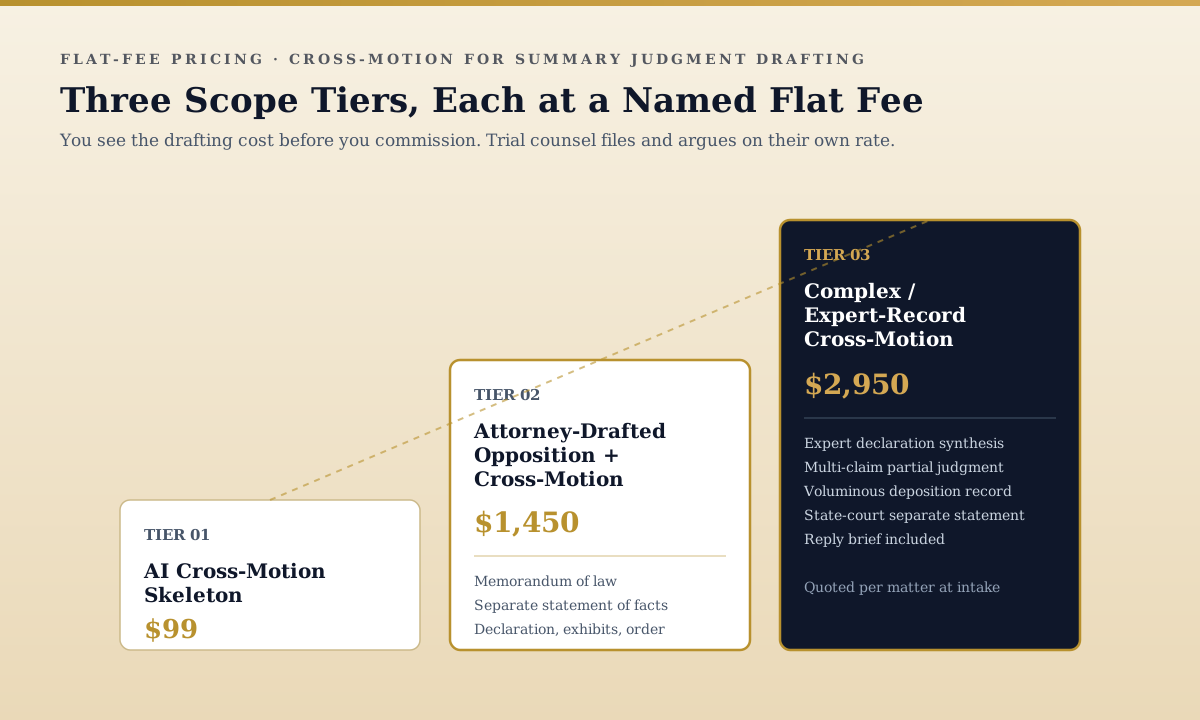
Three scope tiers, each at a named flat fee, so you see the drafting cost before you commission. The AI skeleton is a first-pass framework; the two attorney tiers are drafted by a civil litigation attorney and quoted by complexity. Trial counsel files and argues on their own rate.
AI Cross-Motion Skeleton
An AI-drafted cross-motion for summary judgment skeleton populated from the motion you upload and the record you supply. A first-pass framework for a narrow, fact-light federal matter where counsel will finish the analysis.
- Rule 56(a) framing
- Memorandum of law outline
- Separate statement shell
- PDF and Word export
- 24-hour delivery
Attorney-Drafted Opposition + Cross-Motion
A civil litigation attorney drafts the affirmative cross-motion and the Rule 56 opposition together, with the memorandum of law, the separate statement, the supporting declaration, and the proposed order. The standard package for a single-claim federal or state cross-motion.
- Affirmative cross-motion and opposition
- Memorandum of law on your record
- Separate statement plus responsive statement
- Declaration, exhibits, certificate of service
- Proposed order and filing checklist
- One revision round included
Complex / Expert-Record Cross-Motion
For multi-claim partial summary judgment, expert-declaration synthesis, voluminous deposition records, or a state-court separate statement under California Code of Civil Procedure section 437c. Quoted per matter at intake; the reply brief is included.
- Multi-claim partial summary judgment
- Expert declaration synthesis
- Voluminous deposition record review
- State-court separate statement support
- Reply brief included
- Rule 54(b) framing where you seek early appeal
If your matter does not fit a listed tier, for example a cross-motion under California Code of Civil Procedure section 437c with its separate-statement requirement, or a New York CPLR 3212 motion brought within 120 days of the note of issue, request a per-matter quote and a drafting attorney prices it at intake. For a wider view of where summary judgment sits among civil filings, see our explainer on what a legal motion is and how dispositive motions fit civil procedure.
When a Different Motion Fits the Posture
A cross-motion is the right tool only when the other side contested the case and the record supports judgment. When the posture is different, a different drafted vehicle fits. We draft these three for the situations that sit next to a summary judgment fight.
When the Opponent Never Answered the Complaint
If the other side defaulted instead of contesting the claim, summary judgment is not the vehicle. This explainer covers when a plaintiff moves for default judgment and what the court requires to enter it.
How a Motion for Default Judgment Works After the Clerk Enters DefaultWhen a Judgment Already Entered Must Be Undone
If summary judgment, or a default, was entered against your client, the next move is post-judgment relief. Our drafting service prepares the motion to vacate on the ground the record supports.
Post-Judgment Drafting for a Motion to Vacate a Judgment Based on Fraud or Excusable NeglectWhen You Need the Underlying Motion Built First
If you are the party moving first rather than cross-moving, start from the affirmative motion. This companion build walks the template that tracks every Rule 56 requirement section by section.
Building a Motion for Summary Judgement Template That Tracks Rule 56 RequirementsFrequently Asked Questions
The questions buyers ask most before commissioning a cross-motion, drawn from the live People Also Ask panels for cross-motion for summary judgment and motion for partial summary judgment queries.
What do cross motions for summary judgment mean?
What is the meaning of motion for summary judgment?
How to file a cross-motion?
What happens after a motion for summary judgment?
What is the difference between a motion and a cross-motion?
Why would a defendant file a motion for summary judgment?
Can a partial summary judgment be appealed?
What are the chances of winning a summary judgement?
Commission a Cross-Motion for Summary Judgment
A civil litigation attorney drafts the affirmative cross-motion, the Rule 56 opposition, the memorandum of law, the separate statement, the supporting declaration, and the proposed order. We draft the package; your retained trial counsel signs, files, and argues at the hearing.