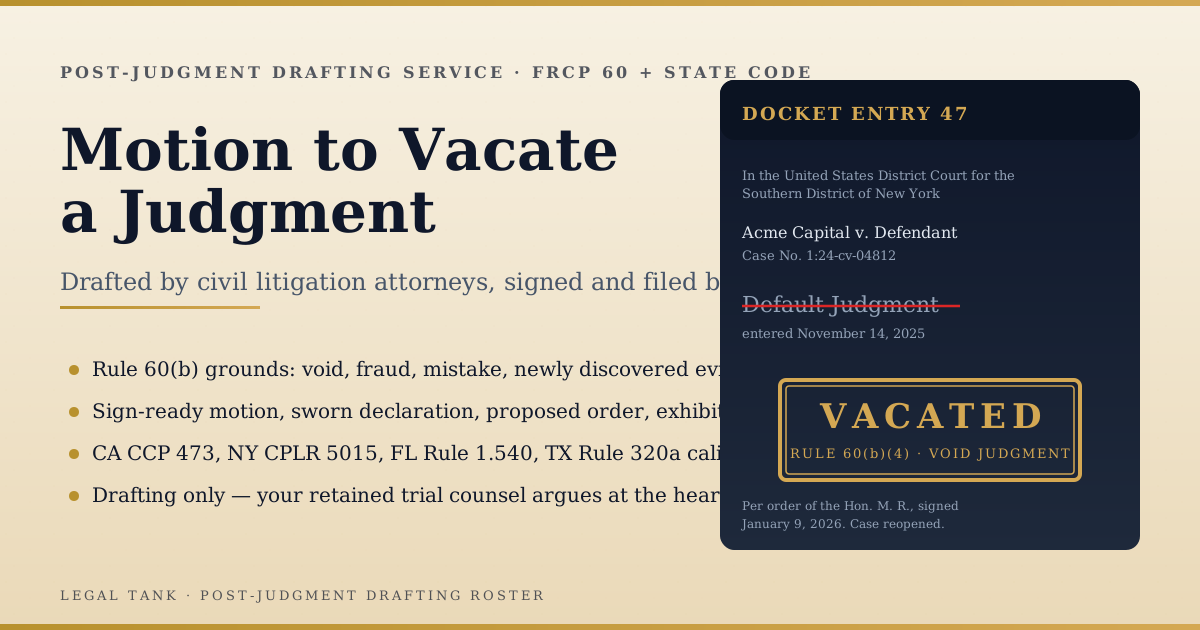
When You Need a Motion to Vacate
Four buyer scenarios account for most of the motions our drafting attorneys prepare. The common thread is a judgment that was never decided on the merits, paired with a curable procedural defect or material new evidence that, properly framed under Rule 60(b) or the controlling state rule, justifies restoring the case to live posture.
Default Judgment Entered Without Proper Service
You first heard about the case when a wage garnishment hit your paycheck, a sheriff served a writ of execution, or a credit report flagged a new judgment. The complaint was never delivered to you, was sent to a stale address, or was left with someone who never passed it on. The judgment is void or voidable for lack of service.
Missed the Answer Deadline Because of Mistake or Neglect
You did receive the complaint, but a medical emergency, a family crisis, a misfiled calendar, or counsel error caused the answer to be missed. The clerk entered default and the court entered judgment. CCP 473(b), CPLR 5015(a)(1), and FRCP 60(b)(1) cover this kind of excusable neglect when paired with a meritorious-defense showing.
Newly Discovered Evidence That Would Change the Outcome
Documents, witnesses, or expert reports surfaced after the trial that you could not have located with due diligence. The new evidence is material and would probably change the result. FRCP 60(b)(2) and parallel state rules supply the framework, with a one-year filing window from the date the judgment was entered.
Fraud or Misconduct by the Opposing Party
The other side concealed material documents, gave false testimony, suppressed a key witness, or otherwise corrupted the proceedings. FRCP 60(b)(3) and state-court analogs allow the judgment to be set aside on clear and convincing evidence of fraud, misrepresentation, or misconduct that prevented you from fully and fairly presenting your case.
If you want background on the procedural posture before commissioning, see our explainer on what a motion to vacate is in civil practice, which covers the Rule 60(b) grounds, the controlling state-court analogs, and the step-by-step filing posture before counsel commissions the drafted package.
What Is a Motion to Vacate? The Six Doors Under FRCP 60(b)
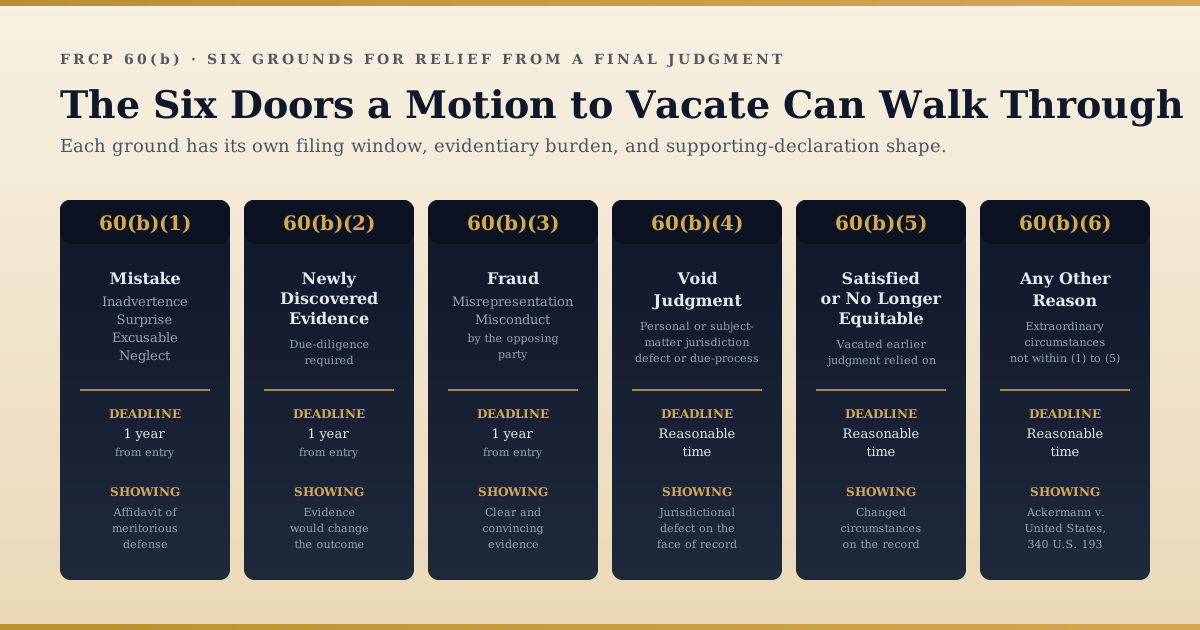
FRCP 60(b) sets six grounds for relief from a final judgment in federal court. Subclauses (1) through (3) carry a one-year ceiling from entry; (4), (5), and (6) run on the more flexible reasonable-time standard. The drafted motion picks the strongest single ground and pleads alternatives only when the record supports them.
Mistake, Inadvertence, Surprise, Excusable Neglect
The bread-and-butter ground. Calendar slips, attorney error, miscommunication with co-counsel, or short medical absences all surface here. The motion pairs the procedural narrative with a meritorious-defense declaration the court can use to confirm that reopening is not futile.
Within 1 year of entry
Newly Discovered Evidence
Reserved for evidence that existed at trial but could not have been found with due diligence. The motion must show the new material is not cumulative, would probably alter the result, and was located after the verdict was entered. Affidavits attach the new exhibits.
Within 1 year of entry
Fraud, Misrepresentation, or Misconduct
Drafted on clear and convincing evidence of fraud on the court or by an adverse party. The motion documents the discovery posture that should have produced the suppressed material, the false testimony, or the misrepresentation, and explains the prejudice to the moving party.
Within 1 year of entry
Void Judgment
Used when the rendering court lacked personal or subject-matter jurisdiction, or the judgment was entered in violation of due process. The hallmark is service that never reached the defendant. No outside ceiling applies, but courts still police the timing for inexcusable delay.
Within a reasonable time, no fixed ceiling
Satisfied or No Longer Equitable
The judgment has been satisfied, released, or discharged, a prior judgment on which it is based has been reversed, or applying it prospectively is no longer equitable. Common in injunction enforcement and consent-decree modifications when the legal landscape has changed.
Within a reasonable time
Any Other Reason Justifying Relief
The residual clause, calibrated against Ackermann v. United States, 340 U.S. 193 (1950) and its progeny. Reserved for genuinely extraordinary circumstances not captured by clauses (1) through (5). The drafted motion frames the equities and explains why the case is not duplicative of an available alternative.
Within a reasonable time
Motions to Vacate a Judgment We Draft
The deliverable is a complete, sign-ready filing package. Every component below is drafted, formatted to the local rule of the court that entered the judgment, and delivered in PDF and editable Word so the engaging firm can sign and file without rework. The package supports a motion to vacate a judgement, a motion to vacate default judgement, or a motion to vacate an order, depending on the procedural posture of your matter.
Notice of Motion and the Motion Itself
Caption, parties, hearing-date placeholder, and the operative request for relief, formatted to the local rule of the court that entered the judgment.
Memorandum of Points and Authorities
Merits brief organized by Rule 60(b) ground or state-rule analog, with controlling case law for the circuit or appellate department your case sits in.
Sworn Declaration Plus Affidavit of Meritorious Defense
Movant declaration narrating the procedural posture and the cause of the missed deadline, paired with the meritorious-defense affidavit California, New York, and Florida courts require.
Proposed Answer or Pleading
Attached as an exhibit where the rule requires it. Drafted as the operative pleading the court can stamp filed-on-grant, so the case is fully restored to merits posture on a single order.
Proposed Order Granting Relief
A separate signature-ready order vacating the judgment, releasing any abstract, lien, levy, or garnishment, and setting the deadline to file the answer if the court grants relief.
State-Specific Exhibits Where the Rule Requires Them
California CCP 473(b) attorney-fault affidavit, New York CPLR 5015 verified petition, Florida Rule 1.540 attached evidentiary exhibits, or Texas bill-of-review pleadings, prepared to the controlling rule.
The package is structured so a granted motion reopens the case on a single order. The proposed answer or pleading is attached as an exhibit where the local rule requires it; the proposed order releases any abstract, lien, levy, or wage garnishment on its face. Your retained trial counsel files, serves, and argues at the hearing. Legal Tank does not appear in court.
State-by-State Vacate Rules from California to Texas
Federal court runs on Rule 60(b). The four largest state systems each have their own post-judgment rule. The drafted motion is calibrated to the court that entered the judgment, not the court where you live, so the filing window, the standard, and the required attachments all track the controlling rule, including the motion to vacate judgment california and the motion to vacate judgment new york variants buyers most commonly commission.
Federal District Court Practice
Standard
Six grounds, one-year ceiling on clauses (1) through (3)
Deadline
One year for mistake, newly discovered evidence, fraud; reasonable time for void, satisfied, any-other-reason.
Practice Note
Independent-action savings clause preserved under Rule 60(d). The drafted motion separates the 60(b) sub-clauses to avoid one-year-ceiling forfeiture on a void-judgment claim.
Superior Court Practice, Default Vacate Workhorse
Standard
Discretionary relief under 473(b), mandatory relief on a sworn attorney-fault affidavit
Deadline
Six months from entry for 473(b); two years from judgment or 180 days from actual notice on defective service under 473.5.
Practice Note
Sixteen-court-day notice rule plus mailing extensions. The CCP 473(b) attorney-fault affidavit, when properly sworn, makes relief mandatory and shifts the cost to prior counsel.
Supreme and Civil Court Practice
Standard
Reasonable excuse plus meritorious defense; one-year ceiling only on excusable-default ground (a)(1)
Deadline
One year from service of judgment with notice of entry on (a)(1) excusable default. (a)(2) newly discovered evidence, (a)(3) fraud or misconduct, and (a)(5) reversal of prior judgment run on reasonable-time. (a)(4) lack of jurisdiction has no time limit. Eight-day notice on motions under CPLR 2214; longer in commercial division parts.
Practice Note
Order to show cause is the standard vehicle in New York. Affidavit of merit attached to the petition is the procedural workhorse, paired with the proposed verified answer.
Circuit and County Court Practice
Standard
Five grounds tracking Rule 60(b)(1) through (5); independent action preserved under 1.540(b) savings clause
Deadline
One year for mistake, newly discovered evidence, fraud; reasonable time for void judgment and satisfied judgment.
Practice Note
Florida courts require the motion to attach the evidentiary basis on its face; bare conclusory allegations are routinely denied. The drafted motion front-loads exhibits.
Plenary Power Window Plus Equitable Vehicle
Standard
Motion for new trial within the plenary power window; equitable bill of review after
Deadline
Thirty days from entry under TRCP 329b for direct attack; up to four years on the equitable bill of review for fraud, accident, or wrongful act.
Practice Note
Texas is the procedural outlier. The drafted vehicle changes from motion to verified petition once plenary power lapses, and the showing for the bill of review is materially higher.
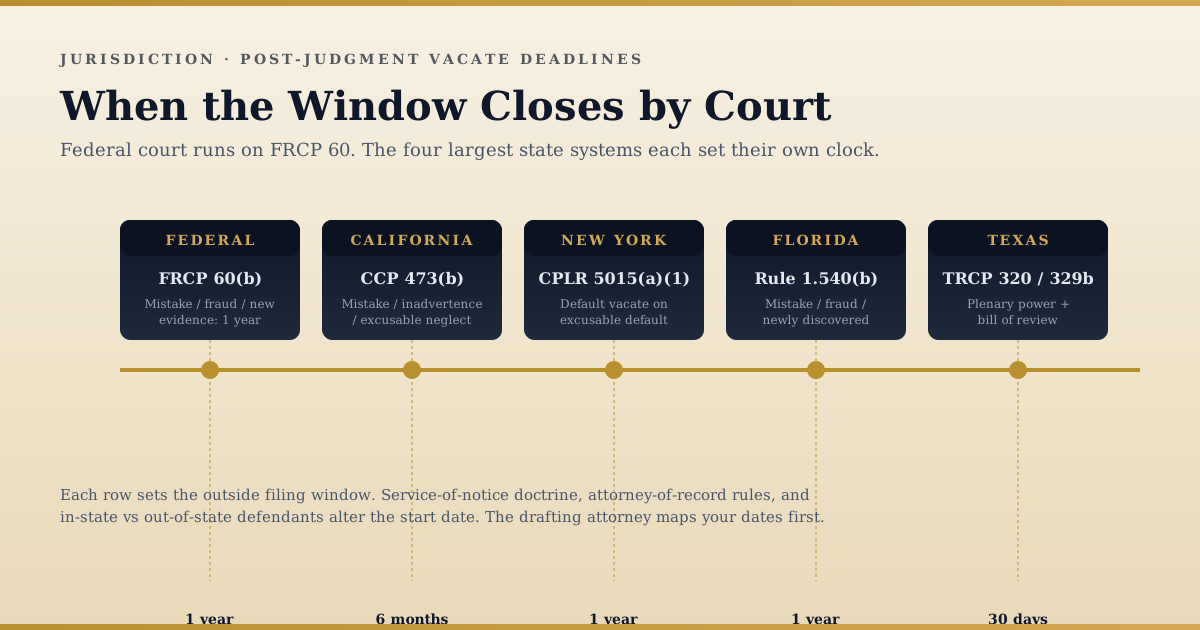
California buyers most often need CCP 473(b) discretionary relief or the mandatory-relief track via attorney-fault affidavit. New York buyers run on CPLR 5015(a) with an order to show cause as the procedural vehicle. Florida buyers file under FL Rule 1.540(b) with evidentiary attachments on the face of the motion. Texas is the procedural outlier where, after the thirty-day plenary power window closes, the drafted vehicle becomes an equitable bill of review with a substantially higher showing.
How Our Attorneys Draft Your Motion to Vacate
Five steps separate intake from a sign-ready motion package. The drafting attorney maps the controlling Rule 60(b) ground or state-rule analog first, then drafts the motion, the supporting declaration with the meritorious-defense showing, the proposed answer where the rule requires it, and the proposed order vacating the judgment.
Intake: You Submit the Judgment and the Docket
Upload the judgment, the docket, the proof of service, any notice of entry, and the correspondence trail through the secure intake questionnaire. The drafting attorney reads the entire procedural posture before any prose is committed.
Attorney Maps the Rule 60(b) Ground and the Filing Window
A civil litigation attorney picks the strongest single ground, or pleads grounds in the alternative when the record supports it, and confirms in writing which deadline controls. You approve the framing before drafting begins.
Draft the Full Vacate Package
The drafting attorney prepares the motion, the supporting memorandum, the movant declaration with the meritorious-defense showing, the proposed answer or pleading where required, the proposed order, and any state-specific exhibit the local rule demands.
Your Review and One Free Revision Round
You read the draft and send comments. The drafting attorney incorporates your edits in a single revision pass at no additional cost to your engagement. Additional revisions are scoped before further work begins.
Sign-Ready Package Delivered for the Engaging Firm
You receive the final PDF and editable Word package, plus a one-page filing checklist matching the controlling local rule. Your retained trial counsel signs the package, files, serves, and argues at the noticed hearing. Legal Tank does not appear in court.
Why Legal Tank for the Motion to Vacate Drafting
You can write the motion in-house, hire local counsel at billable rates to draft it, or commission Legal Tank for the drafting. The trade-off is straightforward: Legal Tank is faster, ships a complete post-judgment relief package, and never appears in court. Four reasons buyers commission us specifically.
Drafted by a Civil Litigation Attorney, Not a Forms Engine
Every motion to vacate is read, framed, and prepared by a bar-admitted civil litigation attorney with post-judgment motion practice in federal and state courts. The motion picks one strong ground rather than papering the file with weak alternatives.
Window-Calibrated to Federal or State Rule
We pull the controlling deadline from the docket on day one, run it under Rule 60(b), CCP 473, CPLR 5015, FL Rule 1.540, or TRCP 329b, and ship inside the filing window. Standard turnaround three to five business days, rush available when the window is days out.
Drafting Only, No Court Appearance, No Surprises
We deliver a sign-ready package. We do not file, serve, or argue at the hearing. Your retained trial counsel handles the courthouse work, signs the papers, and represents you at the noticed hearing.
Built to Reopen the Case, Not Just Reset the Clock
The package includes the proposed answer or pleading where the rule requires it, so a granted motion restores the case to live-merits posture on a single court order. No second round of paperwork is needed to put the defense on the record.
Legal Tank vs. DIY vs. Local Counsel for the Vacate Motion
The three realistic ways to get the motion drafted, side by side.
| Question | Write It Yourself | Hire Local Counsel | Legal Tank |
|---|---|---|---|
| Who drafts it | You and your paralegal, after-hours, working from generic forms | A junior associate at the local firm, billed against the matter | A bar-admitted civil litigation attorney with post-judgment motion practice, ready for your retained counsel to sign and file |
| Turnaround | Whatever your bandwidth allows; deadlines often missed | Two to four weeks, depending on the firm workload | Three to five business days standard, rush available when the window is days out |
| Rule 60(b) framing | Form-driven; subclauses often confused, one-year ceiling misread | Sound on the federal rule, less reliable on state analogs | FRCP 60(b) plus CCP 473, CPLR 5015, FL Rule 1.540, TRCP 329b mapped before drafting begins |
| Meritorious-defense showing | Conclusory and routinely denied for lack of evidentiary support | Drafted, though depth varies by associate | Sworn declaration with exhibits, calibrated to what the controlling court has accepted |
| Files and argues | You and your retained counsel | Yes, full representation if you keep them on the matter | No, your retained trial counsel handles the courthouse work |
Buyers come to us when the wage garnishment is already running, the lien is already recorded, or the foreign judgment is already domesticated. Submit the docket and a drafting attorney returns the framing memo within one business day.
Representative Drafts We Have Produced
Four anonymized vignettes from the drafting roster, each tracking how the procedural posture mapped to a controlling rule and what the resulting order produced. Matter details have been altered to preserve client confidentiality; the rule citations and procedural framing reflect the actual filings.
Eviction Default Vacated, Tenant Restored to Possession
Posture
Tenant served at a stale address after a mid-lease move, default judgment of possession entered, sheriff posted a five-day notice to quit.
Controlling Ground
CCP 473.5 defective service, paired with CCP 473(b) excusable neglect on the missed answer.
Outcome
Judgment vacated on a noticed motion in Los Angeles Superior Court, writ of possession recalled, tenant filed verified answer and proceeded to a bench trial.
Consumer Debt Default Set Aside, Wage Garnishment Released
Posture
Out-of-state debt buyer obtained default judgment in a state where the consumer had not lived for four years, learned of the case from a wage-garnishment notice.
Controlling Ground
FRCP 60(b)(4) void judgment for lack of personal jurisdiction, alternative claim under 60(b)(1) excusable neglect.
Outcome
Judgment vacated, garnishment released, opposing counsel dismissed the underlying action rather than re-file in the correct forum.
Commercial Default Vacated on Attorney-Fault Affidavit
Posture
Small business defendant retained counsel who calendared the answer incorrectly; default judgment entered for breach of a vendor contract.
Controlling Ground
CCP 473(b) mandatory relief on sworn attorney-fault affidavit, with proposed verified answer attached.
Outcome
Motion granted on the papers, fees and costs of the defective representation shifted to prior counsel, case proceeded to mediation on the merits.
Foreign Judgment Vacated in Florida Domestication
Posture
Florida judgment debtor attacked a domesticated New York judgment after a sister-state filing under the Uniform Enforcement of Foreign Judgments Act.
Controlling Ground
FL Rule 1.540(b)(4) void judgment, paired with full-faith-and-credit due-process defense under the registration statute.
Outcome
Florida circuit court vacated the domesticated judgment, ordered the lien released from the chain of title, defendant settled on materially better terms.
The Civil Litigation Attorneys Drafting Vacate Motions
Our drafting roster is built around civil litigation practitioners with post-judgment motion experience, calibrated for the most common buyer scenarios in eviction, foreclosure, consumer debt, and federal commercial matters. The drafting attorney prepares the motion and the supporting declaration; your retained trial counsel signs, files, and argues at the hearing.
Camille Beaumont, Esq.
Landlord-Tenant and Real Estate Counsel
USC Gould School of Law · Eighteen
Eviction Default Vacate, Foreclosure Default Vacate, CCP 473.5 Defective-Service Motions
Civil litigation attorney with eleven years in California and Florida landlord-tenant and real estate practice. Drafts motions to vacate default judgments under CCP 473(b), CCP 473.5, and FL Rule 1.540(b)(4) for tenants served at stale addresses, foreclosure defendants whose summons reached an occupant rather than a record owner, and small landlords who missed a hearing after a process-server failure.
Notable Drafted Matters
- •CCP 473.5 motion produced full vacate plus garnishment release in a 2025 Los Angeles eviction default

Marcus Holloway, Esq.
Senior Litigation Attorney
J.D., Fordham University School of Law · 12 years
FRCP 60(b)(4) Void-Judgment Motions and Federal Post-Judgment Practice
Senior civil litigation attorney with twelve years in S.D.N.Y. and D.N.J. Drafts FRCP 60(b) motions for federal commercial defendants who learned of a judgment from a writ of execution, registration of foreign judgment, or post-discovery sanctions order, with concentration on void-judgment attacks where personal jurisdiction or service was defective on the face of the record.
Notable Drafted Matters
- •FRCP 60(b)(4) motion vacated an S.D.N.Y. default judgment for a foreign defendant in a 2024 commercial matter

Daniel Morales, Esq.
Consumer Defense and Debt Collection Counsel
J.D., UC Davis School of Law · 9 years
Consumer Default Vacate, FDCPA-Adjacent Post-Judgment Relief, Garnishment Release Motions
Drafts motions to vacate consumer-debt default judgments in California, Texas, and New York, with concentration on debt-buyer plaintiffs that filed in venues where the consumer had not resided for years. Pairs the vacate motion with a verified answer asserting FDCPA defenses, statute-of-limitations counterclaims, and lack-of-personal-jurisdiction arguments when the service trail is reconstructable.
Notable Drafted Matters
- •CCP 473.5 motion released a six-month wage garnishment for a California consumer served at a vacated apartment in a 2024 debt-buyer matter

Christopher Davis, Esq.
Federal Commercial and Bill-of-Review Counsel
J.D., University of Texas School of Law · 10 years
Texas Bill of Review, Florida Rule 1.540 Practice, Out-of-State Foreign-Judgment Vacate
Drafts equitable bill-of-review petitions in Texas state court after TRCP 329b plenary power has lapsed, FL Rule 1.540(b) motions to vacate domesticated foreign judgments, and FRCP 60(b)(4) void-judgment motions in federal district courts across the Fifth and Eleventh Circuits. Handles the post-plenary cases other firms decline.
Notable Drafted Matters
- •Bill of review filed three years post-judgment vacated a 2021 Harris County default in a 2024 commercial collections matter
What Defendants and Their Counsel Say
“Wage garnishment hit before I knew there was a case. The drafting attorney pulled the docket, matched the proof of service against my move history, and wrote the CCP 473.5 motion with the meritorious-defense affidavit attached. Judgment vacated and the garnishment released within a month.”
Rosario V.
Los Angeles · Verified client
CCP 473.5 Defective-Service Vacate
“A federal default and our New York counsel needed the motion drafted in seventy-two hours to fit the window. Their attorney framed the void-judgment angle under Rule 60(b)(4), brought our service objections to the front of the brief, and the magistrate vacated on the papers.”
Hideo Y.
New York, NY · Verified client
FRCP 60(b)(4) Void-Judgment Motion
“Houston judgment had gone final three years earlier and every Texas firm I called said the plenary power window was closed. The drafting attorney built the bill of review on the fraud-on-the-court angle, the harris county district court granted it, and the underlying case is now back on the docket.”
Bernadette O.
Houston · Verified client
Equitable Bill of Review
Frequently Asked Questions
The seven questions buyers ask most before commissioning a motion to vacate a judgment, drawn from the live People Also Ask panels for the controlling motion to vacate and 473 motion queries.
How long do you have to file a motion to vacate judgment in California?
What does motion to vacate mean?
How do I make a motion to vacate a judgement in California?
How to file a motion to vacate judgement in California?
What does it mean when a judgment is vacated?
What is a 473 motion for relief?
What is a 473 motion in California?
Related Civil Motion Drafting Services
Vacate motions often run alongside other post-judgment and pre-trial filings. Litigants commissioning a motion to vacate also commission set-aside motions before judgment, reconsideration motions on a fresh ruling, and the plaintiff-side default-judgment template when the procedural posture flips.
What Is a Motion to Vacate?
Educational explainer covering the doctrinal background, the FRCP 60(b) six grounds, and the state-court equivalents, for litigants and counsel reviewing the procedural posture before commissioning a motion.
Motion to Enforce Attorney
Post-judgment enforcement drafting service for parties on the other side of the docket: where a final order or judgment is in place and the counterparty is refusing to comply.
Order to Show Cause
Expedited procedural vehicle used in New York and other jurisdictions to bring a vacate or contempt request before the court on shortened notice when the standard motion calendar is too slow.
Motion to Compel Discovery Attorney
Mid-case discovery escalation drafted under FRCP 37 or the controlling state code when the opposing party will not produce the documents you need.
Commission a Motion to Vacate a Judgment
A civil litigation attorney drafts the motion, the supporting declaration with the meritorious-defense showing, and the proposed order, calibrated to FRCP 60(b) in federal court or the controlling state-court rule. We draft the filing package; your retained trial counsel signs, files, and argues at the noticed hearing.