Answering What Is Motion to Vacate and When Courts Set Aside a Judgment
A motion to vacate is the post-judgment filing that asks the trial court to set aside a prior judgment or order and reopen the case for further proceedings. The motion runs on an enumerated ground under Federal Rule of Civil Procedure 60(b), California Code of Civil Procedure section 473, or the parallel state statute in every other jurisdiction. The grounds vary (mistake, excusable neglect, newly discovered evidence, fraud, void judgment, satisfaction, or extraordinary circumstance), and so does the clock. Some grounds run on a hard one-year cap from entry, others on a reasonable-time standard. This page walks through the federal doctrine, the California statutory map, the parliamentary cousin of the same name, and how the drafted motion lands on the court's calendar.
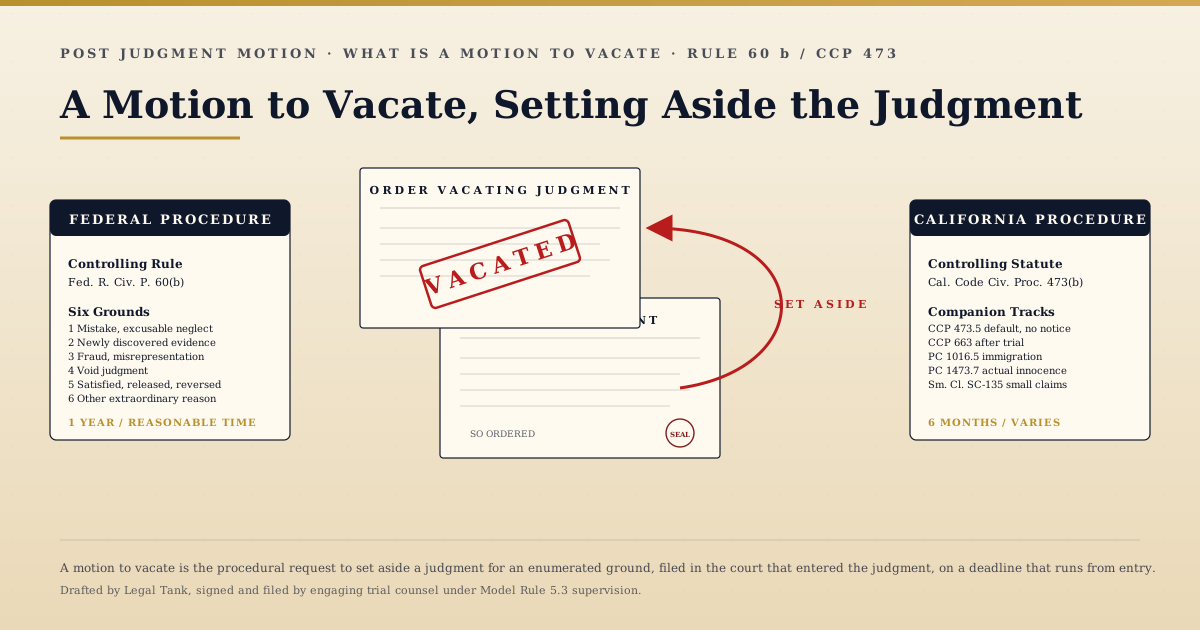
How the Vacate Motion Operationalizes the Doctrine That Final Judgments Are Not Absolutely Final
The filing answers the question what does motion to vacate mean in court at the doctrinal level: it is the procedural device that operationalizes the principle that final judgments are not absolutely final, that the system tolerates a narrow set of grounds for reopening them, and that the moving party must hit one of those grounds within the deadline that runs from entry. The grounds and the deadlines are written into the rule that governs the forum, not improvised by the trial court. A judge cannot vacate a judgment for general fairness; the judge can vacate only when the moving party has proved a ground the rule enumerates. The federal frame and the California statutory map below show how those grounds and deadlines actually look in practice, and where the two diverge.
The Federal Frame: Rule 60(b) and Six Enumerated Grounds
In federal court, the motion lives in Federal Rule of Civil Procedure 60(b). The rule enumerates six grounds: mistake or excusable neglect, newly discovered evidence, fraud or misrepresentation, void judgment, satisfaction or discharge, and any other reason justifying relief. Grounds (1), (2), and (3) carry a hard one-year cap from the date of entry of the judgment. Grounds (4), (5), and (6) run on the softer reasonable-time standard, where the court weighs prejudice to the opposing party against the diligence of the moving party. The Supreme Court in Pioneer Investment Services v. Brunswick Associates, 507 U.S. 380 (1993), set the four-factor balance for excusable neglect that federal trial courts still apply today.
The companion service-firm page on post-judgment drafting for a motion to vacate a judgment based on fraud or excusable neglect walks through the drafted output product, the engagement workflow, and the filing-to-ruling timeline after the motion is served.
Where the Motion Fits in the Procedural Calendar
The motion to vacate is a post-judgment filing, which separates it from the pretrial motion family covered in the companion explainer on what a legal motion is and how the umbrella catalog separates pretrial vehicles from post-judgment vacate motions. A pretrial motion shapes what the jury will hear; a post-judgment motion to vacate asks the court to undo what the jury (or the judge) already decided. The procedural posture matters: the moving party is no longer trying to win the case in the first instance. The moving party is asking for a second instance.
The Six Federal Rule 60(b) Grounds, Mapped to Timing
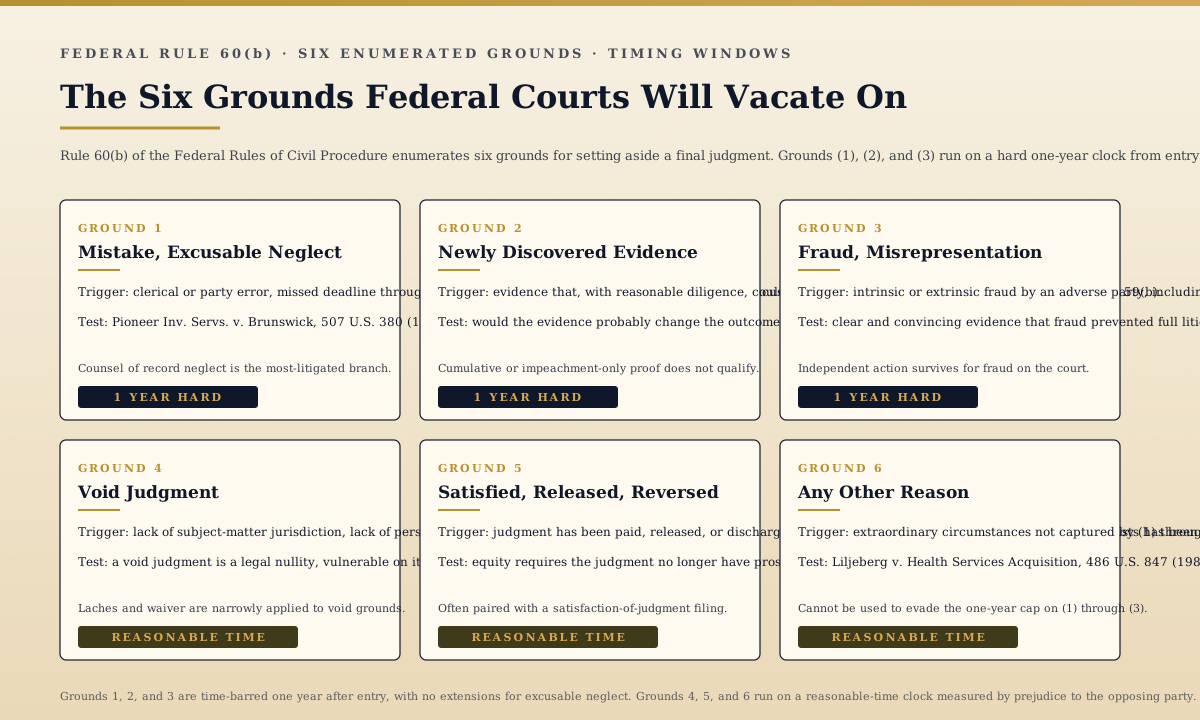
The card grid below summarizes the six enumerated grounds. The first three sit under a hard one-year cap from entry. The last three run on a reasonable-time standard. The procedural separation matters because a Ground 6 catch-all argument cannot be used to evade the one-year cap that would otherwise bar an untimely mistake-or-neglect motion.
- 1 year hard from entry
Ground 1: Mistake, Excusable Neglect
Clerical or party error, missed deadlines through a calendaring fault, or inadvertence the court will excuse under the Pioneer Investment Services v. Brunswick Associates four-factor balance. Counsel-of-record neglect is the most-litigated branch.
- 1 year hard from entry
Ground 2: Newly Discovered Evidence
Evidence that, with reasonable diligence, could not have been discovered in time to move under Rule 59(b). The test asks whether the evidence would probably change the outcome on a retrial. Cumulative or impeachment-only proof does not qualify.
- 1 year hard from entry
Ground 3: Fraud, Misrepresentation
Intrinsic or extrinsic fraud by an adverse party, including perjured testimony or hidden documents that prevented full litigation of the claim. Clear and convincing evidence is required, and the independent action survives Rule 60(b) for fraud on the court.
- Reasonable time
Ground 4: Void Judgment
Lack of subject-matter jurisdiction, lack of personal jurisdiction, or a due-process service defect. A void judgment is a legal nullity, vulnerable on its face. Laches and waiver are narrowly applied to void grounds.
- Reasonable time
Ground 5: Satisfied, Released, Discharged
The judgment has been paid, released, or discharged, or an earlier judgment on which the current one rests has been reversed or vacated. Often paired with a satisfaction-of-judgment filing to clear the record.
- Reasonable time
Ground 6: Any Other Reason
Extraordinary circumstances not captured by grounds (1) through (5) and not duplicative of those grounds. Liljeberg v. Health Services Acquisition Corp., 486 U.S. 847 (1988), reserves Ground 6 for the rare case. Cannot be used to evade the one-year cap.
California Court Rules for the Motion to Vacate California Vehicle
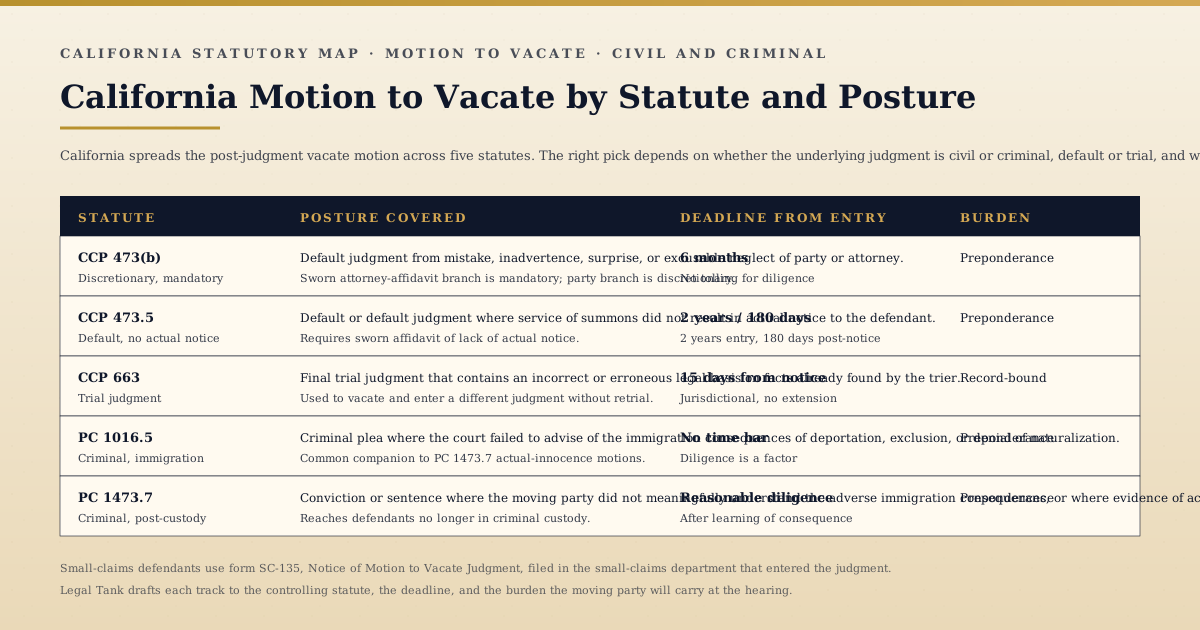
California spreads the post-judgment vacate motion across five statutes, each calibrated to a different procedural posture. The right pick depends on whether the underlying judgment is civil or criminal, whether it is a default or a trial judgment, and whether immigration consequences are in play. The motion to vacate california framework is one of the densest in the country because the state recognizes a wider menu of post-judgment vehicles than the federal Rule 60(b) baseline.
Code of Civil Procedure Section 473(b): The Most-Filed Vehicle
Code of Civil Procedure section 473(b) has two distinct branches. The discretionary branch allows the trial court to set aside a default, a default judgment, or an order resulting from mistake, inadvertence, surprise, or excusable neglect of a party. The court asks whether the mistake or neglect was that of a reasonably prudent person under the same circumstances, and resolves doubts in favor of the strong California policy that cases be heard on their merits. The mandatory branch requires an attorney of record to file a sworn affidavit accepting responsibility for the mistake. When the mandatory affidavit is filed within the six-month window, the court has no discretion to deny the motion. Both branches share the same six-month clock, which runs from entry of the default or the order being challenged. The clock is not extended for excusable neglect by the moving party.
Code of Civil Procedure Section 473.5: Defaults Without Actual Notice
Code of Civil Procedure section 473.5 covers defaults entered after a service of summons that failed to produce actual notice to the defendant. The vehicle is most often used where service was made by substituted service on a stale address or by publication, and the defendant first learned of the action through the post-judgment collection process. The moving party files a sworn affidavit of lack of actual notice along with the motion. The outer cap is two years from entry of the default judgment or 180 days from service of notice of entry, whichever is earlier. The procedural posture also frequently overlaps with the broader default framework covered in the companion explainer on how a motion for default judgment lets the plaintiff secure relief after the clerk enters default.
Code of Civil Procedure Section 663: Post-Trial Judgments
Code of Civil Procedure section 663 reaches post-trial judgments that contain an incorrect or erroneous legal basis on facts already found by the trier. The vehicle is used to vacate a judgment and enter a different judgment on the same factual findings, without retrial. The clock is short and jurisdictional: fifteen days from notice of entry, with no extension available even for diligent counsel. Section 663 motions are often paired with motions for new trial under section 657, because the two vehicles cover overlapping but distinct grounds.
Penal Code Sections 1016.5 and 1473.7: Criminal Vacatur
Penal Code section 1016.5 reaches criminal pleas where the trial court failed to give the statutorily required advisement about the immigration consequences of a guilty or no-contest plea. Penal Code section 1473.7 reaches defendants no longer in criminal custody where the plea was entered without a meaningful understanding of adverse immigration consequences, or where evidence of actual innocence has surfaced. Both statutes are commonly used in tandem when the defendant first learns of the immigration consequence years after the plea was entered, because the procedural posture often defeats federal habeas review. Small-claims defendants in California use a sixth vehicle, form SC-135 (Notice of Motion to Vacate Judgment), filed in the small-claims department of the court that heard the original case.
The Parliamentary Cousin: Motion to Vacate Speaker of the House
The phrase motion to vacate speaker of the house refers to a different procedural vehicle that shares the same name as the court filing covered above. The parliamentary motion is a procedural motion under House of Representatives rules that, when offered and adopted, removes the sitting Speaker from the chair and opens the position for a new election. The vehicle traces back to Jefferson's Manual and has been a feature of House practice since the early Congresses. The October 2023 removal of Speaker Kevin McCarthy was the first time in American history the motion succeeded against a sitting Speaker, which is why the search term spiked across general-interest dockets in late 2023.
The legal motion to vacate, by contrast, is a judicial filing that asks a trial court to set aside a judgment under Rule 60(b) or a parallel state statute. The two devices share the verb (vacate, to empty or annul) but live in different procedural universes. A parliamentary motion runs on House rules and is decided by a majority vote of the chamber. A judicial motion runs on the applicable rules of civil procedure and is decided by the trial court on the moving party's showing.
Why the Two Devices Share the Word
Both descend from English common-law and parliamentary practice where the verb vacate had the literal meaning of emptying a chair or annulling a record. Coke and Blackstone used vacate in both senses (judicial and parliamentary) without distinguishing them as procedural terms of art. Modern American practice has separated the two, but the lexical overlap remains. SERP queries for motion to vacate speaker of the house now return both political-news coverage and historical reference material from House Practice and Jefferson's Manual.
Which Device Litigators Care About
For trial lawyers and pro se litigants, the parliamentary device is a curiosity rather than a tool. The judicial motion to vacate is the procedural workhorse, used hundreds of thousands of times a year across federal and state dockets to attack defaults, fraud, void judgments, and other recognized grounds for reopening a closed case. The drafting templates for the judicial vehicle are covered in the sibling explainers on the anatomy of a motion for default judgment template and how each section functions and on inside a motion for reconsideration template and the sections courts expect to see, both of which share doctrinal architecture with the motion to vacate.
Motion to Vacate Meaning in Working Practice and How to File One
In working practice, the motion to vacate meaning for a litigant is straightforward: the case that closed has a narrow second chance to reopen, on a recognized ground, before a deadline that does not pause for the moving party's diligence. The drafting build has six steps, and the order of operations matters because each step depends on the documentary record assembled in the prior step. Skipping ahead (drafting before fixing the ground, or fixing the ground before checking the deadline) produces motions that look complete on paper but fail at threshold review.
Step 1: Lock the Deadline Before Anything Else
The first triage question is when the judgment was entered and how many days remain on the controlling clock. Federal grounds (1), (2), and (3) run on a hard one-year cap. California section 473(b) runs on six months. Section 473.5 runs on the earlier of two years from entry or 180 days from service of notice of entry. Section 663 runs on a fifteen-day jurisdictional clock. Penal Code section 1016.5 has no time bar but diligence is a factor. The deadline controls the entire posture because filing a day late typically forecloses the relief.
Step 2: Pick the Right Ground
The ground is the doctrinal hook the motion will be argued on. For a default obtained while the defendant was trying to retain counsel, the ground is typically excusable neglect under section 473(b). For a default after service that did not produce actual notice, the ground is section 473.5. For a trial judgment that applied the wrong legal standard to facts the trier found, the ground is section 663. The ground determines the rule, and the rule determines the deadline, the burden, and the form of relief.
Step 3: Assemble the Documentary Record
Pull the case file, the docket, the proof of service, the challenged judgment, and any underlying contracts or correspondence that bear on the ground being argued. The factual showing in the motion has to be supported by a sworn declaration that walks the court through the timeline. Bare conclusions in the declaration (the defendant did not receive the summons) get denied. Specific facts with dates, places, and exhibits (the substituted service address was the defendant's prior business location which closed in June; the defendant's residence and current business have been registered with the secretary of state since July) are what win.
Step 4: Draft the Motion and the Proposed Order
The motion is a written request that identifies the ground, the statute, the relief sought, and the factual showing. The supporting declaration carries the factual narrative under penalty of perjury. The proposed order is the document the judge will sign if the motion is granted, drafted in plain language the court can adopt without modification. The procedural framework for the broader family of substantive motions is set out in companion templates including the what a motion for summary judgment template tracks under Rule 56, which shares the moving-papers + declaration + proposed-order architecture.
Step 5: Serve, File, and Calendar the Hearing
Serve the complete packet on the opposing party in the manner required by local rule, attach a certificate of service, and file with the court clerk. The motion lands on the court's calendar with a hearing date set under the local pretrial motion schedule. The opposing party files a written opposition; the moving party files a reply. The court hears argument at the scheduled hearing and rules from the bench or by written decision. Related procedural filings frequently shape the same docket, including those covered in the explainers on professionally drafted cross-motion for summary judgment briefs and Rule 56 opposition filings and drafting service for a motion to amend pleadings after discovery reveals new claims, which can run alongside or sequentially with a vacate motion.
Step 6: Prepare for the Hearing
The hearing is where most vacate motions are decided. Counsel argues from the moving papers, addresses the opposition's challenges to the factual showing, and answers the court's questions on the ground and the deadline. If the court denies relief, the issue is preserved for appellate review. If the court grants relief, the judgment is set aside and the case returns to the active calendar for further proceedings. In sanctioned-conduct cases where the underlying judgment was obtained through discovery abuse, the vacate motion is sometimes filed alongside the drafted motion for sanctions targeting discovery abuse and bad-faith conduct, which can amplify the equitable showing the court applies to the vacate decision. The broader motion family is mapped in the explainer on the broader legal-motion catalog covering dispositive, evidentiary, and procedural vehicles. External rule reference for federal post-judgment practice sits in Federal Rule of Civil Procedure 60, and the Cornell legal reference for the supporting Federal Rules of Civil Procedure sets the procedural floor that state vehicles modify.