Post Trial Motions That Reshape Verdicts Through New Trials, JNOV, and Reconsideration Requests
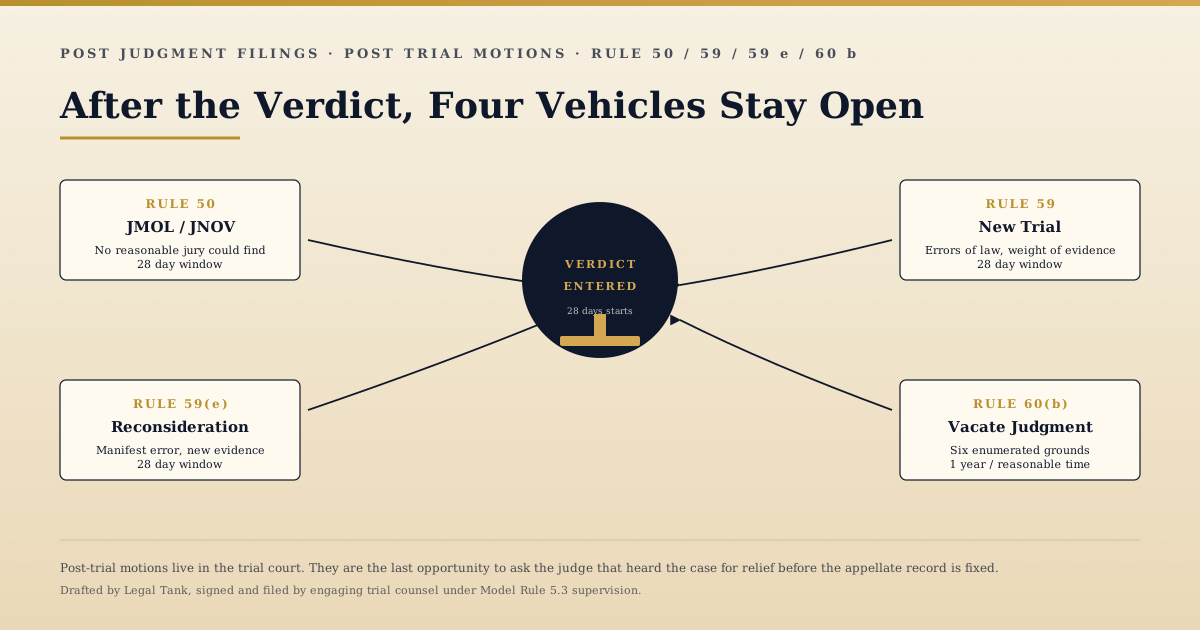
Post trial motions are the filings that run between entry of judgment and the deadline to appeal, when the moving party still has the trial judge as decision-maker and the appellate record has not yet been fixed. In federal practice there are four core vehicles. A Rule 50(b) renewed motion for judgment as a matter of law asks the court to set the verdict aside on the legal-sufficiency record. A Rule 59 motion for new trial asks the court to rewind to a fresh proceeding on instructional error or against-the-weight-of-evidence grounds. A Rule 59(e) motion to alter or amend tweaks the judgment without disturbing the verdict. A Rule 60(b) motion reaches further on time but narrower on grounds. This page lays out each vehicle, the deadlines, the standards, and the drafting build.
What a Post Trial Motion Is and Why the Trial Court Stays the Decision-Maker
The procedural significance of the post trial motion is that the trial judge already knows the record, the witnesses, and the trial errors the moving party is now asking the court to correct. That same judge has discretion under Rule 59 to reweigh the evidence in a way an appellate court cannot. Post-judgment filings are therefore the last opportunity to ask the judge who heard the case for relief; everything after that runs on the appellate record fixed by the clerk and reviewed under deferential standards. The four federal vehicles laid out below trade off scope of relief against depth of grounds and length of clock, which is why vehicle choice drives the entire post-judgment build.
The plaintiff or the defendant can move. Either party who lost in whole or in part can file the motion that matches the relief sought. A defendant who lost on liability can move under Rule 50(b) on the legal-sufficiency record, under Rule 59 for a new trial on instructional error, or under Rule 59(e) to alter the judgment on manifest error. A plaintiff who won liability but lost on damages can move under Rule 59 for a new trial on damages or under Rule 59(e) to alter the damages award. The opposing party files an opposition on the same docket.
The motion is filed in the same district court that entered the judgment, on the same case caption, with a memorandum of law that lays out the legal standard, the trial-record citations, and the doctrinal argument. The proposed order accompanies the motion. The opposing party files written opposition within the local rule timeframe, and the moving party files a reply. The court hears argument at the scheduled hearing and rules from the bench or by written decision. Where the motion overlaps with reconsideration doctrine, the companion explainer on what a motion for reconsideration is and how the trial court applies the Rule 59(e) standard covers the doctrinal architecture of the Rule 59(e) branch.
Why Post-Trial Motion Filings Toll the Notice of Appeal
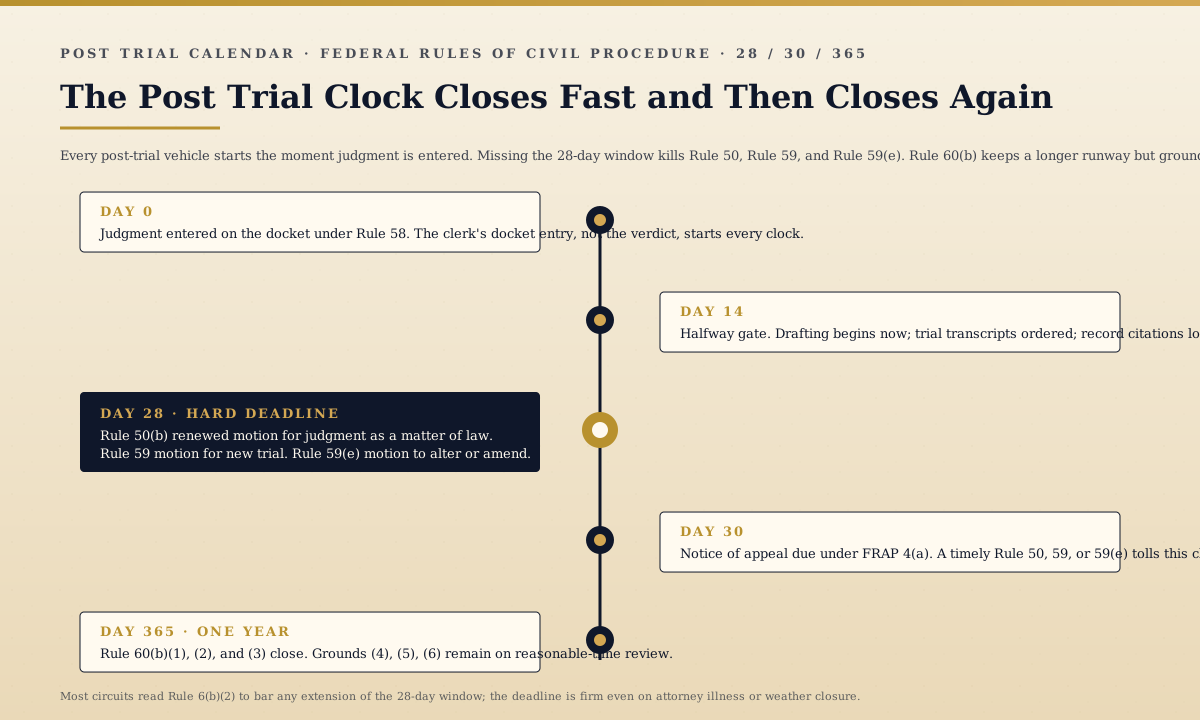
A timely filed Rule 50(b), Rule 59, or Rule 59(e) motion tolls the 30-day notice-of-appeal clock under FRAP 4(a)(4). The procedural consequence is that the moving party preserves the appellate timeline even where the trial court is unlikely to grant relief. The clock restarts from the order disposing of the post-trial motion, not from entry of the original judgment. Rule 60(b) motions do not toll the appeal clock unless filed within the 28-day window. This tolling rule is one of the reasons that trial motions filed in this window matter even when the substantive odds of relief are modest.
The pretrial motion family is a separate procedural universe. Pretrial motions shape what the jury will hear; post-trial motions attack what the jury or the bench already decided. The companion explainer on what a legal motion is and how the broader catalog includes pretrial vehicles covers the pretrial side of the docket from the umbrella perspective. For the broader procedural arc that runs from intake through verdict, the explainer on what is the pre trial process and how each stage shapes a civil case maps the upstream stages that determine which trial errors are available for post-judgment review.
The Four Federal Trial Motions the Post-Judgment Clock Opens
The Federal Rules of Civil Procedure spread the post-judgment toolkit across four rules. Each one does a specific job, runs on its own deadline, and is reviewed on its own appellate standard. The procedural choice is consequential: filing the wrong vehicle either forfeits relief or invites a denial without prejudice to refile, but by then the deadline may have run.
- 28 days hard
Rule 50(b): JMOL / JNOV
Renewed motion for judgment as a matter of law. Asks the trial court to enter judgment for the moving party despite the jury verdict, on the ground that no reasonable jury could have reached the verdict on the legal-sufficiency record. Requires a preserved Rule 50(a) motion at the close of evidence.
- 28 days hard
Rule 59: New Trial
Motion for a new trial on instructional error, against-the-weight-of-evidence challenges, juror misconduct, or other recognized trial-error grounds. Broadest vehicle on the merits. Decided by the trial judge on an abuse-of-discretion standard on later review.
- 28 days hard
Rule 59(e): Alter or Amend
Motion to alter or amend the judgment for manifest error of law or fact, newly discovered evidence, or an intervening change in controlling law. Narrower than Rule 59 because the relief is judgment-level rather than trial-level.
- 1 year / reasonable time
Rule 60(b): Relief from Judgment
Motion for relief from judgment on six enumerated grounds: mistake or excusable neglect, newly discovered evidence, fraud, void judgment, satisfaction, or any other reason. Reaches further than Rule 59(e) on time but is narrower on grounds.
Rule 50(b): Renewed Motion for Judgment as a Matter of Law
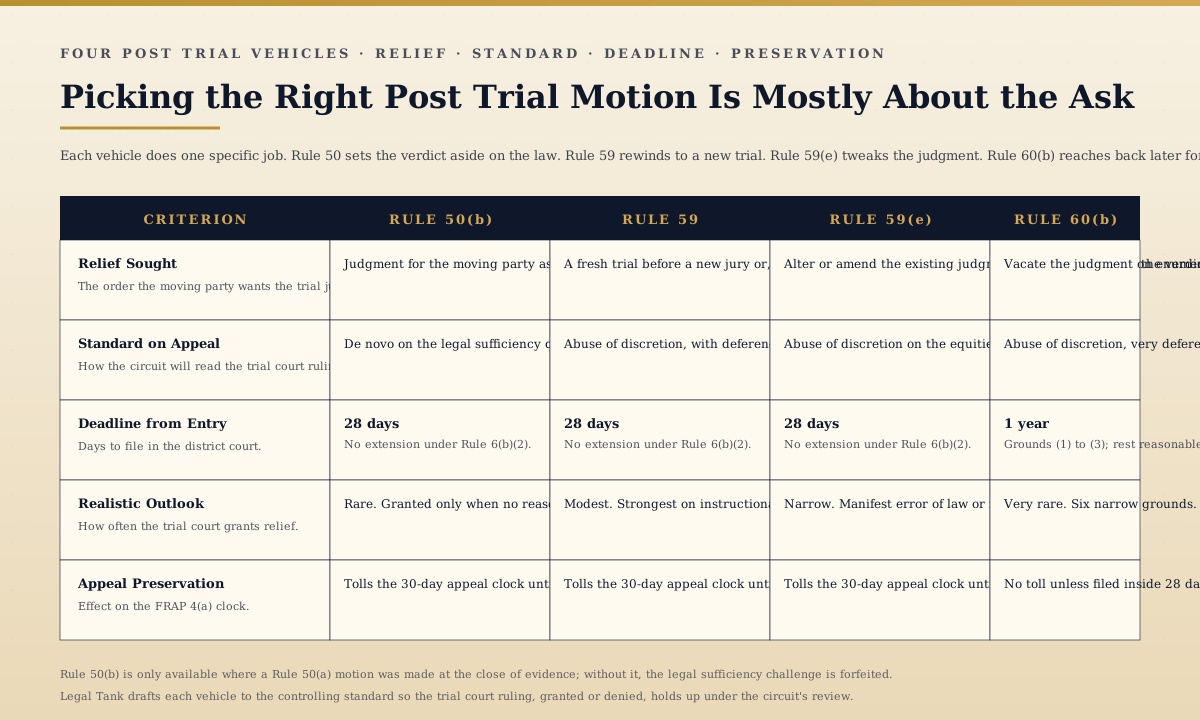
Rule 50(b) is the renewed motion that follows a Rule 50(a) motion made at the close of evidence. The standard asks whether a reasonable jury could have reached the verdict on the evidence presented at trial, taken in the light most favorable to the verdict winner. The trial court grants relief only where the evidentiary record will not support the verdict as a matter of law. The appellate standard is de novo on the legal-sufficiency question, which is unusual for a post-trial motion and is the principal reason litigators preserve the Rule 50(a) record at trial. Where the Rule 50(a) motion was not made, the issue is forfeited and the moving party is limited to Rule 59.
Rule 59: Motion for a New Trial
Rule 59 is the broadest substantive vehicle. The grounds include instructional error, against-the-weight-of-evidence challenges, juror misconduct, prejudicial trial irregularities, and other recognized trial-error categories. The trial court has discretion to grant a new trial and reweigh the evidence in a way that an appellate court cannot. The appellate standard on later review is abuse of discretion, with deference to the trial judge who saw the trial. Rule 59 is the most common post trial motion in federal civil practice because the grounds are broader than Rule 50, the relief (a fresh trial) is more often achievable than judgment as a matter of law, and the same 28-day window makes filing logistically routine alongside other vehicles.
Rule 59(e): Motion to Alter or Amend the Judgment
Rule 59(e) is narrower. The recognized grounds are manifest error of law or fact, newly discovered evidence that could not have been produced at trial with reasonable diligence, and an intervening change in controlling law. The relief is judgment-level (alter or amend the judgment itself) rather than trial-level (a fresh trial). The vehicle is appropriate when the moving party wants the trial court to correct a mistake in the judgment without disturbing the verdict, the trial proceedings, or the trial record. Reconsideration practice in federal court runs through Rule 59(e) inside the 28-day window and through Rule 60(b) outside it.
Rule 60(b): Relief from Judgment on Six Enumerated Grounds
Rule 60(b) is the longer-reaching vehicle. The rule enumerates six grounds: mistake or excusable neglect, newly discovered evidence, fraud or misrepresentation, void judgment, satisfaction or discharge, and any other reason justifying relief. Grounds (1), (2), and (3) carry a hard one-year cap from entry. Grounds (4), (5), and (6) run on the reasonable-time standard. The companion service-firm page on drafted motion to vacate a judgment on fraud or excusable neglect grounds walks through the Rule 60(b) drafting build and the filing-to-ruling timeline for the longer-reach vehicle.
A Practitioner Drafting Checklist: Post Trial Motions
The drafting build runs through six steps. Each step depends on the documentary record assembled in the prior step; skipping a step produces a motion that looks complete on the cover but fails on threshold review. The movant drives the calendar; the opposing party drives the opposition. The trial judge calendars the matter under the court's local post-judgment rules.
- 01
Confirm the 28-Day Clock and the Tolling Effect
Pull the docket and find the date the clerk entered judgment under Rule 58. The 28-day window for Rule 50, Rule 59, and Rule 59(e) runs from that entry date, not from the verdict. Rule 6(b)(2) bars any extension. A timely-filed Rule 50, 59, or 59(e) motion tolls the 30-day FRAP 4(a) notice-of-appeal clock until disposition; the moving party therefore has procedural reasons to file even where the relief is unlikely. Lock the deadline before drafting begins.
- 02
Pick the Vehicle the Relief Actually Requires
Rule 50(b) demands a Rule 50(a) motion was made at the close of evidence; if it was not, the legal-sufficiency challenge is forfeited and the moving party is limited to Rule 59. Rule 59 covers trial-level errors that warrant a fresh proceeding. Rule 59(e) is for judgment-level corrections that do not require retrying the case. Rule 60(b) reaches narrower grounds outside the 28-day window. The vehicle choice drives every later step.
- 03
Order the Trial Transcript and Build the Record Citations
Post-trial motions live or die on record citation. The trial transcript, the trial exhibits, the verdict form, and the jury instructions are the documentary foundation. Order the transcript early because most reporters need at least two weeks to deliver, and the moving party cannot cite what does not exist on paper. Build a master record-citation index keyed to the trial record before drafting the legal sections.
- 04
Draft the Motion, the Memorandum of Law, and the Proposed Order
The motion identifies the relief sought and the rule. The memorandum of law lays out the legal standard, the trial-record citations, and the doctrinal argument. The proposed order is the document the judge will sign if the motion is granted, drafted to be adoptable as written. Where the post-judgment posture overlaps with vacate doctrine, the companion service-firm page on post-judgment drafting for a motion to vacate a judgment based on fraud or excusable neglect (linked below) covers the parallel build for the Rule 60(b) track.
- 05
Serve, File, and Calendar the Hearing
Serve the complete packet on the opposing party, file with the court clerk, and pay the local fee. The motion lands on the court's calendar with a hearing date set under the local post-trial schedule. The opposing party files a written opposition, the moving party files a reply, and the court hears argument at the scheduled date. The trial judge usually rules from the bench at argument or by written decision within the local rule timeframe.
- 06
Preserve the Appeal Even When the Motion Is Denied
Filing the motion preserves the issues for appellate review by drawing a clear trial-court ruling on the asserted error. The denial order is the procedural anchor the circuit will read on appeal. Counsel should also confirm that the FRAP 4(a) clock has been properly tolled and that the notice of appeal is filed within 30 days of the order disposing of the post-trial motion, not from entry of the original judgment.
The drafting packet includes the motion, the supporting memorandum of law, the trial-record citations, the declarations or affidavits supporting any factual showing, and the proposed order the judge can sign as drafted. The docket entries are confirmed before filing. Service of process on the opposing party follows the local rule applicable to post-judgment motions, with a certificate of service attached. Where the local rules require a pre-filing meet and confer requirement on evidentiary or non-dispositive components, counsel completes that step before submission.
Likely Outcomes and Common Mistakes: Post Trial Motions
Outcomes vary sharply by vehicle. Rule 50(b) is rarely granted because the legal-sufficiency bar is high and the verdict winner gets the benefit of every reasonable inference. Rule 59 is granted more often because the trial court has discretion to reweigh evidence and to correct trial errors the appellate court could not reach. Rule 59(e) is granted only on a narrow showing of manifest error or new evidence. Rule 60(b) sits at the bottom of the success-rate ladder because the rule reserves relief for narrow grounds and the trial judge weighs prejudice to the opposing party heavily.
What the Trial Court Is Actually Weighing
The trial court is weighing the trial-record showing against the verdict winner's interest in finality. On Rule 50(b), the court asks whether any reasonable jury could have reached the verdict on the evidence presented. On Rule 59, the court asks whether the trial error was prejudicial enough to affect the outcome. On Rule 59(e), the court asks whether the judgment contains a manifest error of law or fact. On Rule 60(b), the court asks whether one of the six enumerated grounds is satisfied and whether the moving party acted with reasonable diligence. The doctrinal weight of finality is heavy in each calculus, which is why the trial court denial is the modal outcome.
Mistakes That Get Post-Trial Motions Denied at Threshold
The most common procedural error is missing the 28-day window. Federal courts read Rule 6(b)(2) to bar any extension, even on unimpeachable showings of attorney illness or natural disaster. Filing on Day 29 forecloses the Rule 50, Rule 59, and Rule 59(e) relief, leaving the moving party limited to Rule 60(b) on the narrower grounds. The second common error is filing Rule 50(b) without a preserved Rule 50(a) motion at the close of evidence, which forfeits the legal-sufficiency challenge. The third common error is moving under Rule 59(e) on grounds that the rule does not recognize (general dissatisfaction with the verdict, or arguments available before trial that counsel chose not to make).
How Post-Trial Filings Set Up the Appeal
Even where the trial court denies relief, the post-trial motion sharpens the appellate posture. The denial order is the procedural anchor on appeal: the circuit reads the trial-court ruling on the specific error the moving party identified, rather than guessing what the trial judge would have done if asked. The tolling effect on FRAP 4(a) gives counsel additional weeks to prepare the notice-of-appeal record. The procedural shape of the post-trial stage is also one of the reasons that careful pretrial preservation matters: errors that were not preserved at trial generally cannot be raised for the first time in a Rule 59 motion. The opposing party reads each filing the same way, and the plaintiff and defendant often trade roles at this stage depending on which side lost on which issue.