Written and legally reviewed by our editorial team
DRAFTING SERVICE
Attorney Drafting for a Motion to Enforce a Settlement Agreement or Court Order
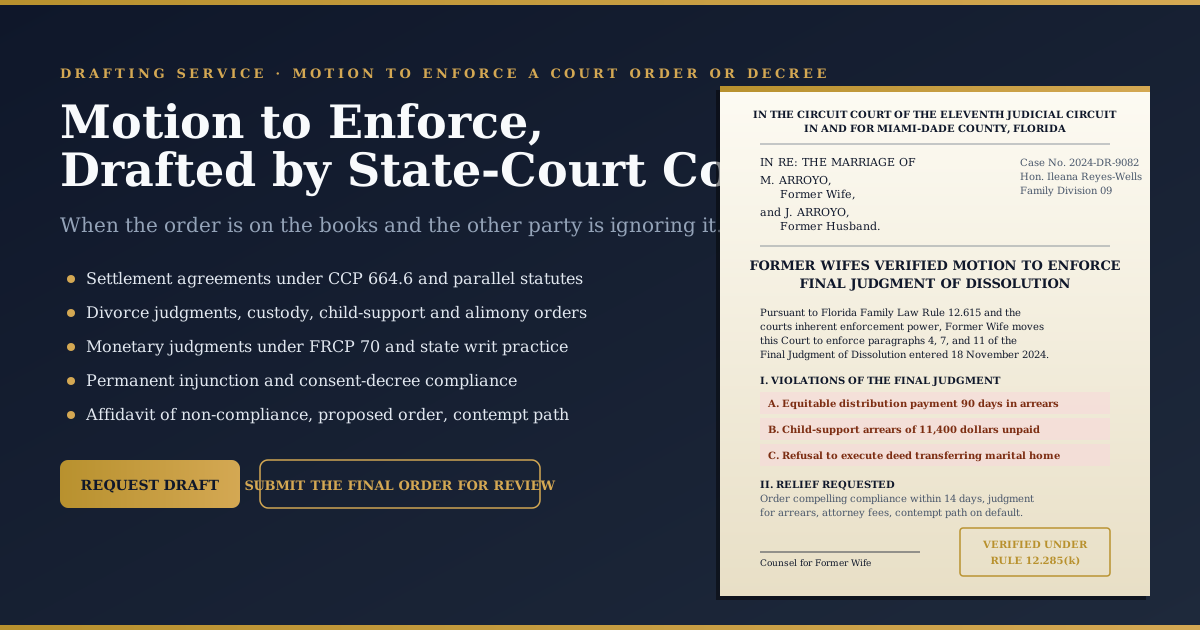
A motion to enforce is the written request a court hears when a final order, divorce decree, or settlement agreement is on the books and the other party is ignoring it. The drafted motion identifies the specific paragraphs in default, attaches sworn proof of non-compliance, and asks the court to compel performance, enter judgment for arrears, shift attorney fees, and reserve the contempt path.
Civil litigation counsel at Legal Tank prepare the full filing package for the engaging firm to sign and file. We draft to Florida Family Law Rule 12.615, Michigan Court Rule 3.208, California CCP 664.6 settlement retention, New York CPLR 5104 contempt practice, and federal FRCP 70 writ practice. Legal Tank does not appear in court and does not sign the filed motion.
3-5
Business day turnaround
5
Rung remedies ladder
12.615
Florida family rule
3.208
Michigan court rule
WHEN YOU NEED ONE
Four Triggers That Send Counsel to the Enforcement Motion
The instrument is reserved for situations where the underlying order, decree, or written settlement is already in place and the violating party has refused or failed to comply. A demand and a reasonable cure window are the standard precursors before the verified motion is drafted.
Payment Obligation in Arrears
Equitable distribution, child support, alimony, or settlement payment is past the due date. Demand sent, demand ignored.
Refusal to Transfer Property
Real estate deed, vehicle title, or business interest awarded in the judgment has not been executed and recorded by the obligated party.
Custody or Parenting Plan Violation
Court-ordered visitation, exchange schedule, or relocation provision is being ignored. Family court enforcement framework controls.
Injunction or Consent Decree Breach
Continuing duty, non-disclosure, non-solicitation, or compliance schedule is being violated. The order needs an enforceable cure path.
FOUR CATEGORIES
The Four Motions to Enforce We Draft for a Motion to Enforce Divorce Judgment or Civil Order
The underlying instrument controls which rule governs, which forum hears the motion, and what relief the court can compel. The drafted motion is matched to one of four categories on intake. Inside a finalized package, the anatomy of a default-judgment motion mirrors the sworn-declaration structure used for enforcement arrears.
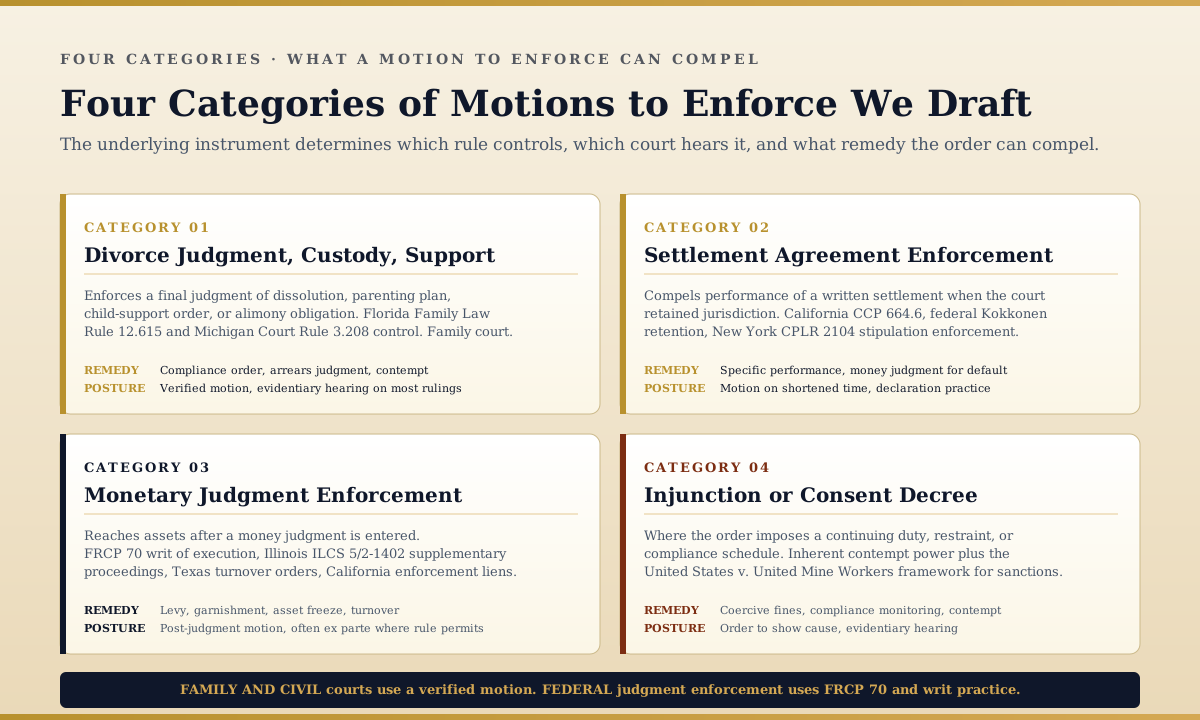
Category 01
Divorce Judgment, Custody, and Support Orders
Family court enforcement of a final judgment of dissolution, parenting plan, child support order, or alimony obligation. Identifies the violated paragraphs, attaches the arrears ledger, and asks for compliance, a money judgment, and contempt path on default.
Category 02
Settlement Agreement Enforcement
Compels performance of a written settlement when the court retained jurisdiction on the record. Common in commercial, employment, and personal-injury matters where one side stops paying or refuses to sign closing documents.
Category 03
Monetary Judgment Enforcement
Reaches assets of the judgment debtor after a money judgment is entered. Drafted as a writ of execution, supplementary-proceedings motion, or turnover application depending on the forum.
Category 04
Injunction and Consent Decree Compliance
Where the order imposes a continuing duty, restraint, or compliance schedule. The drafted motion documents the breach pattern and the cure history, then asks for coercive sanctions or contempt under the inherent power.
SAMPLE PACKAGE
Inside a Motion to Enforce Divorce Decree Form Package
The deliverable is the complete filing package, ready for the engaging firms signature. Every document is matched to the controlling local rule of the family court or civil division where the motion will be filed. The structure also tracks the verification rigor of a federal summary-judgment motion, where evidence is front-loaded onto the moving papers.
Verified Motion to Enforce
Caption, identification of the controlling order, paragraph-by-paragraph violation list, prayer for relief, and verification block sworn under penalty of perjury, formatted to the local rule of the issuing court.
Memorandum of Law in Support
Merits brief organized by the violated order paragraph, with controlling authority on enforcement, contempt, and the remedies ladder for the controlling forum.
Affidavit of Non-Compliance
Sworn declaration narrating each violation with dates, dollar amounts where applicable, the demand-and-cure history, and the proof exhibits referenced by tab.
Exhibits Tabbed and Indexed
Underlying order, executed settlement or decree, demand letters, the arrears ledger, communications with the violating party, and any third-party records that show the breach.
Proposed Order on Enforcement
Signature-ready order compelling compliance within a fixed cure window, entering money judgment for liquidated arrears, shifting attorney fees, and reserving contempt jurisdiction if the cure deadline passes.
Notice of Hearing and Service Documents
Notice of hearing keyed to the local family-court calendar, certificate of service, and proposed order to show cause for the contempt path if the lower remedy is denied.
REMEDIES LADDER
Five Rungs of Relief, From Compliance Order to Custody
A drafted motion to enforce pleads the lowest rung needed to cure the violation and reserves the higher remedies in case the violating party refuses. Courts deny over-pleaded contempt motions on the first hearing. Remedies-ladder discipline matters because each rung requires a progressively higher evidentiary showing.
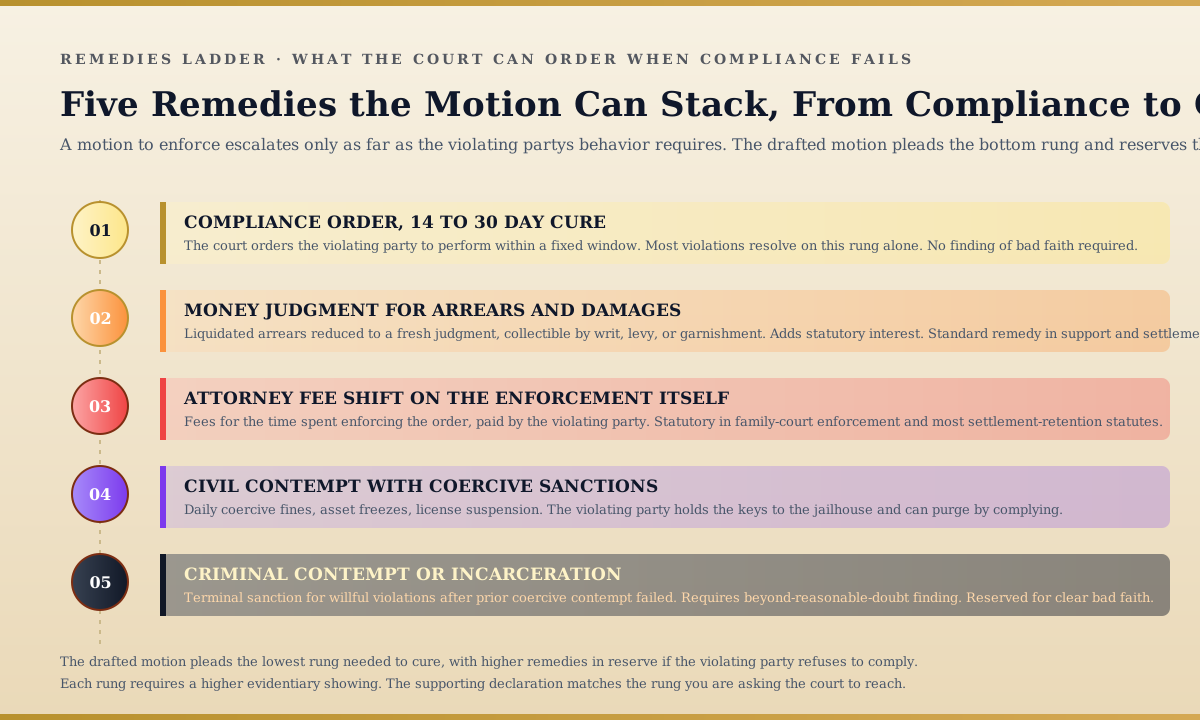
Rung 01
Compliance Order on a 14 to 30 Day Cure
The court orders the violating party to perform within a fixed window. Most violations resolve here. No finding of bad faith required.
FLOOR: Sworn proof of non-compliance
Rung 02
Money Judgment for Arrears and Damages
Liquidated arrears reduced to a fresh judgment collectible by writ, levy, or garnishment. Adds statutory interest.
FLOOR: Itemized arrears ledger plus payment record
Rung 03
Attorney Fee Shift on the Enforcement Itself
Fees for the time spent enforcing the order, paid by the violating party. Statutory in family enforcement and most settlement-retention statutes.
FLOOR: Fee declaration with hours and rates
Rung 04
Civil Contempt with Coercive Sanctions
Daily coercive fines, asset freezes, occupational-license suspension. The violating party holds the keys to the jailhouse and can purge by complying. The motion for contempt to enforce custody runs on this rung when a parenting-time order is the violated decree.
FLOOR: Clear-and-convincing evidence of willful violation with present ability to comply
Rung 05
Criminal Contempt or Incarceration
Terminal sanction for willful violation after prior coercive contempt failed. Requires due-process safeguards under Bagwell.
FLOOR: Beyond-reasonable-doubt finding after a full evidentiary hearing
FLORIDA PRACTICE
Motion to Enforce Court Order Florida Under Family Law Rule 12.615
Florida runs family enforcement on a verified-motion path under Family Law Rule 12.615. The motion is filed in the circuit court family division that entered the order, served on the violating party, and noticed for an evidentiary hearing on contested facts. Florida courts require the verified motion to identify the violated paragraphs with specificity and to attach the sworn proof of non-compliance on the face of the motion. Conclusory pleadings are routinely denied.
For a contempt finding, Florida requires the moving party to show both willful refusal and present ability to comply. The drafted Florida package separates these elements on the face of the motion, attaches the income and asset record where present ability is in issue, and includes a proposed order tracking the verified allegations.
The Verified Motion
Paragraph-by-paragraph violation list under a verification block sworn under penalty of perjury per Rule 12.285(k).
The Memorandum
Florida appellate authority on the willfulness and ability elements, with the controlling district court opinions cited.
The Proposed Order
Compliance window, money judgment for arrears, attorney fees under FS 61.16, contempt reservation if the cure deadline passes.
MICHIGAN PRACTICE
Drafting a Motion to Enforce Judgment of Divorce Michigan Practice Calls For
Michigan domestic-relations courts run enforcement on two parallel tracks. The judgment-enforcement motion under Michigan Court Rule 3.208 is filed in the circuit court family division that entered the judgment of divorce, while support arrears typically flow through a Friend of the Court referral that runs in parallel. The two tracks coordinate on a single docket so that arrears reduction and contempt findings do not duplicate or conflict.
Michigan distinguishes between civil and criminal contempt with materially different evidentiary floors, tracking the federal framework set in International Union, UMWA v. Bagwell, 512 U.S. 821 (1994). The drafted motion pleads the civil rung first, with coercive sanctions including license suspension and asset freezes that the violating party can purge by complying. Criminal contempt is reserved and is pleaded only after a prior civil-contempt order has failed. Where the violating party has relocated outside Michigan, the drafted motion adds long-arm and full-faith-and-credit paragraphs so the order travels with the file.
For a deeper procedural read on related motions in the family court file, pretrial motions shape the family-court file and interact directly with post-judgment enforcement.
JURISDICTION MATRIX
Five Jurisdictions, Five Rules That Control the Enforcement Motion
The drafted motion is matched to the rule that governs the issuing court. Federal enforcement runs on FRCP 70 and Kokkonen retention. State family courts run on Florida 12.615, Michigan 3.208, California Family Code 290, and New York CPLR 5104. The package format, the verification standard, and the proposed order shift with the controlling rule.
FEDERAL
FRCP 70 + Inherent Power
Federal Court Enforcement Practice
FLORIDA
Family Law Rule 12.615
Circuit Court Family Division Enforcement
MICHIGAN
MCR 3.208 + MCR 3.606
Domestic Relations Enforcement and Friend of the Court
CALIFORNIA
CCP 664.6 + Family Code 290
Superior Court Settlement and Family Enforcement
NEW YORK
CPLR 2104 + CPLR 5104
Supreme Court Enforcement of Stipulations and Judgments
REPRESENTATIVE DRAFTS
Four Anonymized Engagements That Show the Rung We Plead
Each vignette below traces a real enforcement file from the posture our drafting counsel inherited through the rung the motion pleaded and the outcome the engaging firm reported back. Client identifiers are removed.
Florida Family Court, Equitable Distribution Arrears
California Commercial Settlement Reneged
Michigan Custody Exchange Violations
New York Injunction in a Trade-Secret Matter
PIPELINE
How We Draft and Deliver the Motion to Enforce Package
From intake to the sign-ready package, the pipeline runs five sequential steps. Our process matches the deliberation of a cross-motion for summary judgment drafting engagement, where evidence and authorities are sequenced before any prose is committed.
Step 01
01
Intake of the Order Being Enforced
You upload the controlling order, the executed settlement or final judgment, the docket, any prior compliance correspondence, and the arrears ledger through the secure intake form. The drafting attorney reads the procedural posture before any prose is committed.
Step 02
02
Attorney Maps the Violations and the Rung
A civil litigation attorney maps each violated paragraph to the controlling rule, picks the lowest remedies-ladder rung needed to cure, and confirms in writing which forum and which rule controls the enforcement motion.
Step 03
03
Draft the Full Enforcement Package
The drafting attorney prepares the verified motion, the memorandum of law, the affidavit of non-compliance, the indexed exhibits, the proposed order, and the notice of hearing keyed to the local family-court or civil-division calendar.
Step 04
04
Your Review and One Revision Round
You read the draft and send comments. The drafting attorney incorporates your edits in a single revision pass at no additional cost to your engagement. Additional revisions are scoped before further work begins.
Step 05
05
Sign-Ready Package Delivered for the Engaging Firm
You receive the final PDF and editable Word package, plus a one-page filing checklist matching the controlling rule. Your retained trial counsel signs the package, files, serves, and appears at the noticed hearing. Legal Tank does not appear in court.
WHY LEGAL TANK
Four Reasons State-Court Trial Counsel Send the Drafting Work to Us
Drafted by a State-Court Civil Litigator
Every motion to enforce is read, framed, and drafted by a bar-admitted civil litigation attorney with state-court enforcement practice across family, civil, and commercial divisions. The motion picks the right rung rather than over-pleading the contempt path on day one.
Rule-Calibrated to the Issuing Court
We pull the controlling order, run the violations under Florida Family Law Rule 12.615, MCR 3.208, CCP 664.6, CPLR 5104, or the federal Kokkonen retention framework, and ship in the local format. Standard turnaround three to five business days, rush available when the family-court hearing window is days out.
Drafting Only, No Court Appearance
We deliver a sign-ready package. We do not file, serve, or argue at the hearing. Your retained trial counsel signs the papers under the engaging firms letterhead and represents you at the noticed hearing.
Remedies-Ladder Discipline, Not Buckshot Pleading
The motion asks for the lowest rung that cures the violation and reserves higher remedies for refusal. Family courts and civil judges deny over-pleaded contempt motions on day one. We plead what the record supports, not what the client is angry about.
DRAFTING COUNSEL
The Civil Litigators Behind the Enforcement Motion
Our state-court enforcement drafting pool runs four attorneys with practice across California, New York, Illinois, Florida, Texas, and the federal courts. Each engagement is read and drafted by one bar-admitted civil litigator, then run through an internal review before delivery. The entry-of-default mechanics that frequently precede an enforcement file follow the same FRCP 55 + state-court analog framework that the drafted package builds on.
Alexandra Chen-Park, Esq.
Employment, Restrictive Covenants and Civil Litigation Counsel
Drafts state-court enforcement motions across the three-state practice in California, New York, and Illinois. Recent work includes CCP 664.6 settlement-enforcement motions in restrictive-covenant matters, CPLR 5104 contempt practice on injunction violations in trade-secret cases, and Illinois 735 ILCS 5/2-1402 supplementary proceedings on commercial judgment enforcement.
NOTABLE MATTERS
- CCP 664.6 enforcement on a restrictive-covenant settlement (Santa Clara County)
- CPLR 5104 contempt on a permanent injunction in a trade-secret matter (Nassau County)
- Illinois 1402 supplementary proceedings in a commercial fee dispute (Cook County)
Camille Beaumont, Esq.
Landlord-Tenant and Real Estate Counsel
Drafts enforcement motions on real-property judgments including writs of possession after eviction, motions to compel deed transfer under settlement and divorce decrees, and lien-enforcement motions under the California Code of Civil Procedure and the Texas Property Code. Counsels small and institutional landlords on the enforcement pipeline from compliance order to sheriff lockout.
NOTABLE MATTERS
- Writ of possession enforcement on a 24 unit Los Angeles eviction judgment
- Motion to compel deed transfer under a Texas marital property division (Dallas County)
- Lien enforcement motion under California CCP 708.610 (Alameda County)
Marcus Holloway, Esq.
Senior Litigation Attorney
Senior civil litigator drafting federal settlement-enforcement motions under the Kokkonen v. Guardian Life retention framework and writs of execution under FRCP 70. Practice covers commercial breach matters in the Southern District of New York and the District of New Jersey, including post-judgment turnover and garnishment motions paired with information subpoenas.
NOTABLE MATTERS
- Kokkonen retention enforcement of a commercial settlement (S.D.N.Y.)
- FRCP 70 writ of execution on a securities-fraud judgment (D.N.J.)
- Turnover motion against a closely-held LLC (S.D.N.Y. post-judgment)
Daniel Whitaker, Esq.
Defamation and Commercial Litigation Counsel
Drafts enforcement motions in Texas civil district courts and the Southern District of Texas, with a focus on turnover orders under Texas Civil Practice and Remedies Code Chapter 31, permanent injunction enforcement in defamation matters, and anti-SLAPP fee recovery on prevailing-party judgments. Coordinates with Colorado state-court enforcement practice for cross-border matters.
NOTABLE MATTERS
- Texas turnover order against a Harris County judgment debtor
- Permanent injunction enforcement in a defamation matter (Tarrant County)
- Anti-SLAPP prevailing-party fee enforcement (Travis County)
CLIENT FEEDBACK
What Engaging Firms Have Said About the Enforcement Package
"The verified motion identified seven specific violations of our final judgment paragraph by paragraph. Our family law trial counsel said it was the cleanest enforcement package she had received from outside drafting in years."
Adriana M.
Miami · Verified client
Florida Family Law Rule 12.615 Motion
"Our settlement defendant stopped paying on installment seven. The CCP 664.6 motion entered stipulated judgment for the balance within thirty days and the defendant cleared it to avoid the abstract on his real property."
Vincent R.
Verified client
California CCP 664.6 Settlement Enforcement
"We needed an order to show cause on a CPLR 5104 contempt and the package included the information subpoenas to find the assets first. The contempt was held and the daily coercive fine ran for nine days before compliance."
Renata K.
New York, NY · Verified client
New York CPLR 5104 Contempt Motion
FREQUENTLY ASKED
What Counsel Ask Before Engaging the Drafting Pool
The questions below come straight from the People Also Ask results returned for motion to enforce, motion to enforce court order florida, and motion to enforce divorce judgment.
What does motion to enforce mean in court?
What is a motion to enforce a settlement in Alabama?
Does a motion to enforce require a hearing?
How serious is a motion to compel?
How do I enforce a divorce court order?
How do I file a motion of contempt in Florida?
How to enforce a divorce decree in Arizona?
ADJACENT MOTIONS
Other Motions Our Drafting Counsel Prepare on the Same Pipeline
When the enforcement file calls for a parallel filing, motion to amend pleadings drafting service after discovery reveals new claims and contempt practice run on the same drafting pool. Each adjacent motion link below opens the dedicated service page.
Motion to Vacate a Judgment
When the violating party attacks the underlying judgment itself, the vacate motion is the procedural mirror to enforcement, FRCP 60(b) and state-court analog drafting.
Motion for Sanctions
Rule 11 and Rule 37 sanctions practice for frivolous filings and discovery abuse, drafted with the 21 day safe-harbor where required.
Motion to Amend Pleadings
When facts surfaced during enforcement require a new claim against the violating party, the amend motion adds the breach to the pleading.
Motion to Compel Discovery
Mid-case discovery escalation drafted under FRCP 37 or the controlling state code when the opposing party will not produce the documents enforcement requires.
Final Order on the Books, Other Party Ignoring It?
Send us the controlling order and the cure history. Our drafting counsel maps the violations to the right rung on the remedies ladder and prepares the verified motion package for the engaging firm to sign and file.
Legal Tank prepares the filing-ready papers. Your retained trial counsel signs the motion, files, serves, and appears at the noticed hearing.