Legal Motion Definition and the Role of Written Requests in Court Proceedings
The legal motion definition, in working litigator terms, is a formal written request that asks a trial court to enter an order on a discrete legal issue inside an existing case. The term traces to the Latin movere, meaning to move the court to act, and the modern procedural framework appears in Federal Rule of Civil Procedure 7(b)(1) and the parallel state rules of civil procedure. The motion legal definition in most treatises tracks the same architecture: the moving party names the relief requested, identifies the rule or statute that supplies the court's authority, sets out the supporting facts, and asks the judge for a ruling. This reference page walks through the three working definitions courts and treatises use, distinguishes the motion from adjacent pleadings, maps the six stages where motion families live in the civil case, and sets out the drafting build under FRCP Rule 7.
Definition and Legal Meaning of the Motion Legal Definition
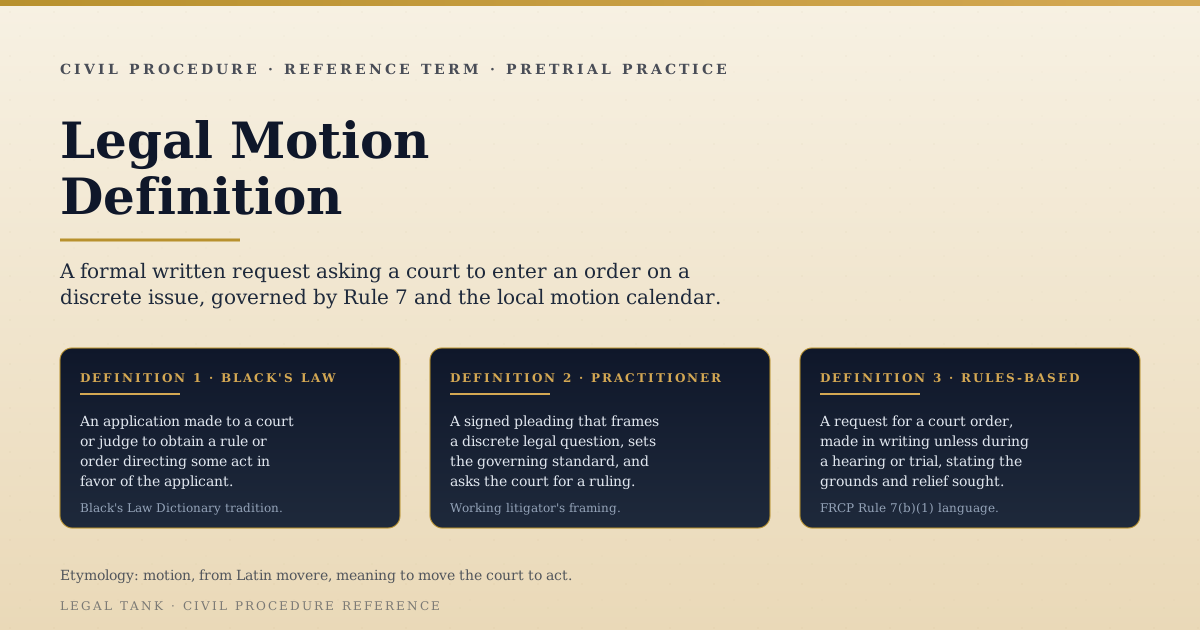
Three working definitions of the term appear across the legal literature, and each one captures something the other two miss. The legal definition of motion set out in Black's Law Dictionary is the most-cited reference framing and the one trial courts most often quote when they sketch the term in an unpublished opinion. The rules-based definition in FRCP Rule 7(b)(1) supplies the procedural shape: a request for a court order, made in writing, that states with particularity the grounds for the request and the relief sought. The practitioner framing focuses on the working architecture: a signed pleading filed inside an active case that frames a discrete legal question and asks the judge for a ruling on the controlling standard.
The Three Reference Definitions Side by Side
A working legal motion reference page should set the three definitions side by side so a reader can match the term to the framing that fits the task. A first-year law student researching the bar-prep formulation wants the Black's Law treatment. A pro se litigant drafting in a federal district wants the FRCP Rule 7 text. A seasoned civil litigator wants the working architecture that maps onto the motion calendar in the receiving court.
Black's Law Tradition
An application made to a court or judge to obtain a rule or order directing some act in favor of the applicant. The Black's Law treatment is the most-cited reference definition and the framing courts most often quote when they sketch the term in a published opinion.
Rules-Based Definition
Federal Rule of Civil Procedure 7(b)(1) supplies the rule-text definition: a request for a court order, made in writing unless made during a hearing or trial, that states with particularity the grounds for seeking the order and the relief sought. The state rules of civil procedure mirror this language in nearly every jurisdiction.
Practitioner Framing
The working definition used by civil litigators in practice: a signed pleading filed inside an active case that frames a discrete legal question, sets the governing standard, identifies the controlling authority, and asks the judge for a ruling. The practitioner framing focuses on what the motion must do, not just what it formally is.
What the Legal Definition Actually Captures
Across all three reference treatments, four elements recur. First, the motion is a written instrument unless the rules permit an oral motion during a hearing or trial. Second, the motion is filed inside an active case, which distinguishes it from a complaint that opens a case or a demand letter that precedes any case. Third, the motion identifies a discrete legal question rather than the merits of the entire dispute. Fourth, the motion asks the court to enter a specific order, not just to consider an argument. The four elements together produce the doctrinal shape that distinguishes the motion vehicle from every adjacent civil filing.
Motion Versus Adjacent Civil Filings
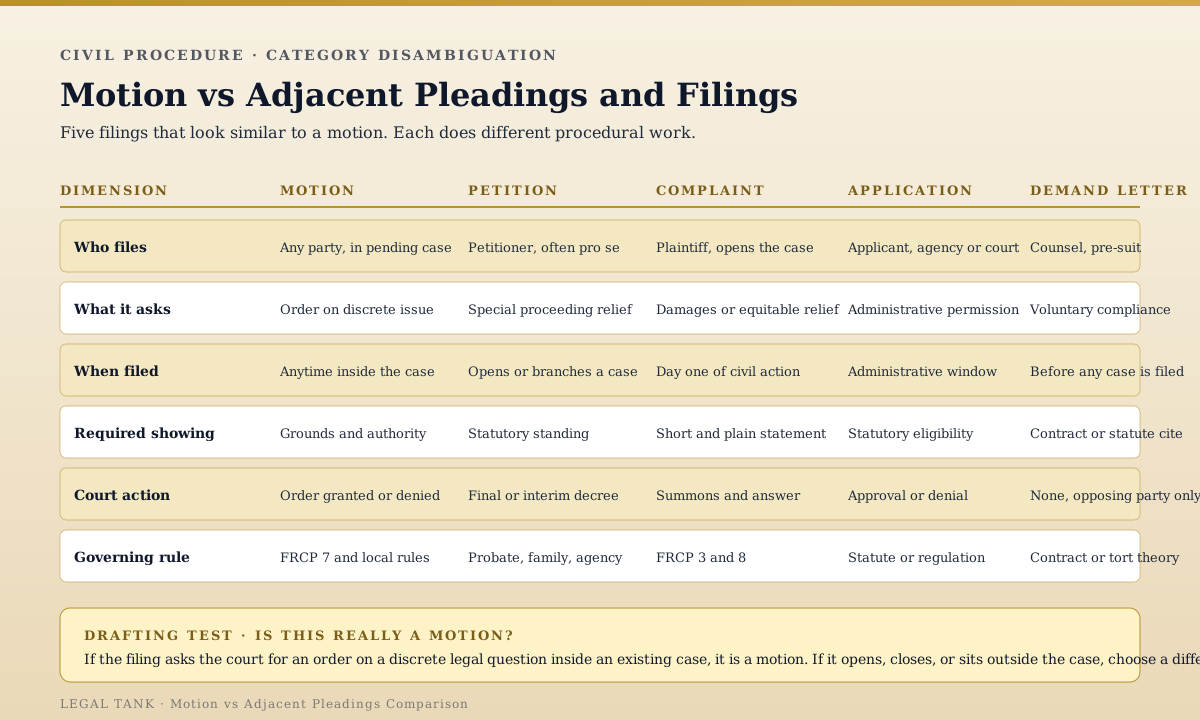
Civil litigators distinguish the motion from four adjacent filings: the petition, the complaint, the application, and the demand letter. The comparison matrix below sets out the distinguishing dimensions courts and practice manuals use to keep the categories straight. The single-sentence drafting test in the footer is the one every working litigator applies before committing a draft to the motion vehicle.
Legal Definition of Motion in the Court Hierarchy
The same definitional core travels up the court hierarchy. A magistrate judge in federal practice resolves discovery motions under the same motion to compel framework used at the trial level for discovery enforcement. A district judge resolves dispositive motions on the same Rule 56 architecture used in every federal civil case. An intermediate appellate court resolves motions filed in connection with an appeal (a motion for an extension of time, a motion for leave to file an amicus brief) using the same definitional anchor, adapted to the appellate-rules vocabulary. The architecture travels; only the controlling standard and the procedural deadlines shift with the level of the court. Scheduling orders entered under FRCP Rule 16 set the deadlines for most pretrial motions inside the case schedule, and the broader civil-procedure framework lives in the Federal Rules of Civil Procedure.
Sample Templates and Real-World Examples: the Legal Motion Template Word Build
A working legal motion template word file follows the same seven-section architecture regardless of the specific motion type. The caption identifies the court, the case number, and the parties. The introduction names the relief and cites the controlling rule. The statement of facts walks the court through the relevant events in chronological order, anchored to specific exhibits. The legal argument applies controlling precedent. The proposed order tells the judge what relief to enter. The certificate of service confirms delivery. The exhibit list catalogs the supporting record.
Example 1: Motion to Dismiss Under FRCP Rule 12(b)(6)
A defendant served with a complaint in federal court reviews the complaint and concludes that, even if every alleged fact is true, the complaint does not state a cognizable cause of action. The defendant files a motion to dismiss under FRCP Rule 12(b)(6) for failure to state a claim. The caption names the court and the case number. The introduction identifies the rule and the relief requested (dismissal of all claims with prejudice). The statement of facts summarizes the complaint's allegations without contesting them. The legal argument applies the Iqbal and Twombly plausibility standard and walks the court through why each claim falls short. The proposed order dismisses the case.
Example 2: Motion for Summary Judgment Under FRCP Rule 56
A defendant in a commercial dispute completes discovery and concludes that the undisputed facts entitle it to judgment as a matter of law. The defendant files a motion for summary judgment under FRCP Rule 56. The motion is accompanied by a statement of undisputed material facts, supporting declarations and exhibits, and a memorandum of law applying the controlling summary-judgment standard. A companion explainer on building a motion for summary judgment template that tracks Rule 56 requirements sets out the section-by-section build for this filing.
Example 3: Motion for Default Judgment Under FRCP Rule 55
A plaintiff serves the defendant with a complaint, the defendant fails to answer within the response window, and the clerk enters default. The plaintiff then files a motion for default judgment under FRCP Rule 55(b) asking the court to enter judgment on the merits. The motion includes a sworn declaration on damages, an affidavit of military service (where required), and a proposed order setting the judgment amount. The drafting architecture for this filing is set out separately in the anatomy of a motion for default judgment template and how each section functions, and the framing question for plaintiffs is covered in what a motion for default judgment is and how the plaintiff frames the post-clerk-default request.
Example 4: Motion for Reconsideration After an Adverse Ruling
A party that has received an adverse ruling on a dispositive motion may, in narrow circumstances, ask the trial court to revisit the decision before appeal. The motion identifies the controlling rule (FRCP Rule 59(e) or Rule 60(b), depending on the jurisdiction and timing), sets out the ground (intervening change in controlling law, new evidence not previously available, clear error of law, or manifest injustice), and asks the court to vacate or amend the prior ruling. The structural build is set out in inside a motion for reconsideration template and the sections courts expect to see.
Why Civil Litigators Rely on the Motions Legal Definition to Frame Case Strategy
The reason civil litigators rely so heavily on the motions legal definition is that motions are the only procedural vehicle that lets a party ask the court for a ruling on a discrete question without waiting for trial. A trial is the answer to the merits of the entire dispute. A motion is the answer to a single question inside the dispute. The procedural difference is the entire reason legal motions exist as a separate category of filing.
What Are Legal Motions Strategically?
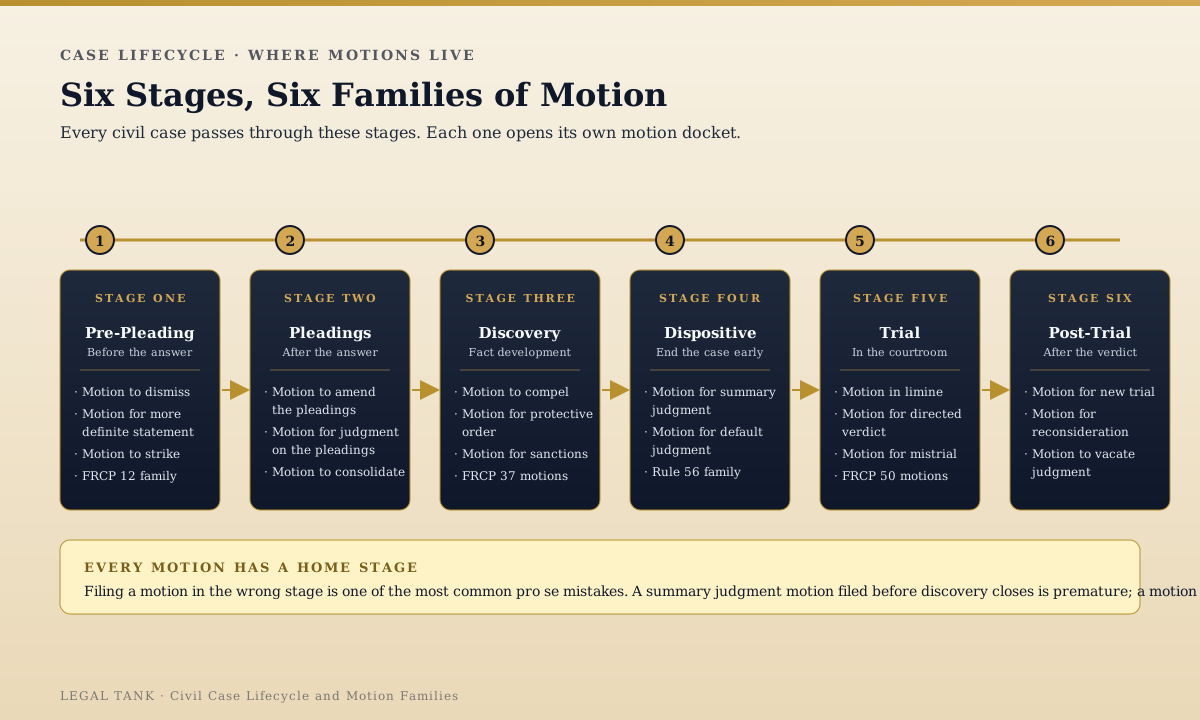
Strategically, what are legal motions good for? Four roles recur. First, dispositive motions (motion to dismiss, motion for summary judgment, motion for default judgment) can end the case before trial when the legal record supports a ruling on the merits without a jury. Second, procedural motions (motion to amend, motion to consolidate, motion to stay) shape the litigation timeline and the scope of the dispute. Third, discovery motions (motion to compel, motion for protective order, motion for sanctions) enforce the discovery rules and recalibrate fact development. Fourth, trial motions (motion in limine, motion for directed verdict, motion for mistrial) frame what the jury hears and preserve appellate issues for review.
The Motions Legal Architecture as a Record-Building Tool
The motions legal architecture also serves as a record-building tool. Every motion that gets filed, briefed, and ruled on becomes part of the case record. The trial judge's ruling on a denied summary-judgment motion preserves the issue for direct appeal if the case ultimately goes to trial and the losing party files a notice of appeal. The denied motion in limine that allowed prejudicial evidence in front of the jury becomes the centerpiece of the appellate brief. The granted motion for sanctions that excluded a key witness becomes the doctrinal anchor of a related case down the line. Every motion in the catalog above functions as a record-building tool across the case schedule, not just at the moment it is decided.
Discovery Motions as the Daily Workhorse
For most civil litigators, the daily workhorse is the discovery motion. The motion for sanctions targeting a party that has repeatedly missed discovery deadlines is set out in drafting service for a motion for sanctions targeting discovery abuse and bad-faith conduct. The motion to amend the pleadings after discovery reveals new claims is set out in drafting service for a motion to amend pleadings after discovery reveals new claims. The cross-motion for summary judgment used when both parties move on the same record is set out in professionally drafted cross-motion for summary judgment briefs and Rule 56 opposition filings.
Why the Definition Matters at the Drafting Desk
Getting the motion legal definition right at the drafting desk matters because the wrong vehicle invites a procedural rejection. A request that should have been a stipulation cannot be smuggled through as a motion without triggering a clerk's notice. A request that needs an entire new pleading (a counterclaim, a third-party complaint) cannot be squeezed into a motion without producing a doomed filing. The doctrinal clarity of the definition guards the drafting desk against committing the wrong words to the wrong vehicle.
How to Build a Legal Motion That Meets Rule 7 and the Local Court Requirements
Building a legal motion that meets both the federal-rule architecture and the receiving court's local requirements is a seven-step exercise. The same seven steps run whether the motion is a Rule 12(b)(6) dismissal, a Rule 56 summary-judgment motion, a Rule 37 motion to compel, or a Rule 59(e) motion to alter or amend judgment. The procedural shape travels across motion types because the underlying definitional elements travel.
- 1
Read the Local Rules of the Receiving Court
Every federal district, every state trial court, and many specialized tribunals publish local rules that supplement the Federal Rules of Civil Procedure or the state rules. The local rules set the page limit, the meet-and-confer prerequisite, the chambers-copy requirement, and the proposed-order format. Drafting a motion before reading the local rules is the most common procedural error in pro se practice.
- 2
Identify the Controlling Rule of Procedure or Statute
Every motion lives under a specific procedural authority. A motion to dismiss lives under FRCP Rule 12. A motion for summary judgment lives under Rule 56. A motion to compel lives under Rule 37. A motion to amend the pleadings lives under Rule 15. Identifying the controlling rule is the first sentence of the introduction and the doctrinal frame for the entire memorandum of law that follows.
- 3
Build the Caption and the Introduction
The caption identifies the court, the case number, the parties, and the assigned judge. The introduction names the relief requested in plain language and identifies the controlling rule. A judge or a clerk should be able to read the first paragraph and know what is being asked, why it is being asked, and which rule authorizes the request.
- 4
Write the Statement of Facts in Chronological Order
The statement of facts walks the court through the relevant events in the order they happened. Each material fact is anchored to a specific exhibit, a docket entry, a deposition page-and-line cite, or a sworn declaration. Drafting facts without anchoring them is the second most common pro se error.
- 5
Apply Controlling Precedent in the Legal Argument
The legal argument applies the controlling rule and the controlling case law to the specific facts. The strongest arguments cite a binding decision from the receiving court's hierarchy, apply the doctrinal test set out in that decision, and walk the court through each element. Persuasive authority from other circuits or other state courts supplements but does not replace binding precedent.
- 6
Draft a Proposed Order
A proposed order is a separate document that gives the judge the exact language to sign. The proposed order should be specific, narrowly tailored to the relief requested, and ready to be entered on the docket without modification. Most federal districts require a proposed order to accompany every substantive motion under their local rules.
- 7
Serve the Motion and File the Certificate of Service
The certificate of service confirms the opposing party received the motion in the manner the rules require. Federal practice uses CM/ECF for service on represented parties; pro se parties are typically served by mail. Failing to file a certificate of service is a common procedural defect that produces a clerk's notice or a striking order from the judge.
Common Drafting Failures the Definitional Test Prevents
Three drafting failures recur across pro se and junior-associate filings. The first is filing a motion that asks for relief the court is not authorized to grant under the cited rule. The second is filing a motion that fails to identify the controlling standard and instead argues at the merits level the trial will eventually reach. The third is filing a motion that misses a local-rule prerequisite (the meet-and-confer certification, the proposed-order requirement, the page limit). Each of these failures is prevented by working through the definitional test and the local-rule audit before drafting.
The Connection to the Underlying Discovery Motion Practice
The drafting architecture set out above is what every motion shares; the controlling rule and the controlling standard are what each specific motion type adds on top. The framing question on what a court motion is at the most foundational level is covered in the anatomy of a motion in court and the four-column federal versus state jurisdiction comparison. The procedural steps for filing a motion as a self-represented litigant are set out separately in the companion guide on the step-by-step process for filing a court motion as a pro se or represented litigant.