Rule 59(e) and Rule 60(b) Standards Governing a Motion to Reconsider Federal Court Rulings
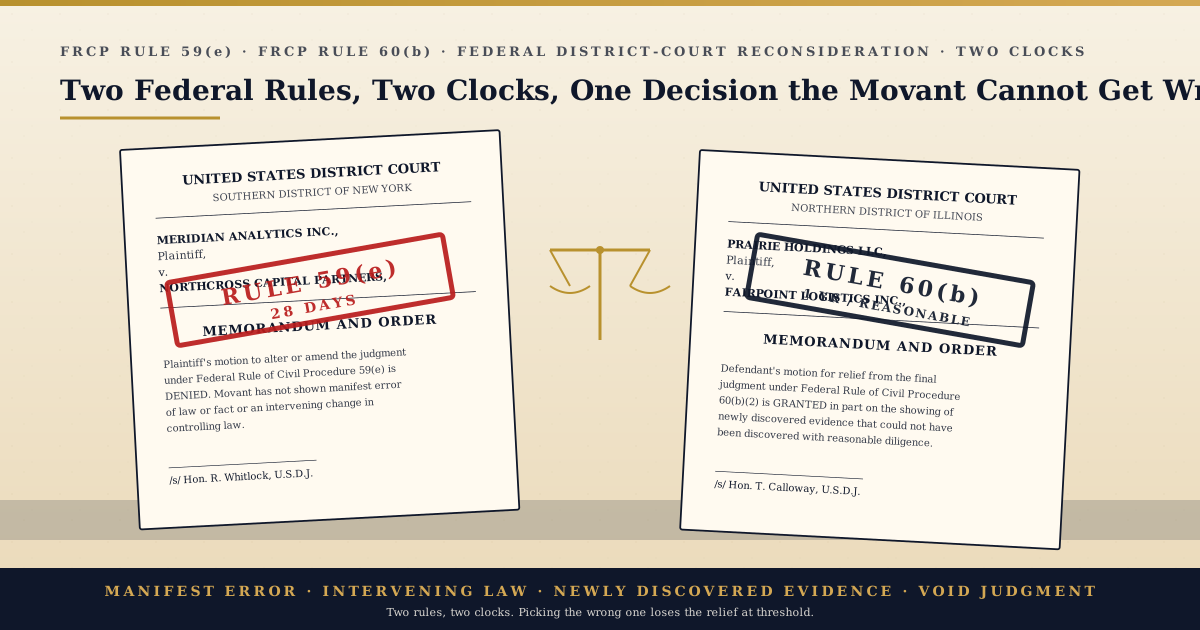
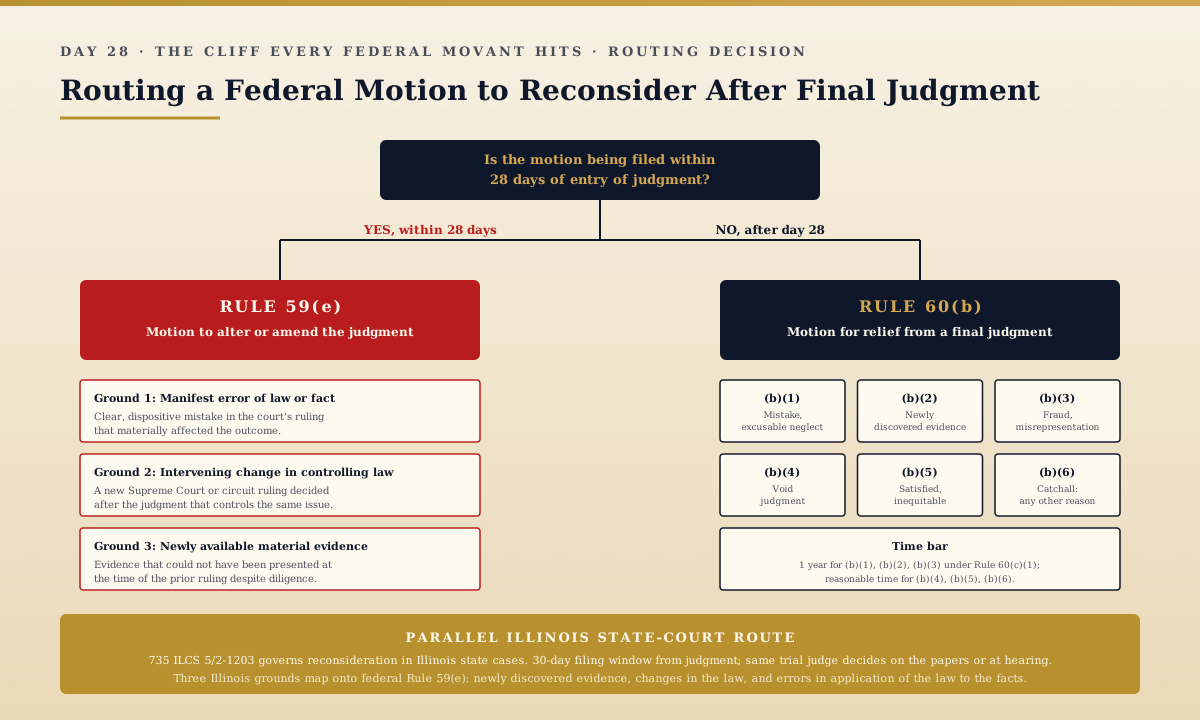
A motion to reconsider federal court ruling is the post-judgment filing that asks the same United States district court to reexamine and modify a substantive order it has already entered. The federal procedural framework runs on two parallel rules: Federal Rule of Civil Procedure 59(e) covers motions to alter or amend the judgment inside a non-extendable 28-day window, and Federal Rule of Civil Procedure 60(b) covers six numbered grounds for relief from a final judgment after that window closes. Picking the right rule is the first move; filing under the wrong rule (or filing on day 29 under Rule 59(e)) loses the relief at threshold review. This page lays out the two-rule framework, the Illinois state-court parallel under 735 ILCS 5/2-1203, the federal local-rule overlay, and the section-by-section build of a filing-ready motion.
The Reconsideration Vehicle in Federal Practice and in the Parallel Motion to Reconsider Illinois State-Court Track
The reconsideration vehicle exists to give the trial court a controlled chance to correct its own ruling before the parties escalate to the court of appeals. In federal practice, the controlled chance runs through two rules with two different clocks. Federal Rule of Civil Procedure 59(e) authorizes a motion to alter or amend the judgment within 28 days of entry, on three recognized grounds (manifest error of law or fact, intervening change in controlling law, and newly available material evidence). Federal Rule of Civil Procedure 60(b) authorizes relief from a final judgment after the 28-day window closes, on six numbered grounds and with two different time bars.
FRCP Rule 59(e) Motion to Alter or Amend
The federal vehicle that runs inside the 28-day window from entry of judgment. Three recognized grounds: manifest error of law or fact, intervening change in controlling law, and newly available material evidence. Filed in the same federal district court, decided by the same judge, no enlargement of the deadline under Rule 6(b)(2).
FRCP Rule 60(b) Motion for Relief From a Final Judgment
The federal vehicle for post-28-day reconsideration. Six numbered subsections covering mistake or excusable neglect, newly discovered evidence, fraud, void judgment, satisfaction or changed circumstances, and the residual catchall. One-year bar on subsections (1) through (3); reasonable-time bar on (4) through (6).
Illinois 735 ILCS 5/2-1203 State-Court Reconsider
The parallel Illinois state-court vehicle that mirrors the federal Rule 59(e) framework on a 30-day filing window. Three Illinois grounds: newly discovered evidence, changes in the law, and errors in the application of the law to the facts. Filed in the same circuit court that entered the underlying ruling.
Local-Rule Page Limits and Meet-and-Confer Compliance
Federal districts impose distinct local-rule requirements on reconsideration practice: page limits (S.D.N.Y. Local Civil Rule 6.3 caps the memorandum at ten pages), meet-and-confer obligations, and chambers-specific briefing schedules. Legal Tank tailors the build to the controlling local rule before the page limit becomes a threshold problem.
The Illinois state-court parallel under 735 ILCS 5/2-1203 tracks the federal Rule 59(e) framework on a 30-day filing window from entry of the judgment. The Illinois grounds are codified as newly discovered evidence, changes in the law, and errors in the application of the existing law to the facts. The same circuit judge who entered the underlying ruling decides the motion. Illinois practitioners treat the 30-day window as jurisdictional; missing it loses the reconsideration vehicle entirely, leaving the appeal as the only remaining avenue. The umbrella explainer on motions in court and how written requests move a case forward grounds the reconsider motion inside the wider category of post-judgment filings.
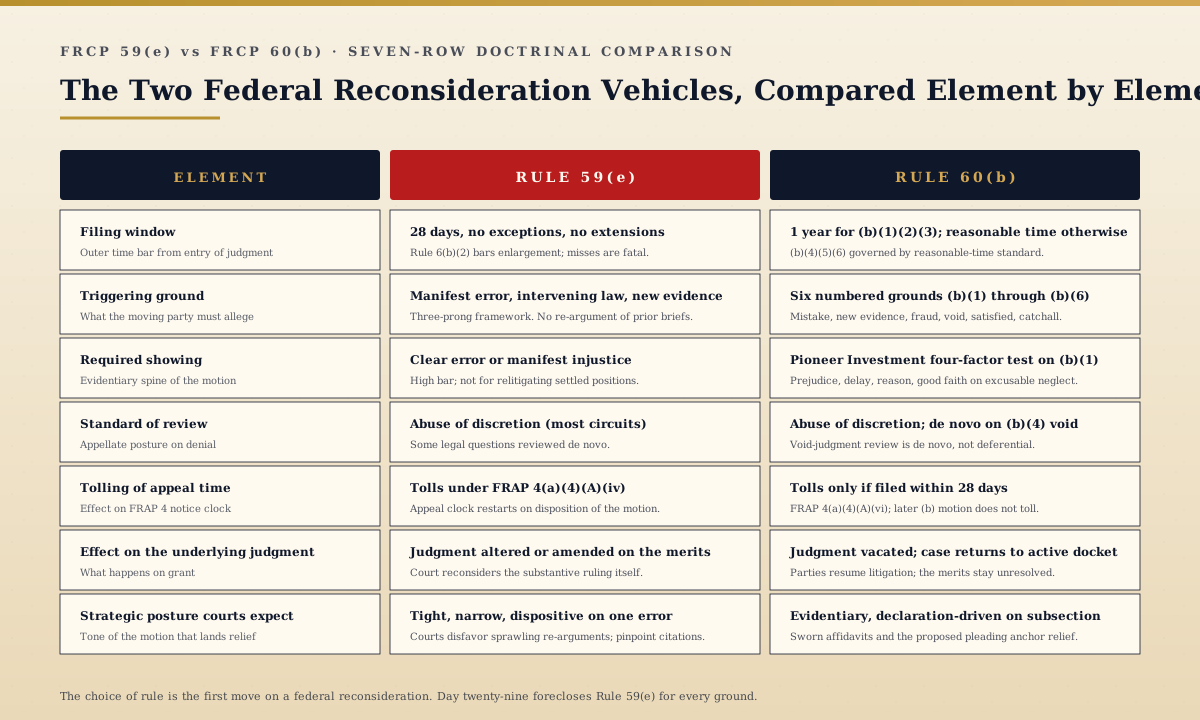
Rule 59(e) Is Not a Vehicle for Relitigating the Prior Brief
Federal courts apply Rule 59(e) narrowly. The motion is not an invitation to reargue positions the court already considered and rejected; it is a request to correct a discrete error. Manifest error of law or fact means the kind of mistake that a reasonable reading of the existing record reveals without additional development. Intervening change in controlling law means a new Supreme Court decision, a new controlling circuit decision, or a new statute that postdates the original order and changes the controlling rule on the same issue. Newly available material evidence means evidence that could not have been presented at the time of the original motion despite diligent effort by the moving party. Federal judges deny motions that repurpose the prior brief without satisfying one of these three grounds.
When Federal Litigators File the Motion to Reconsider Federal Court Ruling and What the Record Has to Show
Federal litigators reach for the reconsideration motion in a narrow set of postures where the underlying ruling has changed the case structure materially and the time to appeal has not yet started running or has run only partially. The most common postures are summary-judgment grants that the losing party believes overlooked a record citation, dismissal orders under Rule 12(b)(6) that the plaintiff believes misapplied the pleading standard, default judgments where the defendant's failure to answer was rooted in excusable neglect, and findings-of-fact rulings after bench trial where one factual finding is genuinely inconsistent with the documentary record.
On the plaintiff side, the reconsider motion is most common after dismissal under Rule 12(b)(6) or Rule 12(b)(1) where controlling circuit precedent shifts after the ruling. On the defendant side, the reconsider motion is most common after adverse summary judgment where a deposition transcript or a Bates-numbered document was not cited in the original opposition brief and now reveals a genuine dispute of material fact. The strategic question on the defendant side is whether to file the reconsider motion or proceed directly to appeal: the reconsider motion tolls the FRAP 4(a) appeal clock under FRAP 4(a)(4)(A)(iv), but only if filed inside the 28-day Rule 59(e) window. The companion procedural explainer on the drafting-to-hearing roadmap for filing a court motion covers the broader motion-filing mechanics that apply to every post-judgment vehicle including reconsideration.
Pro se movants face an unforgiving threshold on federal reconsider motions because the legal standard is dense and the local-rule overlay traps the unwary. Federal practitioners universally recommend retained counsel on Rule 59(e) or Rule 60(b) motions given the low success rate and the high evidentiary bar.
The meet and confer requirement applies in many federal districts before filing a reconsideration motion. Some chambers require the movant to certify that counsel conferred with opposing counsel about the perceived error before the motion is docketed; others impose the requirement by local rule (N.D. Cal. Local Rule 7-9 requires leave of court to file a motion for reconsideration in the first place). The plaintiff and the opposing party have parallel briefing obligations: the opposition brief, filed within the local-rule response window, and the reply brief filed within the local-rule reply window.
How to Prepare the Reconsider Federal Court Filing Section by Section
A filing-ready federal reconsideration motion compiles six structurally distinct sections into one document. Each section advances the argument toward the requested relief; skipping any section produces a motion that looks complete on the cover but fails on threshold review in the United States District Court chambers. The list below tracks the sequence Legal Tank delivers on a Rule 59(e) or Rule 60(b) engagement, with each section mapped to its evidentiary purpose at the hearing or on the papers.
- 01
Caption and Identification of the Ruling Under Review
The federal district court that entered the ruling, the civil action number, the parties as originally captioned, the date of the order under review, and the docket entry citing the order. A one-sentence description of the disposition (summary judgment for plaintiff, dismissal under Rule 12(b)(6), default judgment, judgment after bench trial) grounds the court in the procedural posture before the argument opens.
- 02
Statement of the Controlling Rule and the Ground
A clear statement identifying Rule 59(e) or Rule 60(b) as the controlling vehicle, the specific Rule 59(e) ground (manifest error, intervening law, new evidence) or the specific Rule 60(b) subsection ((b)(1) through (b)(6)), and the controlling text quoted in the moving papers. Federal courts disfavor motions that scatter across two rules without committing to one; pleading the rules in the alternative is acceptable practice only when the 28-day window is genuinely on the edge.
- 03
Sworn Declaration of the Moving Party
A separately captioned declaration under penalty of perjury establishing the factual record that supports the ground. On a Rule 59(e) newly-available-evidence motion, the declaration walks the court through the diligence narrative: when the evidence first became available, why it could not have been presented earlier, and how it materially changes the merits picture. On a Rule 60(b)(1) excusable-neglect motion, the declaration tracks the four Pioneer Investment factors.
- 04
Memorandum of Law With Pinpoint Citations
Five to ten pages of focused legal argument under the controlling circuit's reconsideration jurisprudence. The memorandum walks the court through the standard, applies the standard to the facts in the declaration, and ties the requested relief to the controlling rule. Federal judges read these motions for whether the movant respects the high bar; sprawling re-argument of the prior briefs is the most common reason for denial.
- 05
Local-Rule Compliance Check
Page limits (S.D.N.Y. caps at ten pages; N.D. Ill. caps at fifteen pages on most reconsideration motions), font and margin requirements, chambers-specific motion calendars, and any meet-and-confer obligations the local rule imposes. A reconsideration motion that violates the page limit is sometimes stricken at threshold review, costing the movant the substantive argument before the judge reads it.
- 06
Proposed Order Reflecting the Requested Relief
The proposed order is drafted so the federal district judge can sign without redrafting. On a Rule 59(e) motion that succeeds on manifest error, the order alters or amends the prior ruling line by line. On a Rule 60(b) motion that succeeds on void judgment or newly discovered evidence, the order vacates the prior judgment and resets the case on the active docket. Including the proposed order at filing measurably increases the odds of same-day disposition on a strong motion.
The Pioneer Investment Four-Factor Test on Rule 60(b)(1) Excusable Neglect
The Supreme Court's 1993 decision in Pioneer Investment Services v. Brunswick Associates sets the controlling four-factor framework for Rule 60(b)(1) excusable- neglect motions. The four factors are: the danger of prejudice to the opposing party, the length of the delay and its potential impact on judicial proceedings, the reason for the delay (including whether it was within the reasonable control of the moving party), and whether the moving party acted in good faith. The drafting tracks the four factors as four numbered showings in the moving papers. The supporting memorandum of law walks the court through each factor and the record evidence supporting it.
Rule 60(b)(2) Newly Discovered Evidence and the Diligence Showing
A Rule 60(b)(2) motion for newly discovered evidence requires four showings under prevailing federal jurisprudence: the evidence is new, the evidence is material, the evidence could not have been discovered earlier with due diligence, and the evidence is likely to produce a different result on retrial. The diligence showing is the most heavily contested element; opposing counsel typically argues the evidence was available through routine discovery and the moving party failed to pursue it. The proposed order on a Rule 60(b)(2) motion vacates the judgment and resets the case on the active docket with the newly discovered evidence available for the next dispositive round.
Reconsideration on Summary Judgment Rulings
Reconsideration motions following summary-judgment rulings are the highest-stakes federal posture for the reconsider vehicle. The companion explainer on the Rule 56 summary-judgment vehicle and its dispositive standard covers the underlying Rule 56 mechanism that produces the judgment now under reconsideration. Where the loss came on a summary-judgment record that the movant believes overlooked a specific deposition transcript citation or a Bates-numbered document, the Rule 59(e) motion has to identify the citation with pinpoint precision and explain why the original opposition brief failed to pull it forward. Federal judges generally extend less leniency on the reconsideration motion than they extended on the original summary-judgment opposition.
Outcomes Federal Courts Return and the Strategic Patterns That Follow
Federal reconsideration motions land in one of four outcome buckets, and the post-ruling posture depends on which bucket applies. A grant on a Rule 59(e) motion alters or amends the prior ruling on the merits; the case proceeds from the corrected ruling forward. A grant on a Rule 60(b) motion vacates the prior judgment and resets the case on the active docket; the parties resume discovery or trial preparation. Denial preserves the original ruling and starts the FRAP 4 appeal clock running from the date of the denial. A partial grant modifies one portion of the prior ruling and denies the balance; the partial-grant posture is the most common settlement trigger.
On the federal track, the most reliable strategic pattern is that reconsideration motions are most successful when the record citation is specific (one deposition transcript, one documentary exhibit, one controlling Supreme Court case decided after the original order) and least successful when the motion reads as a comprehensive re-argument of the prior briefs. Federal judges have limited time to revisit issues already decided; a motion that pinpoints a discrete error and shows the controlling rule under that error gets a substantive read. A motion that reargues every point of the original opposition gets a perfunctory denial. The companion service- firm page on drafting a motion to enforce a settlement agreement or court order covers the parallel enforcement vehicle that often follows a successful reconsider motion where the corrected ruling triggers a new compliance obligation on the opposing party.
On the Illinois state-court track, the 735 ILCS 5/2-1203 motion follows a similar outcome pattern but the procedural consequences differ. A grant under Illinois reconsideration practice vacates the judgment and resets the case for further proceedings before the same circuit judge. A denial preserves the judgment and starts the Illinois Supreme Court Rule 303 notice-of-appeal clock running from the date of the denial, not from the date of the original judgment. Illinois practitioners often file the reconsider motion specifically to preserve the appeal posture and toll the appeal clock while settlement discussions continue.
Settlement patterns following a partial grant of reconsider are particularly common in federal commercial litigation. A partial grant signals to both parties that the trial court sees genuine ambiguity in the original ruling; the partial grant becomes a settlement pressure point because neither party can be certain how the rest of the case will resolve. Where the underlying posture also implicates contempt sanctions for noncompliance with the original judgment, the companion service-firm page on attorney-prepared motion for contempt of court enforcing orders against a noncompliant party covers the enforcement-side vehicle that runs in parallel when reconsider does not resolve the dispute. The companion procedural roadmap on how to file a contempt of court motion when an order is violated covers the contempt-filing mechanics that often follow a reconsider denial when the original judgment remains in force.
For specialized federal-court postures (immigration removal proceedings, BIA appellate review, Article I tribunal decisions), the reconsideration vehicle takes different doctrinal shape. The companion service-firm page on immigration attorney drafting a motion to pretermit removal proceedings in immigration court covers one specialized federal-tribunal vehicle that runs in the parallel BIA/EOIR-style federal practice that this district-court reconsideration framework does not directly reach. The underlying procedural floor across all federal reconsideration practice runs through the Federal Rules of Civil Procedure and the form-of-motions framework codified at FRCP Rule 7.