Defined What Is Motion to Quash and the Grounds Courts Accept to Set Aside a Subpoena
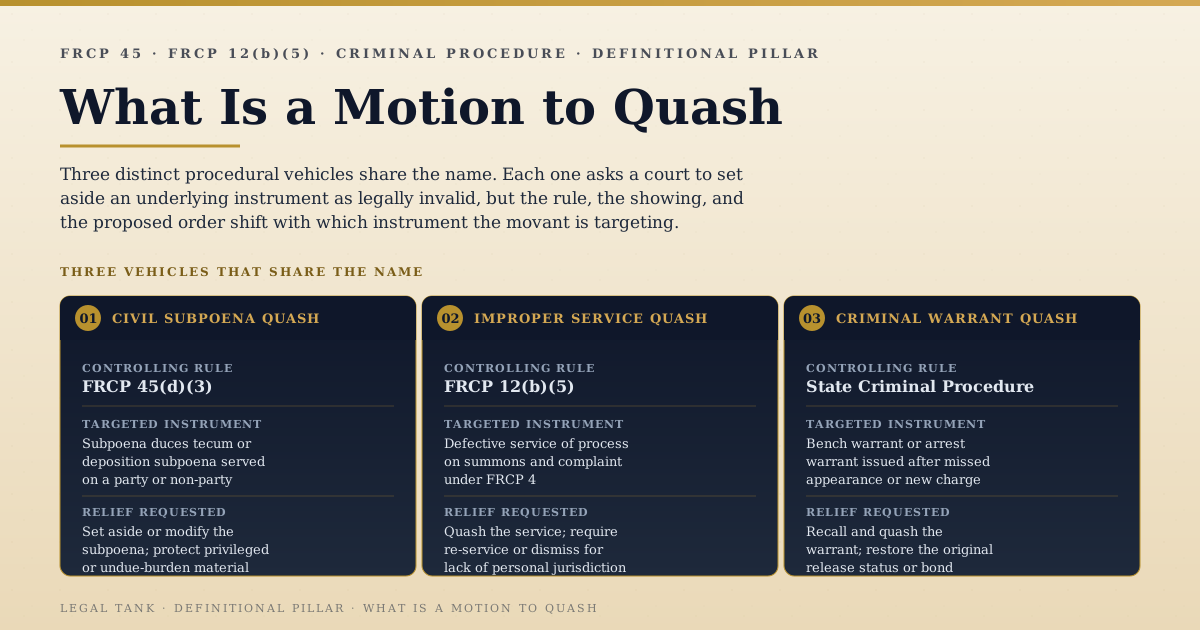
A motion to quash is the written request that asks a court to set aside an underlying instrument as legally invalid. The same name covers three distinct vehicles. The civil-procedure version targets a subpoena under FRCP 45(d)(3), the service-of-process version targets a defective summons under FRCP 12(b)(5), and the criminal version targets a bench warrant through state criminal procedure. Each vehicle has its own controlling rule, its own filing deadline, and its own proposed order. This guide walks through the doctrine, the five recognized grounds, the California and Texas state-court analogs, and the seven-step drafting build for the federal motion to quash subpoena that the rule controls.
Plain-English Definition: What Is a Motion to Quash in Court
In plain English, a motion to quash is a written filing that asks a court to set aside an underlying instrument as legally invalid. The motion to quash meaning in courtroom usage tracks the Latin root: to make void. When a federal litigant asks what does motion to quash mean, the answer turns on which instrument is being challenged. The same word covers three different procedural vehicles, each with its own rule, its own grounds, and its own proposed order. The first and most common is the motion to quash subpoena under FRCP 45(d)(3), where a party or non-party asks the issuing court to set aside or modify a document or deposition subpoena. The second is the motion to quash service of process under FRCP 12(b)(5), where a defendant asks the trial court to set aside a defective summons. The third is the motion to quash warrant, where a criminal defendant asks the issuing court to recall a bench warrant after a missed appearance, a contested charge, or a resolved underlying matter.
The Civil Subpoena Track Is the Most Common Use
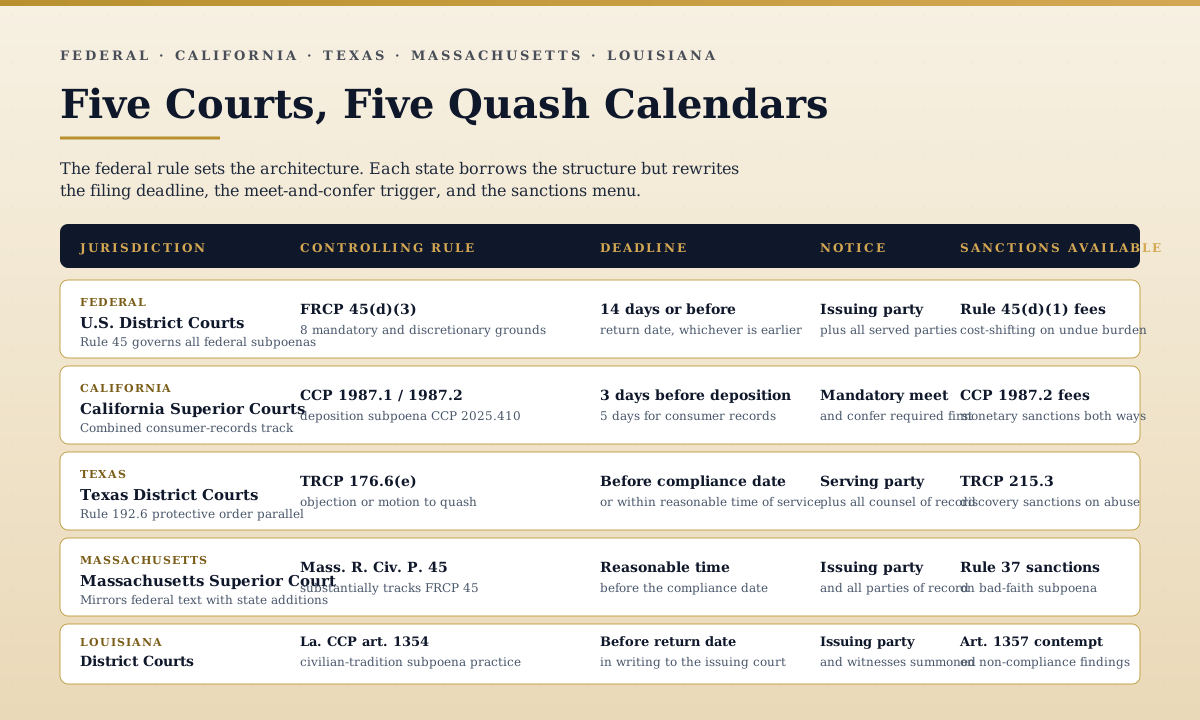
Within the family, the civil motion to quash subpoena is the most-filed and most-litigated vehicle. The trial court's authority to issue the order traces back to Federal Rule of Civil Procedure 45(d)(3) and its state-court analogs, including the California two-rule package on motion to quash in California under CCP 1987.1 and 1987.2 plus the deposition-subpoena rule at CCP 2025.410. Texas runs a parallel framework under Texas Rule of Civil Procedure 176.6(e), and Louisiana operates under Code of Civil Procedure article 1354. Each state borrows the federal architecture and rewrites the filing deadlines, the sanctions menu, and the meet-and-confer trigger.
Where the Motion Fits in the Pretrial Calendar
The motion to quash sits inside the broader pretrial-motion family alongside the motion to dismiss, the motion to compel, the motion for protective order, and the motion in limine. For a fuller framing of how written requests move a civil case through the trial court and how the pretrial motion family fits together, the companion explainer on how a written motion in court moves a civil case through the pretrial calendar toward judgment walks through the procedural sequence in detail. The quash motion is procedurally distinctive because it can be filed by a non-party (the subpoenaed witness or records custodian) as well as by a party, which is unusual within the pretrial-motion universe.
The Four Mandatory Grounds Courts Apply
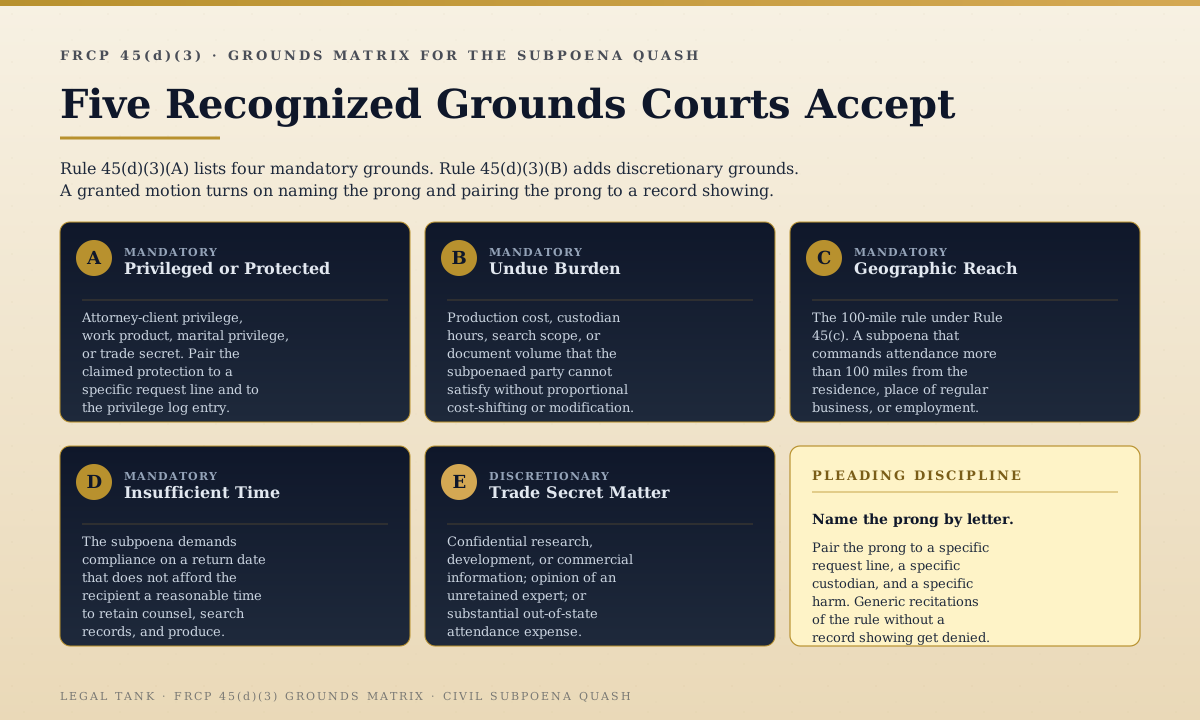
When a litigant asks what are the grounds for a motion to quash, the answer is set by Rule 45(d)(3)(A) for federal civil subpoenas. The rule lists four mandatory grounds the court must apply when invoked on a sufficient record: insufficient compliance time, geographic reach beyond 100 miles, privileged or protected matter, and undue burden. Rule 45(d)(3)(B) adds two discretionary grounds: trade-secret material and unretained-expert opinion or substantial out-of-state attendance expense. The card grid below walks through the four mandatory prongs; the discretionary trade secret prong appears in the jurisdictional matrix later on this page.
Privileged or Protected Matter
Attorney-client privilege, work-product doctrine, marital privilege, or trade-secret protection. The motion pairs each invoked privilege to the specific request line and the corresponding privilege-log entry. A generic privilege assertion without a specific record showing fails at the threshold.
Undue Burden Under Rule 45(d)(3)(A)(iv)
Production cost, custodian hours, search-scope breadth, or document volume that the subpoenaed party cannot satisfy without proportional cost-shifting or modification. The motion quantifies the burden in custodian declarations and proposes a narrower scope or a fee allocation.
Geographic Reach Beyond the 100-Mile Rule
Under FRCP 45(c), a subpoena that commands attendance more than 100 miles from the recipient's residence, regular place of business, or employment violates the geographic-reach rule. The motion shows the distance on the record and asks the court to quash or to require a closer compliance location.
Insufficient Time to Comply
The subpoena demands compliance on a return date that does not afford the recipient a reasonable time to retain counsel, conduct the records search, and produce the responsive material. A return date inside ten business days for a multi-thousand-record demand typically fails this prong.
How the Motion Quash Vehicle Differs From the Motion to Dismiss
The motion-quash family targets a discrete instrument and asks the court to set that instrument aside; the motion to dismiss targets the lawsuit itself and asks the court to terminate it. A motion to quash service under Rule 12(b)(5) typically clears the path for the plaintiff to re-serve and continue the case, while a motion to dismiss for failure to state a claim under Rule 12(b)(6) ends the action subject to amendment. The two motions are routinely filed together in the alternative when a defendant believes both the service and the underlying jurisdiction are defective. The seven-step drafting build later on this page sets out the caption, grounds, and relief sections courts expect in the motion.
California and Texas Court Rules: The Motion to Quash Subpoena California Track and the Texas Parallel
The federal rule sets the architectural template. Each state then rewrites the deadlines, the notice requirements, and the sanctions menu. The two largest civil dockets in the country (California and Texas) handle the quash motion in materially different ways, and a litigant moving cross-state needs to know which framework controls the issuing court.
The California Track Under CCP 1987.1 and 2025.410
California state court runs a combined consumer-records and deposition-subpoena track. The general state-court motion to quash california framework sits at Code of Civil Procedure 1987.1 (the order quashing the subpoena) paired with 1987.2 (sanctions for opposing a meritorious motion or filing a meritless motion). The deposition-subpoena variant runs at CCP 2025.410 and requires the motion to be filed at least three court days before the deposition. Consumer or employee record subpoenas under CCP 1985.3 carry a separate five-day notice-to-consumer trigger that runs before the production date. The California regime is more plaintiff-friendly on the sanctions side: a ca motion to quash that succeeds frequently produces a monetary award against the issuing party on the record. The companion service-firm page on drafting service for a motion for sanctions targeting discovery abuse and bad-faith conduct covers the upstream sanctions-motion package that often pairs with the quash filing in state-court discovery practice.
The Texas Track Under TRCP 176.6 and Rule 192.6
Texas runs the motion to quash texas framework through Texas Rule of Civil Procedure 176.6(e) (objections and motions to quash) coordinated with Rule 192.6 (protective orders). The motion must be filed within a reasonable time before the compliance date, the meet-and-confer requirement is built into the Discovery Control Plan, and the sanctions menu sits at Rule 215.3 for general discovery abuse. Texas trial courts often consolidate the motion to quash with a Rule 192.6 protective-order motion when the recipient seeks both to set aside the subpoena and to obtain forward-looking protection.
Massachusetts, Louisiana, and the Quash Subpoenas Practice Across States
Massachusetts Rule of Civil Procedure 45 substantially tracks the federal text, with state-specific additions on the sanctions menu and the local meet-and-confer trigger. A motion to quash subpoena massachusetts filing therefore runs on essentially the same architecture a federal litigant in the District of Massachusetts would use, with minor adjustments for the Superior Court rules and standing orders. Motion to quash louisiana practice runs through La. CCP art. 1354 and the civilian-tradition subpoena framework, with the state's distinctive civil-law procedural posture shaping the form of the request. The cross-state practice of filing motions to quash subpoenas shows how the federal rule has become the architectural template even where local statutes diverge on filing windows and sanctions.
The Warrant Quash Track in Las Vegas and Other Criminal Courts
The motion to quash bench warrant las vegas inquiry surfaces in the criminal-procedure track, separate from the civil-discovery rule. A Nevada bench warrant for missed court appearance is recalled through a motion to quash filed in the issuing justice or district court, supported by a written explanation for the missed appearance, voluntary surrender or voluntary appearance, and a request for restoration of the original release status. The motion to quash warrant arizona track runs through Arizona Rules of Criminal Procedure 4 and 7, with similar voluntary-appearance and bond-restoration mechanics. These criminal-procedure vehicles sit outside the FRCP and outside the Federal Rules of Civil Procedure architecture this page otherwise describes.
Why Movants File the Motion to Quash Subpoena and What the Order Protects
The purpose of the motion to quash is to prevent harm that the propounded instrument is on calendar to inflict before the recipient can litigate the underlying lawsuit. A subpoena commands compliance on a return date that runs whether or not the recipient agrees the demand is proper. Without the motion, a non-party witness with a five-figure custodian search obligation simply runs the search; a corporate party served with a deposition subpoena calling its officer fifteen-hundred miles from the principal place of business simply produces the officer; and a criminal defendant on an outstanding bench warrant simply gets arrested at a routine traffic stop. The motion is the only procedural device that interrupts the running calendar.
What Each Order Protects
A granted civil motion to quash subpoena order protects the recipient from compliance with the quashed instrument and may shift costs back to the issuing party under Rule 45(d)(1). A granted motion to quash service order protects the defendant from a default judgment based on an invalid summons and frequently triggers re-service within the ninety-day Rule 4(m) window. A granted criminal motion to quash warrant order recalls the bench warrant, restores the underlying release posture, and prevents the warrant-based arrest the defendant would otherwise face. The three orders look procedurally similar on paper, but the harm each prevents is different in kind. The civil subpoena order prevents production; the service order prevents default; the warrant order prevents arrest.
Strategic Purpose Beyond the Single Filing
Many quash subpoena motions function as a bargaining position, not as final relief. The filing itself often forces the issuing party to negotiate a narrower scope (shorter time period, fewer custodians, narrower request categories, agreed cost allocation) before the court rules. Counsel who treat the motion as a tactical posture rather than as an end-state often extract better terms than counsel who go to formal ruling. The same dynamic appears in the parallel drafting service for a motion for sanctions targeting discovery abuse and bad-faith conduct where the threat of a formal sanctions ruling produces negotiated cures that the merits ruling would not.
The Service of Process Variant Protects the Defendant's Forum
The quash service motion under Rule 12(b)(5) and Rule 4 protects the defendant's right to litigate in a proper forum after proper service. A defendant served at an old address, served by leaving the summons with a non-suitable-age individual, or served outside the territorial limits the rule allows can challenge the service without waiving the right to challenge personal jurisdiction or venue. The motion to quash service typically runs together with an alternative motion under Rule 12(b)(2) so the defendant preserves both arguments. The companion explainer on how a motion for default judgment frames the plaintiff's request after entry of default by the clerk sets out the downstream filing the defendant typically faces if the service quash fails and a default is entered.
The Warrant Quash Restores the Original Release Status
The criminal-court quash warrant order recalls the issued bench warrant and restores the defendant's pre-warrant release status (own recognizance, bond, or supervised release). The same mechanism is used to address a warrant issued on a misidentified person, a warrant issued after the underlying matter resolved, or a warrant the defendant never had notice of because mailed court notices went to a stale address. The to quash warrant framework is procedurally separate from the civil-discovery rule but shares the architectural pattern: a written request, a record showing, a proposed order, and a return appearance.
How to Build a Motion to Quash Subpoenas: A Seven-Step Drafting Build
The drafting build for a federal Rule 45 motion to quash subpoenas has seven steps. The order matters: each step depends on the documentary record assembled in the prior step. Skipping ahead (drafting argument before quantifying the burden, or quantifying burden before identifying the prong) produces motions that look complete on paper but fail at threshold review. The seven steps below track the federal practice in the United States District Court; the state-court variants reorder a few of the steps to match local rules.
Step 1: Read the Subpoena and Identify the Prong
Read every category in the subpoena, the return date, the attendance location, and the issuing court's caption. Identify which Rule 45(d)(3) prong the defect implicates: privileged matter under (A)(iii), undue burden under (A)(iv), geographic reach beyond 100 miles under (A)(ii), insufficient time under (A)(i), trade-secret material under (B)(i), or unretained-expert opinion under (B)(ii). The prong determines the record showing, the controlling case law, and the framing of the proposed order. More than one prong may apply to the same subpoena, and the motion may invoke them in the alternative.
Step 2: Quantify the Burden With a Custodian Declaration
Most quash motions live or die on the undue-burden showing. Build a custodian declaration that quantifies the production in concrete numbers: how many email accounts have to be searched, how many document custodians, how many gigabytes of data, how many vendor hours at what hourly rate, how many internal hours of legal review. A court will not credit a generic assertion that the production is burdensome; the court wants a specific cost figure tied to specific search parameters. The custodian declaration is the most-cited exhibit on Rule 45(d)(3)(A)(iv) motions.
Step 3: Draft the Memorandum of Law With Specific Citations
The memorandum of law walks the court through the prong, the controlling Supreme Court and circuit precedent, and the application to the facts in the custodian declaration. For an undue burden motion, anchor to the Rule 26(b)(1) proportionality framework and the local-circuit application cases. For a privilege motion, anchor to the controlling attorney-client and work-product doctrines under the controlling circuit's choice-of-law framework. For a geographic-reach motion, anchor directly to Rule 45(c) and the cases applying the 100-mile rule to corporate officer attendance.
Step 4: Prepare the Proposed Order in Concrete Terms
Attach a proposed order that names the specific relief the court should grant. Asking the court to "quash the subpoena" is weaker than asking the court to "quash request categories 4 through 12 in their entirety, modify request categories 13 through 18 to the period January 2023 through December 2024, and require the issuing party to bear vendor costs above twelve thousand dollars." Specific proposed orders give the court a sign-as-written option and substantially improve the grant rate.
Step 5: Comply With the Meet-and-Confer Requirement
Most federal districts and every major state-court system require a documented meet-and-confer effort before a discovery motion can be heard. The meet and confer requirement is satisfied by a written conferral letter that identifies the specific objections, a follow-up live conferral with opposing counsel, and a certification attached to the motion confirming the conferral took place. The conferral record is also the source of the bargaining position that often produces a negotiated narrowing of the subpoena before the court rules.
Step 6: Serve the Issuing Party and File the Certificate
Serve the complete motion package on the issuing party and all parties of record, attach a certificate of service signed under penalty of perjury, and file the motion with the court clerk through the issuing district's electronic filing system. The motion must be timely under Rule 45(d)(3), which courts generally measure as filed before the subpoena's compliance date; written objections to a document subpoena, by contrast, are due within fourteen days of service under Rule 45(d)(2)(B). The caption on the motion must match the issuing court exactly, naming the same case number, the same parties, and the same district as the underlying subpoena.
Step 7: Be Ready for the Hearing and the Post-Ruling Path
Many quash motions are decided on the papers, but the assigned magistrate judge in federal court or the discovery-motion calendar judge in state court may set a hearing. Bring the custodian declarant, the search-cost numbers, and the negotiation history. If the court denies the motion, evaluate whether the issuing party has overplayed the request enough to support a follow-on protective order motion or a sanctions motion; the procedural toolkit for that escalation is set out in the service-firm page on drafting service for a motion for sanctions targeting discovery abuse and bad-faith conduct. If the court grants the motion in part and modifies the subpoena, comply with the modified scope on the new return date. For the upstream procedural posture and the underlying complaint that supports the discovery exchange, the explainer on drafting service for a motion to amend pleadings after discovery reveals new claims covers the related amendment motion that often follows successful discovery defense. The doctrinal text of Rule 45 and its accompanying advisory committee notes are hosted at the Cornell Legal Information Institute reference for FRCP Rule 45, and the broader civil discovery architecture is set out across the full Federal Rules of Civil Procedure.
Coordinating With Other Pretrial Motions
A subpoena dispute frequently arrives alongside other pretrial filings. A defendant resisting a sweeping document subpoena from an underlying breach-of-contract action may also be considering a dispositive filing. The explainer on building a motion for summary judgement template that tracks Rule 56 requirements walks through the Rule 56 instrument that frequently follows. For the parallel cross-motion practice when both sides have moved for judgment, the service-firm page on professionally drafted cross-motion for summary judgment briefs and Rule 56 opposition filings sets out the response architecture. And for the upstream default-judgment exposure that motivates many service quash motions, the anatomy walkthrough at anatomy of a motion for default judgment template and how each section functions shows the filing the plaintiff is positioned to make if the service stands. For litigants researching what a legal motion is and the umbrella that connects pretrial vehicles like quash, sanctions, and dismissal, the broader motion-family framing supplies the connective tissue across the quash, sanctions, summary judgment, and default-judgment tracks. The reconsideration follow-on for quash denials is covered in inside a motion for reconsideration template and the sections courts expect to see.