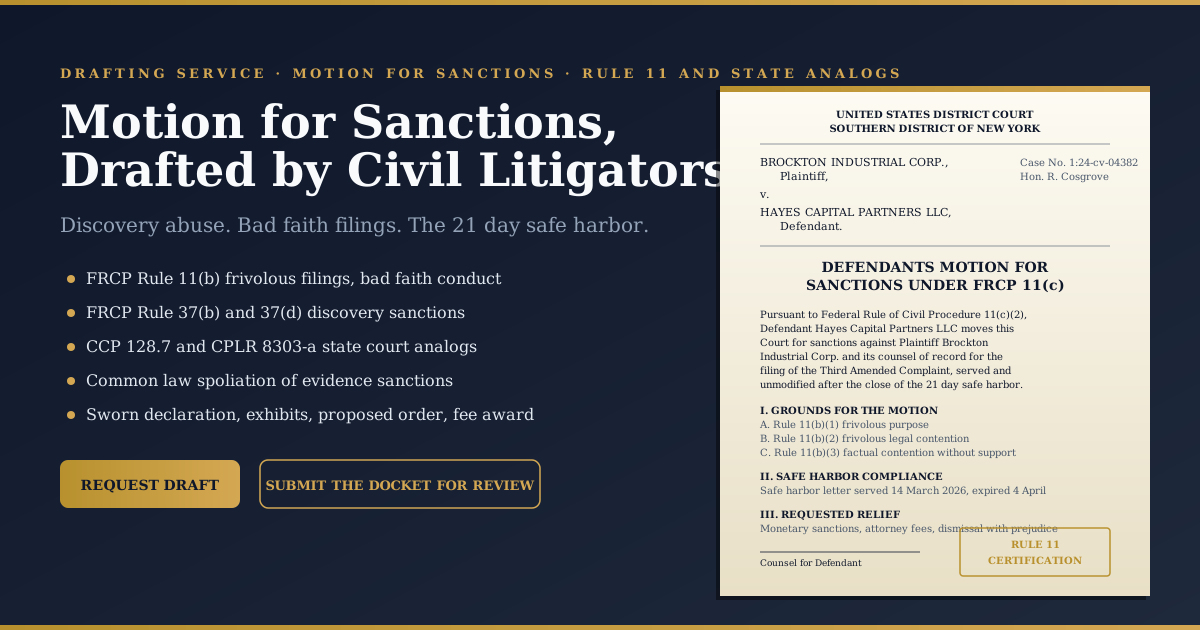
Four Patterns That Bring Litigants to a Sanctions Motion
Four buyer scenarios account for most of the motions our drafting attorneys prepare. The common thread is a pattern the court has already seen on the docket: a baseless filing, a violated discovery order, a destroyed exhibit, or a serial bad faith pattern that has crossed from advocacy into abuse of the proceedings.
Opposing Counsel Filed a Pleading That Has No Legal Basis
Opposing counsel filed a complaint, an amended complaint, a counterclaim, or a third party complaint that contradicts the controlling appellate law in the circuit, asserts claims barred by the statute of limitations on the face of the docket, or repeats allegations a prior court already rejected. FRCP Rule 11(b)(2) and CCP 128.7 cover frivolous legal contentions; the drafted motion brings the controlling authority to the front of the brief.
Discovery Has Been Withheld After a Court Order
The opposing party was ordered to produce documents, sit for a deposition, or answer interrogatories, and they did not. The meet and confer record is on file. FRCP Rule 37(b) authorizes graduated sanctions from issue preclusion through terminating dismissal. The drafted Rule 37 motion documents the order history, the deficiency, and the prejudice to the moving party.
Evidence Was Destroyed After a Litigation Hold Attached
Emails were deleted, paper files were shredded, surveillance footage was overwritten, or text messages were wiped from a phone after the duty to preserve attached. FRCP Rule 37(e) and the common law spoliation doctrine support adverse inference instructions, monetary sanctions, and in extreme cases terminating sanctions. The drafted motion reconstructs what was lost and what was preserved.
Bad Faith Conduct Has Spilled Beyond the Pleadings
Opposing counsel has used the litigation to harass, has filed serial motions to drive up cost, has misrepresented the record to the court, or has otherwise corrupted the proceedings. The drafted motion frames the inherent power of the court under Chambers v. NASCO, 501 U.S. 32 (1991), paired with the rule based ground that most closely fits the conduct.
The drafted motion frames the conduct against the rule that fits it best, not against every possible subsection. For a wider procedural overview before commissioning, see our explainer on what a legal motion is and how sanctions vehicles fit the broader motion-practice toolkit, which positions sanctions motions inside the larger civil-procedure sequence.
Motions for Sanctions We Draft Against Opposing Counsel and Parties
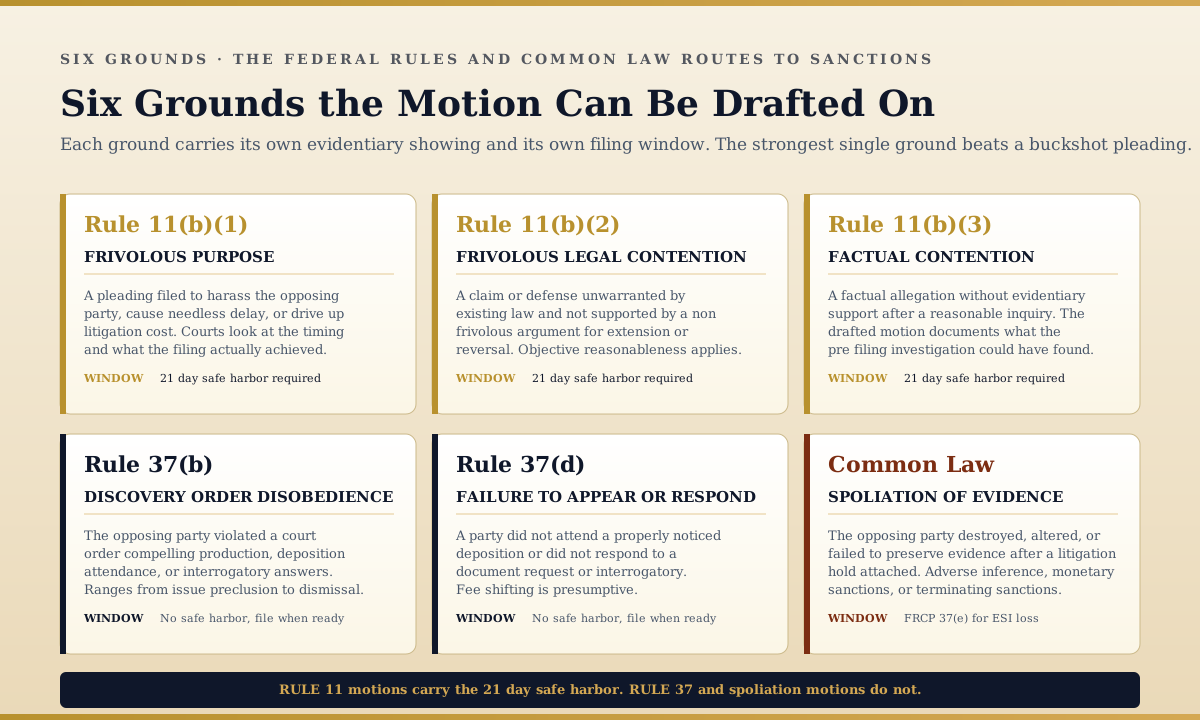
Federal practice gives six routes to a sanctions order. A motion for sanctions against opposing counsel can travel on any of them; the strongest single ground is picked from the record before drafting, with alternative grounds pleaded only when the record supports them. The 21 day safe harbor under Rule 11(c)(2) controls only the frivolous filing track; Rule 37 discovery sanctions and spoliation motions file without the safe harbor wait.
Frivolous Purpose
A pleading filed to harass, cause needless delay, or drive up litigation cost. Courts look at timing and what the filing actually achieved on the docket. Frequently paired with the bad faith fee shifting request when the record shows a strategic harassment pattern.
21 day safe harbor required
Frivolous Legal Contention
A claim or defense unwarranted by existing law and not supported by a non frivolous argument for extension, modification, or reversal. Objective reasonableness applies; the subjective good faith of counsel does not save a contention foreclosed by controlling appellate authority.
21 day safe harbor required
Factual Contention Without Support
A factual allegation without evidentiary support after a reasonable pre filing inquiry. The drafted motion documents what the inquiry could have found in the public record, in opposing counsels own client files, or in document productions already on the docket.
21 day safe harbor required
Discovery Order Disobedience
The opposing party violated a court order compelling production, deposition attendance, or interrogatory answers. Sanctions range from designated facts deemed established, through preclusion of claims and defenses, to dismissal of the action or entry of default judgment in the most extreme posture.
No safe harbor, file when ready
Failure to Appear or Respond
A party did not attend a properly noticed deposition, did not serve responses to requests for production, or did not answer interrogatories. Fee shifting is presumptive under the rule. The drafted motion brings the notice of deposition, the proof of service, and the meet and confer correspondence to the front of the record.
No safe harbor, file when ready
Destruction or Loss of Evidence
The opposing party destroyed, altered, or failed to preserve evidence after a litigation hold attached. The drafted motion frames the duty to preserve, the prejudice from the loss, and the calibrated remedy ranging from an adverse inference instruction through terminating sanctions for intentional destruction.
FRCP 37(e) for electronically stored information
When the conduct sweeps beyond a single subsection of the rule, the drafted motion brings in the inherent power of the court under Chambers v. NASCO, 501 U.S. 32 (1991), as a supplementary basis. We see this pattern most often in serial bad faith motions practice, where no single Rule 11 subsection captures the cumulative misconduct but the pattern itself is sanctionable on inherent power grounds.
Inside the Sample Motion for Sanctions Package We Deliver
The deliverable is a complete, sign ready filing package. A drafted motion for sanctions sample includes every component below, formatted to the local rule of the court that will hear the motion and delivered in PDF and editable Word so the engaging firm can sign and file without rework. For a sibling explainer of what an attorney drafted package looks like on the plaintiff side, see our companion build for building a motion for summary judgement template that tracks Rule 56 requirements.
Notice of Motion and the Motion Itself
Caption, parties, hearing date placeholder, and the operative request for relief. Formatted to the local rule of the court that will hear the motion. The Rule 11 certification appears on the signature page where the local rule requires.
Memorandum of Points and Authorities
Brief organized by the operative subsection, with controlling case law for the circuit or appellate department your matter sits in. Inherent power authority under Chambers is folded in where the conduct sweeps beyond a single subsection of the rule.
Sworn Declaration With Exhibits
Movant declaration narrating the conduct, the safe harbor service for Rule 11 motions, the meet and confer history for Rule 37 motions, and the chronology of the offending pleading or discovery violation. Exhibits attached are tabbed and indexed.
Safe Harbor Service Letter for Rule 11 Practice
Cover letter to opposing counsel enclosing the unfiled motion, with a Rule 11(c)(2) recital starting the twenty one day clock. The letter doubles as the proof of service exhibit when the motion is filed on day twenty two.
Proposed Order Granting Relief
A separate signature ready order specifying the calibrated relief. For Rule 11 the order names the monetary or fee award and the deterrent recital. For Rule 37 the order identifies the issue or evidentiary preclusion, the fee shifting, or the terminating relief.
Fee Application Where the Rule Allows One
Itemized declaration of attorney fees and costs caused by the sanctioned conduct, paired with billing records and a reasonable hourly rate showing. The fee application is folded into the motion package, not chased after the ruling.
The package is structured so the engaging firm can sign, serve, and file on a single read through. Exhibits are tabbed and indexed. The proposed order specifies the calibrated relief; the fee application is folded into the package rather than chased after the ruling. Legal Tank delivers the documents; your retained trial counsel signs, serves, and argues at the hearing.
The 21 Day Safe Harbor: Why Day Twenty Two Matters
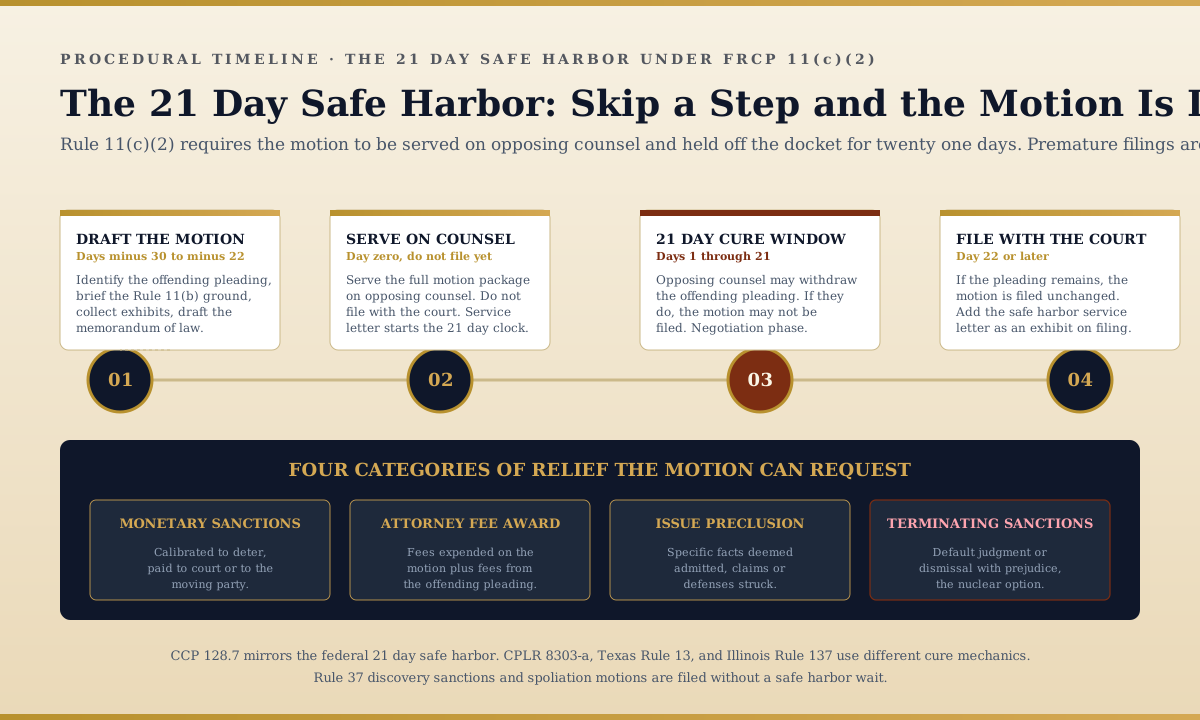
FRCP Rule 11(c)(2) requires the moving party to serve the full motion on opposing counsel and wait twenty one days before filing it with the court. During that window the offending pleading may be withdrawn or corrected. If it is withdrawn, the motion cannot be filed; if it survives the cure window unchanged, the motion is filed on day twenty two with the safe harbor service proof attached as an exhibit. California CCP 128.7 follows the same twenty one day track; New York, Texas, and Illinois state court analogs use different cure mechanics.
Rule 11 and CCP 128.7 Track
Service first, file at day twenty two. The drafted package includes the safe harbor letter as a standalone document. The filed motion attaches the certified service date and the unchanged offending pleading as exhibits. Filing on day twenty rather than day twenty two is the single most common procedural defect, and courts routinely strike the motion on that record alone.
Rule 37 and Spoliation Track
No safe harbor wait. The drafted Rule 37 motion is filed once the meet and confer record is complete and the violated order is on file. Spoliation motions under Rule 37(e) and the common law follow the same no-safe-harbor track. State court analogs in New York, Texas, and Illinois apply only a notice and hearing requirement before sanctions can issue.
State-Court Sanctions Rules: Five Frameworks Buyers Commission Most
Federal court runs on FRCP 11 and FRCP 37. The four largest state systems each have their own sanctions rule with its own cure mechanics. The drafted motion is calibrated to the court that will hear it, with the safe harbor letter where the rule requires one and the notice and hearing schedule where it does not.
Federal District Court Practice
Standard
FRCP 11 for frivolous filings on objective reasonableness, FRCP 37 for discovery misconduct on the order violation record
Filing Window
21 day safe harbor for Rule 11; no safe harbor for Rule 37 or spoliation. File before the case closes or the right is forfeit.
Practice Note
Inherent power under Chambers v. NASCO supplements the rule based ground where conduct exceeds the four corners of a single subsection.
Superior Court Frivolous Filings Practice
Standard
Mirrors FRCP 11 with the same three certification grounds: frivolous purpose, frivolous legal contention, factually unsupported allegation
Filing Window
21 day safe harbor parallel to the federal rule. CCP 128.5 governs bad faith actions or tactics on a separate evidentiary standard.
Practice Note
California courts read 128.7 in light of federal Rule 11 case law. Our drafted motion cites both lines where it strengthens the showing.
Supreme and Civil Court Frivolous Conduct Practice
Standard
Frivolous conduct sanctions under 22 NYCRR 130-1.1 plus statutory frivolous actions under CPLR 8303-a in personal injury and property damage cases
Filing Window
No safe harbor in New York. The motion is filed once the conduct is documented; the court holds a hearing on notice.
Practice Note
Sanctions ceiling is set at 10,000 dollars per occurrence under 130-1.1. The drafted motion documents the conduct against the four enumerated grounds in the rule.
Frivolous Pleadings and Groundless Filings Practice
Standard
TRCP 13 requires a pleading to be brought in good faith and not groundless; CPRC chapter 10 mirrors the federal Rule 11 certification framework
Filing Window
No safe harbor at the rule level. Texas courts require a notice and hearing before sanctioning; the drafted motion sets the hearing schedule on the face of the notice.
Practice Note
Texas appellate courts demand particularity in the order: good cause must be stated, and a bare conclusory ruling is reversed.
Frivolous Pleadings Practice in the Circuit Court
Standard
Mirrors federal Rule 11 certification and authorizes the court to impose appropriate sanctions, including a fee award, against the filing party or counsel
Filing Window
No safe harbor. The motion is filed within thirty days of the entry of final judgment or it is forfeit on the substantive case.
Practice Note
Illinois courts apply Rule 137 narrowly and require the moving party to specify the offending pleading, the certification ground, and the calibrated relief.
California buyers most often need CCP 128.7 on a Rule 11 parallel track. New York buyers run on 22 NYCRR 130-1.1 with a 10,000 dollar ceiling per occurrence and CPLR 8303-a as the statutory companion in personal injury and property matters. Texas buyers file under TRCP 13 and CPRC chapter 10, with appellate courts requiring particularity in the sanctioning order. Illinois buyers file under Supreme Court Rule 137 within thirty days of final judgment or the right is forfeit.
A Motion for Sanctions Example From Each of the Four Grounds
The matters below are anonymized engagement summaries. Each motion for sanctions example tracks one of the four grounds buyers commission most often: Rule 11 frivolous filings, Rule 37 discovery order disobedience, FRCP 37(e) spoliation, and inherent power sanctions against counsel for serial bad faith conduct.
Rule 11 Motion Filed After the 21 Day Safe Harbor Expired
Federal commercial defendant in the S.D.N.Y. served with a third amended complaint repeating claims a prior magistrate had already dismissed with prejudice. The safe harbor letter went out on day one and opposing counsel did not withdraw.
FRCP Rule 11(b)(2) frivolous legal contention paired with Rule 11(b)(1) frivolous purpose for the strategic re filing pattern.
Motion granted on the papers, monetary sanctions of forty five thousand dollars imposed, fees and costs of the offending pleading shifted to plaintiff counsel personally.
Rule 37 Discovery Sanctions for Withheld Custodian Production
D.N.J. trade secret case where defendant withheld the production of two named custodians after a court order to produce; the meet and confer record spanned eleven months.
FRCP Rule 37(b)(2)(A) violation of a court order paired with Rule 37(e) for the loss of one custodians mobile device data.
Issue preclusion granted on the trade secret misappropriation element, monetary sanctions on the fee record imposed, and an adverse inference instruction set for trial.
Spoliation Motion for Surveillance Footage Overwritten Mid Hold
Slip and fall premises liability case in the C.D. Cal. where store level surveillance footage was overwritten on a thirty day rolling cycle three weeks after the litigation hold letter was served by plaintiffs counsel.
FRCP Rule 37(e)(1) and Rule 37(e)(2) for the intentional failure to preserve the only contemporaneous record of the incident.
Adverse inference instruction granted, terminating sanctions denied as disproportionate, fee shifting imposed on the corporate defendant.
Inherent Power Sanctions Against Counsel for Serial Bad Faith Motions
Northern District of Texas commercial litigation where opposing counsel filed eleven discovery motions in eighteen weeks, each denied, each repeating the same denied arguments. The drafted motion combined a Rule 11 ground with the Chambers inherent power authority.
Inherent power under Chambers v. NASCO, 501 U.S. 32 (1991), paired with FRCP Rule 11(b)(1) frivolous purpose for the serial filing pattern.
Lead opposing counsel sanctioned personally, attorney fees of one hundred twelve thousand dollars shifted on the fee record, the offending firm withdrew within two weeks of the order.
Adverse parties commissioning the plaintiff side counterpart often pair sanctions practice with our service for attorney drafted cross-motion for summary judgment briefs and Rule 56 opposition filings, and with our explainer of the related procedural posture in what a motion for default judgment is and when plaintiffs file one in civil litigation.
Inside Our Drafting Pipeline From Intake Through Sign Ready Package
Five steps separate intake from the sign ready motion package. The drafting attorney maps the controlling rule and the filing window first, drafts the full package next, and delivers it with a one page filing checklist matching the local rule. We do not appear in court.
Intake: You Submit the Docket and the Offending Conduct
Upload the offending pleading or discovery deficiency, the operative court orders, the meet and confer correspondence, and the relevant procedural history through the secure intake. The drafting attorney reads the full record before any prose is committed.
Attorney Maps the Ground and the Filing Window
A civil litigation attorney picks the strongest single ground and pleads alternatives only when the record supports them. The attorney confirms in writing whether the safe harbor under Rule 11(c)(2) or CCP 128.7 applies, and you approve the framing before drafting begins.
Draft the Full Sanctions Package
The drafting attorney prepares the motion, the memorandum, the sworn declaration with the safe harbor or meet and confer chronology, the proposed order, and the fee application where the rule allows one. Exhibits are tabbed and indexed for filing.
Your Review and One Free Revision Round
You read the draft and send written comments. The drafting attorney incorporates your edits in a single revision pass at no additional cost to your engagement. Additional revisions are scoped before further work begins.
Sign Ready Package Delivered for the Engaging Firm
You receive the final PDF and editable Word package, plus a one page filing checklist matching the controlling rule. Your retained trial counsel serves the safe harbor letter, files the motion on day twenty two, and argues at the noticed hearing. Legal Tank does not appear in court and does not sign the filed motion.
The pipeline is the same whether the controlling rule is FRCP 11, FRCP 37, CCP 128.7, or Illinois Rule 137. The drafting attorney calibrates the deliverable to the rule and the court. For matters where the next procedural move is a curative amendment instead of a sanctions filing, see our companion service for a drafting service for a motion to amend pleadings after discovery reveals new claims.
Civil Litigation Attorneys Who Draft Sanctions Motions
The four drafting attorneys below carry active federal and state sanctions practices across the largest civil litigation venues. Each engagement is matched to the attorney whose court, rule track, and motion record fits the matter.
Marcus Holloway, Esq.
Senior Litigation Attorney
FRCP 11 Bad Faith Sanctions and FRCP 37 Discovery Sanctions in Federal Commercial Litigation
Senior civil litigation attorney with twelve years in S.D.N.Y. and D.N.J. Drafts FRCP 11 motions on the safe harbor track and FRCP 37 motions on the order violation record for federal commercial, trade secret, and securities matters, with particular concentration on issue preclusion remedies and adverse inference instructions for spoliation of electronically stored information.
J.D., Fordham University School of Law
12 years
2,100+
Daniel Whitaker, Esq.
Federal Commercial and Privilege Counsel
FRCP 26(b)(5) Privilege Log Sanctions and Production Deficiency Motions
Drafts production deficiency motions and privilege log sanctions in the S.D. Tex. and the District of Colorado, with concentration on FRCP 34(b) responsive production attacks and FRCP 26(b)(5)(A) inadequate privilege log challenges. Sanctions practice rides on top of an active privilege and production motion docket.
J.D., University of Texas School of Law
10 years
780+
Nathan Brookfield, Esq.
Federal Deposition and Consumer Litigation Counsel
FRCP 30(b)(6) Deposition Compulsion and Rule 37(d) Failure to Appear Sanctions
Drafts Rule 37(d) sanctions motions in the District of Massachusetts and the District of Rhode Island for consumer class action and commercial discovery disputes. Particular concentration on designee deficiency motions under FRCP 30(b)(6) and on the documented meet and confer record that controls whether a Rule 37(d) motion is granted on the first noticed hearing.
Harvard Law School
Eleven
640+
Alexandra Chen-Park, Esq.
State Court Motion Practice Counsel
CCP 128.7 California, CPLR 8303-a and 22 NYCRR 130-1.1 New York, Illinois Rule 137
Drafts state court sanctions motions in California, New York, and Illinois superior and supreme court practice, including CCP 128.7 safe harbor motions for frivolous filings, 22 NYCRR 130-1.1 sanctions for frivolous conduct, and Illinois Supreme Court Rule 137 motions for unsupported pleadings. Practices the state court analogs alongside federal Rule 11 in dual track commercial matters.
Boalt Hall, UC Berkeley
Fifteen
950+
What Defendants, Plaintiffs, and Their Counsel Say
“Plaintiff counsel was filing the same denied claims for the third time. The drafting attorney mapped the Rule 11 ground, served the safe harbor letter on day one, and held the motion off the docket. Twenty one days later we filed and the magistrate sanctioned opposing counsel personally on the papers.”
Camille D.
New York · Verified client
FRCP Rule 11(b)(2) Frivolous Legal Contention
“Eleven months of meet and confer correspondence and the other side still would not produce two named custodians after the order. The Rule 37 motion was drafted with every email tabbed as an exhibit, and the magistrate granted issue preclusion on the misappropriation element at the hearing.”
Theodore A.
Verified client
FRCP 37(b) Order Violation Sanctions
“Surveillance footage was overwritten three weeks after our hold letter. The drafted spoliation motion reconstructed the duty to preserve from the corporate retention policy, the hold letter chain, and the deposition admissions of the loss prevention manager. Adverse inference granted, fee shifting imposed.”
Marisela V.
Verified client
FRCP 37(e) Spoliation of Surveillance Evidence
Frequently Asked Questions
The eight questions buyers ask most before commissioning a sanctions motion, drawn from the live People Also Ask panels for motion for sanctions, motion for sanctions against opposing counsel, and motion for sanctions example queries.
What does motion for sanctions mean?
How to draft a motion for sanctions?
What does a motion for sanctions mean?
What is a 128.7 motion for sanctions?
What are the 4 types of sanctions?
What do sanctions mean in court terms?
What does it mean if someone is motion for sanction?
What does it mean when an attorney asks for sanctions?
Related Civil Motion Drafting Services
Sanctions motions rarely travel alone. Litigants commissioning a sanctions filing also commission a curative amendment vehicle, a contempt motion for enforcement, a reconsideration template, and the early disposition motion that ends the case on the pleadings.
Motion for Contempt of Court Form
Civil contempt motion paired alongside Rule 37 sanctions when the violated order needs an enforcement vehicle in addition to the calibrated sanctions request.
Motion to Amend Pleadings Attorney
Filed when the sanctions exposure on the original pleading is curable through amendment, often as the safe harbor response on a Rule 11 service letter.
Motion to Reconsider (Federal Court)
Drafted to challenge a denied sanctions motion on newly discovered evidence or clear error of law, or to seek reconsideration of an unfavorable sanctions order under Rule 59(e) or Rule 60(b).
Motion for Judgement on Pleadings Attorney
The early disposition vehicle filed under FRCP 12(c) when the sanctions record also supports a substantive ruling that ends the case on the pleadings.
For the plaintiff side counterpart on the default judgment track, see our service for the anatomy of a motion for default judgment template and how each section functions. For the umbrella explainer covering the procedural posture of every motion family, return to the legal motions guide.
Commission a Motion for Sanctions
A civil litigation attorney drafts the motion, the memorandum, the sworn declaration with the safe harbor or meet and confer chronology, the proposed order, and the fee application where the rule allows one. We draft the filing package; your retained trial counsel serves, files, and argues at the noticed hearing.