Motion for New Trial in Texas Deadlines, Grounds, and Rule 329b Procedure
A motion for new trial in texas is the post-judgment filing that asks the trial court to set aside the verdict and order a fresh trial of the case. The vehicle runs on Rule 329b of the Texas Rules of Civil Procedure, which sets three clocks moving at the same time. The initial thirty-day filing window opens the day the judgment is signed. The seventy-five day auto-overrule cuts in if the trial court has not ruled. The one-hundred-fifth day ends the trial court's plenary power and pushes the case to the court of appeals. This page lays out the Rule 329b framework, compares the Texas vehicle to the California motion for a new trial california branch under CCP 657, and to the federal Rule 59 vehicle, and walks through the drafting build a practitioner runs inside the thirty-day window.
Texas Court Rules on Motion for a New Trial Texas and the Rule 329b Clock
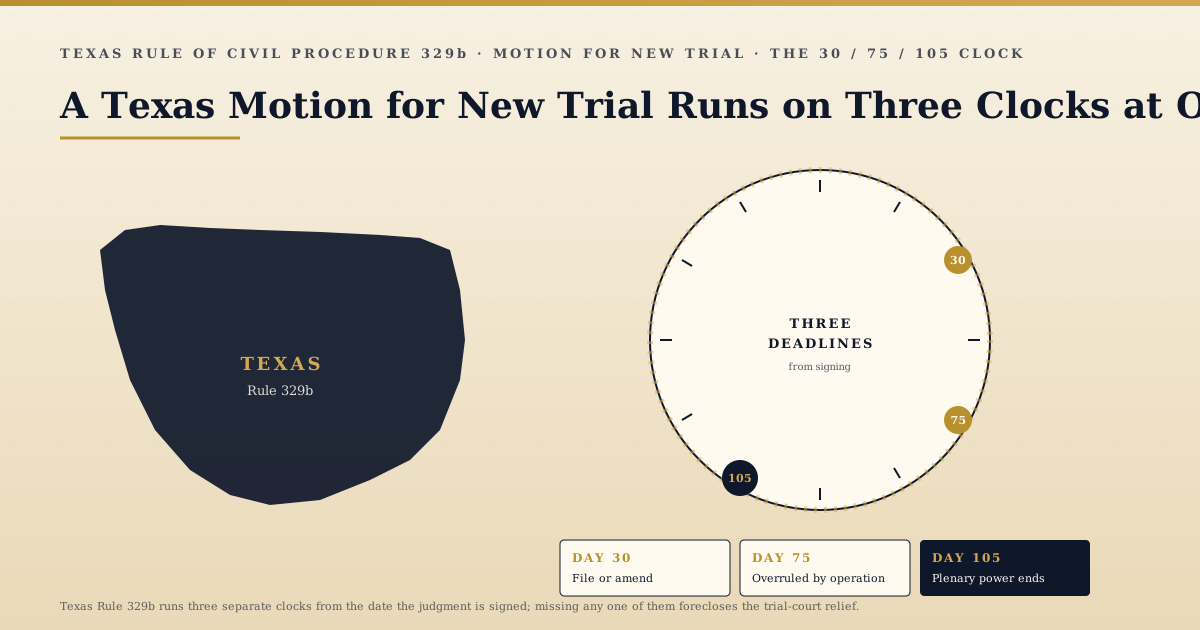
The controlling Texas authority is Rule 329b of the Texas Rules of Civil Procedure. The rule is short on its face but procedurally dense: it runs three clocks at once, all from the date the trial-court judgment is signed. The Day 30 deadline closes the initial filing and amendment window. The Day 75 deadline cuts in as an auto-overrule if the trial judge has not signed an order. The Day 105 deadline ends the trial court's plenary power and divests jurisdiction to the court of appeals. The Rule 329b clocks do not pause for attorney illness, weather closure, or late-arriving trial transcripts. The deadlines are jurisdictional and read strictly.
- Trigger event
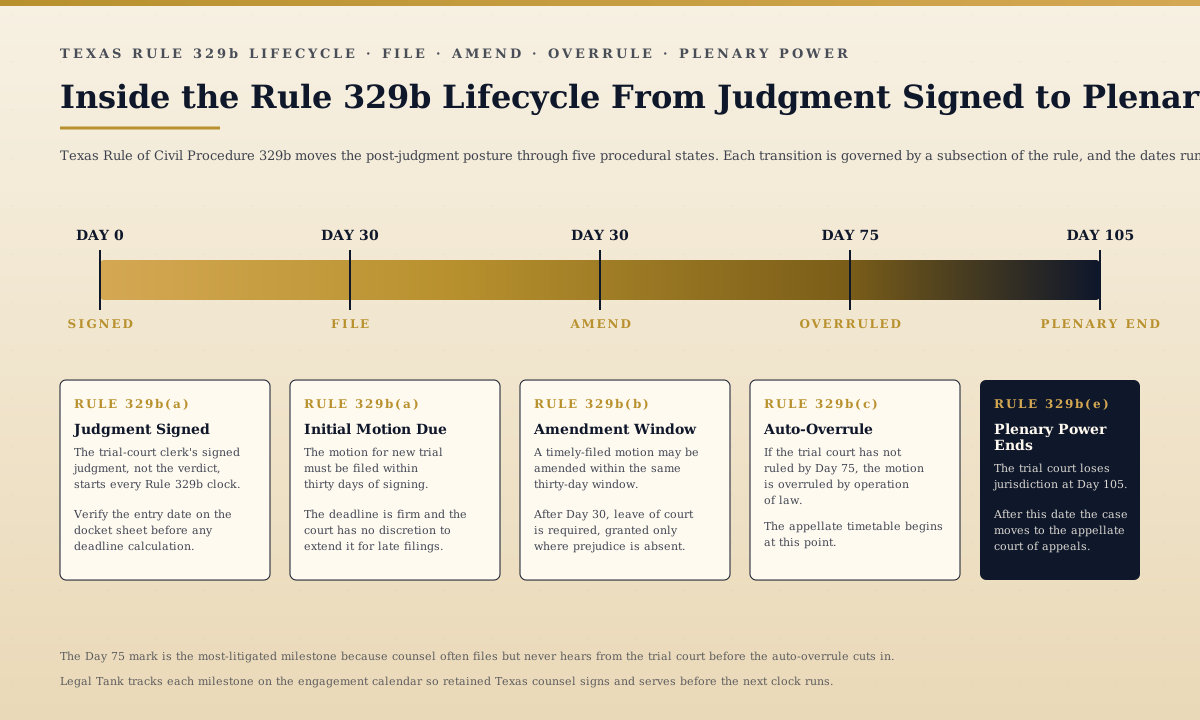
Day 0: Judgment Signed (Rule 329b(a))
The signing date on the docket starts every Rule 329b clock. Verdicts, oral announcements, and notice-of-judgment letters do not start the clock; the signed written judgment does.
- Hard deadline
Day 30: Initial Filing Window Closes (Rule 329b(a))
The motion must be filed within thirty days of signing. The same thirty-day window allows amendment of the originally filed motion. After Day 30, amendment requires leave of court.
- Operation of law
Day 75: Auto-Overrule (Rule 329b(c))
If the trial court has not ruled by Day 75, the motion is overruled by operation of law. The appellate timetable begins running on this date, even if no order has issued.
- Jurisdictional cliff
Day 105: Plenary Power Ends (Rule 329b(e))
The trial court retains plenary power for thirty days after the auto-overrule. After Day 105, the trial court is divested of jurisdiction and the case is in the hands of the court of appeals.
The procedural shape of the texas motion for new trial reflects a Texas-specific choice to give the trial court a structured window to reconsider, rather than the open-ended federal model under Rule 59. The auto-overrule under Rule 329b(c) is the single most-litigated feature of the regime because counsel often files a timely motion, requests a hearing, and then watches the seventy-five day mark pass without trial-court action. At that point the motion is overruled by operation of law, the appellate timetable begins running, and the only path forward is the court of appeals. The companion explainer on what a motion for reconsideration is and how the trial court applies the Rule 59(e) standard covers the federal Rule 59(e) doctrine that informs Texas practice in removed cases and diversity actions sitting in federal district court.
What a Motion for a New Trial Actually Asks the Court to Do
The doctrinal significance of the motion for a new trial is that it is the only post-judgment vehicle that returns the dispute to the same trial calendar before a fresh fact-finder, rather than collapsing the case into appellate review or amending the existing judgment in place. That positions the motion between two adjacent vehicles that share the post-judgment window but do different procedural work. The renewed motion for judgment as a matter of law asks the court to enter judgment for the moving party on the existing record. The Rule 59(e) motion to alter or amend asks the court to correct the judgment without putting the case back to trial. Where Texas, the motion for a new trial california branch under CCP 657, and Federal Rule 59 each diverge is on the trigger event, the filing window, and the grounds catalog covered in the sections below.
The structural significance is that the trial judge who heard the evidence remains the decision-maker for the motion. The judge already knows the witnesses, the exhibits, and the trial errors the moving party is now identifying. Trial-court grants of new trials are reviewed on appeal under an abuse-of-discretion standard with strong deference, which is one of the reasons the motion is more often granted than the renewed motion for judgment as a matter of law (which is reviewed de novo). The procedural cousin is the Rule 60(b) motion to vacate, which reaches narrower grounds outside the new-trial window. The companion explainer on what a legal motion is and the role of written requests in civil court proceedings covers the broader vehicle taxonomy that situates the new-trial motion alongside other post-judgment and pretrial filings.
What the Trial Court Weighs at the Hearing
The trial judge weighs the trial-record showing against the verdict winner's interest in finality. On a legal-error ground, the court asks whether the error was prejudicial enough to affect the outcome. On an against-the-weight ground, the court asks whether the verdict shocks the conscience or reflects a manifest misweighing of the evidence the judge saw at trial. On a juror-misconduct ground, the court asks whether the misconduct reached a substantial right of the moving party. The doctrinal weight of finality is heavy in each calculus, which is why a denial at the trial-court level is the modal outcome even on a well-pled motion. Where the underlying judgment was a default entered without a fair opportunity to defend, the alternative procedural posture covered in the explainer on how a motion for default judgment lets the plaintiff secure relief after the clerk enters default may give the moving party a parallel attack under the default-set-aside track in addition to the new-trial vehicle.
Why the Motion for New Trial Stays in the Same Court
The vehicle stays in the trial court that entered the judgment because the doctrinal premise of the relief is that the trial judge has the best view of what happened at trial. Appellate courts review the cold record. The trial judge saw the witnesses, heard the objections in real time, ruled on the instructions, and watched the jury. The procedural rule reserves the first cut for the judge who saw it. That is also why a motion for new trial is sometimes the only way to preserve factual-sufficiency issues in Texas appellate practice: the court of appeals will not reach factual sufficiency without it.
Why a Motion for New Trial Stays in the Trial Court Even When an Appeal Is Coming
Even where the moving party fully intends to appeal, filing a timely motion for new trial serves three procedural purposes that the appeal cannot. First, it preserves issues that the court of appeals will not reach without it. Texas factual-sufficiency review is the headline example: the court of appeals cannot reverse on factual sufficiency unless the issue was preserved by a timely new-trial motion. Second, it gives the trial judge a second look before the appellate record is fixed; the same judge who saw the trial errors first-hand may correct them without an appeal. Third, it tolls the notice-of-appeal clock and extends the appellate timetable, giving counsel more time to prepare the appellate record and the merits briefing.
Tolling Effect on the Appellate Timetable
Under Texas Rule of Appellate Procedure 26.1(a), a timely-filed motion for new trial extends the notice-of-appeal deadline from thirty days to ninety days from the date the judgment was signed. The extension is automatic on a timely filing; counsel does not need to do anything additional to invoke it. The procedural consequence is that the new-trial motion is the standard preservation move in Texas civil practice even where the moving party expects the trial court to deny relief. In federal court, Federal Rule of Appellate Procedure 4(a)(4) provides the same tolling effect under Rule 59 motions. California rule 8.108 of the Rules of Court provides parallel tolling under CCP 657.
Where the Motion Fits Alongside Other Post-Judgment Filings
The motion for new trial runs in parallel with other post-judgment vehicles, not in sequence. A losing defendant may file Rule 329b new-trial motion together with a Rule 329 motion for judgment non obstante veredicto, an out-of-time Rule 320 motion to extend the appellate timetable, and a Rule 305(a) motion to modify or correct the judgment. Each vehicle has its own grounds and its own standard. Where the post-judgment posture also implicates pleadings amendments (newly discovered evidence may suggest claims that were not pleaded at trial), the companion service-firm page on drafting service for a motion to amend pleadings after discovery reveals new claims covers the parallel pleadings track, and the companion explainer on building summary-judgment papers covers the related vehicle in the explainer on what a motion for summary judgment template tracks under Rule 56.
The Texas Motion for a Fresh Trial in Removed and Federal Cases
In removed cases sitting in federal district court in Texas, the controlling vehicle is Federal Rule of Civil Procedure 59, not Texas Rule 329b. The federal twenty-eight-day filing window applies, the federal grounds catalog applies, and the federal tolling rule applies. The companion explainer on inside a motion for reconsideration template and the sections courts expect to see covers the federal Rule 59(e) reconsideration branch, which is a related but distinct vehicle from the Rule 59 motion for new trial. Diversity cases tried under Texas substantive law but sitting in federal court are governed by the federal procedural rules, including Rule 59, not by the state Rule 329b clocks.
California Motion for New Trial Under CCP 657 and How It Compares to the Texas Vehicle
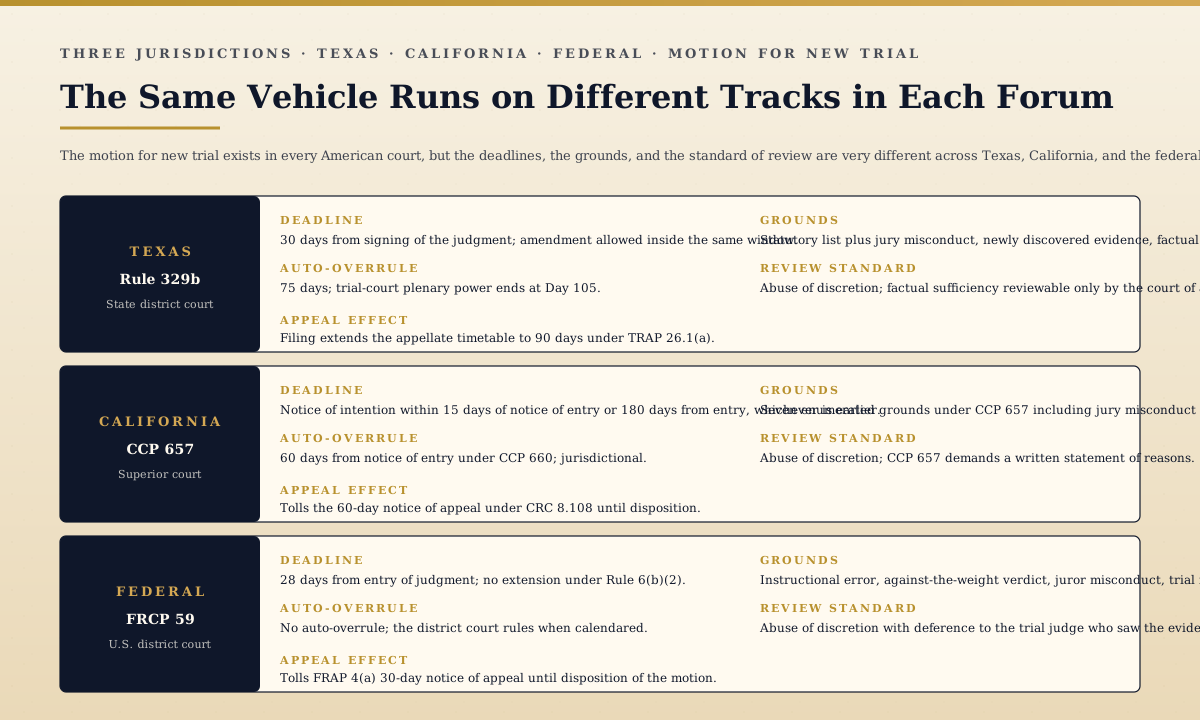
The california motion for a new trial sits in Code of Civil Procedure section 657, which enumerates seven statutory grounds and requires the trial judge to issue a written statement of reasons when granting the motion. The notice of intention to move for new trial is filed within fifteen days after the moving party receives notice of entry of judgment, or within one hundred eighty days from entry of judgment, whichever is earlier. The supporting affidavits and brief follow under CCP 659a. The motion is overruled by operation of law if the trial court has not ruled within sixty days from notice of entry under CCP 660. The California regime sits between Texas (longer overall window, no statutory grounds enumeration) and federal practice (shorter window, no statutory grounds enumeration). The cross- jurisdictional comparison appears in the image below.
The Seven CCP 657 Grounds
CCP 657 enumerates seven grounds: irregularity in the proceedings, misconduct of the jury, accident or surprise that ordinary prudence could not have guarded against, newly discovered material evidence that could not have been discovered with reasonable diligence, excessive or inadequate damages, insufficiency of the evidence to justify the verdict, and error in law occurring at trial. The statute is one of the rare new-trial regimes that requires a written statement of reasons when the trial court grants the motion, which gives the moving party more procedural traction on appeal where the trial court's reasoning can be tested against the record. The procedural cousin in California is the CCP 663 motion to vacate, covered alongside the broader post-judgment menu in California state-court practice.
Where the Texas and California Tracks Diverge
The most consequential divergence is the trigger event. Texas Rule 329b runs from the date the judgment is signed; California CCP 659 runs from notice of entry of judgment. Counsel handling cross-border matters who calendars from the wrong event loses the motion before drafting begins. The second divergence is the grounds catalog. Texas treats new-trial grounds as common-law doctrine inherited from the civil-procedure tradition; California codifies seven specific grounds. The third divergence is the written-statement requirement: a California trial judge who grants a new trial without a written statement of reasons under CCP 657 risks reversal on a procedural ground alone, regardless of the merits. Where the underlying judgment is a federal default judgment, the companion service-firm page on anatomy of a motion for default judgment template and how each section functions covers the federal-track entry vehicle that often precedes the new-trial drafting work.
The Federal Rule 59 Comparator
Federal practice under Federal Rule of Civil Procedure 59 sits in the middle of the procedural spectrum on grounds (no statutory enumeration; trial-court discretion under the broad new-trial standard) and at the bottom on filing window (twenty-eight days from entry of judgment, no extension under Rule 6(b)(2)). The procedural foundation runs through the Federal Rules of Civil Procedure, which set the procedural floor that state vehicles modify.
A Practitioner Drafting Build for the Motion for New Trial Texas Vehicle
The drafting build runs through six steps, calendar-anchored from the day the judgment was signed. Each step depends on the documentary record assembled in the prior step; skipping a step produces a motion that looks complete on the cover but fails on threshold review at the Day 30 filing deadline.
- 01
Verify the Signing Date and Lock the Drafting Calendar
Pull the docket sheet, confirm the date the trial-court judgment was signed, and back-calculate the working filing date to Day 28 to leave a two-day buffer. The Day 30 deadline is read strictly; the rule provides no grace for late filings caused by attorney illness, weather, or late-arriving trial transcripts. The Day 75 and Day 105 deadlines are calculated from the same signing date and are calendared in parallel.
- 02
Identify the Controlling Ground and Map It to Rule 329b
Texas recognizes the full civil-procedure menu of grounds: legal error, factual insufficiency, juror misconduct, newly discovered evidence, irregularity of proceeding, and improper damages. Factual insufficiency is unique to Texas appellate practice and requires the motion for new trial as the preservation vehicle; the court of appeals will not reach factual sufficiency without it. The ground drives the record citations and the relief asked.
- 03
Order the Trial Transcript and Build Record Citations
Most reporters in Texas need at least two weeks to deliver a partial trial transcript. Order early. The motion has to plead the source of the alleged error with particularity (the specific instruction misstated, the specific evidentiary ruling, the specific juror communication) and back the pleading with record citations the trial judge can verify against the reporter's record.
- 04
Draft the Motion, Memorandum of Law, and Proposed Order
The motion identifies the judgment being challenged, the grounds, and the relief sought. The supporting memorandum lays out the doctrine, the standard, and the record citations. The proposed order is the document the trial judge will sign if the motion is granted, drafted to be adoptable as written. Where overlapping reconsideration arguments are in play, the companion explainer on trial court standards on what is motion for reconsideration under Rule 59(e) (linked below) covers the federal reconsideration branch that informs Texas drafting practice in a removal posture.
- 05
File, Serve, and Request a Setting
File with the trial-court clerk, serve all opposing parties under Rule 21a, and request a setting in writing under Rule 320. The trial court is not required to hear the motion before the Day 75 auto-overrule; counsel who wants a hearing must request one in writing and follow up with the coordinator. Without a setting, the motion typically dies on the Day 75 calendar.
- 06
Preserve the Appeal Inside the Plenary Power Window
Filing a timely motion extends the appellate timetable under TRAP 26.1(a) from thirty days to ninety days. The notice of appeal is due within ninety days from the date the judgment was signed when a motion for new trial is timely filed. Counsel calendars the Day 105 plenary-power cliff and the TRAP 26.1(a) ninety-day notice-of-appeal deadline in parallel.
Where the trial record contains discovery-abuse or bad-faith conduct findings that bear on the new-trial calculus, the companion service-firm page on drafting service for a motion for sanctions targeting discovery abuse and bad-faith conduct covers the parallel sanctions vehicle that can run alongside the new-trial motion in cases where the underlying judgment was shaped by adversary misconduct. In summary-judgment opposition postures where the trial-court grant of summary judgment is the challenged ruling, the companion explainer on professionally drafted cross-motion for summary judgment briefs and Rule 56 opposition filings covers the appellate-preservation work that pairs with the new-trial vehicle on summary-judgment-based final judgments.