Tenant-Focused Drafting for a Motion to Stay the Writ of Possession After an Eviction Judgment
A motion to stay the writ of possession is the tenant-side emergency filing that asks the court to pause the sheriff lockout after an eviction judgment has been entered and the writ has been issued. The vehicle is procedural, not substantive: it does not undo the underlying eviction judgment, but it pauses execution to allow the tenant to be heard on a new defense, a procedural irregularity, a habitability claim, or a parallel appeal. The clocks run in hours, not days. Florida tenants have roughly twenty-four hours from sheriff posting under section 83.62 to file. Texas tenants have five days from the signed judgment to perfect the justice-court appeal under TRCP 510.9 + 510.13. California operates on a post-writ stay framework under CCP sections 1176 and 918, not a fixed filing window. Georgia and North Carolina extend the window into the appellate track but condition the stay on rent deposits into the court registry. This page lays out the emergency motion to stay writ of possession drafting build, the five-state matrix, the sample document sections, and the common grounds tenant counsel use to pause the writ.
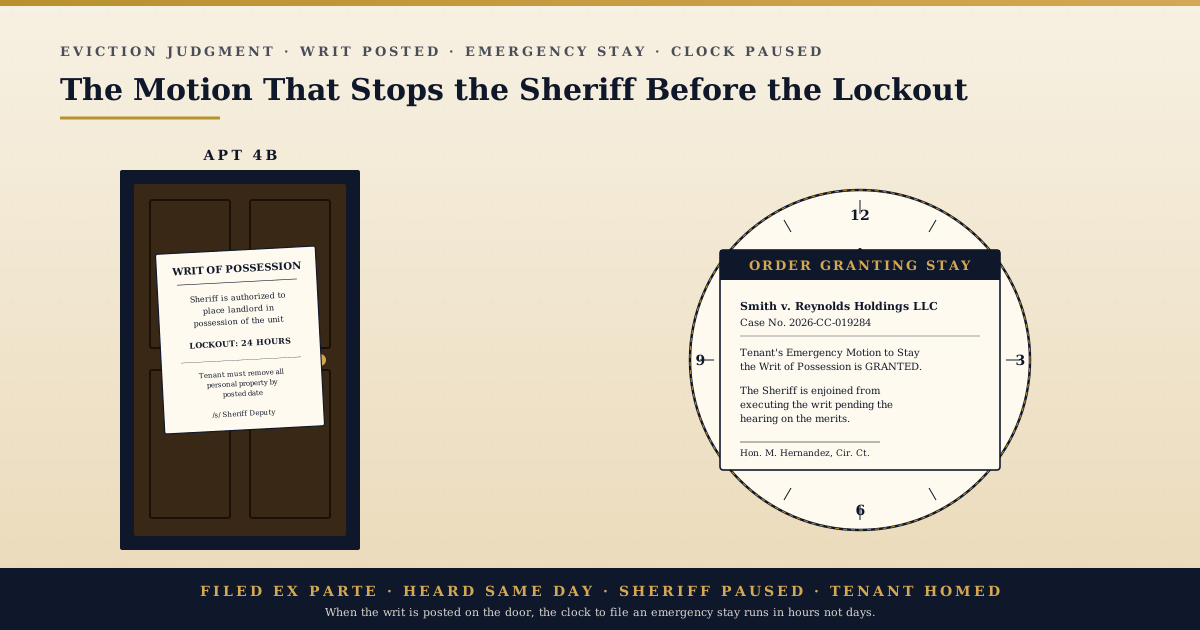
Motion to Stay Writ of Possession Filings We Draft for Tenant Counsel
Legal Tank draftspeople build tenant-side motion to stay papers across four distinct postures, each calibrated to the procedural moment the writ has reached. The posture controls the standard the court applies, the documentary record the motion has to compile, and the conditions the tenant has to accept to obtain the stay. Picking the wrong posture, or filing a generic stay form without matching the local statute, costs the tenant the relief and the housing.
Emergency Stay Filings (Same-Day Posting)
Filed within hours of the sheriff posting the writ on the door. The motion is captioned emergency, supported by a tenant declaration of imminent harm, and routed to the emergency docket or to chambers for an ex parte setting under the local rules.
Stay Pending Motion to Vacate the Underlying Judgment
Filed alongside a Rule 60(b) or state-equivalent motion to vacate. The stay pauses the writ while the trial court considers whether the eviction judgment itself should be set aside on grounds of mistake, excusable neglect, fraud, or void service.
Stay Pending Appeal (Supersedeas Posture)
Filed after the notice of appeal is on file. The stay is typically conditioned on a supersedeas bond or on continuing rent deposits into the court registry. Without the stay, the writ executes during the appeal and the appeal becomes moot on the possession question.
Stay Pending Habitability or Repair Litigation
Filed where the tenant has tendered repair credits, served a habitability claim, or invoked statutory repair-and-deduct provisions. The motion pauses the lockout to allow the trial court to hear the habitability defense the eviction hearing did not reach.
The state regime drives every drafting choice. The Florida twenty-four-hour window after the sheriff posts under Florida Statutes section 83.62 differs from California, where the operative post-writ stay vehicles are CCP section 1176 (stay in an unlawful-detainer action) and CCP section 918 (stay on appeal), each often coupled with a CCP 1179 application for relief from forfeiture. (CCP section 1174(c) provides a separate automatic five-day pre-issuance window in the rent-arrears context, letting the tenant redeem by paying rent before the writ issues at all, but it is not the tenant motion-filing clock once the writ has issued.) Texas runs a forcible- detainer clock under Texas Rules of Civil Procedure 510.13 with a supersedeas-bond or pauper's-affidavit gate at the county- court appeal. Georgia conditions the stay on rent into the registry under O.C.G.A. section 44-7-56. North Carolina runs a ten-day appeal window to district court with a rent-undertaking requirement. The matrix below collects the controlling statutes, the tenant's burden, and the lockout clock for the five highest- volume tenant-defense jurisdictions in the United States.
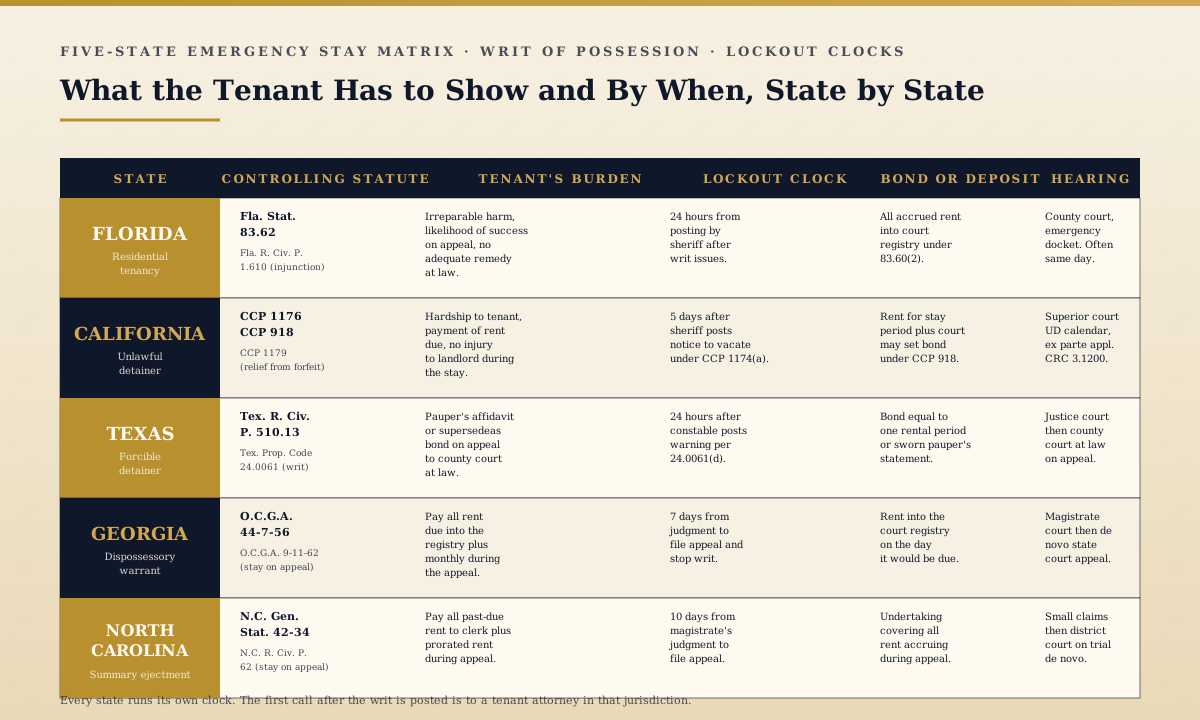
Emergency Eviction Stay Drafting Inside the 24-Hour Window
The pure-emergency posture is the most common Legal Tank intake on this product line. The sheriff posted the writ at three in the afternoon, the tenant called counsel at five, and the lockout is set for the next morning. The drafting cycle runs in hours: pull the eviction file from the county-court docket, identify the writ-issuance order and the posting date, draft the emergency motion to track the local emergency rule, prepare the tenant declaration of imminent harm, and ready the proposed order. In Florida, the registry deposit under section 83.60(2) is the single biggest gating item; without the deposit, the court is statutorily barred from hearing the substantive defense. Legal Tank prepares the registry- deposit affidavit alongside the motion so engaging Florida tenant counsel can file the whole package at the clerk's window in one trip. Where the underlying judgment was a default against a tenant who never received service, the companion explainer on Anatomy of a Motion for Default Judgment and the Plaintiff's Burden Under FRCP Rule 55 covers the parallel default-set-aside vehicle that pairs with the stay on a void-service ground.
Stay Pending Appeal as a Possession-Preservation Tool
A notice of appeal does not, on its own, stay the writ. Without a separate stay order or a posted supersedeas bond, the writ executes during the appeal and the appeal becomes moot on the possession question (the tenant is already out). The stay- pending-appeal motion fills the gap. The California version runs under CCP 918 and requires a showing that the appeal raises a substantial question. The Texas version runs under Texas Rules of Appellate Procedure 24.2 and conditions the stay on a supersedeas bond. The Georgia version under O.C.G.A. 9-11-62 and the North Carolina version under N.C. R. Civ. P. 62 both require rent into the court registry. Where the same underlying facts also support a Rule 56 challenge to the trial-court ruling that produced the eviction judgment, the companion explainer on Anatomy of a Motion for Summary Judgment Template That Tracks Rule 56 Requirements covers the threshold-relief vehicle that pairs with the stay on an appellate-preservation theory.
What a Sample Emergency Motion to Stay Writ of Possession Looks Like When It Reaches the Court
A filing-ready emergency motion to stay writ of possession compiles six structurally distinct sections into one document. Skipping any section produces a motion that looks complete on the cover but fails the emergency standard on threshold review. The list below tracks the section sequence Legal Tank delivers on a tenant-side intake, with each section mapped to its evidentiary purpose at the hearing.
- 01
Caption, Court, and Case Number
The county court for unlawful-detainer or summary-ejectment actions, the case number assigned at the original filing, the parties as originally captioned, and a clear emergency designation on the cover under the local emergency-docket rule. The caption block also identifies the underlying judgment date and the writ-issuance date so the court has the procedural posture at a glance.
- 02
Statement of the Eviction Posture and the Writ
A short, three- to five-paragraph chronology that walks the court through the lease, the notice to quit, the eviction trial, the judgment, the writ-issuance order, the sheriff posting on the door, and the lockout date set by the writ. The chronology grounds the emergency framing in record dates the court can verify on the docket.
- 03
Grounds for the Stay
The substantive heart of the motion: a numbered, paragraphed showing of why the writ should be stayed. Typical grounds include payment of accrued rent, tender of repairs the landlord refused to apply, procedural defects in the original notice or service, void service of the writ, a federal protection that the trial court did not reach, and habitability defects that excuse the rent obligation.
- 04
Conditions the Tenant Offers
Stay applications go further when the tenant offers conditions that protect the landlord during the stay: deposit of accrued rent into the court registry, deposit of monthly rent into the registry during the stay, posting of a bond, and an expedited hearing calendar. Conditions tell the judge that the tenant intends to be a paying occupant during the pause, not a free occupant.
- 05
Tenant Declaration of Imminent Harm
Filed as a separately captioned declaration under penalty of perjury, signed by the tenant. The declaration identifies the lockout date, the harm that follows (loss of housing, loss of employment, school disruption, medical-care disruption), and the absence of immediate alternative housing. The declaration is the evidentiary spine of the emergency standard.
- 06
Proposed Order and Certificate of Service
The proposed order tracks the motion argument line by line so the court can sign without redrafting. The certificate of service shows service on landlord counsel and, where applicable, on the sheriff or constable executing the writ. Filing the proposed order with the motion is the difference between a same-day signing and a multi-day wait for the court to draft its own order.
The composite document is short by appellate standards: a well-drafted emergency stay motion runs five to eight pages of argument, plus a one-page proposed order and a two-page tenant declaration. The court reads the motion once on the bench before calling counsel up; every paragraph has to advance the stay argument or it gets cut. Where the eviction record also contains a contested debt that the tenant disputed below, the companion service-firm page on Anatomy of a Motion for Reconsideration Template and the Sections Courts Expect to See covers the parallel reconsideration vehicle that asks the trial court to revisit the judgment itself, often filed in tandem with the stay motion on the same docket.
What an Emergency Motion to Stay Writ of Possession Actually Asks the Court to Do
The court hears the emergency stay as an equitable intervention rooted in its inherent power to control the enforcement of its own orders, a power American courts inherited from the eighteenth-century Court of Chancery practice that recognized execution as a separate stage from judgment. That equitable footing matters because it is what lets the trial court intervene after the eviction judgment has become final on the docket: the judgment fixes the parties' substantive rights, but the sheriff's execution of the writ is a separate ministerial act the court retains supervisory authority over until the lockout is complete. The conditions the court attaches (rent into the registry, supersedeas bond, expedited hearing calendar) flow from that supervisory authority, not from the underlying merits; they exist to keep the landlord whole during a pause the court has the equitable discretion to grant.
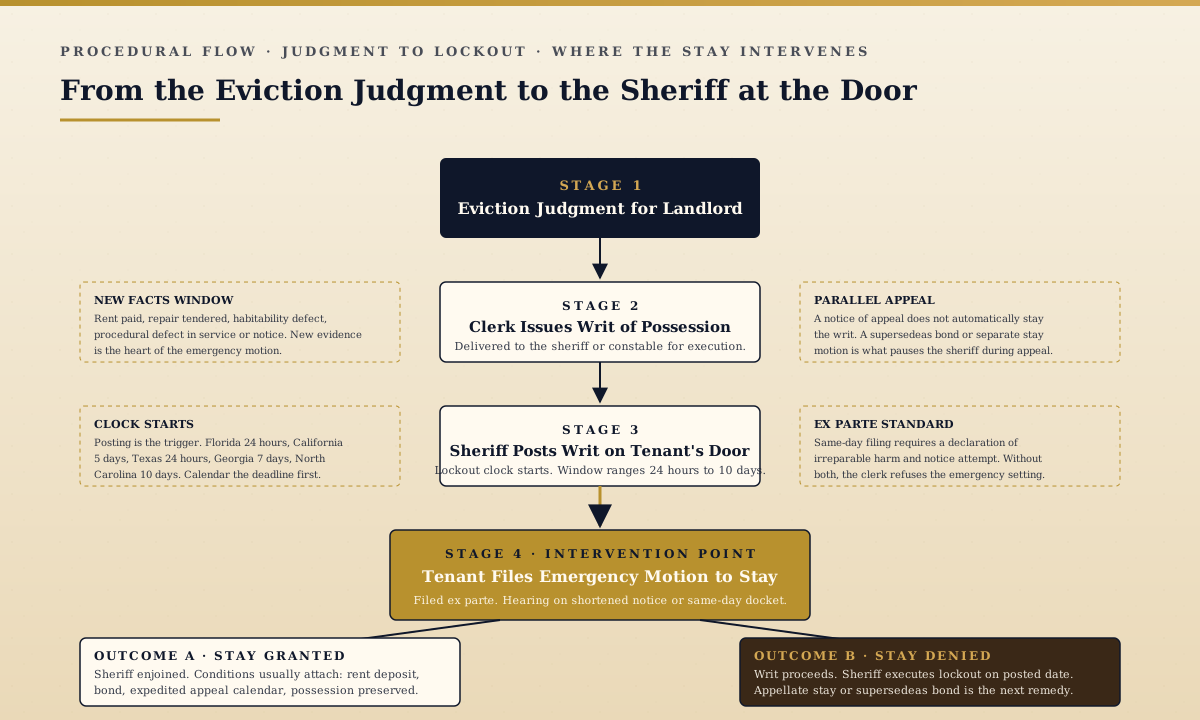
The Procedural Posture, in One Paragraph
The eviction trial has happened. The landlord won. The court entered a judgment for possession. The clerk issued the writ. The sheriff or constable posted the writ on the tenant's door with a lockout date. Somewhere between the posting and the lockout, the tenant develops a position the court has not yet heard: rent paid that the landlord refused, a habitability defect the eviction trial did not reach, a procedural defect in the original service, a federal protection (CARES Act notice, VAWA protection, FHA accommodation), or a payment plan tendered in good faith. The motion to stay the writ of possession is the vehicle that puts that new position in front of the court before the lockout executes.
What the Court Weighs on the Emergency Standard
The standard tracks the federal preliminary-injunction framework most state courts have adopted for emergency relief: likelihood of success on the new position, irreparable harm to the tenant from the lockout, balance of equities between landlord and tenant during the stay, and the public interest in housing stability. Irreparable harm is usually the easiest prong to satisfy: the loss of possession of one's home is the textbook irreparable harm under American injunction doctrine. Likelihood of success is the contested prong: the tenant has to show the new position has legal substance, not just sympathy. The balance-of-equities prong is the prong most often used to set conditions: rent into the registry, bond, expedited hearing. Where the eviction record contains discovery-abuse or bad-faith conduct by the landlord that bears on the equities calculus, the companion service-firm page on Drafting Service for a Motion for Sanctions Targeting Discovery Abuse and Bad-Faith Conduct covers the parallel sanctions track that strengthens the balance-of-equities argument on the stay.
Why the Vehicle Lives in the Trial Court, Not the Court of Appeals
The trial court that entered the eviction judgment is the first stop because the trial judge has the case file, the witnesses, and the procedural history. The trial court can issue an order paused by lunch hour where a court of appeals would take days to spin up the record. The court of appeals becomes the stop only after the trial court denies the stay (or after the tenant files a parallel notice of appeal and needs an appellate stay to keep the writ from mooting the appeal). Where the tenant has additional claims that were not pleaded at trial but emerged from discovery the eviction case did not reach, the companion service-firm page on Drafting Service for a Motion to Amend Pleadings After Discovery Reveals New Claims covers the parallel-amendment track that often pairs with the stay motion when the tenant has affirmative counterclaims against the landlord.
Common Grounds and Practical Use of the Motion Stay Writ Vehicle
The grounds tenant counsel use to stay the writ of possession cluster around six recurring fact patterns. Each pattern maps to a specific evidentiary record and to a specific statutory or constitutional hook the eviction trial did not reach. The grounds are not interchangeable; counsel picks the ground that matches the documentary record, then drafts the motion to land on that ground at the hearing.
Rent Paid or Tendered That the Landlord Refused
The most common factual ground. The tenant produces a cancelled check, a money-order receipt, a bank-transfer record, or a sworn affidavit of cash tender refused. The eviction judgment was entered on the landlord's representation that the rent was unpaid; the tender record contradicts the representation. The motion asks the court to stay the writ pending an evidentiary hearing on the payment record. The registry deposit is straightforward: the tenant deposits the disputed rent into the registry on the same docket, and the court can resolve the dispute without the lockout running.
Habitability Defect That Excuses the Rent Obligation
The tenant produces a code-enforcement citation, a sworn affidavit describing uninhabitable conditions, a repair record, or a tenant-rights organization's habitability survey. The ground asks the court to read the rent obligation as conditional on the landlord's habitability obligation, and to stay the writ pending a habitability hearing. In California, the doctrine runs through California Civil Code section 1941.1 (habitability checklist) and the implied warranty of habitability. In Florida, it runs through Florida Statutes section 83.51 (landlord's obligation to maintain). In Texas, through Texas Property Code section 92.052. The habitability ground is procedurally durable because it sits on independent statutory duties the eviction trial often did not reach.
Procedural Defect in Service, Notice, or the Writ Itself
Service of the three-day notice (Florida), the three-day pay- or-quit (California), the three-day notice to vacate (Texas), or the seven-day demand (Georgia) is a statutory predicate to the eviction judgment. If the notice was defective, the judgment can be set aside, and the stay holds while the set- aside motion is heard. Service of the eviction summons itself is the deeper procedural defect: if the tenant was never personally served, the underlying judgment is void for lack of jurisdiction, and the stay is the holding pattern while the motion to vacate runs. Federal-court Federal Rule of Civil Procedure 60(b)(4) doctrine on void judgments is persuasive authority in state unlawful-detainer practice on the void-for-lack-of-jurisdiction ground. Where the underlying default was entered without proper service, the companion service-firm page on anatomy of a motion for default judgment template and how each section functions covers the entry-side default mechanics that often need to be attacked in parallel with the stay motion.
Federal Protection the Trial Court Did Not Reach
CARES Act notice protections (still operative for covered properties), Violence Against Women Act protections for survivors of domestic violence, Fair Housing Act reasonable- accommodation requirements for disability-based defenses, and Servicemembers Civil Relief Act protections for active-duty tenants all live in federal statute and can be raised on a stay motion even where the eviction trial proceeded on a state-law theory. The federal protection is often the strongest ground because it overrides state-law eviction procedure on federal- supremacy grounds. Where the cross-motion posture also reaches summary-judgment law, the companion service-firm page on professionally drafted cross-motion for summary judgment briefs and Rule 56 opposition filings covers the dispositive vehicle that pairs with the stay on a federal-protection theory.
Pending Appeal That the Writ Would Moot
The tenant has timely filed a notice of appeal from the eviction judgment. Without a stay, the writ executes during the appeal and the appeal becomes moot on the possession question. The stay-pending-appeal motion preserves the appeal by keeping the tenant in possession during the appellate review. The standard tracks the federal-court four-prong test for stays pending appeal: likelihood of success on the appeal, irreparable harm without the stay, balance of equities, and the public interest. Counsel asking the upstream question what a legal motion is and how the vehicle taxonomy spans pretrial and post-judgment filings will recognize that the appellate-stay posture is the post-judgment mirror of the same motion-practice instinct that shapes pretrial preservation.
Settlement Talks That Justify a Procedural Pause
Where the parties have engaged in good-faith settlement negotiations after the judgment (cash-for-keys, payment plan, stipulated extension), the stay can be the procedural pause that gives the negotiation time to mature. The motion typically attaches a sworn statement from counsel describing the settlement posture, a proposed conditional order that ties the stay to specific negotiation milestones, and a request for short-term setting on the docket. The vehicle is closely related to the post-judgment compliance work covered in the companion service-firm page on Attorney-Prepared Motion of Contempt of Court for Enforcing Orders Against a Noncompliant Party, which sits on the same compliance-and-enforcement spine.