Motion for Default Judgement Procedure When a Defendant Fails to Answer a Civil Complaint
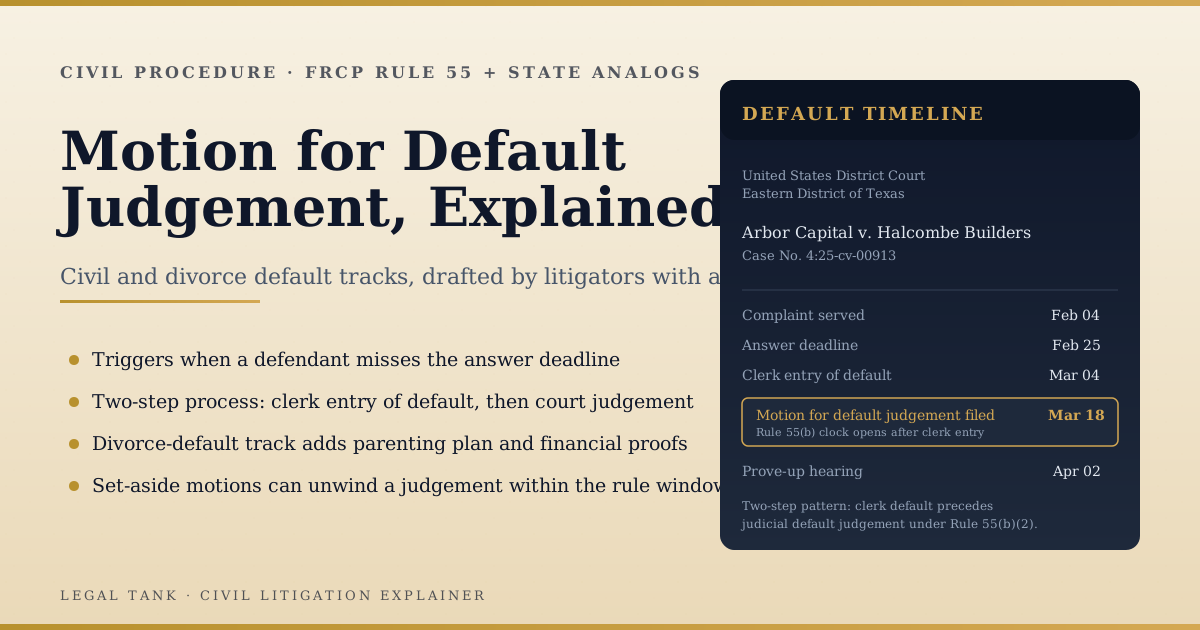
A motion for default judgement asks the court to enter a binding judgement against a defendant who has failed to file an answer or other responsive pleading within the deadline set by the rules. The procedure runs on two tracks. The civil track follows Federal Rules of Civil Procedure Rule 55 in federal court and the parallel state analogs in superior and circuit courts; the divorce-default track follows the state family code and adds parenting and support proofs. Both tracks share the same architecture: clerk entry of default first, judicial default judgement second, prove-up record in between. This explainer walks through the legal definition, the tactical reasons litigators choose this vehicle, the drafting build, and the realistic outcome ranges a moving party can expect.
Defining the Civil and Divorce Default Judgement Tracks Side by Side
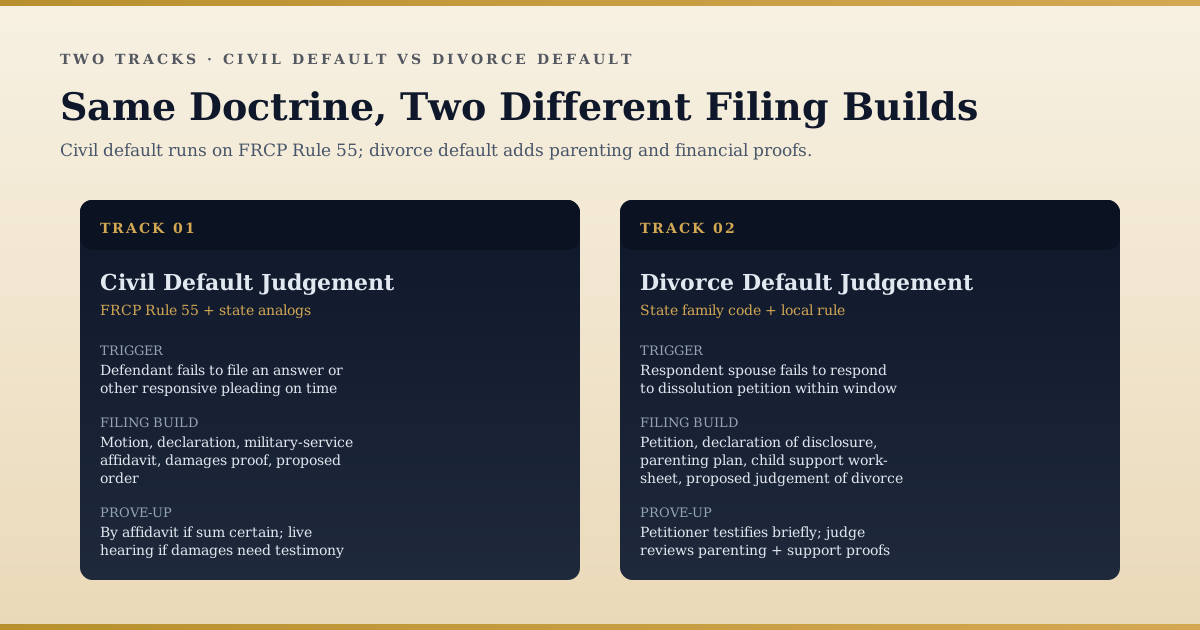
A default judgement is a binding judicial ruling that resolves the case in favor of the appearing party when the opposing side fails to participate. The civil-litigation version and the family-law version share the same underlying doctrine, but the filing builds are different enough that experienced counsel treat them as separate tracks. Civil default runs on FRCP Rule 55 in federal court and on parallel state-court rules. Divorce default runs on the state family code, the local family-law rule, and the uniform parenting-and-support proofs the controlling jurisdiction requires.
The trigger is the same on both tracks: the responding party fails to file an answer (or, in family court, a response to the petition) within the time window set by the rules. In civil federal practice the window is twenty-one days from service. In most state civil courts the window is thirty days. In divorce dockets the response window ranges from thirty to sixty days depending on the state. Once the window closes without an appearance, the moving party can ask the clerk to enter default on the docket, and once the clerk enters default, the moving party can file the substantive motion for default judgement.
Civil Default: The Two-Step Pattern Under Rule 55
Rule 55 splits the default into two procedural steps. Rule 55(a) authorizes the court clerk to enter default on the docket when the moving party shows that the defendant has failed to appear and that the failure is documented by affidavit. Rule 55(b) then authorizes the court to enter the judgement itself: 55(b)(1) for liquidated damages where the clerk can act ministerially, and 55(b)(2) for unliquidated damages where the judge takes proof. The two-step pattern protects the defendant against default judgements entered without notice and without a documented record. Practitioners who try to skip the clerk-default step and file the substantive motion directly receive a docket entry rejecting the filing for failure to satisfy 55(a) first.
Divorce Default Judgement: Petition Plus Proofs
The divorce default judgement follows the same two-step pattern but adds a substantial proof-of-fairness package. The petitioner must show the court that the proposed terms (custody, support, property division, attorney fees) are not extracted by taking advantage of an absent spouse, but are equitable on the face of the record. Most states require both preliminary and final declarations of disclosure, a parenting plan with the proposed custody arrangement, a child support worksheet using the state guideline formula, and a proposed judgement of divorce. The judge reviews the bundle, takes brief testimony from the petitioner at the prove-up appearance, and signs the judgement of divorce when the record supports it. For litigants on the inverse side of this equation (defendants seeking to reopen a default), our companion piece on our drafting service for a motion to vacate a judgment walks through the FRCP 60(b) six grounds, the CCP 473(b) and CPLR 5015(a) state-court analogs, and the timing windows for setting aside an entered default.
Where Default Judgements Sit in the Pretrial Architecture
Default judgements live in the same family of dispositive pretrial vehicles as Rule 12(b)(6) motions to dismiss and Rule 56 motions for summary judgement. The differences turn on which party is missing from the analysis. Rule 12 takes the complaint as written and asks whether it states a claim; Rule 56 takes the record after discovery and asks whether genuine fact disputes exist; Rule 55 takes the defendant's non-appearance as the triggering fact and asks whether the moving party has done enough to deserve judgement. Each rule produces a judgement without trial, but the path is different. For the related early-resolution vehicle on the pleading record itself, see our explainer motion for judgment on the pleadings drafting for civil litigants seeking early resolution.
Tactical Reasons Counsel Choose This Vehicle
The motion default judgement is the fastest path to an enforceable judgement when the opposing party has stopped appearing. Experienced civil litigators reach for it in five recurring situations: commercial collections against corporate defendants that have ceased operations, breach-of-contract cases where the defendant cannot afford the litigation but also cannot afford to settle, post-service evasion patterns where the defendant tries to drag the case out by ignoring papers, family- law dissolution proceedings against an absent spouse, and consumer protection actions where the defendant is a fly-by-night merchant. In each pattern, the moving party gets an enforceable judgement in weeks rather than years, and the judgement is fully usable for post-judgement enforcement.
Speed: Weeks Rather Than the Trial Calendar
The single largest tactical reason to use the default vehicle is calendar compression. An ordinary civil case in federal district court takes eighteen to thirty-six months to reach a trial-ready posture under the scheduling order the judge enters early in the case. A default judgement against a non-appearing defendant resolves the same merits question in three to six weeks. The moving party preserves the right to all post-judgement enforcement remedies and avoids the discovery burden that the ordinary track would require.
Enforceability: Same Tools as a Litigated Judgement
A default judgement is functionally identical to a litigated judgement once entered. The plaintiff becomes a judgement creditor and can deploy the full set of post-judgement enforcement tools: writs of execution, bank garnishments, wage garnishments, examina- tions in aid of execution, judgement liens on real property, domestication in sister states, and post-judgement discovery under Rule 69. The defendant carries the burden of moving to set aside under the strict Rule 60(b) standard, and the burden does not get easier with time.
Cost: Minimal Compared to a Contested Track
The drafting and prove-up cost of a motion for default judgement is a fraction of the cost of contested litigation. There is no discovery, no meet and confer requirement on discovery disputes, no depositions, no expert reports, no trial preparation, and no trial. The motion itself, the supporting declaration, the SCRA affidavit, the damages exhibits, and the proposed order can be drafted in a week. The cost advantage is most visible in collections matters where the underlying claim is small enough that contested litigation would exceed the recovery.
Strategic Pressure: Sometimes the Threat Alone Moves the Case
A non-trivial percentage of default motions never get adjudicated because the looming filing causes the defendant to enter an appearance and ask for a stipulation to set aside the clerk default. Counsel often files the motion deliberately to force the conversation. The defendant agrees to answer, the parties stipulate to vacate the clerk-default entry, and the case proceeds on the merits. That outcome is not a loss; it is the negotiated track the threat of default was designed to open.
When Not to Use the Default Track
Default judgements are not always the right call. When the defendant is solvent and the underlying claim has weak liability theory, the well-pleaded-allegation rule of Rule 55 can produce a judgement the appellate court later vacates on a set-aside motion, wasting the time invested. When the damages number depends on unliquidated or expert proof, the prove-up burden may approach the trial burden the moving party hoped to avoid. And when the defendant has counsel waiting in the wings, the default-and- set-aside cycle may simply add procedural delay. Counsel evaluates these factors before filing.
Building the Filing From Scratch
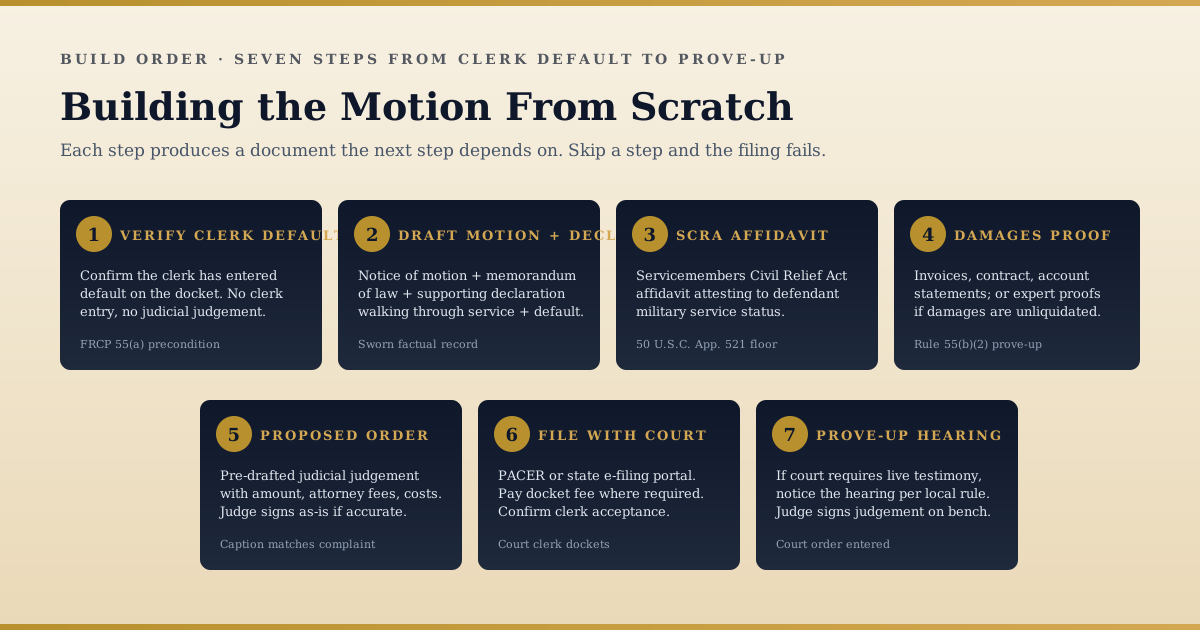
The motion package is a seven-document build, and each piece must be in place before the next can be drafted. Self-represented filers and counsel new to the default track often try to start with the proposed order; that is the wrong end of the build. The clerk-default entry is the foundation. Everything else stacks on top.
Step 1: Verify Clerk Entry of Default on the Docket
The moving party must first secure clerk entry of default. In federal practice this is a Rule 55(a) submission: a request for entry of default supported by an affidavit confirming the defendant has not answered and the deadline has passed. The clerk acts ministerially and enters the default on the docket. The docket entry is the precondition for everything that follows. If the clerk rejects the request (commonly because service was defective or the deadline was miscalculated), the moving party must fix the underlying problem before proceeding.
Step 2: Draft the Motion, Memorandum, and Supporting Declaration
The notice of motion identifies the rule (Rule 55(b)(1) for sum- certain damages, Rule 55(b)(2) for everything else), names the parties in the same caption used in the complaint, and sets the briefing schedule per the local rule. The memorandum of law argues the merits: the jurisdictional record, the procedural posture (service of process, expiration of the answer deadline, clerk entry of default), the substantive claims established by the well-pleaded allegations of the complaint, and the legal authority for the damages number. The supporting declaration anchors the factual record under penalty of perjury, with exhibits attached.
Step 3: Attach the SCRA Military-Service Affidavit
Federal law (the Servicemembers Civil Relief Act, codified at 50 U.S.C. App. 521) requires the moving party to file an affidavit addressing whether the defendant is in active military service. State courts apply parallel rules. The affidavit must state affirmatively that the defendant is, or is not, in military service, based on a search of the Department of Defense database. Courts reject default motions that omit the SCRA affidavit outright; this is the most common preventable rejection in the default track.
Step 4: Assemble Damages Proof
For liquidated damages under Rule 55(b)(1), the proof package is an account statement, the contract, invoices, the underlying promissory instrument, or a similar document tying the number to a sum certain. For unliquidated damages under Rule 55(b)(2), the proof package is more extensive: it may include a damages expert's report, treating-physician records, market valuation evidence, or any other proof the substantive law requires. The prove-up hearing the judge calendars under 55(b)(2) is where this proof gets tested, and the strength of the proof is the single largest predictor of the final award amount.
Step 5: Prepare the Proposed Order
The proposed order is what the judge actually signs. A clean proposed order fits on one page, mirrors the prayer for relief from the complaint, includes specific dollar amounts for principal, prejudgement interest, attorney fees, and costs, and leaves blanks only for the date and the judge's signature. Proposed orders that overreach (asking for relief the complaint did not plead, or seeking enhanced damages without a separate hearing) get lined through or rejected outright.
Step 6: File With the Court Clerk
Filing is electronic in federal court through PACER and in most state courts through the local e-filing system. The court clerk reviews the package for completeness and dockets it. Service on the defendant is required even though the defendant has not appeared, and the certificate of service goes into the filing package. The clerk may flag a missing SCRA affidavit, a caption mismatch, or a procedural defect at the intake stage. Cure the defect and refile.
Step 7: Notice the Prove-Up Hearing (When Required)
When the judge requires a prove-up hearing, the moving party notices the hearing per local practice. The hearing is short: the plaintiff testifies briefly, presents the damages exhibits, and asks the judge to sign the proposed order. Cross-examination is rare. The judge either signs the proposed order on the bench or takes the matter under advisement and rules in writing.
How Long Does a Motion for Default Judgement Take? Realistic Outcome Ranges
The motion produces one of four outcomes in the overwhelming majority of cases. Counsel who plans for the range, rather than hoping for the cleanest outcome, drafts a filing that holds up under any of the four. The ranges below are calibrated to federal civil practice and to the dominant state-court patterns; specific dockets vary on the margins.
Litigants who later need to challenge an entered default judgement (typically because notice was defective or excusable neglect prevented timely appearance) should consult our companion service explainer on drafting a motion to vacate a judgment for you to sign and file, which walks through the Rule 60(b) six grounds, the meritorious-defense affidavit, and the timing windows that govern setting aside an entered default.
- Clean grant
Judgement Signs at the Bench, Same Day
Common pattern in well-pleaded civil commercial cases with liquidated damages, a clean clerk-default entry, and an SCRA affidavit on file. The judge signs the proposed order at the prove-up appearance, the clerk dockets the judgement, and post-judgement enforcement opens immediately. Eviction and small-claims dockets produce this outcome on a weekly cadence.
- Damages reduced
Judgement Enters But the Court Trims the Award
The judge accepts liability on the well-pleaded allegations but is skeptical of the damages number. Pre-judgement interest, attorney fees, and consequential damages are the typical line items the court reduces. The proposed order returns from chambers with handwritten edits, and the plaintiff accepts the modified amount in exchange for an enforceable judgement.
- Hearing required
Court Demands a Prove-Up Hearing With Live Testimony
Federal judges and most state-court judges require a prove-up hearing when damages are unliquidated, when the complaint sounds in fraud, when an expert calculation underlies the damages, or when the case involves a vulnerable party (minors, incapacitated adults). The hearing extends the timeline by two to four weeks but does not change the substantive likelihood of a judgement, only the documentary record the court demands.
- Set aside on motion
Defendant Moves to Set Aside Under Rule 60(b) and Succeeds
When a defendant moves to set aside within the rule window and shows excusable neglect, fraud, defective service of process, or a meritorious defense, courts routinely reopen the case. The judgement is vacated, the answer deadline reopens, and the litigation proceeds on the merits. The moving party should plan for this risk by drafting the underlying complaint and service record to withstand the most common set-aside arguments.
Post-Judgement Enforcement After a Clean Grant
After a clean grant, the moving party transitions immediately to enforcement. The judgement is docketed, the writ of execution issues on request, garnishment papers serve on banks and employers, and Rule 69 post-judgement discovery opens. The presiding judge typically retains jurisdiction over enforcement disputes for the life of the judgement. Counsel coordinates with the client on the enforcement plan as soon as the judgement is signed.
Damage Reductions and the Risk of an Appellate Round
When the court trims damages, the moving party should evaluate whether the reduction is acceptable or whether further litigation is justified. A defendant who appears late and moves to set aside can argue both the merits and the damages; an over- aggressive damages number is one of the recurring grounds the set-aside court relies on to reopen the case. A judgement that reflects a measured damages number is harder to disturb.
Set-Aside Risk and the Burden of Persuasion
The most common defense to an entered default judgement is a Rule 60(b) motion to set aside. Federal practice gives the defendant one year to move on grounds of mistake, inadvertence, surprise, or excusable neglect; longer for fraud, void judgements, or other extraordinary grounds. Courts favor merits determinations over procedural defaults, so the burden on the defaulting defendant is real but not insurmountable. Plaintiffs who anticipate set-aside motions build a service record, an SCRA affidavit, and a damages package that withstands scrutiny.