How the NJ Civil Motion Calendar Sets Return Dates and Submission Deadlines for Filers
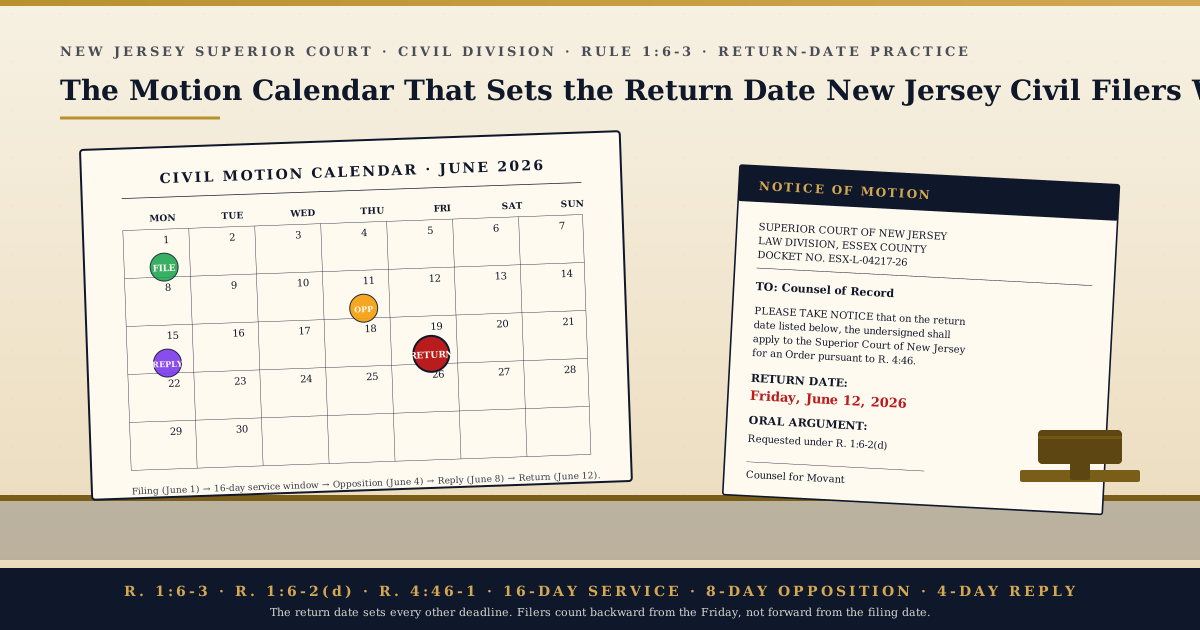
The nj civil motion calendar is the return-date schedule each motion judge in the Superior Court of New Jersey maintains for civil motions. The movant selects a return date Friday from that calendar; every other deadline (service, opposition, reply, oral-argument request) counts backward from the selected date under Rule 1:6-3 of the New Jersey Court Rules. The federal District of New Jersey counts backward too, but from a fixed first or third Monday motion day and on different day counts, which is the procedural difference that trips up litigators who move between the two courts. This page lays out the federal-versus-state procedural differences, the calendar mechanics, the section-by-section drafting build, and the practical patterns New Jersey civil litigators use to keep motions on schedule.
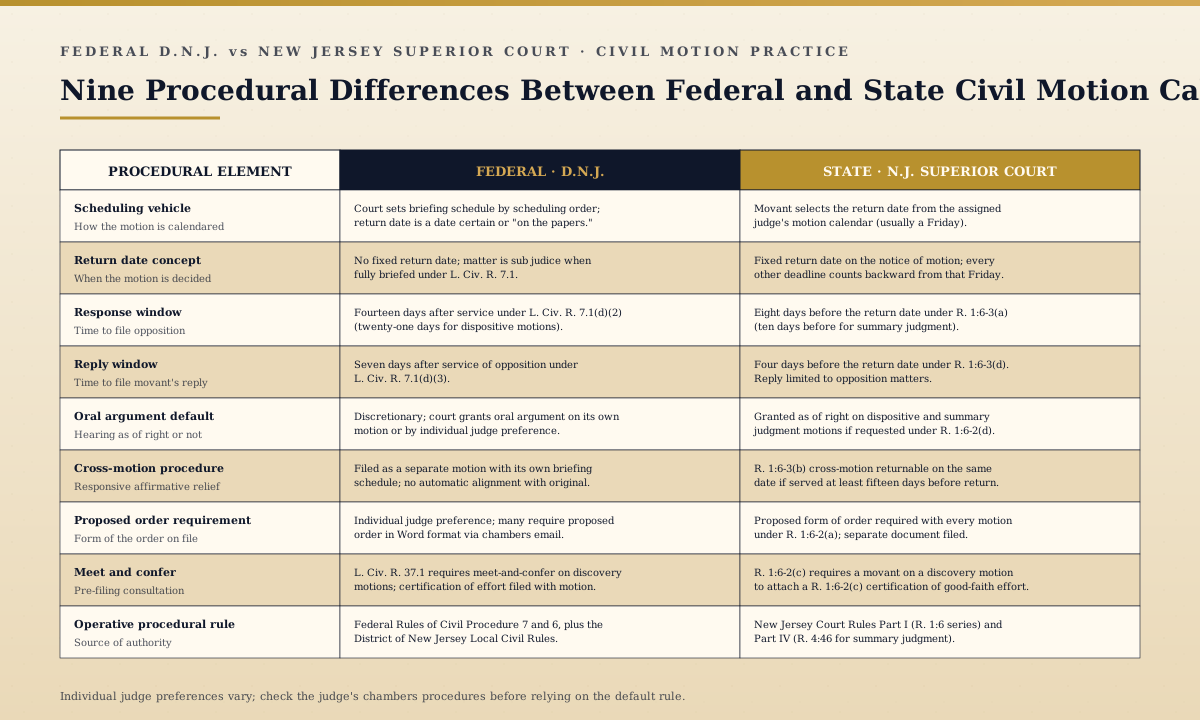
Federal vs State Practice Differences for the Civil Motion Calendar in NJ
New Jersey is one of the jurisdictions where a civil litigator who shifts between federal and state practice has to mentally switch schedules at the courthouse door. Both courts count their deadlines backward from a return date, but the cadence and the day counts differ. In the District of New Jersey, motions are made returnable on a fixed motion day, the first or third Monday of the month under L. Civ. R. 78.1, with the moving papers filed twenty-four days before that motion day, opposition fourteen days before, and reply seven days before under L. Civ. R. 7.1. The motion day is the federal return date, even though many District of New Jersey judges decide the motion on the papers without holding argument.
New Jersey Superior Court practice runs on the same backward-counting logic but a different calendar. The movant selects the return date first, picking a Friday from the assigned judge's own motion calendar rather than a district-wide Monday; the return date then governs every other deadline. Filing is at least sixteen days before the return; opposition is at least eight days before; reply is at least four days before. A litigator who carries the federal twenty-four, fourteen, and seven day counts into state court (or the state sixteen, eight, and four day counts into federal court) will compute the wrong deadlines, because the two courts share the backward-counting method but not the arithmetic. The companion explainer on attorney drafting help to file a motion in civil and family court matters covers the broader motion-filing build that includes the return-date selection step on New Jersey cases.
Oral Argument as of Right Under R. 1:6-2(d)
On dispositive and summary judgment motions, New Jersey grants oral argument as of right under Rule 1:6-2(d) when requested in the notice of motion or the opposition. Federal D.N.J. practice runs the opposite default: oral argument is discretionary and most motions are decided on the papers absent the court's own order. The procedural posture in state court therefore gives counsel an automatic forum to address the motion judge on the record before the order issues. Counsel calibrate their papers accordingly: brief writing leans heavier on argument-ready framing in state court where oral argument is expected, leans heavier on self-contained record citation in federal court where the papers may be the only vehicle.
Cross-Motion Practice Under R. 1:6-3(b)
A second defining feature of state practice is the cross-motion mechanic at Rule 1:6-3(b). A responding party who wants affirmative relief related to the original motion (a motion to compel discovery in response to a motion for protective order, for example) serves a cross-motion returnable on the same date by filing it together with the opposition, eight days before the return date, provided the cross-motion relates to the subject matter of the original motion. The motion judge then resolves both requests on a single return Friday. Federal practice requires a separate motion with its own motion day and briefing schedule. The cross-motion mechanism consolidates parallel discovery disputes that otherwise generate competing motion sequences. The companion drafting page on custom professionally drafted motion to compel discovery covers the drafting build for discovery motions that often generate cross-motions in New Jersey state practice.
Legal Meaning of the NJ Civil Motion Calendar Without the Procedural Jargon
The phrase nj civil motion calendar describes two related things. First, it is the return-date schedule each judge of the Superior Court of New Jersey publishes for civil motions, typically running every Friday on which the judge sits, with a cap on the number of motions returnable on any single date. Second, it is the working calendar a New Jersey civil litigator maintains internally to track return dates and the cascading deadlines (filing, service, opposition, reply, oral-argument request) that flow off each return date. The two senses overlap in practice: the court's calendar produces the return date; the litigator's calendar tracks every deadline that the return date generates.
Return Date Selection Under R. 1:6-3
The movant selects a return date from the assigned judge's published motion calendar (usually a Friday). The selected return date becomes the anchor that every other deadline counts backward from: sixteen days for service, eight days for opposition, four days for reply. Calendar selection is the first procedural decision in a New Jersey civil motion.
Notice of Motion and Proposed Order Under R. 1:6-2
Every New Jersey civil motion is filed on a notice of motion that captions the return date prominently. A proposed form of order accompanies every motion under Rule 1:6-2(a), filed as a separate document for the motion judge to sign without redrafting. The notice and proposed order are calibrated to the relief requested and the rule under which it is sought.
Cross-Motion Procedure Under R. 1:6-3(b)
A responding party may file a cross-motion returnable on the same date as the original motion, but only if the cross-motion relates to the subject matter of the original motion. Under Rule 1:6-3(b) the cross-motion is served together with the opposition papers, eight days before the return date, on its own notice of motion with its own supporting brief and proposed order. Cross-motion practice consolidates related relief on a single return date and is a defining feature of New Jersey civil motion practice.
Federal D.N.J. Practice Under L. Civ. R. 7.1
The Federal District of New Jersey runs a different return-date schedule. Motions are made returnable on a fixed motion day, the first or third Monday of the month under L. Civ. R. 78.1, and the briefing counts backward from it: the moving papers are filed at least twenty-four days before the motion day, opposition at least fourteen days before, and reply at least seven days before under L. Civ. R. 7.1. A party opposing a dispositive motion may adjourn the motion day once as of right under L. Civ. R. 7.1(d)(5). Oral argument is discretionary, and individual judge preferences govern proposed-order submission via chambers email.
The mechanical center of the regime is the civil motion calendar nj rule at R. 1:6-3. Subsection (a) sets the entire return-date countdown for an ordinary motion: the moving papers are filed and served sixteen days before the return date, opposition eight days before, and reply four days before. Subsection (b) governs cross-motions, which the responding party serves together with the opposition and notices for the same return date when the cross-motion relates to the subject matter of the original motion. Subsection (c) fixes when service is complete (on receipt, with ordinary mail presumed received on the third business day). Summary judgment runs on its own longer schedule under R. 4:46-1, and a motion return date is adjourned by consent of the parties with the court's approval. Counsel reads R. 1:6-3 in conjunction with R. 1:6-2 (form of motions and notice of motion content), R. 1:6-6 (certifications in lieu of affidavits), and the vicinage-specific chambers procedures that govern proposed-order submission and oral-argument scheduling.
The Movant, Opposing Party, and Cross-Movant Roles
The movant is the party who files the motion and selects the return date. The opposing party is the party (or parties) served with the motion who answer on the eight-day-before-return schedule. A cross-movant is an opposing party who, while answering the original motion, files an affirmative request for related relief on the same return date. The proposed order accompanying each filing identifies the requesting party and the relief sought; the motion judge enters separate orders on the original motion and the cross-motion, even when decided contemporaneously.
The Meet-and-Confer Requirement on Discovery Motions
On discovery motions, R. 1:6-2(c) imposes a separate meet and confer requirement: counsel certifies a good-faith effort to resolve the discovery dispute before filing. The certification is a separate paragraph in the moving counsel's certification, identifying the dates of correspondence, the topics addressed, and the unresolved disputes that justify court intervention. Failure to attach the certification is grounds for dismissal without prejudice; the motion is refiled after the meet-and-confer occurs. The Federal D.N.J. analogue at L. Civ. R. 37.1 is similar but not identical, so counsel cannot cut-and-paste the certification from prior federal practice.
Common Grounds and Practical Use of the Motion Calendar on New Jersey Civil Cases
New Jersey civil litigators reach the motion calendar at recurring procedural inflection points. Each generates a distinct filing on a distinct return date. The most common categories are dispositive motions (motion to dismiss under R. 4:6-2, motion for summary judgment under R. 4:46), discovery motions (motion to compel discovery, motion for protective order, motion for sanctions), scheduling motions (motion to extend discovery, motion to adjourn trial), and post-judgment motions (motion to vacate default, motion for reconsideration under R. 4:49-2).
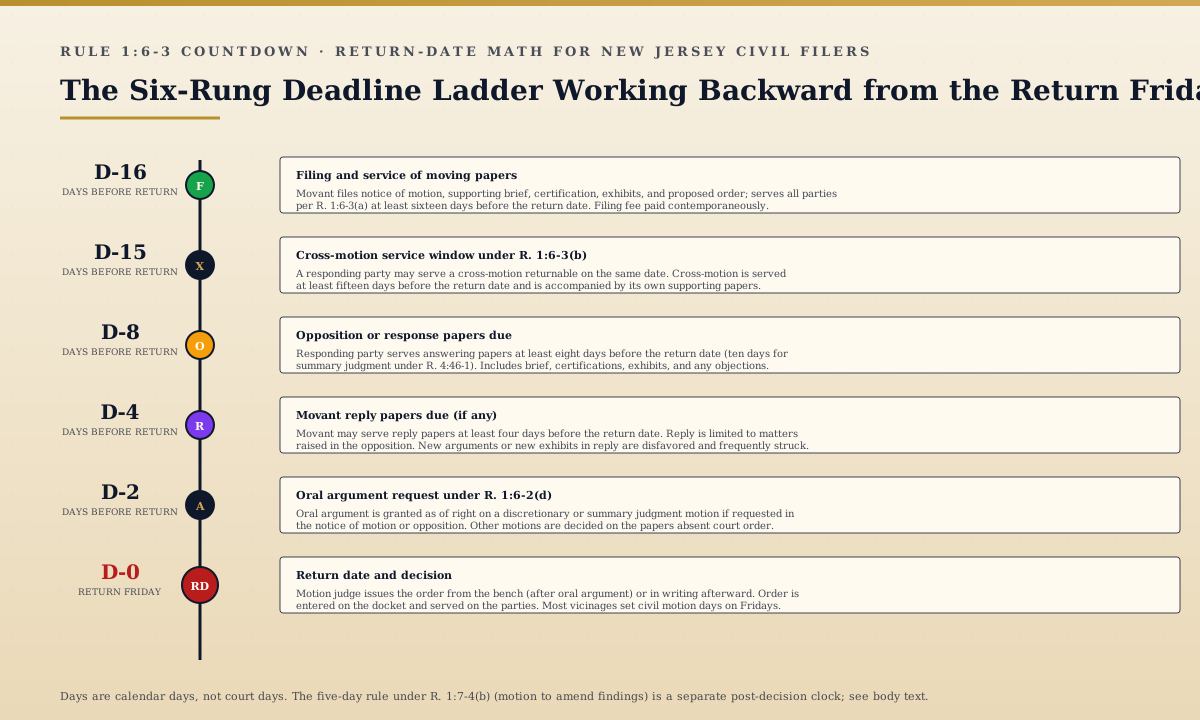
Dispositive motions account for the heaviest brief load on the New Jersey civil motion calendar. A motion to dismiss under R. 4:6-2(e) for failure to state a claim is briefed on the same R. 1:6-3 schedule as any other motion: filed sixteen days before return, opposition due eight days before, reply due four days before. The companion explainer on the procedural walkthrough on how to file a motion to dismiss in civil litigation covers the substantive dismissal grounds; the calendar mechanics on this page sit on top of that substantive framework. A motion for summary judgment runs on its own longer schedule under R. 4:46-1: the moving papers are served and filed twenty-eight days before the return date (not sixteen), opposition is due ten days before the return date (not eight), reply is due four days before, and the motion must be returnable no later than thirty days before the scheduled trial date. The longer runway reflects the heavier evidentiary record required on a dispositive factual showing.
Discovery motions occupy a separate corner of the calendar. Motions to compel discovery and motions for protective order frequently generate cross-motions under R. 1:6-3(b), so the calendar handles both filings on the same return Friday. The companion definition page on the definition and purpose of what is motion to compel in civil discovery practice covers the substantive discovery showing required on the motion itself. Sanctions motions under R. 4:23 follow the same calendar with one practice point: counsel typically request oral argument as of right under R. 1:6-2(d) because sanctions decisions benefit from the motion judge's questioning on the record.
Scheduling motions (adjournments, extensions, leave to amend pleadings) are short-record motions that are frequently resolved by a consent adjournment of the return date with the court's approval rather than on a full briefing cycle. Post-judgment motions to vacate default judgment under R. 4:50-1 are filed on the same R. 1:6-3 schedule with one twist: the time bar runs from entry of the judgment, so counsel calendars both the return date and the underlying timeliness window before opening the moving papers. The companion service-firm page on drafted motion to set aside default judgment for civil defendants covers the underlying R. 4:50-1 grounds; the calendar mechanics on this page sit on top of that substantive framework.
Drafting Mechanics From Caption to Service on the NJ Civil Motion Filing
A New Jersey civil motion is a six-document filing: the notice of motion, the supporting brief, the certification with exhibits, the proposed form of order, the proof of service, and (where applicable) the R. 1:6-2(c) good-faith certification on discovery motions. Each component carries its own caption requirements and signature rules. The engaging counsel signs the certification and the notice of motion; Legal Tank prepares the drafting build under R. 5.3 supervision so the New Jersey filer can review, sign, and file without redrafting.
Notice of Motion With the Return Date Captioned
The notice of motion is the cover sheet that captions the Superior Court of New Jersey vicinage, the docket number, the names of the parties, and (most importantly) the return date selected from the assigned judge's motion calendar. The notice states the relief requested, the rule under which it is sought, and the supporting documents filed with the motion. The return date is the load-bearing line on the notice; every other deadline counts backward from it.
Supporting Brief and Statement of Material Facts
The supporting brief sets out the procedural posture, the controlling rule, the factual record, and the argument. On a summary judgment motion under Rule 4:46-2, the brief is accompanied by a statement of material facts in numbered paragraphs with citations to the record. The opposing party answers each numbered paragraph in its own counter-statement. Compliance with the Rule 4:46-2 statement-and-counter-statement format is a threshold issue on dispositive motions.
Certification or Affidavit Under R. 1:6-6
Every assertion of fact outside the pleadings is supported by a certification under Rule 1:6-6 (the New Jersey equivalent of an affidavit, signed under penalty of perjury without notarization). Counsel certifications cover procedural facts; party certifications cover substantive facts; expert certifications cover opinion testimony. Exhibits are attached as numbered exhibits to the certification of the witness who can authenticate them.
Proposed Form of Order Drafted for Signature
The proposed order is filed as a separate document under Rule 1:6-2(a). It states the relief granted, the date, and includes a signature block for the motion judge. The proposed order is drafted so the motion judge can sign without redrafting and so the order entered on the docket reflects exactly the relief the movant requested. Including the proposed order at filing is required, not optional.
Filing, Service, and Filing Fee Under R. 1:5
Motions are filed through the eCourts system in vicinages that have adopted electronic filing and served on all parties at least sixteen days before the return date under Rule 1:6-3(a). Service is by eCourts notification for represented parties and by regular mail or personal service for pro se parties. The filing fee is paid contemporaneously through the eCourts payment system. A proof of service is filed with the motion or shortly afterward.
Oral Argument Request Under R. 1:6-2(d)
Oral argument is granted as of right on a discretionary or summary judgment motion if the request is made in the notice of motion or in the opposition papers under Rule 1:6-2(d). Other motions are decided on the papers absent a court order. Oral argument requests carry tactical weight: a strong record on the papers favors deciding without argument, while a contested record where credibility is in play favors requesting argument so the judge can question both sides.
The Memorandum of Law on Dispositive Motions
On dispositive motions, the supporting brief is filed as a separately captioned memorandum of law with a table of contents, table of authorities, statement of the procedural posture, statement of material facts, and the legal argument under the controlling rule. New Jersey practice expects the memorandum to address every element of the cause of action (on a motion to dismiss under R. 4:6-2(e)) or every material fact in the moving party's statement (on a summary judgment motion under R. 4:46-2). The companion definition page on defining what is a motion for summary judgment under federal rule of civil procedure 56 covers the federal analogue; the New Jersey version under R. 4:46 tracks the same substantive Celotex framework but runs on the state calendar schedule.
Procedural Posture for the Defendant's Filing Track
When the defendant in a civil action is the one filing the motion (a motion to dismiss, a motion for summary judgment, or a motion for judgment on the pleadings), the calendar mechanics are identical to a plaintiff-filed motion but the strategic posture differs. The defendant's filing is often the first opportunity to put the merits before the court and to frame the trial posture before discovery has fully developed. The companion service-firm page on drafting a motion for judgment on the pleadings for civil litigants seeking early resolution covers the substantive grounds for the federal Rule 12(c) equivalent; the New Jersey version under R. 4:6-2(e) runs the same R. 1:6-3 calendar schedule. Where the posture also involves a missed answer date and the plaintiff is moving for default judgment, the companion explainer on defining the plaintiff's request and what is a motion for default judgment in civil litigation covers the default-judgment motion mechanics under R. 4:43-2.
Service of the Moving Papers Under R. 1:5
Service is by eCourts for represented parties in vicinages running electronic filing, and by regular mail or personal service for pro se parties or in vicinages still on paper filing. The proof of service is signed by counsel under R. 1:5-3 and filed with the motion or shortly afterward. A missed proof-of-service filing does not invalidate the motion if the underlying service occurred, but the missing proof generates an adjournment request from the opposing party or a sua sponte inquiry from the motion judge. The companion service-firm page on professionally drafted pleadings for filing a motion in court in civil and family matters covers the broader filing build for New Jersey civil and family-court motion practice.
How Motion Judges Decide and the Patterns That Tilt the Calendar Outcome
Motion judges in the Superior Court of New Jersey decide most matters from the bench on the return Friday or in a short written order entered within days. A small share (typically the heaviest summary judgment motions with voluminous records) goes under advisement for a written opinion. The strongest predictor of outcome is the completeness of the moving record: certifications under R. 1:6-6 that cover every material fact, exhibits authenticated by the appropriate witness, a memorandum that addresses every element of the cause of action or every material fact in the statement of material facts.
The second-strongest predictor is procedural compliance. Motion judges grant motions where the moving papers are on time, properly captioned, properly served, and accompanied by the required certifications and proposed order. They deny or adjourn motions where the papers are late, missing the R. 1:6-2(c) certification on a discovery motion, missing the proposed order, or where the brief exceeds the page limit set by chambers procedures. New Jersey motion practice rewards mechanical-rigor compliance with the rules at least as much as it rewards substantive argument quality.
The third pattern is oral argument tactics. On motions where the record is strong and the law is clear, counsel often does not request oral argument and lets the papers stand. On motions where credibility is in play (a default judgment motion where the defendant disputes service, a summary judgment motion turning on a single disputed fact), counsel requests oral argument under R. 1:6-2(d) so the motion judge can question both sides on the record. The umbrella explainer at the legal motions guide pillar covering federal and state motion-filing taxonomy sets out the broader motion landscape this New Jersey calendar fits into.
Frequently Asked Questions About the NJ Civil Motion Calendar
Questions captured from Google People Also Ask for the phrase civil motion calendar nj. Answers reflect Legal Tank's drafting build and the operative New Jersey court rules.
What is a civil motion calendar?
How do I create a motion calendar?
How many days to respond to a motion in NJ?
Get the Motion on the Calendar With the Record That Wins on the Return Friday
Legal Tank drafts the notice of motion, supporting brief, certifications, exhibits, and proposed order calibrated to the assigned judge's chambers preferences and the R. 1:6-3 return-date math. The engaging New Jersey counsel signs, files, and appears at oral argument. We prepare drafts only; we do not appear in court.
Legal Tank prepares draft pleadings; the engaging New Jersey trial counsel signs, files, serves, and appears at every return date and oral argument.