When You Need a Motion to Compel
Most discovery disputes resolve before a court ever sees them. The motion to compel discovery is the escalation when good-faith meet-and-confer letters have failed. Four buyer scenarios account for the bulk of the motions our drafting attorneys prepare.
Opposing Party Refuses to Respond to Discovery
Your response deadline has passed and the other side has not served objections, responses, or any indication they are coming. Your case is stalled and your meet-and-confer letters have gone unanswered. You need a court order to move forward.
Incomplete or Evasive Answers to Interrogatories
Responses arrived but evade the question, recite boilerplate objections, or point to undefined documents. You have already raised the deficiencies in correspondence and the responses have not been amended.
Withheld Documents and Improper Objections
Requests for production are met with blanket privilege and work-product objections, no privilege log, and no usable production. The deadlock is costing you discovery you need to take depositions or move toward summary judgment.
Deposition Witness Refuses to Answer
A corporate designee or fact witness refuses to answer questions during deposition. The transcript is open, your case schedule is moving, and you need the testimony before the discovery cutoff or trial setting.
If you want the procedural background before commissioning, see our editorial pages on the compel discovery process and what a motion to compel is in court.
What's Included in the Drafted Package
The Custom Quote tier ships a complete, sign-ready filing package. Every component below is drafted, formatted to the local rule of the court where your matter is pending, and delivered in PDF and editable Word so your retained counsel can sign and file without rework.
Notice of Motion and the Motion Itself
Caption, parties, hearing date placeholder, and the operative request for relief, formatted to your court's local rule.
Memorandum of Points and Authorities
The merits brief, organized request-by-request and objection-by-objection, ready for your retained counsel to sign and file.
Supporting Attorney Declaration
Sworn declaration authenticating the meet-and-confer record, served discovery, deficient responses, and any deposition transcripts.
Proposed Order for the Judge
A separate signature-ready order naming the disputed requests and the deadline for complete responses if granted.
State-Specific Exhibits When the Local Rule Requires Them
We add the exhibit your court demands: CRC 3.1345 separate statement (CA), NYCRR 202.7 affirmation (NY), TRCP 191.2 certificate of conference (TX), or the FL Rule 1.380 / IL Rule 219 equivalent.
Fee Application Stub
A short fee-application section preserved in the motion so the prevailing-party fee award is not waived when your counsel files for it after the ruling.
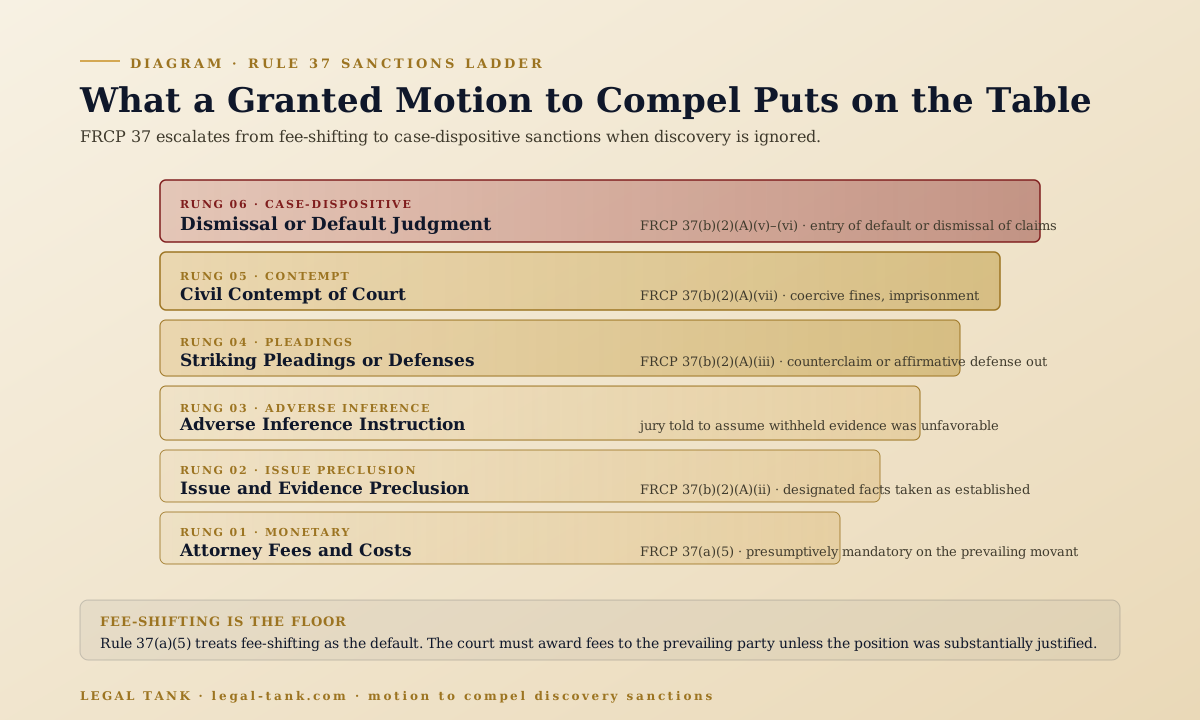
The package is structured so the Rule 37(a)(5) attorney-fee award is preserved on a granted motion to compel discovery, which often means the cost of the drafting service is recovered from the opposing party. Your retained trial counsel files the package, serves it, and argues at the hearing.
How Our Attorneys Draft Your Motion to Compel
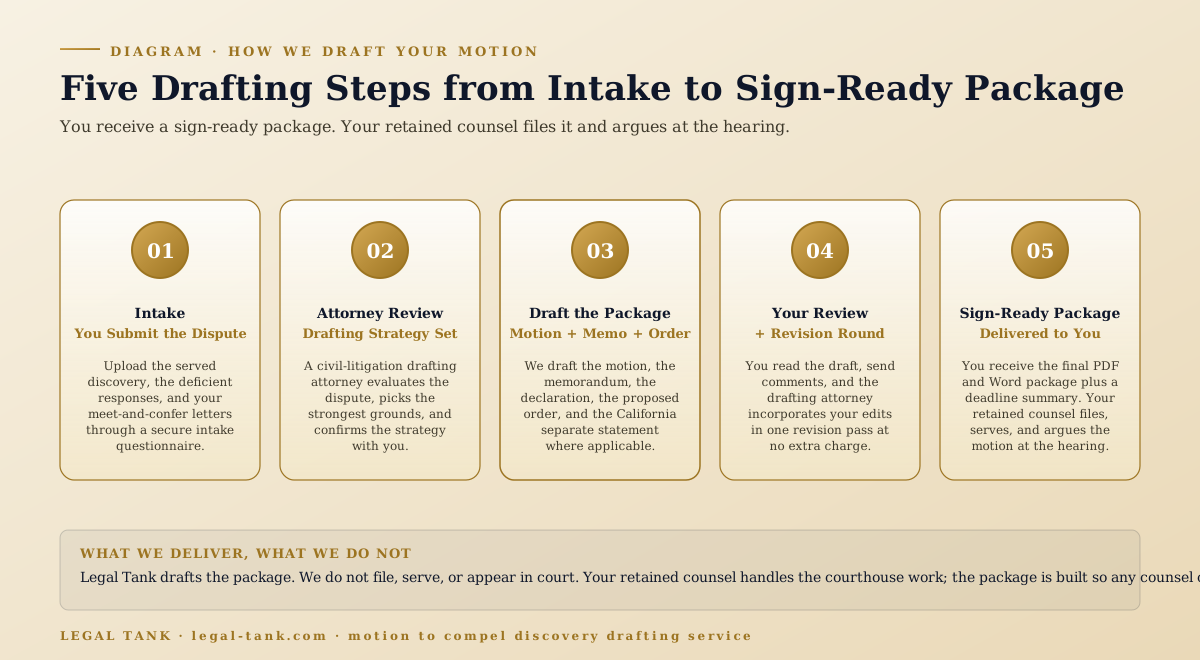
The drafting attorney delivers a sign-ready motion package at every step. Each deliverable, from the sworn declaration to the proposed order to any state-specific exhibit the local rule demands, is prepared to the controlling federal or state-court rule where the matter is pending.
Intake: You Submit the Dispute
Upload the served discovery, the deficient responses, and your meet-and-confer correspondence through the secure intake questionnaire. We send a short clarifying email if anything in the record needs context.
Attorney Review and Drafting Strategy
A civil litigation attorney reads the dispute, picks the strongest grounds for relief, and confirms the drafting strategy with you in writing before any prose is committed. You approve the angle; we then draft.
Draft the Full Motion Package
We draft the motion, memorandum, supporting declaration with exhibits, proposed order, and any state-specific exhibit the local rule requires (CA CRC 3.1345 separate statement, NY NYCRR 202.7 affirmation, TX TRCP 191.2 certificate of conference, plus FL Rule 1.380 and IL Rule 219 equivalents).
Your Review and One Free Revision Round
You read the draft and send comments. The drafting attorney incorporates your edits in a single revision pass at no extra charge. Additional revisions are quoted before any work begins.
Sign-Ready Package Delivered
You receive the final PDF and Word package, plus a one-page deadline summary covering the controlling federal local rule or state-court motion calendar (CA 45, NY 20, TX 21, FL 30, IL 14 days). Your retained counsel files, serves, and argues at the hearing. Legal Tank does not appear in court.
Why Legal Tank for the Motion to Compel Drafting
You can write the motion in-house, hire local counsel at billable rates to draft it, or commission Legal Tank for a flat-fee custom quote. The trade-off is straightforward: Legal Tank is faster, ships a complete fee-recovery-ready package, and never appears in court. Four reasons buyers commission us specifically.
Drafted by a Civil Litigation Attorney, Not a Forms Engine
Every Custom Quote motion is read, framed, and prepared by a bar-admitted civil litigation attorney with discovery-motion experience. The AI tier is clearly labeled and priced separately so you always know which one you are buying.
Delivered Inside the Court's Filing Window, Whatever the Jurisdiction
We pull the trigger date from the controlling rule and turn the package around inside the filing window (CA 45, NY 20 under CPLR 2214, TX 21, FL 30, IL 14, plus the federal local rule). Standard turnaround three to five business days, rush available when the window is days out.
Fee Recovery Built Into the Drafted Motion
The drafted package preserves the FRCP 37(a)(5) fee shift, or its state-code parallel (NY CPLR 3126, TX TRCP 215.2, FL Rule 1.380(b), IL Rule 219(c), CA CCP 2023.030), on the record. When the motion is granted, the drafting cost is often recovered from the opposing party.
Drafting Only, No Court Appearance, No Surprises
We deliver a sign-ready package. We do not file, serve, or argue at the hearing. Your retained trial counsel handles the courthouse work. The price you are quoted is the price you pay.
Legal Tank vs. DIY vs. Local Counsel
The three realistic ways to get the motion drafted, side by side.
| Question | Write It Yourself | Hire Local Counsel | Legal Tank |
|---|---|---|---|
| Who drafts it | You and your paralegal, evenings and weekends | A junior associate at the local firm, billed against the matter | A bar-admitted civil litigation drafting attorney, ready for your retained counsel to sign and file |
| Turnaround | Whatever your bandwidth allows | Two to four weeks, depending on the firm's workload | Three to five business days standard, rush available |
| Cost structure | Your hourly rate times the time it takes | Hourly billing, $400 to $900 per hour, no cap | Flat-fee Custom Quote, fixed before drafting begins |
| Fee recovery built in | Only if you remember to draft the fee section | Yes, but their fees are also higher than the recovery | Yes, drafting fee often recovered from opposing party |
| Files and argues | You and your retained counsel | Yes, full representation | No, your retained trial counsel handles the courthouse work |
Buyers come to us when they want the package on their desk, ready to sign and file, in time for the deadline. Submit the dispute and a drafting attorney returns a fixed quote within one business day.
Attorney Fees and Cost Structure
Two service tiers cover the spectrum, from an AI-generated motion to compel template for federal-court matters with narrow factual disputes through a fully attorney-drafted package for state-court motions in any of the fifty states, multi-deponent matters, and disputes that need a strategic fee-recovery footing.
AI-Generated Motion Skeleton
AI-drafted motion to compel discovery template populated from the supplied discovery, responses, and meet-and-confer record. Suitable for first-pass drafting in straightforward federal-court matters where the dispute is narrow and uncontested on facts.
- FRCP 37(a) framing
- Memorandum of points and authorities outline
- Sample motion to compel discovery format
- PDF and DOCX export
- 24-hour delivery
Attorney-Drafted Motion to Compel
A civil litigation attorney drafts the full motion, the supporting memorandum, the sworn declaration, the proposed order, and any state-specific exhibit your court requires. The Rule 37(a)(5) attorney-fee application (or its state-code parallel) is included in the deliverable when the motion is granted.
- Drafted from the discovery dispute record
- FRCP 37 framing for federal court
- Parallel state-code framing (NY CPLR 3124, TX TRCP 215.1, FL Rule 1.380, IL Rule 219, CA CCP 2030.300/2031.310)
- State-specific exhibits where required (CRC 3.1345 separate statement, NYCRR 202.7 affirmation, TRCP 191.2 certificate of conference)
- Meet-and-confer declaration prepared
- Sign-ready filing package
The drafted motion preserves Rule 37(a)(5) fee recovery from the opposing party once the motion is granted, which often means the cost of the drafting service is recovered as part of the sanctions order. A short-form motion for extension of time template is sometimes paired with a motion to compel when the discovery cutoff is days away and the briefing window cannot fit into the existing schedule.
The Civil Litigation Attorneys Drafting Discovery Motions
Our drafting roster is built around civil litigation practitioners who have run discovery from both sides of the v. The drafting attorney prepares the motion and the supporting declaration; your retained trial counsel signs, files, and argues at the hearing.

Marcus Holloway, Esq.
Senior Litigation Attorney
J.D., Fordham University School of Law · 12 years
Federal Civil Litigation: Pre-Suit Demand & Discovery Motions
Senior civil litigation attorney with twelve years in S.D.N.Y. and D.N.J. Drafts pre-suit demand letters for commercial collections and breach-of-contract recovery, plus FRCP 37 motions to compel discovery, protective-order motions, and 30(b)(6) follow-on motions for federal commercial, trade-secret, and securities matters.
Notable Drafted Matters
- •Rule 37 motion produced 11,400 withheld documents in a S.D.N.Y. trade-secret matter

Alexandra Chen-Park, Esq.
Employment, Restrictive Covenants & Civil Litigation Counsel
Boalt Hall, UC Berkeley · Fifteen
Workplace Disputes & State-Court Discovery Motion Practice
Drafts demand letters for unpaid wages and severance disputes, cease and desist letters for harassment and non-compete enforcement, and state-court motions to compel discovery under New York CPLR 3124, Illinois Supreme Court Rule 219, and California CCP 2030.300 / 2031.310. Practices across the three jurisdictions in employment, restrictive-covenant, and trade-secret matters.
Notable Drafted Matters
- •CPLR 3124 motion produced full document production in a 2025 NY Commercial Division matter

Nathan Brookfield, Esq.
Construction, Consumer & Federal Discovery Counsel
Harvard Law School · Eleven
Contractor Disputes, Consumer Protection & 30(b)(6) Motion Practice
Drafts demand letters under Chapter 93A, CLRA, and state contractor lien statutes, plus cease and desist letters against contractors continuing unauthorized work. Also drafts FRCP 30(b)(6) designee-deficiency motions and FRCP 37 deposition compulsion motions in Massachusetts federal court for consumer-class-action and commercial discovery disputes.
Notable Drafted Matters
- •30(b)(6) follow-on motion produced a continued deposition with a prepared designee in a 2024 D. Mass. class action

Daniel Whitaker, Esq.
Defamation, First Amendment & Commercial Litigation Counsel
J.D., University of Texas School of Law · 10 years
Anti-SLAPP Practice & Federal Privilege-Log Challenges
Drafts defamation cease and desist letters calibrated against state anti-SLAPP statutes for online defamation, false reviews, and reputation matters. Also drafts FRCP 26(b)(5)(A) privilege-log challenges, in-camera review motions, and FRCP 34(b) production-deficiency motions for federal commercial litigation in Texas and Colorado, including federal-court motion practice in the Southern District of Texas.
Notable Drafted Matters
- •Rule 26(b)(5)(A) motion produced waiver of 600+ privilege-logged documents in a 2024 N.D. Tex. matter
What Litigation Counsel Say
“Opposing counsel had stalled on requests for production for four months. Their drafting attorney prepared the motion to compel discovery with the meet-and-confer record indexed as exhibits and a separate statement that walked through every objection. The opposing side produced before the hearing.”
Lawrence P.
San Francisco · Verified client
Motion to Compel Production
“We had a forty-fifth-day window in California state court that everyone on my own side missed. Their attorney rebuilt the timeline from the response service date, drafted the CCP §2031.310 motion with a CRC 3.1345 separate statement, and we filed with two days to spare. Court granted on the papers.”
Reagan A.
Los Angeles · Verified client
California Motion to Compel Further
“Witness refused to answer ten 30(b)(6) topics in deposition. The drafting attorney prepared the FRCP 37(a)(3)(B)(i) motion that night, attached the deposition transcript with the refusals tabbed, and the magistrate ordered a continued deposition with sanctions for the refused topics.”
Iris V.
New York, NY · Verified client
Motion to Compel Deposition
Frequently Asked Questions
The four questions buyers ask most before commissioning a motion to compel discovery: cost, drafting, fee recovery, and what happens after filing.
How much will a lawyer charge to file a motion to compel?
How to draft a motion to compel?
Who pays for motion to compel?
What happens after you file a motion to compel?
Related Civil Motion Drafting Services
Discovery motions often run alongside other procedural filings. Litigants commissioning a motion to compel discovery also commission templates and drafted motions across the rest of the civil docket. See, for example, our explainer on what a motion to compel is, the motion for default judgment definition, and the motion to modify a divorce decree template for family-court motion practice.
Motion to Dismiss Template
FRCP 12(b)(6) and state-equivalent dismissal motion templates for failure to state a claim, lack of jurisdiction, and improper venue.
Motion for Extension of Time
FRCP 6(b) extension motion for response and discovery deadlines, with the good-cause showing federal and state judges expect.
Motion to Reconsider (Federal Court)
Post-ruling reconsideration motion under Local Rule 7-9, FRCP 59(e), and FRCP 60(b) for newly discovered evidence and clear error.
Commission a Motion to Compel Discovery
A civil litigation attorney drafts the motion, the supporting declaration, and the proposed order, calibrated to FRCP 37 in federal court or the controlling state discovery code. We draft the filing package; your retained trial counsel signs, files, and argues at the hearing.