A motion to compel is a formal request to a civil court asking the judge to order the opposing party to comply with outstanding discovery obligations. It is filed under Rule 37 of the Federal Rules of Civil Procedure (or a state analogue) after a good-faith meet-and-confer effort has failed to resolve a dispute over interrogatories, document requests, deposition attendance, or evasive responses. A granted motion typically orders compliance within a fixed deadline and shifts the moving party's attorney fees to the resisting side.
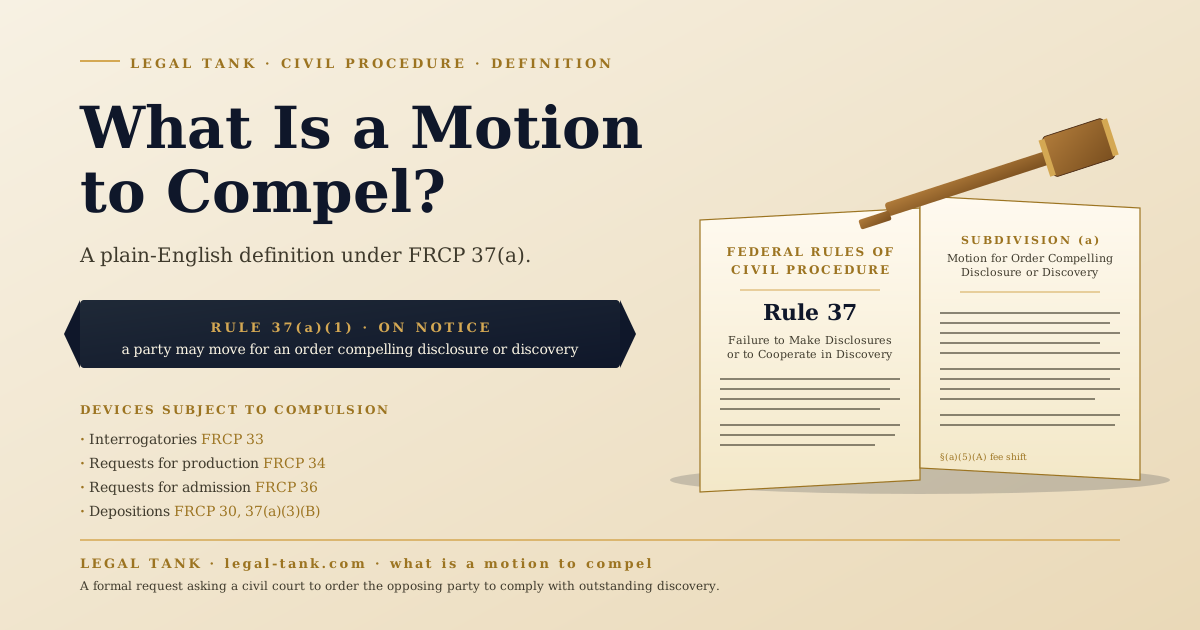
The motion to compel definition begins with the verb compel itself. In ordinary usage, the compel meaning is to force someone to do something they would otherwise refuse, and the legal sense narrows that to a court-issued order requiring a specific procedural act. Inside civil litigation, a movant who has been stonewalled in discovery turns to the court for that order. The procedural authority sits in Rule 37(a) of the Federal Rules of Civil Procedure, which authorizes a party to seek an order requiring disclosure or discovery after a good-faith conferral has failed.
On notice to other parties and all affected persons, a party may move for an order compelling disclosure or discovery. The motion must include a certification that the movant has in good faith conferred or attempted to confer with the person or party failing to make disclosure or discovery in an effort to obtain it without court action.
Federal Rules of Civil Procedure, Rule 37(a)(1)
Legal Meaning of Compel
The compel definition in a procedural sense covers two acts the court can order: production of information and attendance at a discovery event. The judge who grants the motion can require the opposing party to answer interrogatories under oath, produce documents in their possession, custody, or control, sit for a deposition, or appear for a physical or mental examination. What it means to compel means the court has converted a private discovery dispute into a binding procedural directive backed by sanction authority.
Motion to Compel Discovery Explained
What is a motion to compel discovery in concrete terms? It is the procedural pleading that translates a discovery failure into a court order. The motion identifies the specific requests at issue, quotes the deficient response or the silence that followed, attaches the meet-and-confer correspondence as exhibits, and proposes a precise order. The supporting memorandum cites the controlling rule, walks through proportionality under Rule 26(b)(1), and addresses any objections the opposing party has raised. The opposing party then has a fixed window to oppose, and the court rules either on the papers or after a brief argument. The result is an order that resolves each disputed request item by item.
Common Scenarios That Trigger the Motion
The dispute pattern that produces these motions is familiar across commercial, employment, and personal-injury cases. The opposing party serves boilerplate objections without responsive substance. A deponent fails to appear or refuses to answer specific questions. A producing party redacts heavily without supporting entries on a privilege log. A subpoenaed third party ignores the command altogether. Each of these is a textbook trigger for the relief Rule 37 authorizes, and the question of does a motion to compel look bad generally turns on which side made the discovery decisions, not on the existence of the motion itself.
Why Parties File This Motion
The decision to file is rarely about the documents in isolation. Litigators move to compel discovery because three distinct objectives converge: get the missing information, deter future obstruction, and preserve the record for sanctions or appeal. Each rationale supports a slightly different framing in the supporting brief, and an experienced movant calibrates the motion to the dominant objective.
Forcing Responses to Ignored Discovery Requests
The first and simplest reason is informational. The plaintiff or defendant cannot try the case without the requested material, the opposing side has not produced it, and the meet-and-confer call has not closed the gap. Filing the motion shifts the dispute to the judge, who decides whether the response is adequate and what additional production is required. Most motions resolve at this level: the court orders production within fourteen to thirty days, the documents arrive, and the case proceeds on the merits.
Overcoming Improper Objections and Privilege Claims
The second reason is doctrinal. Rule 33(b)(4) and Rule 34(b)(2) require objections to be stated with specificity, and Rule 26(b)(5)(A) requires every privilege withholding to be logged. A party that responds with general objections, or that withholds material on privilege without entry-level descriptions, has not preserved its objections in a way the court will treat as valid. The motion to compel is the procedural vehicle for getting the judge to declare those objections waived and order production on the merits.
Preserving the Record for Sanctions and Appeal
The third reason is strategic. When a party expects continued obstruction, the granted motion is the predicate for everything that follows: monetary fee-shifting at first, then evidence preclusion, then issue-establishment, and ultimately terminating sanctions if the disobedience continues. The Rule 37(b)(2) ladder requires a violated order before each rung becomes available, so getting the order on the books matters for the next motion as much as it matters for the current discovery gap. The same record also creates the foundation for an appeal if the trial court later denies dispositive relief on a contested fact that the movant could have proved with the withheld discovery.
When to File a Motion to Compel
Timing is a question litigators answer with reference to two independent calendars: the meet-and-confer record on one side and the discovery cutoff on the other. The question of what is motion to compel discovery ripens for filing only after the conferral has failed and before the case schedule extinguishes the right to seek the relief.
After Meet and Confer Fails
Rule 37(a)(1) and most state analogues require the movant to confer in good faith before filing. In federal practice the certification is a one-paragraph statement attached to the motion, identifying the date and method of the conferral and briefly summarizing why it did not resolve the dispute. Local rules in many districts require a contemporaneous letter or telephonic exchange, not just an email chain, and judges enforce the requirement strictly. The motion is ripe the day the conferral closes without resolution; filing earlier risks denial without prejudice for failure of the prerequisite.
Before the Discovery Cutoff Deadline
The outer boundary is the discovery cutoff in the case-management order. Most federal districts treat motions to compel as discovery motions that must be filed and resolved before that date, and many local rules go further by requiring the motion be filed at least thirty days before the cutoff. A movant who waits until the cutoff is hours away has to clear an additional hurdle: showing diligence in pursuing the discovery during the open window. Late motions tend to fail not on the merits but on the diligence inquiry that local rules build into the timing.
Common Triggers for Filing
The triggers cluster into a small set: missed response deadlines on interrogatories or requests for production; boilerplate objections without responsive substance; deposition no-shows or instructions not to answer; refusals to produce a 30(b)(6) corporate designee on noticed topics; and inadequate privilege logs. Each trigger maps to a different subsection of Rule 37(a) and to a slightly different proof package, but the underlying motion architecture is the same.
What Happens After Filing
Once the movant files, the local rule sets the briefing schedule, usually fourteen to twenty-one days for the opposition and seven for the reply. The court can decide on the papers, set oral argument, refer the dispute to a magistrate judge, or order an in-camera production for inspection. Many districts route discovery disputes to a designated magistrate, and the magistrate's order is reviewable by the district judge under a deferential standard. The opposing party's window to oppose is the single most important deadline in the responding party's calendar from the day the motion lands.
How the Court Rules on the Motion
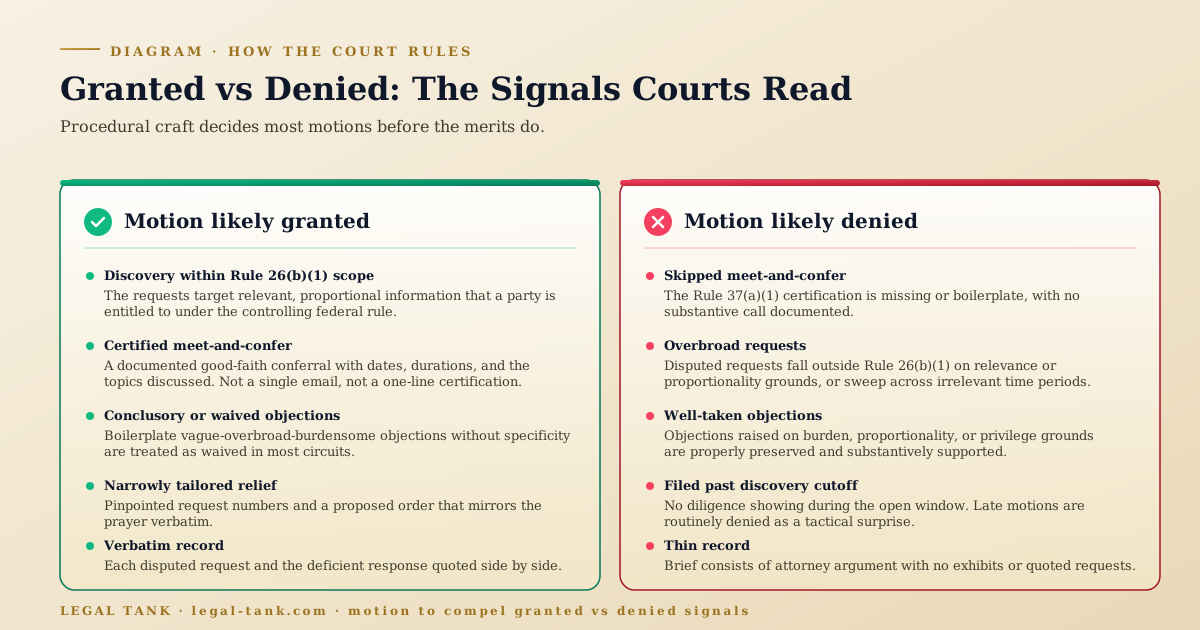
Federal magistrate judges and state-court discovery commissioners see hundreds of these motions each year, and the patterns that decide them are stable. The court works through three questions in order: was the discovery within scope, did the movant satisfy the conferral prerequisite, and is the requested relief proportionate to the case? In Florida, where motion to compel florida practice runs through Florida Rule 1.380, the same inquiry plays out under state-court timing rules but with the federal-style proportionality lens that courts have read into the rule.
Procedural craft decides most motions before the merits do.
Motion likely granted
Discovery requests were properly served and within Rule 26(b)(1) scope.
The moving party met and conferred in good faith and certified the conferral in writing.
The opposing party's objections are conclusory or were waived by untimeliness.
The relief requested is narrowly tailored to the disputed requests.
The supporting brief quotes each disputed request and the verbatim deficient response.
Motion likely denied
The moving party skipped or undercooked the meet-and-confer prerequisite.
The disputed requests are overbroad or seek information outside Rule 26(b)(1).
The objections raised are well-taken on burden, proportionality, or privilege grounds.
The motion is filed after the discovery cutoff with no diligence showing.
The supporting record is thin and consists of attorney argument with no exhibits.
Hearing and Oral Argument on the Motion
Some judges decide the motion on the briefs alone. Others set a short oral argument, often by telephone or video, and ask the parties to walk through the disputed requests one by one. The argument tends to be tightly focused on the disputed items, not on the merits of the case, and the magistrate may rule from the bench at the end of the call. A movant should arrive ready to speak to each request specifically, not in generalities.
Order Granting or Denying the Motion
The order itself is typically a short document that lists each disputed request and rules item by item: granted, denied, granted in part, or held in abeyance pending in-camera review. A granted order will set a fixed compliance window, usually fourteen to thirty days, and will identify the form of production required. A denied order will explain briefly why the request fell outside Rule 26(b)(1) scope or why the objection was sustained.
Sanctions and Fee Awards Under Rule 37
Rule 37(a)(5)(A) makes a fee award the default outcome when the court grants a motion to compel: the movant gets reasonable expenses, including attorney fees, unless the opposing position was substantially justified or other circumstances make the award unjust. The fee shift is one of the few automatic fee-shifting provisions in the federal civil rules, and it applies even when the dispute resolves before the hearing if the discovery is provided after the motion is filed. State analogues operate similarly under their respective discovery rules.
Compliance Deadlines Set by the Court
The compliance deadline is the operative date for everything that follows. Producing the discovery in compliant form within the window typically closes the dispute. Missing the deadline triggers a second motion practice cycle: the movant can file a motion for sanctions under Rule 37(b)(2), and the court can escalate from monetary sanctions to issue preclusion or, in severe cases, terminating sanctions on the disobedient claim.
What Happens After Filing
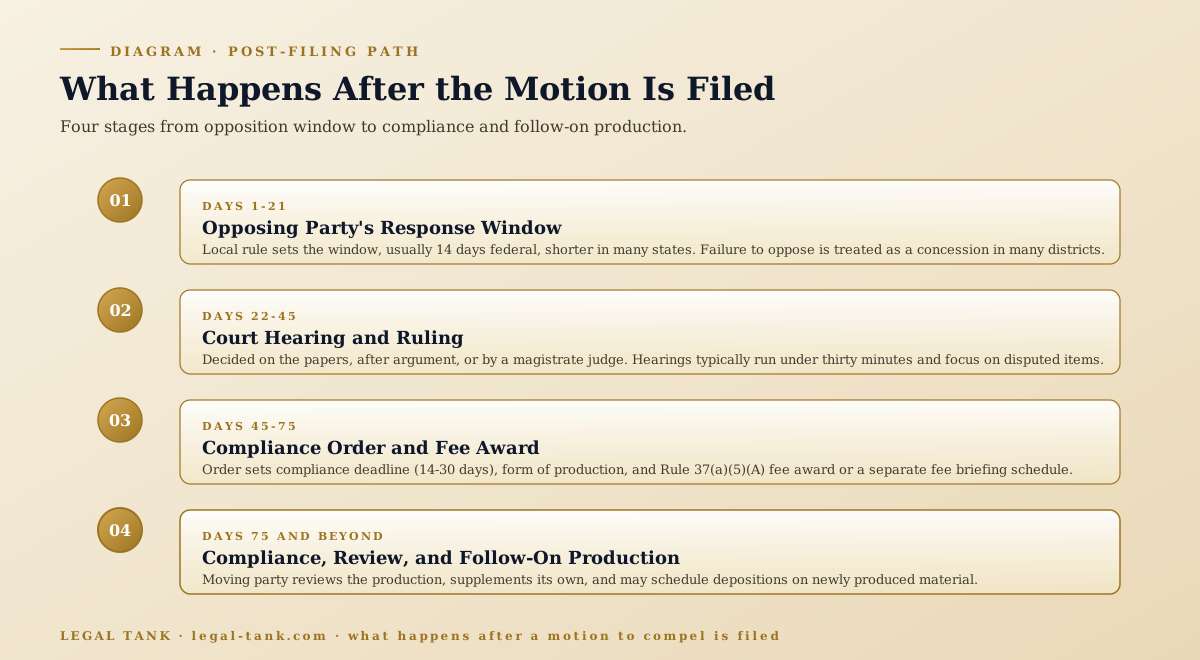
What happens after a motion to compel is filed is a question about the post-filing calendar. Once the motion is served, the case enters a fixed sequence: the opposing party briefs, the court rules, and the parties either comply or escalate to sanctions. The path is procedural, but the timing varies by district and by the assigned judge's preferences.
Four post-filing stages from opposition window to compliance and follow-on production.
Opposing Party's Response Window
The local rule fixes the window, usually fourteen days in federal practice and shorter in many state systems. The opposition must address each disputed request, attach supporting exhibits, and either accept the duty to produce or articulate why production is excused. Failing to file an opposition is treated as a concession in many districts and often results in the motion being granted as unopposed.
Court Hearing and Ruling
The court either decides on the papers, sets oral argument, or routes the dispute to a magistrate. A typical hearing is short, often under thirty minutes, and is focused on the disputed items rather than the merits of the underlying claim. The magistrate or judge issues a written order that resolves each request specifically and sets a compliance deadline.
Sanctions and Compliance Orders
If the court grants the motion, the order will typically include the compliance deadline, the form of production required, and either an immediate fee award or a separate briefing schedule on fees. If the opposing party fails to comply, the next filing is a Rule 37(b)(2) sanctions motion, and the court has broad authority to order monetary sanctions, evidence preclusion, issue establishment, or dismissal.
Next Steps If Discovery Is Granted
Once the discovery arrives, the moving party reviews the production for completeness, supplements its own discovery if appropriate, and may schedule follow-on depositions on the newly produced material. If the production is partial or if the responses remain evasive, the moving party documents the deficiency and prepares a follow-on motion that builds on the granted order as the predicate violation. The case then returns to its underlying merits track, often with the disputed material now central to summary judgment briefing.
Compliance is the only safe response to a granted order.
A party that disagrees with the magistrate's ruling has fourteen days to file written objections to the district judge under Rule 72(a). What it cannot do is ignore the order while the objection is pending; the order is in effect until stayed or modified, and noncompliance during the objection window is itself sanctionable.
Sample Scenarios in Civil Litigation
The same procedural mechanics produce a recognizable set of fact patterns. Each motion to compel example below is a composite drawn from federal and state-court orders, edited to show the path from discovery failure to court ruling. The particular relief depends on the rule invoked and the strength of the meet-and-confer record, but the architecture is consistent.
Contract dispute
Compelling Discovery Responses in a Contract Dispute
A plaintiff in a breach-of-contract case serves interrogatories asking the defendant to identify every communication that relates to the disputed delivery. The defendant returns answers consisting of boilerplate objections, with no substantive responses. The plaintiff sends a meet-and-confer letter listing each defective answer. The defendant refuses to supplement. The plaintiff files a motion to compel under Rule 37(a)(3)(B), the court grants the motion, and the defendant is ordered to provide complete answers under oath within fourteen days plus reimbursement of the plaintiff's reasonable fees.
Deposition no-show
Forcing Deposition Attendance After a No-Show
A defendant in an employment matter notices the deposition of the plaintiff's supervising witness. The witness is properly served but does not appear and offers no explanation. After the certification of nonappearance, the defendant moves under Rule 37(a)(3)(B)(i) to compel the witness to sit for the deposition and to award the costs of the failed setting. The court orders the deposition rescheduled within twenty-one days and awards the court reporter's fee plus attorney time as a discovery sanction.
Document production
Obtaining Withheld Documents in Employment Litigation
A plaintiff in a wage-and-hour case requests three years of payroll records and time-clock data under Rule 34. The employer produces a redacted summary spreadsheet but refuses to release the underlying records. The plaintiff files a motion to compel production of the unredacted source documents. The court orders the employer to produce the native files in their original format under a protective order, and to certify completeness under oath.
Privilege challenge
Resolving Privilege Log Disputes
A defendant withholds two hundred documents on attorney-client privilege grounds and serves a privilege log that lists only date ranges and generic descriptions. The plaintiff disputes the log under Rule 26(b)(5)(A) and moves to compel either entry-level descriptions or in-camera review. The court orders the defendant to amend the log within ten days, releases thirty-eight documents that did not meet the privilege standard, and reserves judgment on the remainder pending in-camera inspection.
Each example of motion to compel in the grid above maps to a different Rule 37(a) subsection. Reading several alongside one another sharpens the question of when filing is the right move and when the same dispute is better resolved by another round of meet-and-confer correspondence. For more technical scenarios, the working treatment of drafting and filing a motion to compel walks through the form papers and the proof package the underlying motion requires.
The purpose of a motion to compel is to ask the court to order the opposing party to respond to discovery they have failed or refused to provide. The motion is a formal procedural remedy under Rule 37 of the Federal Rules of Civil Procedure and parallel state rules, used after the requesting party has tried, in good faith, to resolve the dispute through a meet-and-confer call or letter. The court's order can require the opposing side to answer interrogatories, produce documents, sit for a deposition, or supplement evasive responses. A successful motion typically also shifts the moving party's reasonable attorney fees and costs to the side that resisted, which is the second purpose: to deter discovery abuse by attaching a real cost to obstruction.
Is a motion to compel a bad thing?
A motion to compel is not inherently a bad thing for either side; it is a routine discovery tool in active civil litigation. For the moving party, it signals to the court that the opposing side has refused to participate in discovery, and a granted motion strengthens the moving party's position on sanctions and on the merits if the resisting conduct continues. For the responding party, a motion to compel does carry real risk because Rule 37(a)(5) makes a fee-shifting award the default when the court grants the motion, and repeated discovery obstruction can lead to issue-preclusion or terminating sanctions. The motion is bad only when the opposing party loses on a question that could have been resolved during the meet-and-confer, because at that point the court is likely to award fees and to view future objections from that party with skepticism.
What happens if someone ignores a motion to compel?
If a party ignores a motion to compel after the court grants it, Rule 37(b)(2) authorizes a graduated set of sanctions that escalate quickly. The court can order the disobedient party to pay the moving side's additional attorney fees, can deem certain facts established against the disobedient party, can prohibit the disobedient party from introducing evidence on a particular issue, can strike pleadings or claims, can dismiss the action or enter a default judgment, and in extreme cases can hold the disobedient party in civil contempt. Most judges issue an order to show cause first, giving the disobedient party one final chance to comply or explain. If the second chance is also ignored, terminating sanctions become realistic, and the case can effectively be lost on procedural grounds without a trial on the merits.
Need a Rule 37 Motion Drafted?
Send the discovery requests at issue, the deficient responses, and the meet-and-confer correspondence. A civil litigation attorney drafts the motion, the supporting memorandum, the attorney declaration with exhibits, and the proposed order as a sign-ready package for the trial counsel of record.