
Steps in the Motion to Compel Discovery Process Under Civil Procedure Rules
To compel discovery is to ask a civil court for an order forcing an opposing party to answer interrogatories, produce documents, or respond to requests for admission they have ignored, evaded, or improperly objected to. The mechanism is a motion under Federal Rule of Civil Procedure 37 or the parallel state-court rule, supported by a sworn meet and confer record, and backed by mandatory fee shifting against the losing side.
If a party fails to make a disclosure required by Rule 26(a), any other party may move to compel disclosure and for appropriate sanctions.
What It Means to Compel Discovery
A request to compel discovery is a procedural escalation, not a substantive claim. The court is not being asked to decide the merits of the lawsuit. It is being asked to enforce the rules that govern how the parties exchange the documents, sworn answers, and admissions that will frame the merits phase. The compulsion mechanism sits inside the larger family of civil litigation motion practice, and the relief itself is narrow: an order directing complete responses by a date certain. The pressure attached is broader, because Rule 37(a)(5)(A) makes the losing side pay the moving party's reasonable attorney fees absent substantial justification.
The doctrine reaches every flavor of written discovery in civil practice. Interrogatories under Rule 33, requests for production of documents and electronically stored information under Rule 34, and requests for admission under Rule 36 are all subject to the same compulsion mechanism. Depositions are reached through Rule 37(a)(3)(B), which allows the moving party to obtain an order compelling answers to questions a deponent refused, or compelling a 30(b)(6) corporate designee to be produced. For a longer treatment of the underlying threshold doctrine, see our companion primer on the motion to compel as a doctrinal device.
The legal authority is Rule 37 of the Federal Rules of Civil Procedure for federal-court matters and the parallel state code provisions for state actions: California Code of Civil Procedure sections 2030.300 (interrogatories) and 2031.310 (production), New York Civil Practice Law and Rules 3124, Texas Rule of Civil Procedure 215, Florida Rule 1.380, and Illinois Supreme Court Rule 219. Each rule attaches the same fee-shifting consequence and the same path to escalating sanctions when compliance does not follow.
When to File a Motion to Compel
The motion compel discovery filing window opens the moment the response is due and a defect appears, but the practical timing is governed by the meet and confer obligation and the local-rule deadlines that follow. Most districts treat the motion as untimely if it is filed more than 30 to 45 days after the deficient response without an explanation, and discovery cutoff is the absolute backstop. The timeline below tracks the chronology from the original request through the court's ruling. For the cross-cutting text of Rule 37, Cornell's Legal Information Institute has the controlling subdivisions referenced throughout this guide.
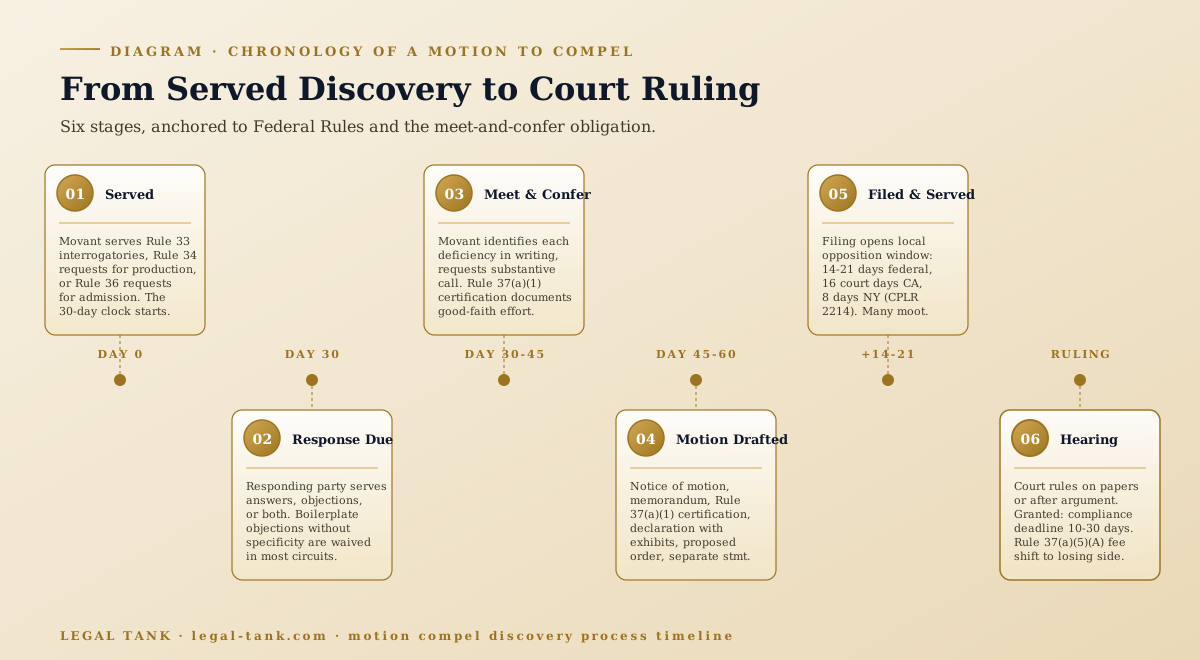
- 01
Discovery served
Movant serves interrogatories, requests for production, or requests for admission. The clock for the response starts on service and runs 30 days under Rule 33(b)(2), Rule 34(b)(2)(A), and Rule 36(a)(3), with parallel state windows.
- 02
Response due
Responding party serves answers, objections, or a combination. A failure to respond at all becomes the predicate for a Rule 37(d) sanctions motion in addition to a motion to compel. Boilerplate objections without specificity are treated as waived in most circuits.
- 03
Meet and confer
The requesting party identifies each deficiency in writing, requests a substantive call, and documents the conferral. The certification under Rule 37(a)(1) requires a good-faith effort to resolve the dispute without court intervention. Skipping this step is the single most common reason motions are denied summarily.
- 04
Motion drafted
Movant drafts the notice of motion, the memorandum organized request by request, the Rule 37(a)(1) certification, the proposed order, and any local-rule exhibit such as a joint discovery statement or separate statement. Each disputed request appears verbatim alongside the response and a short argument paragraph.
- 05
Filed and served
Filing triggers the opposition window, which runs the local response period (commonly 14 to 21 days in federal court, 16 court days in California, 8 days in New York under CPLR 2214). Many opponents produce the discovery rather than face the hearing, mooting the motion in part.
- 06
Hearing and ruling
The court rules on the papers or after a brief argument. A granted motion produces an order setting a compliance deadline, typically 10 to 30 days, and a fee-shifting award under Rule 37(a)(5)(A). A denied motion can also award fees to the prevailing nonmovant absent substantial justification.
Grounds That Justify Compelling Responses
Courts grant a motion to compel discovery when the record shows a concrete, request-by-request failure rather than a generalized dissatisfaction. Four patterns dominate. Each connects to specific subdivisions of Rule 37 and supplies its own evidentiary frame for the motion.
Evasive or Incomplete Answers
Rule 37(a)(4) treats an evasive or incomplete disclosure, answer, or response as a failure to disclose, answer, or respond. Common patterns include answering a different question than the one posed, hedging with qualifiers that swallow the substance, and stating that responsive documents will be produced without identifying which categories or where they appear in the production.
Failure to Respond Within Deadline
A party that fails to serve any response by the due date loses most objections and exposes itself to both a motion to compel and a Rule 37(d) sanctions motion. Several circuits apply automatic objection waiver where the response is more than a day or two late absent a written extension agreement filed with the court.
Improper Objections to Requests
Boilerplate objections (vague, overbroad, unduly burdensome) without specificity are waived in most jurisdictions. The respondent must connect each objection to the actual language of the request and identify what is being withheld so the court can assess the dispute on a concrete record. A privilege objection without a privilege log is itself a grounds for compulsion.
Refusal to Produce Documents
Rule 34(b)(2)(C) requires the responding party to either produce or specify the categories withheld and the basis. Withholding documents in the face of a clear request, redacting on novel and undisclosed grounds, or refusing to search defined custodians for electronically stored information are all standard predicates for the motion.
The motion almost never travels alone. Where the failure pattern includes a withheld 30(b)(6) deposition or a refusal to produce a designated witness, the same filing typically pairs the document compulsion with a Rule 37(a)(3)(B) request for an order compelling the deposition. Where the responding party has served no response at all, the moving party should evaluate whether to layer a specimen motion for discovery structure with a parallel Rule 37(d) sanctions request rather than relying on the milder Rule 37(a) path. For the criminal-procedure cousin used to obtain exculpatory or impeachment material, see our reference on the criminal motion of discovery, which operates under different rules and a different evidentiary standard.
How the Motion to Compel Process Works
The motion compel discovery workflow has four operational stages, and each stage produces a discrete document or record event the court will look for at the hearing. Skipping a stage, or producing only a thin paper trail at one of them, is the most common reason a motion that would have been granted on the merits fails on procedural grounds.
Meet and Confer With Opposing Counsel
Send a written deficiency letter that quotes each request, quotes the response, and explains the defect. Follow with a substantive call or video conference. The certification under Rule 37(a)(1) names the date, the duration, the participants, and what each side conceded. Courts in California and the Northern District of Illinois are particularly strict on this point; a single email exchange is not a meet and confer.
Draft the Motion and Supporting Declaration
The motion package contains a notice of motion, a memorandum of points and authorities organized request by request, the Rule 37(a)(1) certification, a sworn declaration of counsel attaching the meet and confer correspondence as exhibits, a proposed order, and a separate statement where the local rule requires it. The memorandum of law argues each disputed request individually rather than treating the dispute in the aggregate.
File and Serve the Motion
File the package with the clerk, serve the opposing party through the court's electronic system, and calendar the opposition deadline plus the hearing date. Many opponents produce the discovery rather than file an opposition; the moving party should be prepared to amend the proposed order to reflect partial mootness if production occurs before the hearing.
Attend the Hearing and Obtain a Ruling
Some judges rule on the papers; others hold a brief argument focused on the disputed requests. The signed order will set a compliance deadline (commonly 10 to 30 days), set the fee award amount or order a separate fee application, and reserve jurisdiction to enter further sanctions for noncompliance. Calendar the compliance date and follow up immediately with a renewed motion or contempt application if production does not arrive.
Sample Language and Drafting Format
The blocks below show the three drafting components every motion compel discovery sample needs to land cleanly with the court: the caption that establishes the relief sought on the face of the filing, the meet and confer certification that satisfies Rule 37(a)(1), and the prayer for relief that frames the order the court will sign. The compel discovery sample is annotated for federal practice; state-court adaptations require swapping the rule citation and adding any local separate-statement format. Litigants who want the full sign-ready package rather than a specimen can engage drafting on the matter and have local trial counsel file the resulting filing under their own signature.
Caption and Introduction Block
IN THE UNITED STATES DISTRICT COURT
FOR THE [DISTRICT]

[PLAINTIFF],                       )   Case No. [NUMBER]
                                   )
        Plaintiff,                 )   PLAINTIFF'S MOTION TO COMPEL
                                   )   DISCOVERY RESPONSES FROM
v.                                 )   DEFENDANT [NAME] AND FOR AN
                                   )   AWARD OF EXPENSES UNDER
[DEFENDANT],                       )   FEDERAL RULE OF CIVIL
                                   )   PROCEDURE 37(a)(5)
        Defendant.                 )
                                   )   Hearing: [DATE]
                                   )   Judge: [NAME]
The caption must state both the procedural relief (an order compelling responses) and the monetary relief (expenses under Rule 37(a)(5)) on its face. Many courts will not award fees that are not pleaded in the caption.
Meet and Confer Certification Paragraph
CERTIFICATION OF MEET AND CONFER UNDER RULE 37(a)(1)

Counsel for Plaintiff certifies that, before filing this
motion, the undersigned conferred in good faith with counsel
for Defendant in an effort to obtain the discovery without
court action. Counsel exchanged written deficiency letters on
[DATE 1] and [DATE 2] and held a substantive video conference
on [DATE 3] lasting [DURATION]. Defendant has confirmed in
writing that it will not supplement the responses identified
herein. The parties' positions are at impasse, and judicial
intervention is necessary to resolve the dispute.

Dated: [DATE]              /s/ [Counsel of Record]
The certification names dates, durations, and topics. Courts compare it to opposing counsel's account and treat any inconsistency as a credibility question that affects the merits ruling.
Prayer for Relief and Signature
PRAYER FOR RELIEF

WHEREFORE, Plaintiff respectfully requests that this Court
enter an order:

  1.  Compelling Defendant to serve, within fourteen (14) days
      of entry of this Order, complete and verified responses
      to Plaintiff's Interrogatories Nos. [LIST] and Requests
      for Production Nos. [LIST], without objection;

  2.  Awarding Plaintiff its reasonable expenses, including
      attorney fees, incurred in bringing this Motion under
      Federal Rule of Civil Procedure 37(a)(5)(A); and

  3.  Granting such other and further relief as the Court
      deems just and proper.

Dated: [DATE]              /s/ [Counsel of Record]
The prayer pinpoints request numbers and pairs the compulsion order with the fee-shifting request. The accompanying proposed order mirrors the prayer verbatim so the court only has to sign.
Possible Rulings and Sanctions Outcomes
Courts work through Rule 37 sanctions on a graded ladder, starting with a simple compliance order and escalating only as the noncompliance pattern justifies. The same statutory grants apply where a Rule 37(b) violation follows a previously entered compulsion order. The tiers below track how a typical dispute moves from first-time compulsion through terminating sanctions, with each higher tier presupposing the failure of every step below it.
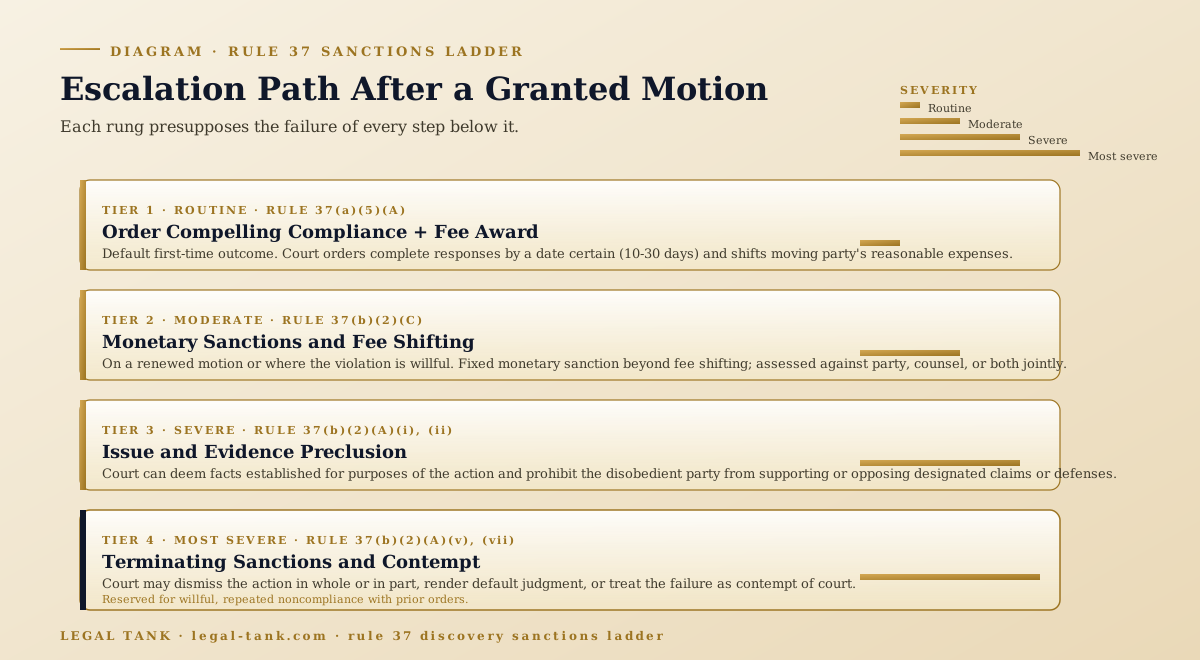
Order Compelling Compliance
The default first-time outcome. The court orders complete responses by a date certain, often 10 to 30 days, and awards reasonable expenses to the moving party under Rule 37(a)(5)(A).
Monetary Sanctions and Fee Shifting
On a renewed motion or where the violation is willful, the court adds a fixed monetary sanction beyond fee shifting. Sanctions can be assessed against the party, counsel, or both, and are routinely awarded jointly under Rule 37(b)(2)(C).
Issue and Evidence Preclusion
Rule 37(b)(2)(A)(i) and (ii) authorize an order designating that certain facts be taken as established for purposes of the action, and an order prohibiting the disobedient party from supporting or opposing designated claims or defenses or introducing designated matters in evidence.
Terminating and Contempt Sanctions
Rule 37(b)(2)(A)(v) and (vii) authorize the court to dismiss the action in whole or in part, render default judgment, or treat the failure as contempt of court. Reserved for willful, repeated noncompliance with prior orders, but available on the right record without escalating intermediate steps.
Adverse-inference rulings sit alongside the formal sanctions ladder. Where a party fails to preserve discoverable evidence, Rule 37(e) authorizes the court to instruct the jury that it may presume the lost information would have been unfavorable to the responsible party. The instruction often does more case-level damage than the underlying compulsion order. Where a protective order issued in the same case is also violated, the court can fold the contempt remedy under Rule 37(b)(2)(A)(vii) into the same proceeding.
Common Errors That Sink the Motion
The four mistakes below account for the majority of denied motions to compel. Each is procedural rather than substantive, which means the underlying discovery dispute is winnable on a clean record but lost on the present filing. The fix in every case is to delay the filing, document the predicate, and refile.
Skipping the Meet and Confer Requirement
Filing without a documented good-faith conferral is the single most common reason motions to compel are denied. Rule 37(a)(1) requires the certification, and most local rules add a substantive-call requirement on top. A boilerplate certification asserting good-faith effort without dates, durations, and topics covered is treated as no certification at all.
Failing to Quote the Disputed Requests
Courts will not parse summarized arguments. Each disputed interrogatory, request for production, or request for admission must appear verbatim alongside the verbatim response and a short paragraph explaining the deficiency. Many federal districts and state trial courts (notably California and Illinois) require this side-by-side format as a separate statement attached to the motion.
Missing the Filing Deadline
Many courts impose a presumptive deadline measured from the date of the deficient response, often 30 to 45 days, after which the motion is treated as untimely without good cause. Discovery cutoff is the absolute backstop. Filing after the cutoff requires an extension motion in addition to the motion to compel, and courts routinely deny last-minute compulsion attempts as a tactical surprise.
Overbroad or Unsupported Relief Requests
Asking the court to order responses to all outstanding discovery without identifying specific defective requests reads as a failure to engage with the record. Pinpoint the failures, supply the legal authority that compels production for each, and request only the relief the rule supplies. Overbroad orders are denied as drafted, even where the underlying discovery is plainly compellable.
Need the Sign-Ready Drafting Package?
The doctrinal framework above is the analytical spine. The execution work is different: drafting the request-by-request memorandum, attaching the meet and confer correspondence as exhibits, formatting the local-rule separate statement, and assembling the proposed order. Legal Tank's civil litigation drafters produce the full sign-ready package, calibrated to the controlling federal or state rule, and deliver it for filing by retained trial counsel.
For most matters the cost of the drafting service is recovered from the opposing party under Rule 37(a)(5)(A) when the motion is granted. The drafted package preserves the fee application on the record from the first page.