Anatomy of a Legal Motion Form and the Sections Courts Expect to See
A motion form is the standardized layout a court expects every motion filing to follow before the clerk will accept it onto the docket. The federal floor sits in FRCP Rule 7(b)(1), which requires the motion to be in writing, to state with particularity the grounds for the relief, and to set out the relief sought. State and county courts layer their own local rules on top of that floor. This page walks the six elements of the standard form motion, the blank motion form variants that most courts publish, and the local-rule wrinkles that show up on a Maricopa County motion (a frequent example because the county publishes its self-help forms publicly).
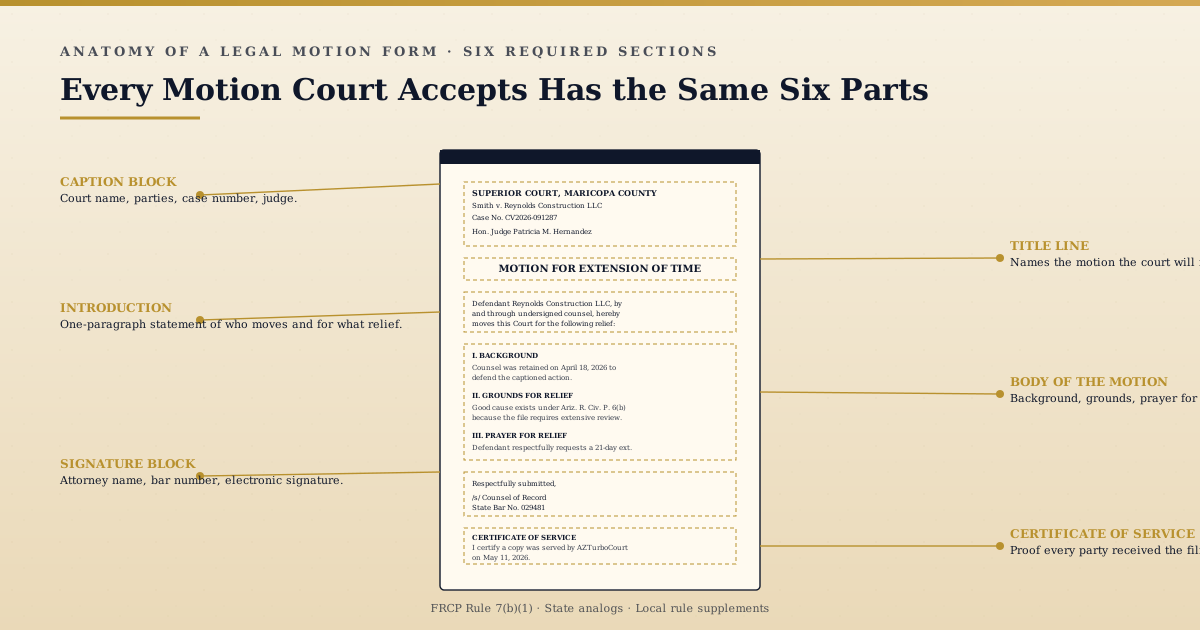
What a Form Motion Is and Why Its Structure Is Locked
The reason the layout is locked is that each section does specific work the court depends on to process the filing, and the clerk rejects forms that omit any of the six. The caption routes the filing to the right matter, the title controls the standard of review the judge applies, the body pleads the grounds with the particularity that FRCP Rule 7(b)(1) requires, the relief request gives the judge a defined order to sign, the signature carries the Rule 11 certification of good-faith basis, and the certificate of service proves the opposing party received notice under FRCP Rule 5(d)(1)(B). Removing or weakening any one section breaks the function the clerk and the judge use the section for, which is why intake rejects the filing rather than passing the defect on.
FRCP Rule 7(b)(1) is the federal floor. The rule requires every motion to (A) be in writing unless made during a hearing or trial, (B) state with particularity the grounds for seeking the order, and (C) state the relief sought. Subsection (b)(2) then carries the formal requirements of Rule 10into the motion, including the caption, the numbered-paragraph structure, and the Rule 10(a) requirement that the filing be named in its title. Rule 7(b) has no further subsections; the former signing provision was folded into Rule 11in the 2007 restyling. The official text sits on Cornell LII at the Federal Rules of Civil Procedure root and the Rule 7 page.
State courts publish their own analogs. Arizona codifies the same three substantive requirements in Ariz. R. Civ. P. 7.1and layers the local-rule supplements on top through Maricopa County Local Rules. New York, California, Texas, and Florida all do the same. The state-court analog is never identical to the federal rule, but the six structural elements (caption, title, grounds, relief, signature, certificate of service) are present in every jurisdiction. A motion form that fails any one element is procedurally defective.
The movant is the party submitting the motion form. The opposing party is whichever party the movant is asking the court to act against. The procedural posture (who moves, who responds, who replies) is fixed by local rule and by the rule under which the motion is brought.
Cohort cross-reference. The six structural elements show up identically on every motion form, including the Anatomy of a Motion for Summary Judgment Template That Tracks Rule 56 Requirements piece on this site, and the Anatomy of a Motion for Default Judgment Template and How Each Section Functions explainer. The grounds and the relief section change with the underlying rule; the structural skeleton does not.
The Six Required Sections Side by Side
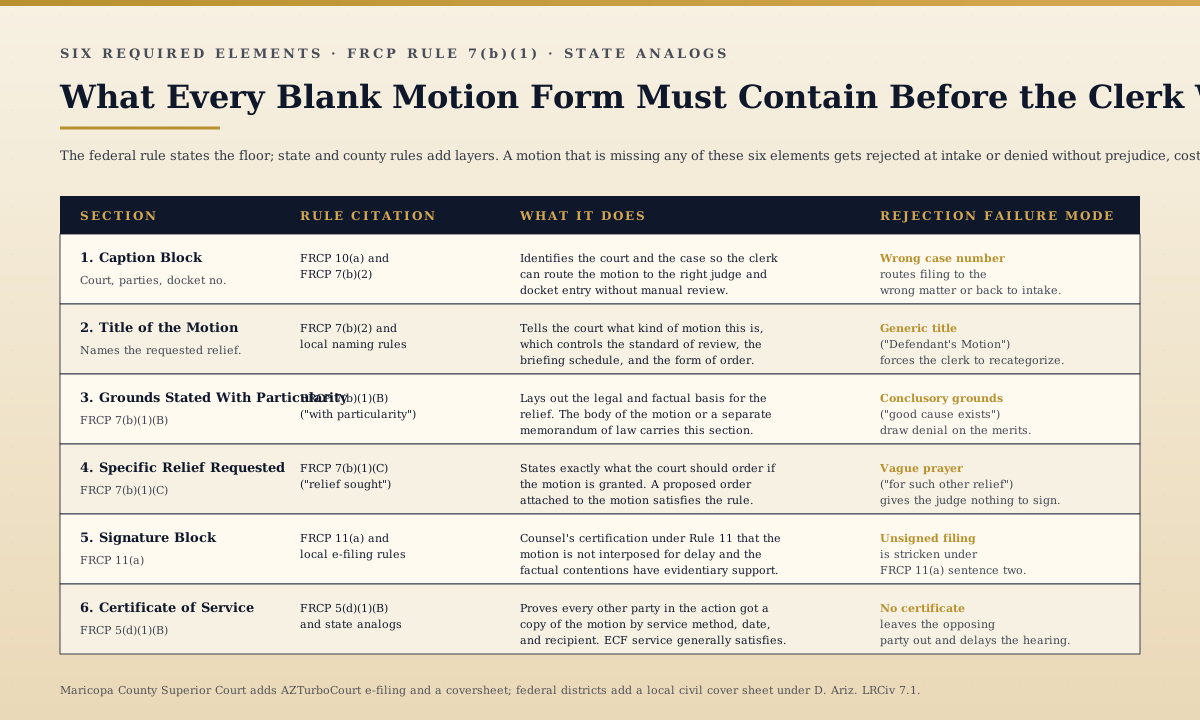
1. Caption Block
FRCP 10(a) and FRCP 7(b)(2)
Court name, parties, case number, and assigned judge. The clerk uses the caption to route the filing to the right docket and the right department. A wrong case number routes the motion to a different matter or back to intake.
2. Title of the Motion
FRCP 7(b)(2) and local naming rules
The title names the relief the motion seeks. The title controls the standard of review, the briefing schedule, and the form of order. A generic title like Defendant's Motion forces the clerk to recategorize the filing manually.
3. Grounds Stated With Particularity
FRCP 7(b)(1)(B)
The body of the motion (or a separate memorandum of law) carries the legal and factual basis for the relief. Conclusory grounds, like good cause exists with no facts, draw denial on the merits even when the underlying motion is meritorious.
4. Specific Relief Requested
FRCP 7(b)(1)(C)
The motion states exactly what the court should order if the motion is granted, ordinarily in a separate proposed order attached to the motion. A vague prayer that asks for such other relief as the Court deems just gives the judge nothing to sign.
5. Signature Block
FRCP 11(a)
Counsel's name, bar number, contact information, and electronic signature. Rule 11(a) certifies that the motion is not interposed for delay and that the factual contentions have evidentiary support. Unsigned motions are stricken under Rule 11(a) sentence two.
6. Certificate of Service
FRCP 5(d)(1)(B)
Proof every other party in the action received a copy of the motion, by what service method, on what date, addressed to whom. ECF service generally satisfies the rule in federal court. A missing certificate leaves the opposing party out and delays the hearing.
Where the Blank Motion Form Comes From and What It Standardizes
A blank motion form is the court-published motion form template that a self-represented party or a busy practitioner uses as a starting point. Most state courts and many federal districts publish blank forms for the highest-volume procedural motions: extension of time, leave to file an amended pleading, motion for contempt of an order, withdrawal of counsel, and a handful of other recurring asks. The form is the structural skeleton: caption, division, title, body with numbered paragraphs, prayer, signature, and certificate of service. The filer fills in the specifics.
The purpose of the blank form is institutional, not aesthetic. The court wants every motion landing on the docket to be in the same shape so the clerk can index the filing, the calendar judge can triage the motion to the right calendar, and the court reporter can cite to a known docket entry. A motion that strays from the form burns clerk time and creates routing risk; clerks reject filings that miss caption fields, omit the case number, or use the wrong title.
The blank form also standardizes the memorandum of lawattachment. Many courts treat the motion as a short cover document (one or two pages) and require a separately captioned memorandum of law that carries the legal argument. The blank form has a checkbox or a placeholder line confirming that the memorandum is attached. Federal districts like the S.D.N.Y. and the D. Mass. routinely enforce the separate-memorandum rule and will strike a motion that stuffs the legal argument into the motion body itself.
The proposed order is the third document the standardized blank form contemplates. A proposed order is the ready-to-sign document the judge will adopt if the motion is granted. Most local rules require the moving party to file a proposed order with the motion, drafted to be adoptable as written. The proposed order tracks the relief stated in the motion line by line; mismatched relief between the motion body and the proposed order is the most common reason a clerk kicks a form back.
Related anatomy work. See Inside a Motion for Reconsideration Template and the Sections Courts Expect to See for the reconsideration variant of the form, and Anatomy of a Motion for Default Judgment and the Plaintiff's Burden Under FRCP Rule 55 for the default-judgment variant, which adds an affidavit of non-military service and a damages calculation.
The Meet-and-Confer Requirement on Procedural Motions
Most courts that publish blank motion forms also enforce a meet and confer requirement before the motion can be filed. The moving party has to contact opposing counsel, describe the relief the motion will seek, ask whether opposition is forthcoming, and document the response. The certification line on the form attests that the meet-and-confer happened. Procedural motions filed without the certification get denied without prejudice and re-set; substantive motions filed without the certification can be deemed waived.
Federal districts vary on the wording of the meet-and-confer certification. The Northern District of California requires the certification on every discovery motion under Local Rule 37-1. The District of Massachusetts requires it on every non-dispositive motion under Local Rule 7.1(a)(2). Arizona requires a good-faith consultation certificate under Rule of Civil Procedure 7.1(h) on the motions that rule reaches. The substantive standard is the same in each forum even when the certification language varies.
Filling Out a Blank Motion Form Maricopa County Filers Get Right
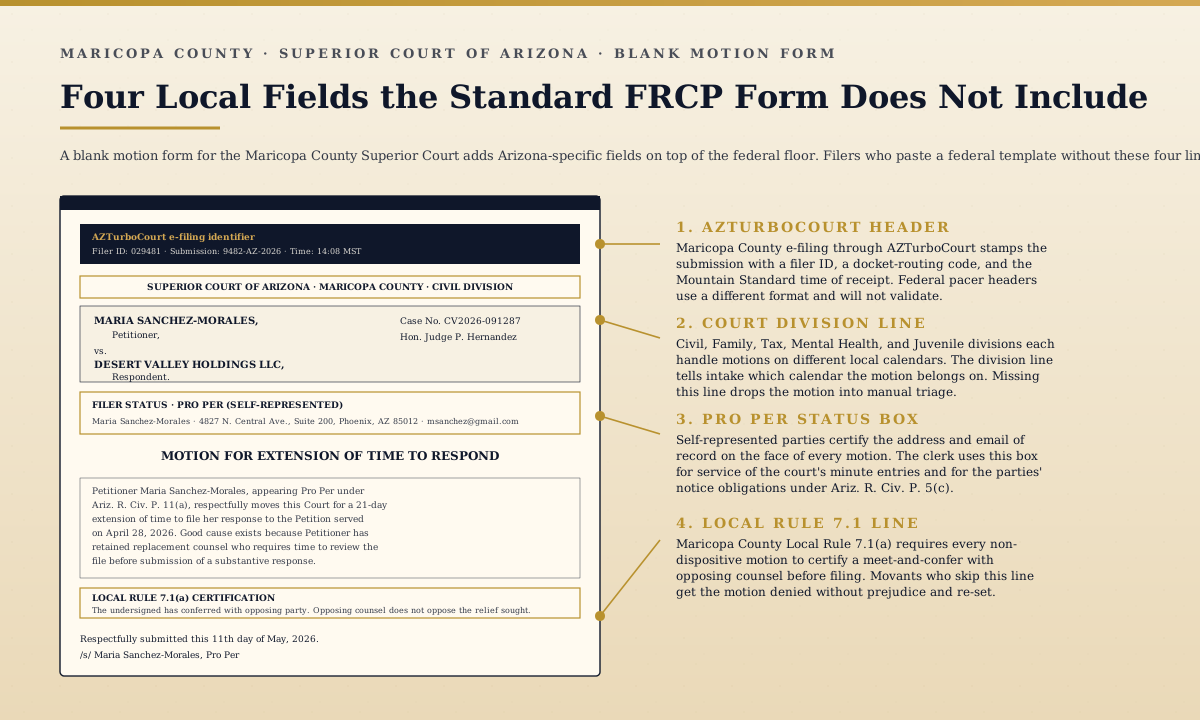
The blank motion form maricopa county filers use looks like an FRCP Rule 7 motion at first glance, but the Arizona local rules layer four county-specific fields on top of the federal floor. Filers who paste a federal template without these four lines get bounced back by the AZTurboCourt e-filing review queue and lose time on the underlying clock. This section walks the form fields top to bottom for a Maricopa County civil motion.
- 01
Pull the Local Form From the Court's Self-Help Center
The Maricopa County Superior Court publishes blank motion form templates on its self-help center website for the most common civil and family-court motions. Pull the controlling form from the court's site (not from a third-party template aggregator) because the local form gets revised when the local rules change and an out-of-date form will be rejected at intake.
- 02
Fill the Caption Block, Division Line, and Pro Per Status Box
Type the court name, county, division (Civil, Family, Tax, Mental Health, Juvenile), case number, and judge into the caption. If the filer is self-represented, check the Pro Per status box and type the filer address and email exactly as registered with AZTurboCourt. The clerk uses these fields to serve minute entries and route docket notices.
- 03
Title the Motion to Match the Relief Sought
Use the controlling motion name (Motion for Extension of Time, Motion to Dismiss, Motion for Reconsideration, Motion for Contempt). The title controls the rule the court applies and the standard of review on later appeal. A descriptive title is also easier for the docket clerk to index.
- 04
Plead the Body With Particularity Under the Controlling Rule
Background, grounds for relief, and prayer for relief. Cite the controlling rule (Ariz. R. Civ. P. or the FRCP analog) in the grounds section. Attach affidavits, exhibits, and a separate memorandum of law where the rule requires one. Arizona Rule of Civil Procedure 7.1 sets the page limits the filing must hit: 17 pages for the motion, 17 for the response, and 11 for the reply, exclusive of attachments and any required statement of facts.
- 05
Add the Rule 7.1(h) Good-Faith Consultation Certificate Above the Signature
Arizona Rule of Civil Procedure 7.1(h) requires a good-faith consultation certificate on the motions the rule reaches (discovery motions and motions not joined in by every party), certifying that the movant conferred with opposing counsel in person or by telephone (exchanged emails or letters do not satisfy the rule) before filing. The certificate goes above the signature block and identifies the date and method of the consultation, plus opposing counsel's position on the relief sought. A motion that needs the certificate but omits it is denied without prejudice and re-set.
- 06
Sign, E-File Through AZTurboCourt, and Serve Every Party
Apply the electronic signature, submit through AZTurboCourt, and pay the filing fee (waivable on a separate fee-waiver application). The system service-stamps the filing and routes ECF notices to every party who has appeared. Print the AZTurboCourt confirmation page; that page is the proof of timely filing if the matter is ever in dispute.
Why the Same Layout Reads Differently in Form Maricopa County vs Federal Practice
The structural elements are the same. The differences are routing: the AZTurboCourt header replaces the federal pacer header, the division line replaces the federal court-and-division block, the Pro Per status box is an Arizona innovation that the federal rule does not require, and the Rule 7.1(h) good-faith consultation line replaces the variable certification language other districts use. A motion drafted for the federal D. Ariz. forum does not transfer to the Maricopa County Superior Court without the four field changes; the substantive analysis transfers cleanly.
Form maricopa filers also navigate the local calendar rules. Civil motions are heard on Wednesdays and Thursdays on most calendar judges' rotations; family-court motions run on a separate calendar; tax motions sit on a third. The division line controls the routing, which is why the form requires it on the very first line above the caption. Filers who put the division line in the wrong place or omit it entirely create a routing problem the clerk has to manually fix.
Drafting service. Legal Tank prepares the motion form to the local rule the engaging trial counsel files under. See Motion for Sanctions Drafting Service Targeting Discovery Abuse and Bad-Faith Conduct, Drafting Service for a Motion to Amend Pleadings After Discovery Reveals New Claims, and Professionally Drafted Cross-Motion for Summary Judgment Briefs and Rule 56 Opposition Filings for substantive examples of the form filled to a controlling standard.
Wins, Losses, and Settlement Patterns on Motion Form Filings
The motion-form filing has three realistic outcomes after the opposing response and any reply land on the docket: granted on the papers, set for hearing, or denied without prejudice for a form defect. Settlement is the fourth pathway the parties often reach during the good-faith consultation required by Rule 7.1(h). Knowing the distribution helps the moving party draft the form to the outcome the rule favors.
Granted on the Papers
Unopposed and well-supported procedural motions (extensions of time, leave to file, withdrawal of counsel) are typically granted on the papers without oral argument when the motion form is complete and the Rule 7.1(h) consultation certificate shows no opposition. The proposed order attached to the motion gets signed and entered the same week.
Set for Hearing
Contested substantive motions (motions to dismiss, motions for sanctions, motions for contempt) get set for oral argument on the court's motion calendar. The opposing party files a response, the moving party files a reply, and the court hears argument on a scheduled date. The court rules from the bench or by written order within the local-rule timeframe.
Denied Without Prejudice for Form Defects
The most common loss on a blank motion form filing is not a denial on the merits, it is a procedural denial: missing Rule 7.1(h) consultation certificate where the rule requires one, missing certificate of service, wrong case number on the caption, generic title that fails the indexing rule, or a vague prayer for relief. The moving party can re-file but loses time on the underlying clock.
What the Win Pattern Looks Like
Granted motions share four features. The caption is correct on the first read (court, parties, case number, judge). The title names the rule under which the motion is brought (Motion for Extension of Time under Ariz. R. Civ. P. 6(b), not Defendant's Motion to Extend). The grounds section pleads facts with citation to the record. The proposed order tracks the relief request line by line. The court reads a granted motion in five minutes and signs the proposed order the same day.
The plaintiff moves on procedural matters as often as the defendant; the form does not distinguish. Motions for extension of time, motions for leave to file an amended pleading, motions to compel discovery, and motions for contempt of an order all come up on the plaintiff's side regularly. The standard the court applies is the same regardless of which party files.
What the Loss Pattern Looks Like
Denied motions cluster on a small number of failure modes. The local-rule certification is missing or non-specific. The grounds section recites a legal standard without applying it to the facts of the case. The proposed order asks for relief the body of the motion did not request. The certificate of service lists an old address for the opposing party. None of these errors are substantive failures of the underlying claim; they are form failures that the moving party can correct on re-filing, but the re-filing costs days on the calendar.
Where Settlement Typically Surfaces
The meet-and-confer call before the motion is filed is the single most productive settlement point on procedural motions. Opposing counsel often consents to a procedural extension or a discovery adjustment when contacted ahead of filing. The motion is then filed as unopposed and grants on the papers within days. On substantive motions (dismissal, sanctions, summary judgment), settlement surfaces during the response-and-reply window when the moving party's position is clear on the docket and the opposing party evaluates the cost of fighting versus the cost of compromise.
Where this fits in the litigation arc. Motion-form practice is the bread-and-butter of pretrial work. See What a Legal Motion Is and Where Form-Based Vehicles Sit in the Broader Motion Catalog for the umbrella framing, and Professionally Prepared Motion of Contempt of Court for Enforcing Orders Against a Noncompliant Party for the enforcement variant where the form mechanics matter most.
Motion Form Questions Filers Search For
Questions pulled from real Google People Also Ask data on motion-form searches. Answers framed to the way Legal Tank drafts and the way courts read these filings in practice.