Template Rental Agreement: A Clause Blueprint
A template rental agreement is a pre-built written instrument a landlord and a tenant fill in to capture eight core clauses: parties, premises, term, rent, deposit, use and maintenance, default and notice, and signatures. The same Restatement (Second) of Contracts formation logic that makes any rental contract enforceable also governs the residential lease, the commercial lease, and the short-term furnished rental.

What Is a Rental Contract, and What Eight Clauses Anchor the Template
A rental contract is a written agreement between a landlord and a tenant that conveys a leasehold interest in real property in exchange for rent, on terms the parties define and the controlling state statute supplements. The Restatement (Second) of Contracts treats a rental contract as a promise the law will enforce so long as the formation elements are present: identifiable parties with capacity, mutual assent through offer and acceptance, lawful consideration, definite subject matter, and an absence of disqualifying defenses. The same logic that animates a thorough contract definition walkthrough applies here, plus the property-law layer the Restatement (Second) of Property contributes for leasehold interests. Federal overlays attach at signing for residential units: the lead-based paint disclosure rule (42 U.S.C. § 4852d) applies to pre-1978 housing, and the Fair Housing Act bounds the screening criteria.
A template rental agreement is the document layer the parties use to express that contract. Every credible template captures the same eight clauses in some form. Each clause closes a category of risk; each gap a clause leaves becomes a litigation cost the parties will eventually pay. The blueprint below applies to a residential month-to-month, a fixed-term residential lease, a commercial single-tenant lease, and a short-term furnished rental, with state-specific addenda layered on top. For the broader free-template comparison, the related free agreement contract template guide surveys partnership, service, and employment templates alongside the rental form.
Parties
What it captures: Full legal name of landlord and tenant, with entity type and signing officer for corporate or trust parties.
Why it matters: An ambiguous parties clause is the single most common reason an otherwise valid rental contract is challenged on a default judgment motion.
Premises
What it captures: Exact street address, unit number, parking and storage allocation, and a floor plan exhibit for commercial space.
Why it matters: A vague premises description creates a vague obligation, and a vague obligation cannot ground an eviction or a damages claim.
Term
What it captures: Commencement date, expiration date, holdover handling, and renewal mechanics if a renewal option is granted.
Why it matters: Term ambiguity drives the bulk of holdover litigation, particularly the question whether the tenancy converts to month-to-month at expiration.
Rent
What it captures: Monthly amount in dollars, due date, grace period, late-fee schedule sized to the state cap, and NSF fee for returned checks.
Why it matters: Most state statutes cap the late fee at a percentage of the monthly rent; a generic late-fee number is unenforceable in those jurisdictions.
Security Deposit
What it captures: Deposit amount inside the state cap, holding rules (segregated trust account where required), and the statutory return deadline.
Why it matters: Conform the deposit clause to the state statute or risk paying double damages plus attorney fees, the standard remedy for non-conforming landlords.
Use and Maintenance
What it captures: Allocation of repair duties, the implied warranty of habitability (non-waivable in most residential jurisdictions), and use restrictions.
Why it matters: Lease language attempting to waive habitability is unenforceable; commercial leases instead allocate operating-expense pass-throughs and CAM.
Default and Notice
What it captures: What counts as default, the statutory notice period before eviction, and the defined cure window for monetary versus non-monetary breach.
Why it matters: Most states require a statutory notice with a specific cure period; missing or shortened notice drives unlawful detainer dismissals.
Signatures
What it captures: Signature blocks for each party, the date of execution, and a witness or notary line where the state requires one.
Why it matters: An unwitnessed lease in a witness-required jurisdiction is voidable; an unsigned lease is no lease at all under the statute of frauds.
For the body of contract law that supplies default rules where the lease is silent (statute of frauds writing requirement for terms over one year, parol evidence treatment of pre-execution promises, integration clause effect), the dedicated laws of contracts walkthrough collects the doctrines that animate every well-drafted rental template. For the closely related residential-form drafting framework, the parallel rent contract agreement guide unpacks the same blueprint at greater depth, with annotated example clauses for residential, commercial, and lease-to-own deals.
Free Template Rental Agreement Pricing Across Four Spend Rungs
The market for a free template rental agreement spans four spend rungs, from a generic blank form at zero dollars to a custom-negotiated commercial lease at several thousand dollars. Most renters and small landlords sit at one of the four rungs below. Each rung exists for a reason; each rung carries a trade-off the buyer accepts when they pick that price. A free generic template is the right tool for a low-stakes deal between people who already trust each other; it is the wrong tool when material money is at stake or the parties are strangers.
The cost ladder below names the price, the deliverable, and the risk the buyer accepts at each rung. The free tier is built from open-source forms; the state-specific paid tier comes from forms publishers and state-bar self-help portals; the professionally drafted tier produces a state-conformed lease in three to seven business days; the custom tier covers commercial and multi-tenant work that requires negotiation. For the cross-form comparison across rental, partnership, service, and employment templates, see the related contract templates in Word walkthrough, which catalogs free Word-based rental forms alongside other contract types.
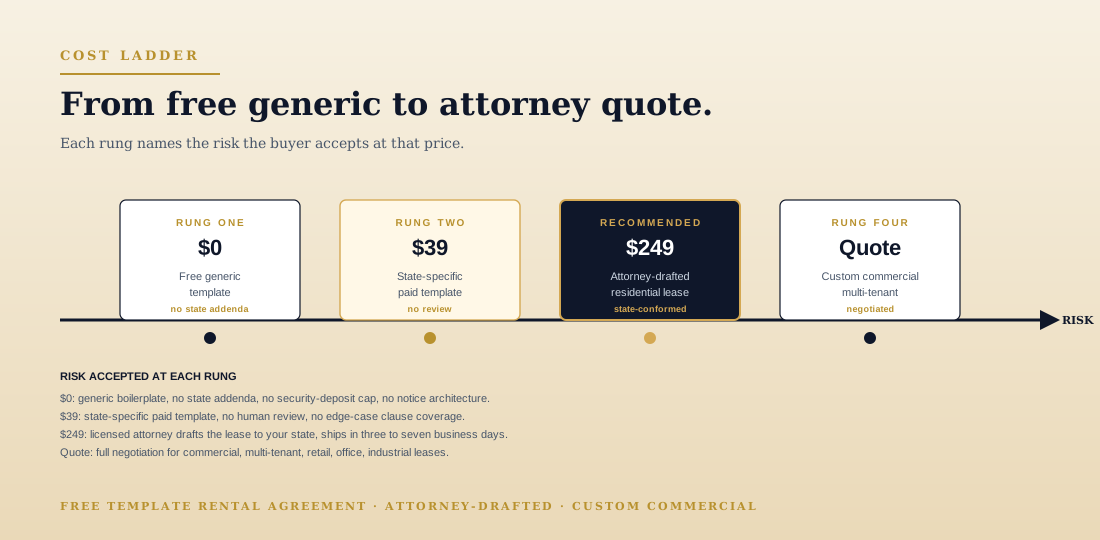
Generic blank form pulled from a free template gallery. Useful for low-stakes family rentals and friend-to-friend sublets.
Risk at this rung: No state-specific disclosures, no security-deposit cap, no notice architecture, no habitability conformance.
State-specific form purchased from a forms publisher or a state bar self-help portal, with statutory disclosures pre-filled.
Risk at this rung: No human review, no edge-case clause coverage, no calibration to your specific deal terms or property type.
The lease is drafted to your state, with state addenda built in and a sign-ready final document, in three to seven business days.
Risk at this rung: None at this rung for a standard residential tenancy. The cost is the only constraint.
Custom commercial lease, retail, office, industrial, or multi-tenant residential, with negotiated CAM, escalators, and assignment mechanics.
Risk at this rung: None; this rung exists because commercial deals require negotiation, ongoing counsel, and counterparty document review.
The economics flip around the professionally drafted tier. Below it, the buyer accepts gaps in exchange for cost savings; above it, the buyer pays for negotiation and counsel rather than for the document itself. For a free residential lease starter that captures the eight-clause blueprint without the state-specific calibration, the public template library at the Legal Tank template library ships free residential, commercial, and roommate forms. For a real-estate-counsel pathway when the deal is non-standard, the dedicated lease attorney page walks through the engagement model.
Four Template Rental Agreements and Their Customization Profile
Four template rental agreements cover the bulk of residential transactions: a month-to-month, a fixed-term residential, a roommate or sublease, and a short-term furnished rental. Each variant starts from the eight-clause blueprint and adds variant-specific customization. The wrong variant is a clause-mismatch problem: a fixed-term lease used for a month-to-month relationship over-promises both directions, a roommate side agreement built from a primary-lease template misses the master-lease subordination, and a short-term furnished rental drafted from a twelve-month lease form omits the furnishings inventory and the cleaning-fee architecture.
The cards below name each variant, the deal profile it fits, and the customization checklist the drafter should run before execution. The same eight-clause spine carries through all four; what changes is the calibration of term, notice, deposit treatment, and house-rules language to the specific tenancy. Lease agreements for non-residential use (commercial retail, office, industrial) sit outside this set and require purpose-built drafting at the custom tier. The rental agreement and lease distinction is functional, not formal: the term lease tends to denote a fixed-term written instrument, while rental agreement covers both fixed-term and month-to-month forms.
Residential Month-to-Month
Open-ended residential tenancy with a recurring monthly rent and either side free to terminate on a defined notice (typically thirty or sixty days, depending on the state and the length of tenancy).
- ·Notice period set to the state minimum (thirty days in most states, sixty in California for tenancies over one year).
- ·Late-fee architecture sized to the state cap.
- ·Habitability and repair duties allocated per state code.
- ·Security-deposit return tied to the statutory accounting deadline.
Residential Fixed-Term
Residential tenancy for a fixed term (typically twelve months) with a defined start and end date, holdover rules, and optional renewal mechanics.
- ·Holdover language stating whether the tenancy converts to month-to-month or terminates at expiration.
- ·Renewal option with a defined notice window and renewal-rent mechanics.
- ·Early-termination clause with a buyout fee or a re-let obligation on the landlord.
- ·Pet, smoking, and short-term-rental restrictions integrated as numbered house rules.
Roommate or Sublease
Side agreement between roommates or between a master tenant and a subtenant, slotted under a primary lease that the parties cannot rewrite.
- ·Recital identifying the master lease and the master tenant's continuing obligations.
- ·Allocation of rent and utilities among occupants, with a default rule when one roommate departs early.
- ·Common-area, kitchen, and bathroom rules calibrated to the household.
- ·Sublease consent language tracking the master lease's assignment provisions.
Short-Term Furnished
Short-term rental of a furnished property, typically thirty days to six months, frequently used for relocation, corporate housing, or post-disaster placement.
- ·Furnishings inventory attached as an exhibit, with replacement-value language for damage claims.
- ·Utilities and Wi-Fi included in the rent rather than billed separately.
- ·Cleaning fee, key-deposit, and pet-deposit treatment distinct from the security deposit.
- ·Compliance carve-outs for short-term-rental ordinances in cities that regulate them (Los Angeles, San Francisco, New York).
California Rental Agreements and Their Statutory Disclosures
California rental agreements face the densest statutory-disclosure load of any United States jurisdiction, and a generic free template rental agreement will rarely include all of it. Six clauses every California residential lease should integrate sit at the top of the audit checklist: the security-deposit cap and accounting deadline, the three-day pay-or-quit notice format, the federal lead-paint disclosure, the Megan's Law database notice, the mold and bedbug disclosures, and the Tenant Protection Act of 2019 rent-cap and just-cause framework.
Each card below names the rule, cites the controlling statute, and describes the operative obligation. Omission of a required disclosure is a procedural defect that often surfaces only at the unlawful detainer hearing or the security-deposit small-claims action; by then the cost of the omission is decided on the courthouse calendar, not in the lease.
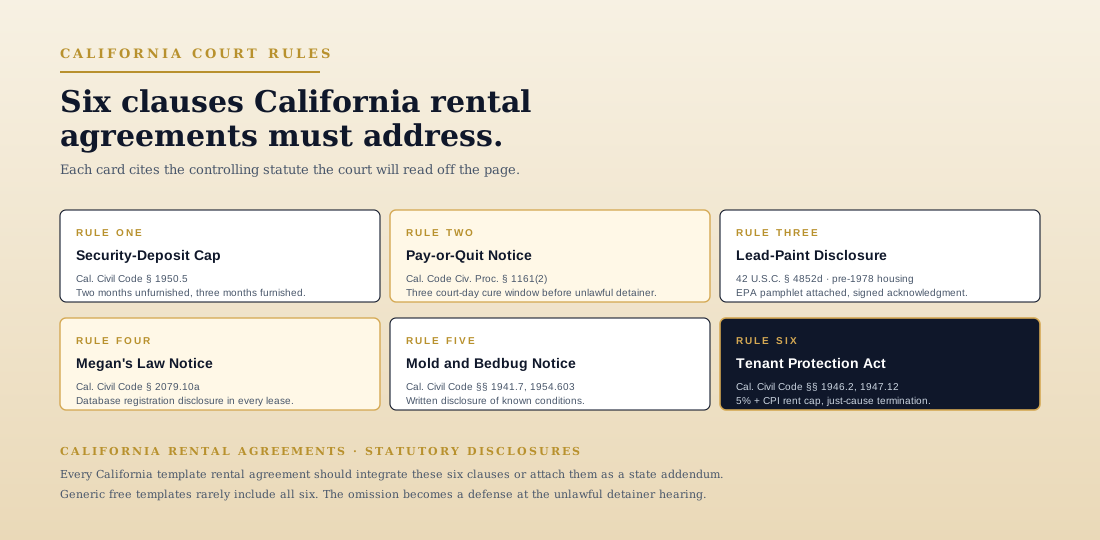
Security-Deposit Cap and Accounting Deadline
As of AB 12, effective July 1, 2024, California caps the residential security deposit at one month's rent, whether the unit is furnished or unfurnished. A small-landlord exception lets a natural-person owner, or an LLC whose members are all natural persons, who owns no more than two residential properties totaling no more than four units collect up to two months' rent, except where the tenant is a service member. The landlord must return the deposit, with an itemized statement of any deductions, within twenty-one calendar days of the tenant's surrender. Missing the deadline forfeits the right to deduct.
Three-Day Pay-or-Quit Notice
Before filing an unlawful detainer action for non-payment of rent, the landlord must serve a three-day notice to pay or quit. The notice must state the dollar amount due, the name and address of the person to whom payment is due, and the consequence of non-payment. The three-day window excludes weekends and judicial holidays. A defective notice (wrong amount, wrong address, missing element) is a complete defense at the unlawful detainer hearing.
Lead-Paint Disclosure for Pre-1978 Housing
Federal law requires the landlord of any residential dwelling built before 1978 to disclose known lead-based paint hazards, attach the EPA pamphlet "Protect Your Family from Lead in Your Home," and obtain the tenant's signed acknowledgment. The disclosure attaches to every California lease for pre-1978 housing. Penalties for non-compliance include treble damages and attorney fees.
Megan's Law Database Notice
Every California residential lease must include the statutory Megan's Law notice informing the tenant that the California Department of Justice maintains a database of registered sex offenders accessible at meganslaw.ca.gov. The notice text is fixed by statute and should appear verbatim. Omission is a per se procedural defect that some tenants argue forfeits late-fee enforcement.
Mold and Bedbug Disclosure
California requires written disclosure of any known mold condition exceeding state Department of Public Health thresholds, plus a written bedbug-information notice covering identification, prevention, and the tenant's right to report infestations without retaliation. Both disclosures attach to residential leases for habitable dwellings; commercial leases address them by allocation.
Tenant Protection Act Rent Cap and Just Cause
The Tenant Protection Act of 2019 caps annual rent increases at five percent plus regional CPI (capped at ten percent total) for most residential properties more than fifteen years old, and requires a statutory just-cause for termination of a tenancy lasting longer than twelve months. Exempt categories include single-family residences not owned by a corporation and properties subject to a more protective local rent-control ordinance. The just-cause framework defines at-fault and no-fault categories with specific notice and relocation-payment requirements.
Beyond the six statewide rules, several California cities (San Francisco, Los Angeles, Oakland, Berkeley, Santa Monica) layer local rent-control and just-cause ordinances on top of the Tenant Protection Act, with notice forms, registration requirements, and habitability standards that exceed the state floor. A California-specific template rental agreement should be calibrated to both layers, statewide and municipal, before the parties execute.
Filling In and Operating the Rental Agreement Template
Downloading the right template is half the work; the blanks decide whether the document performs. Most template failures trace to the fill-in stage: an adult occupant left off the tenant line, a first partial month never prorated, a late fee copied from another state, utilities left unallocated, or a pet clause applied to an assistance animal the Fair Housing Act says is not a pet. The eight completion provisions below govern how the template is filled in at signing and how it operates over the life of the tenancy, from the move-in checklist through written amendment to holdover at expiration.
Two operating rules sit over all eight. First, any change after execution takes a written amendment signed by both parties; well-drafted templates carry an integration clause that makes oral modifications unenforceable. Second, at expiration the template should already say what happens next: renewal on notice, automatic conversion to a month-to-month holdover tenancy at the same or a stated higher rent, or termination requiring surrender. For an open-ended tenancy where a no-cost form genuinely suffices, the companion month-to-month rental form and state disclosure walkthrough covers that route in depth.
Name Every Adult Occupant as a Tenant
List each adult who will live in the unit by full legal name on the tenant line and have each one sign, then add joint and several liability wording so the landlord can collect the entire rent from any one signer, not a share from each. An adult left off the signature block is a mere occupant the lease cannot reach. Pair the parties fill-in with a precise premises fill-in: street address, unit number, and any assigned parking space or storage locker by number.
Prorate the First Partial Month
When the term starts mid-month, divide the monthly rent by the days in that month and multiply by the days of occupancy, and write the method into the rent clause so the daily rate cannot be disputed. Collecting a full month at signing and applying the prorated figure to month two keeps the first payment clean.
Allocate Every Utility by Name
State which party pays electricity, gas, water, sewer, trash, and internet, line by line. Multi-unit landlords using a ratio utility billing system (RUBS) or submetering should say so in the utilities clause, since several states and cities regulate both billback methods and require disclosure of the allocation formula.
Separate Pets from Assistance Animals
A pet clause sets the pet deposit, pet rent, or pet fee and any breed or weight limits. It never applies to a service animal or an emotional support animal: under the Fair Housing Act and HUD guidance those are not pets, and no pet charge of any kind can attach to them, though the tenant remains liable for actual damage.
Set Guest and Occupancy Limits
Define when a guest becomes an occupant; templates commonly convert any guest staying more than ten to fourteen consecutive days, or a set number of days per month, into an unauthorized occupant requiring landlord consent. Add the smoking provision here as well, stating whether smoking is banned in the unit, on balconies, or across the property.
Prohibit Subletting and Short-Term Listings
Bar assignment, subletting, and listing the unit on Airbnb, Vrbo, or any hosting platform without prior written consent. Without an express short-term-rental prohibition, a tenant who rents out the unit nightly may argue the general sublet clause does not reach a licensee arrangement.
Alterations and Renters Insurance
Require prior written consent for painting, wall mounting, fixtures, and locks, with restoration at move-out. A renters insurance clause requiring liability coverage (commonly $100,000) with the landlord named as an interested party shifts tenant-caused loss to a carrier instead of the deposit.
Attach Move-In and Move-Out Checklists
A signed move-in inspection checklist, ideally with dated photographs, fixes the unit's condition at commencement, and a matching move-out inspection fixes it at surrender. The comparison is what separates deductible damage from normal wear and tear (faded paint, minor scuffs, carpet wear from ordinary use), which no state lets a landlord charge against the deposit.
Frequently Asked Questions
Common questions about template rental agreements, simple-form drafting, the relationship between a Word-based template and a professionally drafted lease, and the legal name for a rental contract.