Written and legally reviewed by our editorial team
DRAFTING SERVICE
Drafting Service for a Motion in Limine to Keep Prejudicial Evidence From the Jury
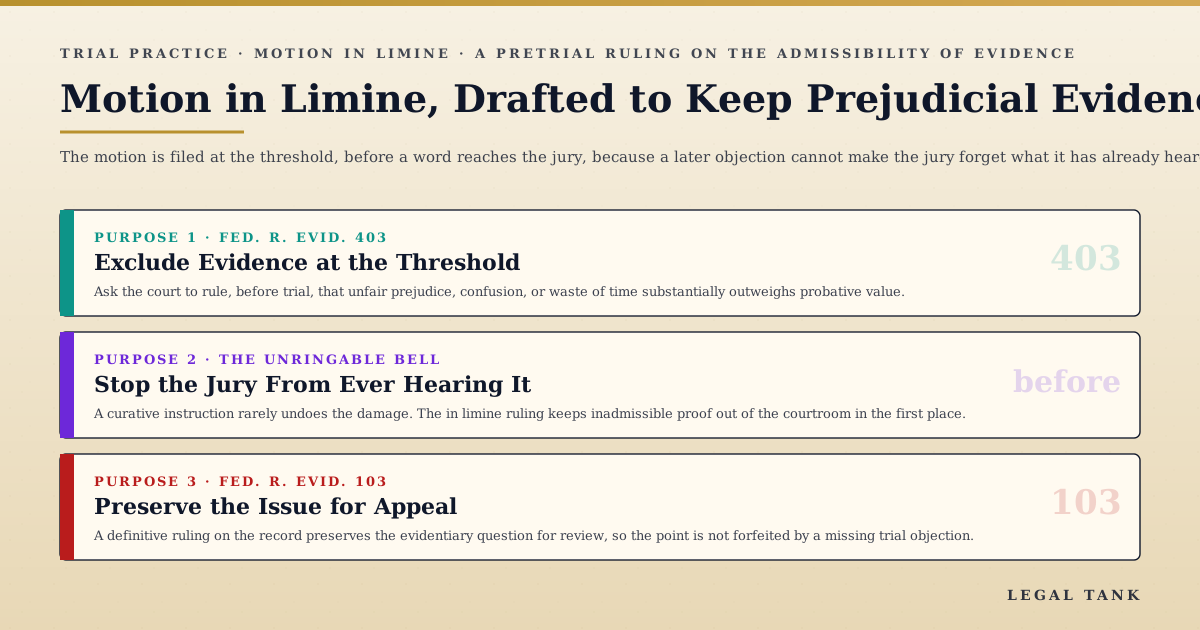
A motion in limine is the pretrial motion a trial lawyer files to have the court rule on the admissibility of evidence before it is offered, so inadmissible or unfairly prejudicial material never reaches the jury. The drafted motion names each item, invokes the controlling Federal Rule of Evidence (Rule 403 for unfair prejudice, Rule 702 and Daubert for experts, Rules 404(b), 609, 407, 408, and 411 for specific categories), and asks the court to bar the evidence and any reference to it in front of the jury.
Trial counsel at Legal Tank prepare the full filing package for the engaging firm to sign and file. We draft the motion, the memorandum, the record excerpts, and the proposed order framed for a definitive ruling under Rule 103(b) so the issue is preserved for appeal. Legal Tank does not appear in court and does not sign the filed motion.
403
Core prejudice rule
702
Daubert expert rule
103
Preserves for appeal
3-5
Business day turnaround
WHEN YOU NEED ONE
Four Triggers That Send Trial Counsel to a Motion in Limine
The motion is reserved for the final pretrial period, once discovery has closed and the evidence is known, but before the jury is seated. Each of the four common triggers below points to a different evidentiary rule and a different argument.
Inflammatory Evidence Looms
Gruesome photographs, a party's unrelated misconduct, or an inflammatory reference that a jury cannot un-hear. Rule 403 excludes it when the danger of unfair prejudice substantially outweighs probative value.
An Expert Fails Daubert
The opposing expert's methodology is unreliable or the opinion outruns the data. A Rule 702 motion in limine challenges the expert before the jury hears a single conclusion, under the Daubert reliability standard.
Insurance or Settlement May Surface
A witness may mention liability insurance under Rule 411 or a compromise offer under Rule 408. The motion bars the reference so the jury decides liability and damages on the merits, not on who pays.
Preserving the Record for Appeal
Counsel needs a definitive evidentiary ruling on the record under Rule 103(b) so the issue survives for appeal without depending on a renewed objection in the heat of trial.
MEANING
What a Motion in Limine Means, and Why It Is Filed Before the Jury Arrives
The phrase is Latin for at the threshold, and the timing is the whole idea. A motion in limine resolves an evidentiary dispute before trial, outside the jury's hearing, so the jury is never exposed to material the rules would exclude.
THE PROBLEM IT SOLVES
The Bell That Cannot Be Unrung
Once a jury hears that a defendant has a prior conviction, or sees a gruesome photograph, or learns that an insurer stands behind the case, an objection sustained a moment later cannot erase the impression. Courts and trial lawyers describe inadmissible evidence as a bell that cannot be unrung. A curative instruction asks jurors to disregard what they have already absorbed, which human jurors cannot reliably do.
The motion in limine removes that risk by settling the admissibility question in advance. If the court excludes the evidence before trial, the jury never hears it, and counsel builds the opening statement and the order of proof around a record they can count on.
THE STANDARD IT RUNS ON
Discretion, Balanced Under Rule 403
Most motions in limine turn on Federal Rule of Evidence 403, which lets the court exclude relevant evidence when the danger of unfair prejudice, confusing the issues, misleading the jury, or wasting time substantially outweighs its probative value. The trial court decides within its discretion, and an appellate court reverses only for an abuse of that discretion.
That discretionary posture is why the drafted motion does the work up front: it hands the judge the record cite, the controlling authority, and a clean balancing argument, so the ruling rests on a developed record rather than a snap courtroom judgment. For the wider family of pretrial filings, the guide to legal motion forms and how they fit the pretrial sequence sets the context.
EXAMPLES BY RULE
A Motion in Limine Example for Each Evidentiary Ground We Draft
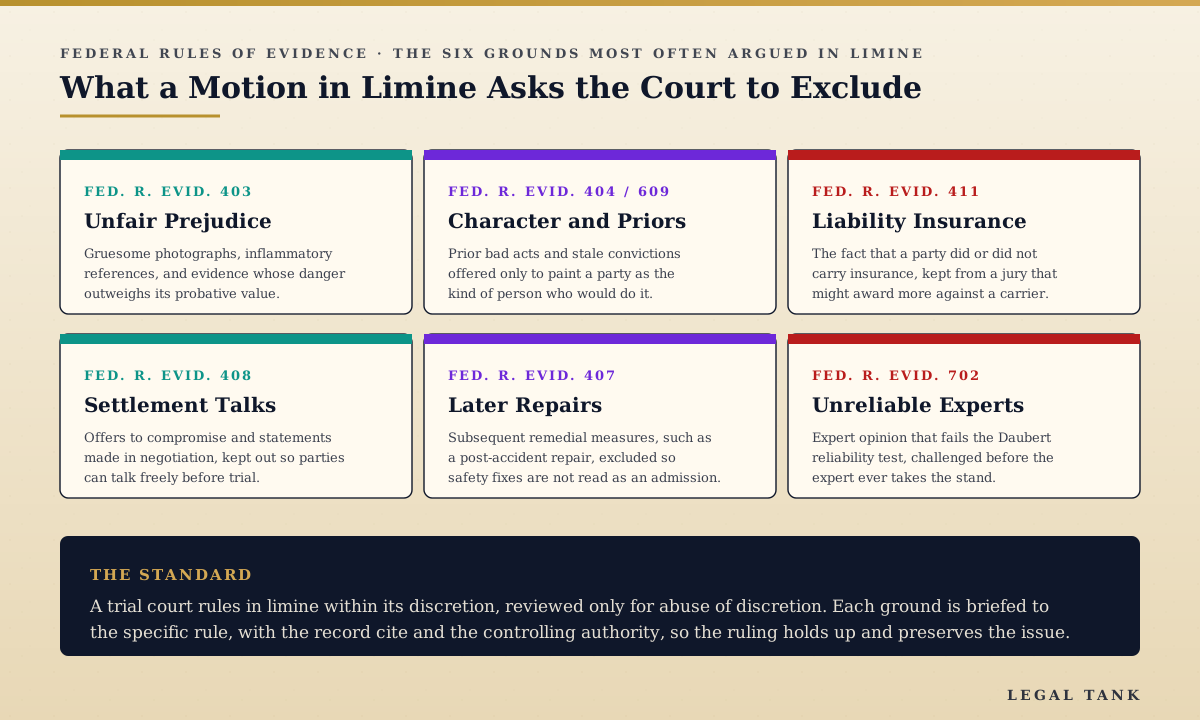
There is no single motion in limine. Each one targets a specific item of evidence and the rule that keeps it out. The four grounds below are the ones that recur across civil trials, and each is drafted to its own standard.
Rule 403
Unfair Prejudice, Confusion, and Waste of Time
The workhorse ground. Gruesome photographs, inflammatory characterizations, and cumulative evidence excluded when the danger of unfair prejudice, confusing the issues, or misleading the jury substantially outweighs probative value.
Rules 404(b) / 609
Character Evidence and Prior Convictions
Prior bad acts offered to show a party acted in conformity, and stale or unduly prejudicial prior convictions offered to impeach. Excluded except within the narrow purposes the rules allow, such as motive or intent under 404(b).
Rule 702 / Daubert
Unreliable Expert Testimony
Expert opinion that fails the Daubert reliability test, rests on an unaccepted methodology, or exceeds the expert's qualifications. Challenged before the expert testifies so the jury never hears an opinion the court will strike.
Rules 407 / 408 / 411
Repairs, Settlement Talks, and Insurance
Subsequent remedial measures such as a post-accident repair, offers to compromise and statements made in negotiation, and the existence of liability insurance. Each excluded by its own rule so the jury decides on the merits.
IN THE UNITED STATES DISTRICT COURT
PLAINTIFF'S MOTION IN LIMINE NO. 3: TO EXCLUDE EVIDENCE OF LIABILITY INSURANCE
Plaintiff respectfully moves this Court, in limine, for an order prohibiting Defendant, its counsel, and its witnesses from offering, mentioning, or alluding to the existence, availability, or amount of any liability insurance coverage, and from suggesting to the jury that any party is or is not insured, on the following grounds:
1. Evidence of insurance is inadmissible under Rule 411.
Federal Rule of Evidence 411 provides that evidence that a person was or was not insured against liability is not admissible to prove whether the person acted negligently or otherwise wrongfully. The sole purpose of any such reference here would be to suggest that a solvent carrier stands behind the defense, inviting the jury to decide liability and damages on the identity of the payer rather than the evidence. Even if the reference carried some marginal relevance, it should be excluded under Rule 403 because the danger of unfair prejudice substantially outweighs any probative value…
Illustrative only. The caption, numbering, and facts are generic and used to show how a single ground reads on the page. Every motion we draft is written to the actual trial record, the controlling evidence code, and the local pretrial-motion practice.
DRAFTED PACKAGE
Six Documents the Drafting Pool Delivers in Every Engagement
The motion does not stand alone. Every in limine engagement delivers six documents organized to the pretrial-motion practice of the court where the motion will be filed. Counsel of record receives the complete package, reviews, signs, and files.
The Motion in Limine
Caption, introduction identifying each item of evidence at issue, the numbered grounds keyed to the governing Federal Rule of Evidence, and a precise prayer for an order excluding the evidence and barring reference to it before the jury.
Memorandum of Points and Authorities
Merits brief organized item by item, each opening with the applicable standard (Rule 403 balancing, Rule 702 Daubert, or the specific exclusionary rule), then the record cite and the controlling circuit or state authority.
Omnibus or Single-Issue Structure
Where the court prefers one consolidated filing, the motion is drafted as an omnibus motion in limine with numbered subsections; where a single dispositive evidentiary fight controls, it is drafted as a focused stand-alone motion.
Supporting Evidentiary Record
The deposition excerpts, discovery responses, exhibits, or expert report pages that establish the evidence at issue, indexed and cited so the court can rule on the papers without hunting through the file.
Proposed Order
A signature-ready order granting the motion, naming the excluded evidence, and directing counsel not to offer or mention it in the jury's presence without first approaching the bench, framed for a definitive ruling under Rule 103(b).
Meet-and-Confer and Certificate of Service
The conferral certification many courts require before an in limine motion, plus the notice of hearing keyed to the pretrial conference and the certificate of service on opposing counsel.
HOW IT IS BUILT
How to Write and File a Motion in Limine, Step by Step
Writing a motion in limine is a matter of discipline: isolate each item of evidence, pair it with the rule that excludes it, and prove the point on the record before the jury is seated. The five-step pipeline below is how the drafting pool turns a trial record into a filing-ready motion.
Step 01
Intake of the Trial Record
You upload the pleadings, the scheduling order with the motion deadline, the deposition transcripts, expert reports, and the exhibits or discovery responses that identify the evidence you want excluded or admitted. The drafting attorney reads the evidentiary posture before any prose is committed.
Step 02
Attorney Maps Each Item to a Rule
A trial-practice attorney pairs each piece of evidence with the controlling Federal Rule of Evidence, Rule 403, 404(b), 609, 407, 408, 411, or 702 with Daubert, and confirms the local-rule format and the conferral requirement. The mapping is documented before drafting begins.
Step 03
Draft the Motion and Memorandum
The attorney prepares the motion, the memorandum of points and authorities argued item by item to the applicable standard, the indexed record excerpts, the proposed order framed for a definitive Rule 103(b) ruling, and the certificate of service.
Step 04
Your Review and One Revision Pass
You read the draft and send comments. The drafting attorney incorporates your edits in a single revision pass within the engagement scope. Additional evidentiary grounds or a companion opposition brief are scoped separately before further work begins.
Step 05
Sign-Ready Package Delivered to the Engaging Firm
You receive the final PDF and editable Word package, plus a one-page filing checklist matching the court's pretrial-motion practice. Your counsel of record signs, files, serves, and argues the motion at the pretrial conference. Legal Tank does not appear in court.
When the evidence you need to keep out was never produced in discovery, the drafting service for a Rule 37 motion to compel discovery builds the record upstream. And when an opponent violates a granted in limine order at trial, a motion for sanctions for injecting excluded evidence is the enforcement filing that follows.
THREE FORMS
The Types of Motion in Limine, From Exclude to Omnibus
Although most motions in limine ask to exclude evidence, the instrument has three recognized forms, and the right one depends on whether you are keeping evidence out, locking admissibility in, or resolving the whole evidentiary docket at once.
Exclude
Motion to Exclude (Defensive)
The most common form. It asks the court to keep evidence out, gruesome photos, prior convictions, insurance, an unreliable expert, so the jury never hears it. The mover carries the argument that the rule bars the evidence or that Rule 403 prejudice outweighs its value.
Admit
Motion to Admit (Offensive)
The less common but powerful form. It asks the court to rule in advance that specific evidence is admissible, so counsel can build the opening and the case-in-chief around it with confidence rather than gambling on a mid-trial ruling.
Bundle
Omnibus Motion in Limine
A single consolidated motion that gathers many evidentiary requests into numbered subsections. Most trial courts prefer this format because it lets the judge resolve the entire pretrial evidentiary docket at one hearing.
A Granted Ruling Is Often Preliminary
Whichever form is used, an in limine ruling can be provisional. Under Rule 103 the court may revisit it as the trial develops, and in Luce v. United States the Supreme Court held that a defendant must actually testify to preserve an in limine impeachment ruling for appeal. That is why the proposed order is drafted to seek a definitive ruling wherever the record supports one, so the point does not evaporate at trial.
ENGAGEMENT
Turnaround and Engagement Process for the In Limine Drafting Pool
Engagement starts with a custom quote at intake, sized to the number of evidentiary grounds and the pretrial deadline. The four tracks below describe how the work moves from upload to delivery. No standardized fee table is published on this page; quotes are confirmed per matter via the custom quote request.
Standard Track
Three to Five Business Day Turnaround
Used when the pretrial-motion deadline is at least two weeks out. Includes intake, attorney review of the evidentiary record, full drafting of the motion and memorandum, one revision pass, and delivery of the sign-ready PDF and editable Word files.
Rush Track
Forty-Eight to Seventy-Two Hour Turnaround
Reserved for final-pretrial-conference deadlines that close inside a week. Drafting moves to the front of the queue. Scope, the evidentiary grounds, and the timeline are confirmed at intake.
Scope of Drafting
Single Motion or Omnibus Package
Standard scope is one motion in limine plus its memorandum, supporting record excerpts, proposed order, and certificate of service. An omnibus motion covering multiple evidentiary grounds, or an opposition to the other side's motion, is scoped at intake.
Signature and Filing
Counsel of Record Signs and Files
Legal Tank delivers the filing-ready package. The engaging firm reviews, signs the motion under its own letterhead, files through the court's electronic filing system, serves opposing counsel, and argues the motion at the pretrial conference.
WHY LEGAL TANK
Four Reasons Counsel Send In Limine Work to This Drafting Pool
Drafted by Trial Counsel
Every motion in limine is read, framed, and drafted by a bar-admitted trial attorney who has argued evidentiary motions at pretrial conferences. The brief argues each ground to its own rule rather than asking the court to exclude evidence on a conclusory objection.
Rule-by-Rule Precision
Rule 403 balancing, Rule 404(b) propensity, Rule 609 impeachment limits, Rule 702 Daubert reliability, and the 407, 408, and 411 exclusions each carry a different standard. The motion is built to the rule that actually controls the item, not to a generic exclude template.
Drafting Only, No Court Appearance
We deliver a sign-ready package. We do not file, serve, or argue at the pretrial conference. Your counsel of record signs the papers under the engaging firm's letterhead and represents the party at the hearing under Rule 5.3 supervision.
Written to Preserve the Record
The proposed order is drafted to seek a definitive ruling under Rule 103(b) wherever the record allows, so the evidentiary issue is preserved for appeal and does not turn on a renewed objection in the middle of trial.
REPRESENTATIVE DRAFTS
Four Anonymized Engagements From the In Limine Drafting Pool
S.D.N.Y. Motion to Exclude Liability Insurance and Settlement Talks
POSTURE
Plaintiff in a commercial-vehicle collision expected defense counsel to reference the carrier's coverage and the parties' failed mediation to suggest the plaintiff was overreaching.
RULE INVOKED
Fed. R. Evid. 411 to exclude the insurance reference and Fed. R. Evid. 408 to exclude the compromise negotiations, briefed with the deposition pages where the topics arose.
OUTCOME
Court granted the motion in full and entered a definitive order barring any mention of coverage or the mediation before the jury. The case tried on liability and damages alone.
D.N.J. Daubert Motion in Limine to Bar a Causation Expert
POSTURE
Defense causation expert in a products case relied on a methodology the expert had not tested and could not tie to peer-reviewed support, and the opinion outran the underlying data.
RULE INVOKED
Fed. R. Evid. 702 and the Daubert reliability factors, supported by the expert's deposition transcript and report excerpts indexed to each reliability gap.
OUTCOME
Court granted the motion and excluded the causation opinion. The defense theory collapsed without an admissible expert and the matter resolved before the jury was seated.
State-Court Motion to Exclude Gruesome Photographs
POSTURE
Plaintiff sought to introduce a series of graphic post-incident photographs whose emotional impact far exceeded what they proved about the disputed mechanism of injury.
RULE INVOKED
Fed. R. Evid. 403 counterpart, arguing that the danger of unfair prejudice substantially outweighed the limited probative value given undisputed medical testimony on the same point.
OUTCOME
Court excluded the most graphic images and admitted two neutral photographs, narrowing the prejudicial display and preserving the objection for the record.
Omnibus Motion in Limine on the Eve of a Federal Trial
POSTURE
Trial counsel needed a single consolidated filing addressing prior convictions, a subsequent repair, and undisclosed exhibits before the final pretrial conference.
RULE INVOKED
Fed. R. Evid. 609 conviction limits, 407 subsequent remedial measures, and the pretrial-disclosure rules, gathered into numbered subsections for one hearing.
OUTCOME
Court ruled on all three grounds at the pretrial conference, granting the convictions and remedial-measure exclusions and reserving the disclosure issue, which streamlined the trial plan.
DRAFTING COUNSEL
Four Attorneys on the In Limine Drafting Bench
Every motion is drafted by a bar-admitted trial attorney whose practice anchors one corner of the evidence rules: Rule 403 prejudice and the insurance and settlement exclusions, Rule 702 Daubert expert challenges, state-court character-evidence practice, and Rule 609 and 407 impeachment and remedial-measure work.
Marcus Holloway, Esq.
Senior Litigation Attorney
Twelve years in the Southern District of New York and the District of New Jersey. Drafts motions in limine on the Rule 403 unfair-prejudice balance, Rule 411 liability-insurance exclusions, and Rule 408 compromise-negotiation bars for commercial and personal-injury trials. Anchors the trial-evidence side of the litigation drafting pool.
NOTABLE MATTERS
- Rule 411 and 408 omnibus motion excluding insurance and mediation references in a commercial-vehicle trial (S.D.N.Y.)
- Rule 403 motion excluding cumulative and inflammatory exhibits before a jury trial
- Definitive Rule 103(b) ruling preserving an evidentiary exclusion for appeal
Daniel Whitaker, Esq.
Federal Commercial Litigation Counsel
Senior federal-civil drafting attorney with ten years in the Southern District of Texas and the District of Colorado. Drafts Rule 702 motions in limine to bar unreliable expert testimony under the Daubert factors, built on the expert's deposition transcript and report, for commercial, products, and trade-secret trials.
NOTABLE MATTERS
- Daubert motion in limine excluding a causation expert on an untested methodology (D.N.J.)
- Rule 702 challenge narrowing a damages expert's opinion to the supported data
- Rule 403 motion excluding a prejudicial demonstrative exhibit at trial
Alexandra Chen-Park, Esq.
Civil and Employment Trial Counsel
Fifteen years of state-court trial practice across California, New York, and Illinois. Drafts motions in limine under state evidence codes that track Rule 403 and 404(b), excluding prior bad acts and character evidence in employment, restrictive-covenant, and personal-injury trials, plus in limine practice under California Evidence Code sections 352 and 1101.
NOTABLE MATTERS
- Evidence Code section 352 motion excluding inflammatory prior-conduct evidence in a jury trial
- Section 1101 motion barring character evidence offered for propensity
- Motion in limine to admit business records under the hearsay exception
Nathan Brookfield, Esq.
Federal Civil Procedure Counsel
Eleven years in the District of Massachusetts and on federal commercial and consumer dockets in the First Circuit. Drafts motions in limine on Rule 609 conviction-impeachment limits, Rule 407 subsequent-remedial-measure exclusions, and pretrial-disclosure enforcement for consumer, contractor, and products trials.
NOTABLE MATTERS
- Rule 407 motion excluding a post-accident repair offered as an admission (D. Mass.)
- Rule 609 motion limiting impeachment by a stale conviction
- Omnibus motion in limine resolving three evidentiary grounds at the pretrial conference
CLIENT FEEDBACK
What Engaging Firms Have Said About the In Limine Package
"We had a week before the final pretrial conference and needed insurance and the failed mediation kept out. The drafted Rule 411 and 408 omnibus motion cited the exact deposition pages and the court barred both references. The jury never heard either."
Gregory A.
Verified client
Rule 411 / 408 Omnibus Motion in Limine
"Their drafting attorney turned the opposing expert's deposition into a clean Daubert motion in limine. Every reliability gap was tied to a transcript page. The court excluded the causation opinion and the case settled within the week."
Marisol T.
New Jersey · Verified client
Rule 702 Daubert Motion in Limine
"The graphic photos would have inflamed the jury on a point our own doctor already conceded. The Rule 403 motion drew the balance exactly right, and the court cut the worst images while preserving our objection for the record."
Devin R.
Verified client
Rule 403 Motion to Exclude Photographs
FREQUENTLY ASKED
What Counsel Ask Before Engaging the In Limine Drafting Pool
The questions below come straight from the People Also Ask results returned for motion in limine and motion in limine example. The answers are framed around the Federal Rules of Evidence and the drafting deliverable.
What is a motion in limine?
What is the purpose of a motion in limine?
What is an example of a motion in limine?
How do you write a motion in limine?
When do you file a motion in limine?
What happens when a motion in limine is granted?
ADJACENT MOTIONS
Other Motions Our Drafting Counsel Prepare on the Same Pipeline
The motion in limine sits inside a larger trial-preparation sequence. When the file calls for the adjacent instruments below, the same drafting pool prepares them. Each link opens the dedicated service page.
Motion to Compel Discovery
When the evidence you need to exclude, or admit, at trial was never produced, the Rule 37 motion to compel is the upstream filing that builds the record the in limine motion relies on.
Motion for Protective Order
When sensitive material must be kept out of the record before trial rather than merely away from the jury, the protective-order motion is the discovery-stage companion to the in limine motion.
Motion for Sanctions
When an opponent violates an in limine order or injects excluded evidence in front of the jury, the sanctions motion is the enforcement vehicle that follows the granted motion.
Opposition to a Motion
When the other side files its own motion in limine to exclude your evidence, the opposition brief answers each evidentiary ground and keeps your proof in the case.
Authority anchor: Federal Rule of Evidence 403 (Cornell LII) for the balance of probative value against unfair prejudice, with Rule 103 governing rulings on evidence and the preservation of error. Local pretrial-motion rules in the trial court set the filing deadline, the conferral requirement, and the format for the motion in limine.
Trial Is Set? Send Us the Evidence You Need Kept Out.
Send the pleadings, the scheduling order with the pretrial-motion deadline, and the deposition or expert record that identifies the evidence at issue. Our trial counsel maps each item to the controlling Federal Rule of Evidence, drafts the motion and memorandum, and prepares the proposed order for a definitive ruling, ready for the engaging firm to sign and file.
Legal Tank prepares the filing-ready papers. Your counsel of record signs the motion, files, serves, and argues it at the pretrial conference under Rule 5.3 supervision. Legal Tank does not appear in court.