Irrevocable Trust: How It Works, and What It Protects
Prepared by a licensed U.S. attorney
An irrevocable trust is a trust the grantor cannot unilaterally change or revoke. Giving up that control is what removes the assets from the taxable estate, shields them from creditors, and enables long-term-care planning.
This page explains how an irrevocable trust works, how it differs from a revocable one, the main types, the tax treatment, and how to set one up. Each trust is drafted to the grantor's state law and a defined goal rather than filled into a generic form.
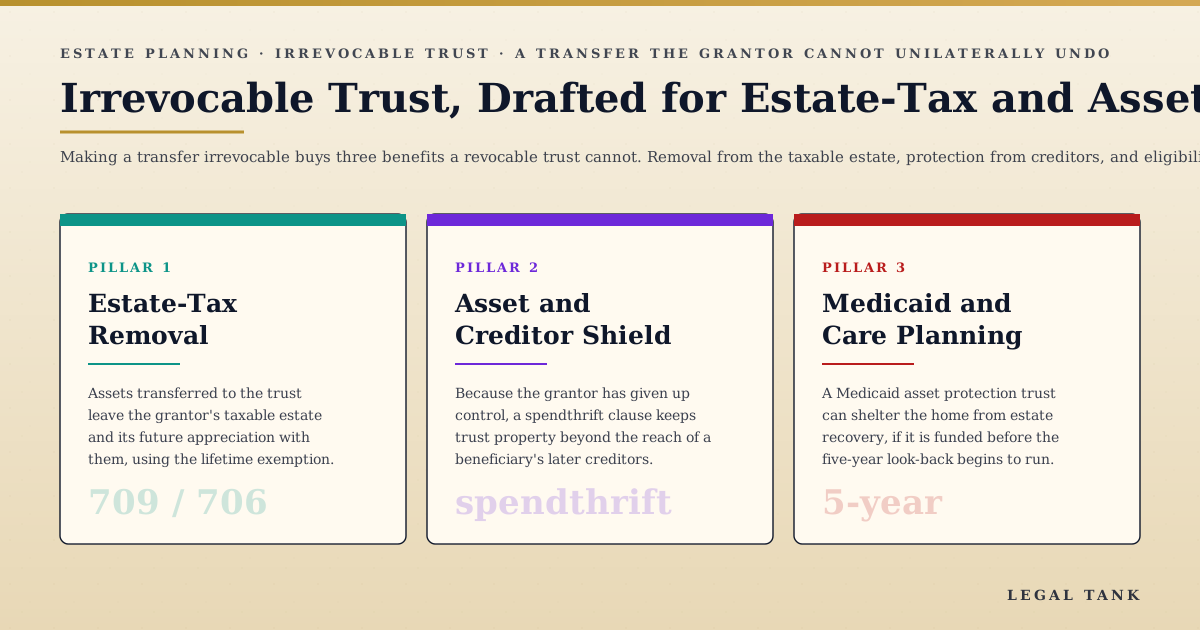
Estate Tax · Creditors · Medicaid
Three protections a revocable trust cannot give
How Does an Irrevocable Trust Work?
An irrevocable trust works by moving property out of the grantor's hands. The grantor transfers assets to a trustee, who holds and manages them for the beneficiaries under terms the grantor set at creation but can no longer freely rewrite. Because the grantor has genuinely given up ownership and control, the law stops treating the assets as the grantor's own, and that single fact is what produces the tax, creditor, and benefits advantages.
Three parties define the trust. The grantor creates and funds it. The trustee, usually someone other than the grantor, administers it and makes distributions under a defined standard. The beneficiaries receive the benefit. The distribution standard in the document, not the grantor's later wishes, governs who gets what and when, which is exactly why the structure holds up against creditors and benefit-program rules.
Families often pair this with a revocable living trust that keeps day-to-day assets flexible and out of probate, while reserving the irrevocable trust for the specific property they want permanently protected.
Irrevocable Trust vs Revocable Trust
The two instruments look similar on paper and diverge on one axis: control. Everything a revocable trust gives up in protection, it buys back in flexibility, and the reverse is true for the irrevocable form. The table sets the difference out line by line.
| Dimension | Revocable Living Trust | Irrevocable Trust |
|---|---|---|
| Control during life | Grantor keeps full control, can serve as trustee, amend, or revoke at any time. | Grantor gives up control; a separate trustee administers under fixed terms. |
| Estate-tax treatment | Assets remain in the taxable estate; no estate-tax reduction. | Transferred assets and their appreciation leave the taxable estate. |
| Creditor protection | None; assets are reachable by the grantor's creditors. | Assets are generally shielded from the grantor's and beneficiaries' creditors. |
| Medicaid / long-term care | Counted as an available resource; no long-term-care benefit. | Can shelter assets, subject to the five-year look-back. |
| Probate avoidance | Yes, for assets funded into the trust. | Yes, for assets funded into the trust. |
| Changing the terms | Freely, at the grantor's discretion. | Only by consent, court order, decanting, or trust protector. |
If your goal is probate avoidance and lifetime flexibility rather than asset protection, the living trust drafting service covers the revocable side of this comparison.
Types of Irrevocable Trust
“Irrevocable trust” is a category, not a single document. Each type below solves a different problem, and the right choice follows from the goal, whether that is protecting a disabled heir's benefits, keeping life insurance out of the estate, or planning for care costs.
Special Needs Trust
Holds an inheritance for a beneficiary with a disability without disqualifying them from means-tested benefits such as SSI and Medicaid. A trustee pays for supplemental needs the government programs do not cover.
Spendthrift Trust
Uses a spendthrift clause so a beneficiary cannot assign the interest and creditors cannot attach it before the trustee makes a distribution. The workhorse asset-protection structure for inherited wealth.
Irrevocable Life Insurance Trust
An ILIT owns a life insurance policy so the death benefit passes to heirs free of estate tax and outside probate, funded with annual gifts that cover the premiums.
Medicaid Asset Protection Trust
Shelters the home and other assets from being counted for Medicaid long-term-care eligibility and from estate recovery, provided it is funded before the five-year look-back window.
Grantor Retained Annuity Trust
A GRAT lets the grantor transfer appreciating assets to heirs at a reduced gift-tax cost while retaining an annuity stream for a set term, freezing the taxable value at transfer.
Charitable Remainder Trust
Pays income to the grantor or a beneficiary for a term, then distributes the remainder to a charity, producing an income-tax deduction and removing the gifted assets from the estate.
Dynasty Trust
Keeps wealth in trust across multiple generations, using the generation-skipping transfer tax exemption so the assets are not taxed again as they pass from children to grandchildren and beyond.
QTIP Trust
A qualified terminable interest property trust gives a surviving spouse income for life, qualifies for the marital deduction, and lets the first spouse to die control who receives the remainder, common in blended families.
Two of these have their own drafting guides. For an inheritance that must not disqualify a disabled beneficiary from benefits, see the special needs trust. For the spendthrift clause that keeps an heir's creditors out, see the spendthrift trust.
Irrevocable Trust Taxes and the Estate Exemption
The tax appeal of an irrevocable trust is that the transferred assets, and everything they earn or appreciate to afterward, sit outside the grantor's taxable estate. For 2026 the federal estate and gift tax exemption is $15 million per individual, made permanent and indexed for inflation under the 2025 tax law, so federal estate tax mainly concerns larger estates. Several states impose their own estate tax at far lower thresholds, and irrevocable planning is often driven by those.
Funding the trust is generally a completed gift. It either uses part of the lifetime exemption or fits within the $19,000 per recipient annual gift exclusion for 2026. During its administration, an irrevocable trust frequently files its own income tax return and reaches the top income tax bracket at a low threshold, so distribution timing and the choice between a grantor and non-grantor structure carry real tax weight.
Specialized structures fine-tune the result: an irrevocable life insurance trust keeps a policy death benefit out of the estate, and a grantor retained annuity trust shifts appreciation to heirs at a discounted gift-tax cost. The tax posture, completed gift, exemption use, and reporting, is settled at drafting so the plan does the work it was built to do.
How to Set Up an Irrevocable Trust
Six steps take an irrevocable trust from goal to funded instrument. The order matters: the goal and the trust type are fixed first, because they govern the trustee choice, the clauses, and the funding plan that follow.
- 1
Define the goal and pick the trust type
Estate-tax reduction, asset protection, and Medicaid planning each call for a different irrevocable structure. The goal dictates the type, the trustee choice, and the funding plan, so it is settled before any drafting begins.
- 2
Draft the trust instrument
The document names the grantor, the trustee, and the beneficiaries; states the distribution standard; and includes the spendthrift clause and the administrative powers. It is drafted to the grantor's state law and the specific tax objective.
- 3
Appoint an independent trustee
Because the grantor gives up control, an irrevocable trust generally names a separate trustee, an individual or a corporate fiduciary, so the grantor does not retain a power that would pull the assets back into the estate.
- 4
Execute before a notary
The grantor signs the trust instrument, which is notarized and, for some trust types, witnessed. Unlike a litigation filing, no court or counsel of record is involved; the executed document creates the trust.
- 5
Fund the trust by retitling assets
The trust protects only what it holds. Deeds, accounts, and policies are retitled into the trust's name, and each transfer is checked for gift-tax reporting and, where relevant, the five-year Medicaid look-back.
- 6
Handle ongoing tax and administration
An irrevocable trust often files its own income tax return and follows the distribution terms rather than the grantor's wishes. The trustee keeps records, files returns, and administers distributions under the document.
Part of a broader estate planning practice. Related work: a revocable trust for probate avoidance, a supplemental needs trust for a disabled beneficiary, and a creditor-protective spendthrift trust for an heir who is not ready to manage a lump sum. For larger or more specialized goals, the cluster also covers a charitable remainder trust for appreciated assets, a Medicaid trust for long-term-care eligibility, and a self-settled asset protection trust for shielding the grantor's own assets from future creditors.
Irrevocable Trust: Common Questions
What is an irrevocable trust?
What is the difference between a revocable and an irrevocable trust?
What are the disadvantages of an irrevocable trust?
Can you change or dissolve an irrevocable trust?
Does an irrevocable trust avoid estate tax?
Does an irrevocable trust protect assets from a nursing home?
Protect the Assets, on Your Terms
Tell us the goal, estate-tax reduction, asset protection, or care planning, and the assets you want to move. We return the trust type, the trustee structure, and the funding plan, drafted to your state law for you to execute before a notary.
Quotes return same business day on intakes received before 5 PM ET