Petition for Writ of Habeas Corpus Drafting for Federal and State Post-Conviction Relief
Prepared by a licensed U.S. attorney
Section 2254 petitions, Section 2255 motions, supporting memoranda, replies, and certificate-of-appealability applications.
We draft the full habeas corpus petition for both audiences: attorneys serving as counsel of record and self-represented petitioners. Every draft frames the constitutional grounds against the record, tracks the strict AEDPA one-year deadline, and conforms to the Habeas Rules on the official AO 241 and AO 243 forms. The completed draft returns to you to review, sign, and file. We never file, sign, notarize, or appear.
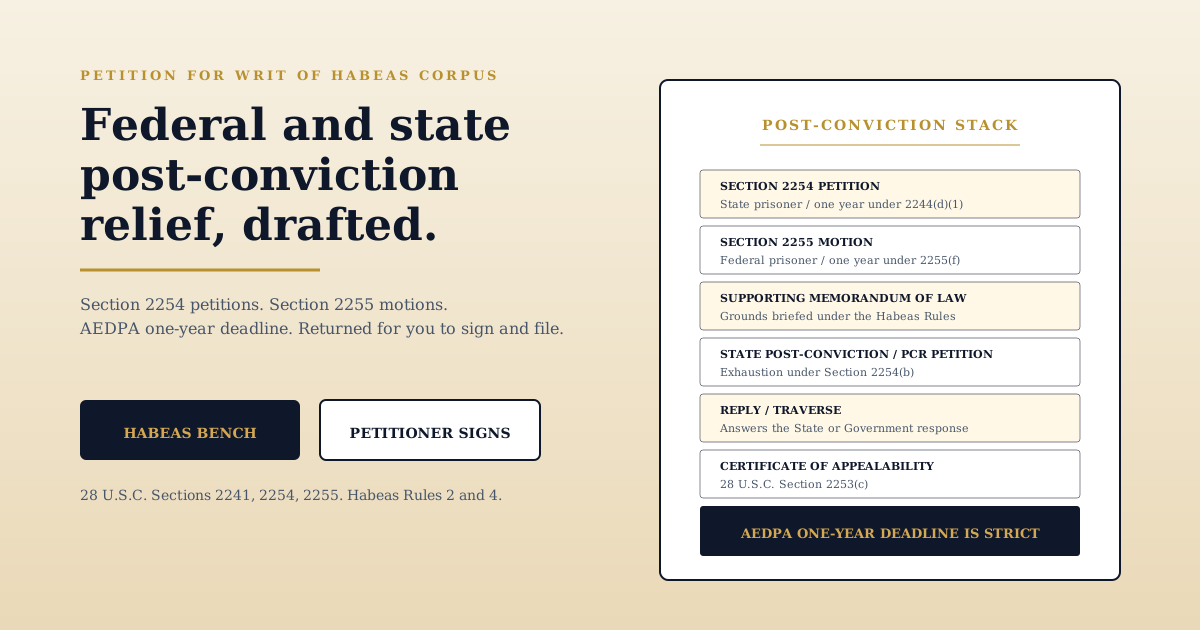
28 U.S.C. § 2254 · § 2255 · AEDPA
Constitutional grounds framed against the record on every petition
Every Habeas Corpus Petition Document the Bench Drafts End to End
From the federal habeas petition itself through the supporting memorandum, the reply, and the certificate-of-appealability application, the seven documents below cover the post-conviction path. Engage a single petition as a project or the full package from state post-conviction through the federal filing.
Pursuing a different extraordinary writ? See our writ of mandamus petition drafting for orders compelling official action, or route a merits appeal through appellate brief writing services.
Federal Section 2254 Petition
Petition for a state prisoner in custody pursuant to a state-court judgment under 28 U.S.C. Section 2254, drafted on official form AO 241 with each ground stated, the supporting facts pleaded, and the exhaustion history documented under Section 2254(b).
Federal Section 2255 Motion
Motion to vacate, set aside, or correct the sentence for a federal prisoner under 28 U.S.C. Section 2255, drafted on official form AO 243 and filed in the court that imposed the sentence. The functional habeas equivalent for those convicted in federal court.
Supporting Memorandum of Law
The brief that carries the argument behind the petition: the constitutional grounds developed element by element, the governing standards named, and the record cited. Pairs with the petition so the court has both the pleaded grounds and the legal analysis.
State Post-Conviction / PCR Petition
State post-conviction relief petition drafted to the state's own procedure, filed before federal habeas so the exhaustion requirement of Section 2254(b) is satisfied. State post-conviction rules vary widely and are confirmed per matter.
Reply or Traverse
Reply, sometimes called a traverse, answering the State's or the Government's response to the petition. Focuses the disputed grounds, meets procedural-default and timeliness defenses, and does not inject grounds outside the petition.
Application for a Certificate of Appealability
Application for a certificate of appealability under 28 U.S.C. Section 2253(c), the gateway to appealing a denied petition, framed around the substantial-showing-of-the-denial-of-a-constitutional-right standard the statute requires.
Second or Successive Authorization Motion
Motion to the court of appeals for authorization to file a second or successive petition under 28 U.S.C. Section 2244(b). The gatekeeping order must issue before a district court may consider a later petition, so this motion comes first.
Section 2254 Petition Versus Section 2255 Motion: Statute, Filer, and Deadline
The table below is the operational frame the bench works from. The controlling difference is who convicted the person in custody: a state-court judgment routes to a Section 2254 petition, while a federal conviction routes to a Section 2255 motion in the sentencing court. Both carry the same strict AEDPA one-year window, and state prisoners must exhaust state remedies under Section 2254(b) first.
| Petition or Motion | Governing Statute | Who Files | Deadline | Review Standard |
|---|---|---|---|---|
| Federal Section 2254 petition | 28 U.S.C. Section 2254 | State prisoner | One year, Section 2244(d)(1) | Section 2254(d) deference |
| Federal Section 2255 motion | 28 U.S.C. Section 2255 | Federal prisoner | One year, Section 2255(f) | Merits in the sentencing court |
| State post-conviction / PCR petition | State PCR statute | State prisoner (pre-federal) | State deadline, varies | State post-conviction standard |
| Supporting memorandum of law | Habeas Rules 2 and 4 | Filer | With the petition | Supports the pleaded grounds |
| Reply or traverse | Habeas Rules (per order) | Petitioner or movant | Per court order | Answers the response |
| Certificate of appealability | 28 U.S.C. Section 2253(c) | Petitioner or movant | With or after final order | Substantial showing of a denial |
| Second or successive authorization | 28 U.S.C. Section 2244(b) | Petitioner or movant | Before any refiling | Court of appeals gatekeeping |
What our bench does not do
Our drafters do not file petitions, do not sign them, do not verify them under penalty of perjury on your behalf, do not appear in court, and do not make the grounds-selection or strategy calls. Those touchpoints stay with the filer, whether that is counsel of record or a self-represented petitioner, because they require the signature and the personal verification the engagement does not transfer. We draft; you review, sign, and file.
Constitutional Grounds That Support a Writ of Habeas Corpus
A habeas petition succeeds or fails on the grounds it pleads, and those grounds have to be constitutional or jurisdictional rather than a simple disagreement with the verdict. The most common ground is ineffective assistance of counsel, which is measured under the Strickland two-prong standard: the petitioner must show that counsel's performance was deficient and that the deficient performance prejudiced the defense. Both prongs have to be pleaded and supported by the record, and our drafters build each one element by element.
A Brady claim is the second recurring ground: the suppression by the prosecution of evidence favorable to the accused, where the evidence is material to guilt or punishment. Beyond Strickland and Brady, petitions raise the actual-innocence gateway, which can excuse certain procedural defaults, along with other constitutional trial and sentencing errors. For a state prisoner filing under Section 2254, every ground is also read against the Section 2254(d) deference standard, so the petition is drafted to show the state decision was contrary to, or an unreasonable application of, clearly established Federal law, or rested on an unreasonable determination of the facts.
Because the record is where habeas cases are won or lost, our litigation support services pair with the drafting when the trial transcript and exhibits need to be organized before the grounds are framed. The completed petition, with its constitutional grounds and record citations, returns to you to review, sign, and file.
The AEDPA One-Year Limit Is Strict, So Drafting Starts Early
The single most important date in any post-conviction matter is the AEDPA one-year statute of limitations. For a Section 2254 petition it runs under 28 U.S.C. Section 2244(d)(1); for a Section 2255 motion it runs under Section 2255(f). The statutes define several accrual triggers, the deadline is unforgiving, and statutory and equitable tolling are both narrow. A petition that misses the window is usually over before the merits are ever reached. That is why the record should reach the bench early rather than near the deadline.
The one-year clock and its triggers
Most petitions run from the date the judgment became final at the end of direct review, but the statutes list other accrual triggers as well. We map the trigger that applies and flag whether a properly filed state post-conviction application is pausing the clock. We confirm the posture per matter and do not guarantee that any filing will be timely.
Exhaustion comes before the federal clock closes
A state prisoner has to exhaust available state remedies under Section 2254(b) before a federal court will reach the merits, so state post-conviction practice usually comes first. Sequencing the state and federal filings against the one-year window is part of the intake, and it is another reason to start well ahead of the deadline.
Second or successive petitions need permission first
If a first petition has already been decided, a later one is a second or successive petition and cannot go straight to the district court. Under 28 U.S.C. Section 2244(b) the petitioner must first obtain authorization from the court of appeals, and that gatekeeping motion is drafted before anything is refiled below.
How to File a Habeas Corpus Petition, From Intake to Signature
The six-step flow runs the same whether you are counsel of record or a self-represented petitioner, and whether the matter is a standalone Section 2255 motion or a full path from state post-conviction through the federal Section 2254 petition.
- 1
Post-conviction intake
Send the judgment, the custody status (state or federal), the conviction and sentencing dates, the direct-appeal history, and any known deadline. We return the scope, the named drafter, and the timeline. Attorneys and self-represented petitioners both intake the same way.
- 2
Custody + AEDPA deadline posture
We identify whether the matter is a Section 2254 petition or a Section 2255 motion, map the AEDPA accrual trigger under Section 2244(d)(1) or Section 2255(f), and flag the strict one-year window and any narrow tolling. Starting early is the point; we do not guarantee timeliness.
- 3
Exhaustion + record review
For state prisoners we confirm whether available state remedies are exhausted under Section 2254(b), which usually means state post-conviction relief comes first. The trial, plea, and sentencing record is reviewed for the grounds the record will support.
- 4
Grounds identification + drafting
Constitutional grounds are mapped to the recognized categories: ineffective assistance under the Strickland two-prong standard, Brady suppression of exculpatory evidence, the actual-innocence gateway, and other constitutional trial or sentencing errors. The petition is drafted on AO 241 or AO 243.
- 5
Form + Habeas Rule 2 conformance
The supporting memorandum is built out, the citations are checked, and the petition is conformed to Rule 2 of the Habeas Rules so it survives the Rule 4 preliminary review by the judge without a form-based dismissal.
- 6
Returned for your signature and filing
The completed draft returns to you in review-ready form. You, whether counsel of record or a self-represented petitioner, own the final review, verify the petition under penalty of perjury, sign it, and file it. We never file, sign, notarize, or appear.
Handling several matters or a mixed post-conviction docket? See how firms and pro se litigants outsource legal services for drafting-heavy workstreams.
You Sign and File Every Post-Conviction Relief Petition; We Draft the Record and the Argument
Every habeas engagement is structured so the filer stays in control. Our drafter prepares the petition, the memorandum, and the reply; the second drafter runs the citation and form conformance pass; and the completed draft returns to you. Whether you are counsel of record under ABA Model Rule 5.3 or a self-represented petitioner, you own the final review, the grounds and strategy calls, and the verification. No petition reaches the docket without your signature on it.
The filer signs and verifies every petition
Section 2254 petitions, Section 2255 motions, state PCR petitions, replies, and COA applications all carry the filer's signature and, where required, the verification under penalty of perjury. Our drafter prepares the document; you own the review, the signature, and the filing.
Senior drafter plus a conformance pass
Every petition runs a senior drafter plus a second reviewer who checks the citations and conforms the petition to Rule 2 of the Habeas Rules on the AO 241 or AO 243 form before it leaves the portal. You still own the final review on delivery.
Legal Tank
- Reviews the trial, plea, and sentencing record and maps the available grounds.
- Drafts the petition on AO 241 or AO 243 to Rule 2 of the Habeas Rules.
- Builds the supporting memorandum around Strickland, Brady, and the actual-innocence gateway where they fit.
- Maps the AEDPA accrual trigger and documents the exhaustion history under Section 2254(b).
- Drafts the reply, the COA application under Section 2253(c), and any second-or-successive authorization motion.
The Filer
- Owns the grounds selection and the post-conviction strategy.
- Reviews the petition on return and signs and verifies it personally.
- Files the petition with the court and pays or seeks to waive the filing fee.
- Appears at any hearing the court sets and handles all communication with the court.
For a direct appeal of the conviction rather than a collateral attack, see our appellate brief drafting. To compel a lower court or official to act, see mandamus petition drafting. For the research memo behind the grounds, see post-conviction legal research.
Questions About Filing a Petition for Writ of Habeas Corpus
What is a petition for writ of habeas corpus?
What is the deadline to file a federal habeas petition?
What is the difference between a Section 2254 petition and a Section 2255 motion?
Can I file a habeas corpus petition without a lawyer?
How much does a habeas corpus petition cost?
Start Your Habeas Petition Before the Deadline Closes
Send the judgment, the custody status, and the operative deadline through our quote form. We return the scope, the named drafter, and the timeline. Because the AEDPA one-year window is strict, the sooner the record reaches the bench, the more runway there is before you sign and file.
Quotes return same business day on intakes received before 5 PM ET