Legal Research Services for Attorneys and Firms
Research memos, multi-jurisdiction statutory survey, case-law analysis, and Shepardized cite-checking on Westlaw and Lexis benches.
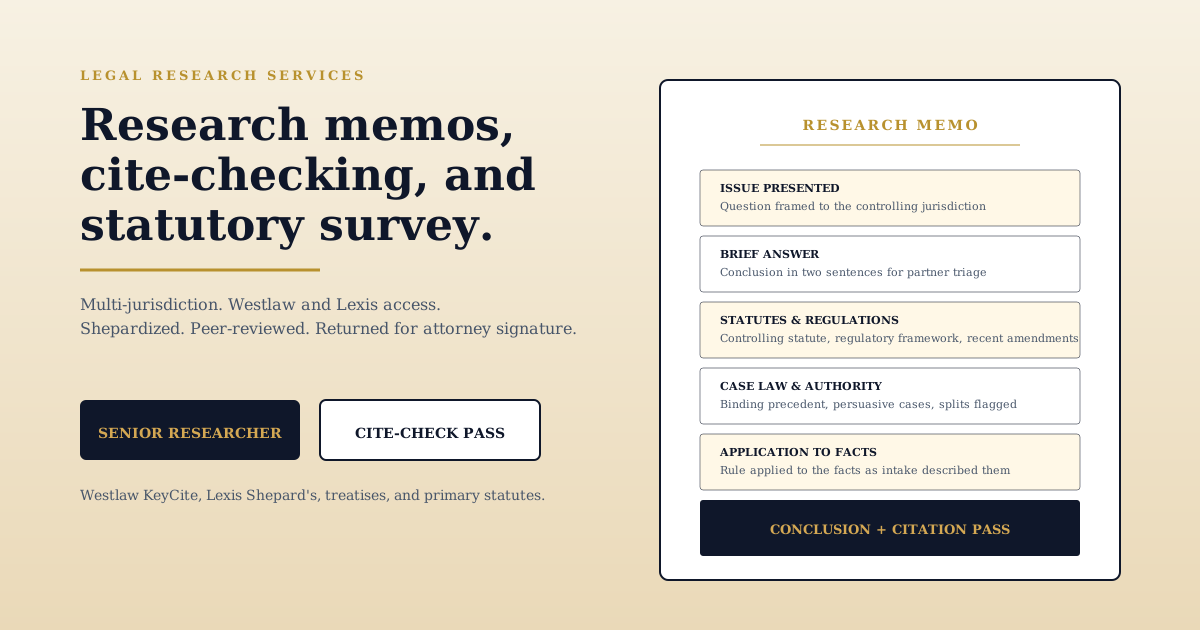
Our legal research services deliver research memos in the six-section anatomy your supervising attorney already reads at triage: issue, brief answer, statutes, case law, application, conclusion. Every authority is cite-checked through KeyCite or Shepard's before the memo leaves the portal, and every memo runs a senior researcher plus a peer review pass before it returns to your firm for the Rule 5.3 review.
KeyCite · Shepard's · Treatise
Every authority verified before the memo returns
Research Workstreams We Run on the Bench
Our case law research services, shepardizing service, and outsourced legal research bench cover the eight workstreams below. Engage a single memo as a project or stand up a research retainer for ongoing cite-checking and bench-memo capacity.
Single-Issue Research Memos
One issue, one controlling jurisdiction, one memo. Issue presented, brief answer, statutes, case law, application, and conclusion. Cite-checked through KeyCite or Shepard's before the memo leaves the portal.
Multi-Jurisdiction Statutory Survey
Comparative survey memos that map a single rule (employment restrictive covenants, consumer-protection statutes, professional licensing, registration requirements) across the jurisdictions the client operates in. When a matter needs full national coverage, we run a 50-state survey across all fifty jurisdictions plus the District of Columbia on the same single-engagement scope.
Pre-Litigation Research Stack
Cause-of-action research, elements analysis, defenses survey, statute-of-limitations survey, forum selection, and choice-of-law research bundled into the research stack a litigator opens a complaint or answer with.
Regulatory and Administrative Research
Federal Register releases, agency guidance, CFR provisions, state regulatory codes, and recent enforcement actions. Updates can be set on a standing cadence for compliance-driven engagements.
Circuit and State Split Memos
When the controlling rule splits across federal circuits or among states, our researcher maps the split, flags the leading cases on each side, and identifies the position the controlling jurisdiction would most likely adopt on first impression.
Case Law Analysis on Specific Authority
Deep-dive analysis on a single leading case or line of authority: holding, reasoning, subsequent treatment, distinguishing fact patterns, and how the supervising attorney can frame or distinguish the authority on a pending matter.
Cite-Checking and Authority Verification
Standalone citation-pass service for briefs, motions, and memos drafted in-house. We run every authority through KeyCite or Shepard's, flag negative treatment, and return a clean cite-check log with the recommended fixes.
Bench Memos for Hearings and Oral Argument
Pre-hearing bench memos that compile every authority the supervising attorney will reference at oral argument, with the leading paragraph from each opinion pulled and indexed for quick reference at the lectern.
Docket and PACER Research
Docket and PACER pulls, court-record retrieval, and docket monitoring: we pull the filings, orders, and docket sheets a matter turns on from PACER and state e-filing systems, retrieve certified court records on named cases and parties, and set standing docket monitoring so new filings on a tracked case surface as they hit the docket.
The Six-Section Anatomy Every Research Memo Returns In
Every legal research memo we deliver lands in your associate's inbox in the same six-section structure so the supervising attorney can triage from the brief answer and dive into the analysis from there. The anatomy below is the spine our researchers write to on every engagement.
- 1
Issue Presented
The legal question framed to the controlling jurisdiction in one sentence that names the parties, the operative facts, and the rule the matter turns on.
- 2
Brief Answer
A two-sentence conclusion the supervising attorney can read first for triage: yes or no on the issue, with the controlling authority cited inline.
- 3
Statutes and Regulations
The controlling statute, any regulatory framework that implements or overlays it, and any recent amendments or releases that change the analysis since the leading cases were decided.
- 4
Case Law and Authority
Binding precedent in the controlling jurisdiction first, persuasive authority from sister jurisdictions second, and any circuit or state split flagged with the leading cases on each side of the split.
- 5
Application to Facts
The rule applied to the facts as intake described them: which element each fact satisfies, which fact gaps the supervising attorney should pin down with the client, and any reasonably foreseeable counter-argument the rule supports.
- 6
Conclusion + Citation Pass
A clean restatement of the brief answer with every authority cite-checked through KeyCite or Shepard's, plus a citation log flagging any authority with negative subsequent treatment.
Database Access Sits Inside the Legal Tank Bench
Our researchers operate on standing Westlaw and Lexis subscriptions, with Bloomberg Law and HeinOnline available for matters that require treatise depth or historical statutory research. Database access sits inside our bench, which means your matter never opens an external database account, never carries an outside subscription cost back to the client, and never produces a research trail that lives on a third-party platform outside the engagement letter.
The citation pass on every memo runs through KeyCite or Shepard's, whichever is the controlling-jurisdiction standard. Negative-treatment flags (criticized, distinguished, superseded, overruled) are surfaced in the memo itself and called out in the citation log so the supervising attorney sees the risk at first read. The researcher reads every flagged authority in full before the memo returns: a flag without a recommendation is not a finished cite-check.
Practice-area benches that draw on the database stack cover commercial litigation, employment, regulatory and administrative law, intellectual property, real estate, corporate transactional, and family law. Send the issue and the controlling jurisdiction and we route the engagement to the researcher whose practice-area lane fits.
How a Research Engagement Runs From Intake to Memo Delivery
Every research engagement runs through the same six-step flow whether the deliverable is a one-question memo or a multi-state survey.
Turnaround is scoped to the matter and set with you at intake. Standard research returns within a few business days, and a named rush, or priority, tier is available when a hearing or filing deadline compresses the window, with same-day turnaround on tightly scoped single-issue questions. Broader work, such as a 50-state survey or a full pre-litigation research stack, runs longer because the citation pass covers more authority.
- 1
Issue intake
Send the issue, the controlling jurisdiction, the turnaround, and any facts the rule turns on through our quote form. We return scope and timeline in one business day.
- 2
Researcher match
We assign a senior researcher whose practice-area lane fits the issue (commercial, employment, regulatory, litigation, IP), plus a peer reviewer for the citation pass.
- 3
Secure handoff
Source materials and your privileged communications move through the SOC-2 Type II matter portal. Database access (Westlaw, Lexis, Bloomberg) sits inside our bench.
- 4
Research and draft
Senior researcher runs primary research first, then secondary and procedural. Memo drafted to the six-section anatomy and held to your house-style citation format.
- 5
Citation pass + peer review
Every authority is cite-checked through KeyCite or Shepard's. A peer reviewer runs a second-set-of-eyes pass on the analysis before the memo leaves the portal.
- 6
Returned for attorney review
Memo returned to your firm. The supervising attorney owns the Rule 5.3 review, the client communication, and any pleading the memo informs.
Our Researcher Writes the Memo; The Supervising Attorney Acts on It
Research memos are work product for the supervising attorney's review under ABA Model Rule 5.3. Our researcher prepares the analysis, runs the citation pass, and returns the memo through the encrypted matter portal. The supervising attorney owns the legal advice that flows from the memo, the client communication, and any pleading or transaction document the memo informs. We do not advise clients, do not sign pleadings, and do not communicate with the underlying client.
We run research in both registers. Neutral, objective memos give the supervising attorney a straight read of the law with the risks flagged, and advocacy research marshals the authority to support a position in a brief or motion. Either way our researchers work as researchers, not the attorney of record: the argument, the strategy, and the signature stay with the engaging attorney. The bench is staffed by experienced, US-based researchers who prepare research and analysis for the engaging firm's supervising attorney; they do not enter appearances, give legal advice, or hold the attorney-client relationship.
Supervising attorney owns the analysis on output
The research memo is a tool the supervising attorney uses to advise the client. The advice itself, the strategy decisions, and the signature on any resulting pleading or contract stay with the engaging attorney under the engagement letter and Rule 5.3.
Senior researcher + peer citation pass
Every memo runs a senior researcher on the analysis plus a peer reviewer on the citation pass before the deliverable leaves our portal. The supervising attorney still owns the Rule 5.3 review on delivery.
Legal Tank
- Runs the conflicts check before the researcher sees any privileged material.
- Conducts primary, secondary, and procedural research on our database bench.
- Drafts the memo to the six-section anatomy and runs the cite-check pass.
- Returns the memo and citation log through the encrypted matter portal.
Supervising Attorney
- Reviews the analysis and the citation log on delivery.
- Advises the client and makes the strategy call the memo informs.
- Signs every pleading, motion, or contract the memo feeds into.
- Holds the attorney-client relationship with the underlying client.
Research engagements often pair with drafting workstreams. For how brief-writing vendors price and staff that work, see ten brief writing vendors compared. See our legal brief writing services for trial-level briefs and our appellate brief writing services for circuit-court work. For broader workstream routing, see outsource legal services.
Legal Research Outsourcing Without the Offshore Handoff
Most legal research outsourcing runs through offshore LPO pipelines: the issue goes into a queue, a researcher you never speak to works it against an unfamiliar reporter system, and the memo comes back needing a second research pass to trust. Our model is a standing US-trained research bench engaged per memo. You send the issue and the controlling jurisdiction; the same named senior researcher carries it from scoping through the citation log, and the deliverable is priced per memo before work starts rather than metered by the hour.
Firms use the bench as an online legal research service in two modes: overflow, where trial deadlines have consumed associate capacity and a single-issue memo needs to land in days, and standing support, where recurring cite-checking or survey work moves off billable desks entirely. Either way the work product arrives memo-ready for Rule 5.3 review, and research pairs with drafting when you need the combined research and drafting workstream behind a motion or brief.
Questions Attorneys Ask About Outsourced Legal Research
What does a legal researcher do?
What are the 4 types of legal research?
How much does it cost to hire a legal researcher?
Is legal research a skill?
What is the difference between Westlaw and Shepardizing?
Can attorneys pass the cost of outsourced legal research through to the client?
How fast can a research memo be turned around?
Get a Research Quote Today
Send the issue, the controlling jurisdiction, and the turnaround through our quote form. We return scope and the assigned senior researcher in one business day.
Quotes return same business day on intakes received before 5 PM ET