Ex Parte Motion Meaning Explained for Litigants Facing Urgent Court Filings
An ex parte motion is a written request to the court made by one party without the other side present, used in the narrow circumstances where notice would defeat the relief or where the harm cannot wait for a standard hearing. This page explains the legal meaning, the standards courts apply, the filing procedure, and the patterns that get applications denied.
What an Ex Parte Motion Means
The phrase ex parte motion meaning resolves to a simple definition once the Latin is translated. Ex parte means for one party, and a motion is a written request asking the court to do something. Put together, an ex parte motion is a request made by the movant alone, presented to the judge without the opposing party participating in the filing or, often, even knowing it is being filed. American courts permit this only in narrowly defined situations governed by the Federal Rules of Civil Procedure and parallel state procedural codes.
Definition of Ex Parte in Legal Practice
In day-to-day practice, lawyers use ex parte to describe any communication or filing that involves only one side of the dispute. The full parte motion meaning includes both the procedural posture (one party present) and the evidentiary frame (the moving party carries the entire burden of persuasion without adversarial testing). The judge sees the motion, the supporting declaration, and the proposed order, and rules on that record alone.
Key Features of an Ex Parte Motion
Three features distinguish an ex parte filing from a noticed motion. The first is the absence of the opposing party at the time of decision. The second is the elevated showing required to justify proceeding without input from the other side. The third is the temporary nature of the relief; an order issued on an ex parte basis usually expires automatically at a follow-up hearing scheduled for adversarial argument. The motion meaning in this context is therefore not just procedural but substantive, because the relief itself is provisional.
When One-Sided Communication Is Permitted
Communicating with a judge without the other side present is ordinarily forbidden by the rules of professional conduct. Ex parte motions are the recognized exception, and they are authorized either by procedural rule, by statute, or by the court's inherent authority to issue interim orders necessary to preserve the status quo. The movant must identify the specific authority on the face of the motion.
Common Situations That Justify Filing Ex Parte
Courts most often grant ex parte applications for temporary restraining orders, emergency custody orders, asset preservation relief, and orders shortening time. Each of these involves a credible risk that giving advance notice would let the opposing party defeat the relief by acting in the gap between notice and hearing.
Why Courts Allow Ex Parte Filings
The basic policy answer is that some harms cannot be undone once they happen, and a judicial system that required full notice in every situation would be unable to prevent them. The ex parte motion exists to bridge the gap between the speed at which harm can occur and the speed at which the court can ordinarily act. Courts approve these requests sparingly and only after the movant articulates a specific reason why the standard noticed-motion track is inadequate.
Preventing Irreparable Harm Before Notice
The classic justification for ex parte relief is irreparable harm. If money damages cannot adequately compensate the loss, and if the harm will occur before a noticed hearing can be set, the court has authority to enter an interim order preserving the status quo until both sides can be heard. The movant must identify the harm with specificity, supported by sworn declaration, not by attorney argument.
Time-Sensitive Emergencies and Imminent Deadlines
Statutory and contractual deadlines sometimes collide with court schedules. When a sale is set to close in days, a foreclosure auction is scheduled within hours, or a child is about to be taken out of state, the ordinary motion calendar cannot deliver relief in time. The judge has authority to shorten time, hear the matter on an expedited basis, or issue a holding order, but only when the timeline is genuine and verifiable.
Situations Where Notice Would Defeat Relief
Asset freezes and writs of attachment present the clearest example. Telling the opposing party that an asset freeze is being sought gives that party the opportunity to move the assets out of reach before the order issues. The judge can authorize the freeze ex parte for a limited period, with a return hearing on a short fuse for the responding party to contest the order on a full record.
Statutory and Procedural Authorizations
Many ex parte filings rest on specific statutory grants, not on general inherent authority. Domestic violence statutes authorize ex parte protective orders. Tax codes authorize ex parte jeopardy assessments. Securities statutes authorize ex parte asset freezes in fraud cases. The motion should cite the controlling statute or rule on its face so the judge can verify the source of authority without independent research.
When to File an Ex Parte Motion
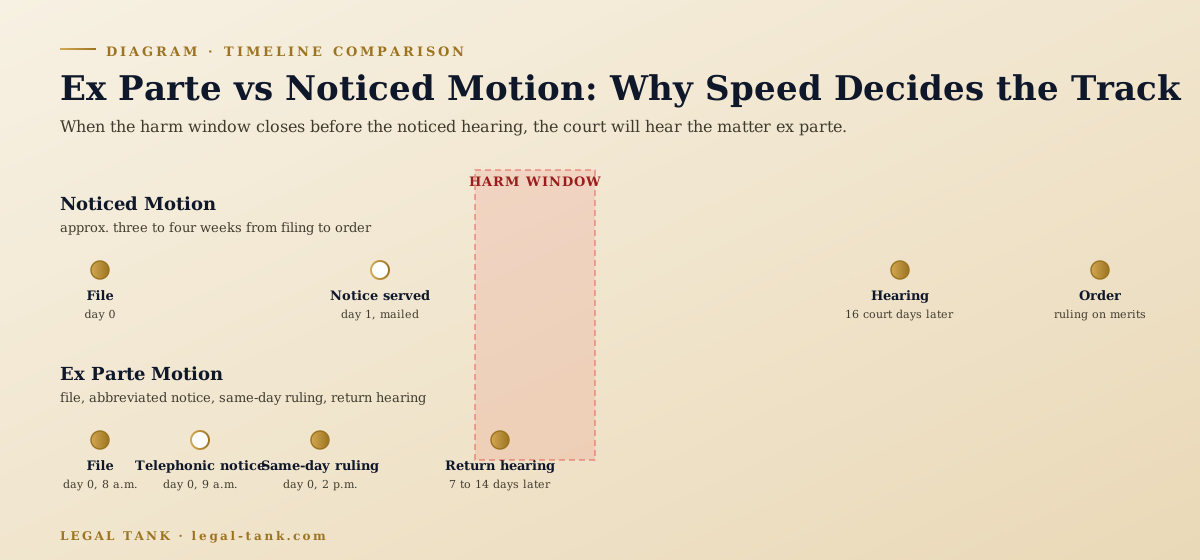
Timing is the single biggest filter on ex parte success. Most denied applications fail because the movant could have filed a noticed motion days or weeks earlier and chose not to. The standard for file ex parte applications begins with a strict assessment of whether the situation is genuinely one that cannot wait for the noticed-motion track.
Emergency Circumstances Requiring Immediate Relief
True emergency motion practice means harm that will occur before the next available noticed-motion date and that cannot be adequately addressed by money damages later. A scheduled foreclosure sale, an imminent eviction, an upcoming surgery for a contested minor child, or a deportation flight booked within the week are recognized examples. The judge wants a date and a clock, not adjectives.
Insufficient Time for Standard Notice
Most jurisdictions require sixteen court days of notice for an ordinary motion, sometimes longer. When the harm will occur inside that window, the motion may proceed ex parte if the movant can show that the timeline was not created by the movant's own delay. Courts treat self-inflicted urgency harshly, so the supporting declaration must explain when the movant first learned of the situation and why earlier filing was not possible.
Risk of Irreparable Harm Before Hearing
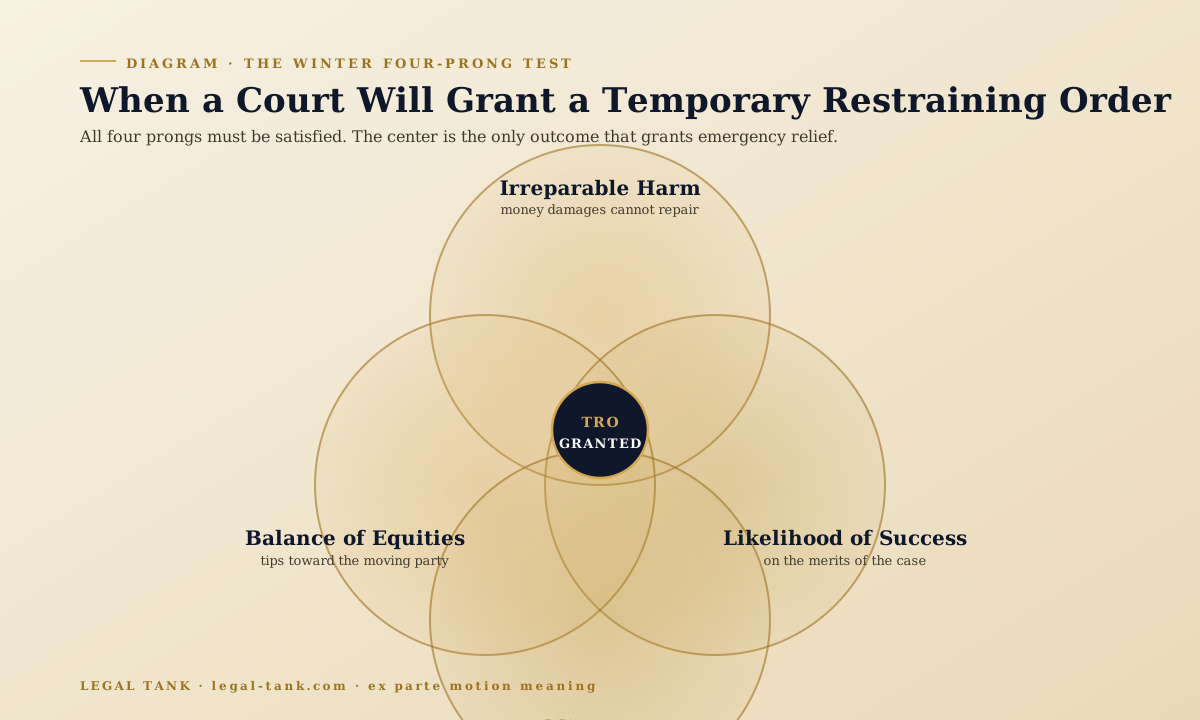
The irreparable harm standard is the second prong. Even when the timeline is short, the court will deny ex parte relief if the harm is economic and reversible by money damages. The movant must connect the threatened harm to a category that money cannot repair: loss of a unique asset, loss of custody, destruction of evidence, exposure of a trade secret, or loss of physical safety.
Statutory Deadlines That Justify Ex Parte Filing
Some deadlines are themselves statutory and cannot be moved. Anti-SLAPP motion deadlines, removal deadlines, and statute of limitations cutoffs may force expedited filings if a party did not learn of the underlying facts until late. The motion should cite the controlling deadline statute so the judge can confirm the timing constraint without independent research.
How to File an Ex Parte Motion
The mechanics for an ex parte filing track those of any motion, with one critical difference: the movant must, in most courts, give notice of the intent to file ex parte to opposing counsel even though the motion itself proceeds without their participation. The procedure below reflects the dominant pattern across federal and state civil courts; local rules vary, and the moving party should consult the controlling rule for the particular court.
- 1
Draft the Motion and Supporting Declaration
The motion itself states what the moving party is asking the court to order, the legal basis for the relief, and the reason the matter must proceed ex parte. The supporting declaration is where the evidentiary work happens. It must be made under penalty of perjury, must be based on personal knowledge, and must lay out the timeline, the harm, and the reason notice would defeat the relief in concrete factual terms. Attorney argument in the brief never substitutes for sworn factual assertion in the declaration.
- 2
Notify Opposing Counsel Before Filing
The notice requirement catches many pro se litigants and even seasoned attorneys by surprise. Most jurisdictions require telephonic or written notice to the opposing party (or counsel if represented) before the ex parte appearance, stating the time and place of the appearance, the relief sought, and the facts underlying the request. The notice gives the responding party the option of appearing to oppose, even though their absence will not prevent the court from ruling.
- 3
File With the Clerk and Request a Hearing
File the motion, declaration, proposed order, and notice with the clerk's office. Many courts have a designated ex parte window or a specific judge handling ex parte matters on a rotating schedule. Filing fees apply, and some jurisdictions require a separate ex parte application fee on top of the ordinary motion fee.
- 4
Serve the Order and Proof of Service
If the court grants the motion, the movant must serve the signed order on the responding party promptly, usually within twenty-four hours, and file proof of service with the court. The order will typically set a return date for a noticed hearing where the responding party can appear and contest the relief. Failing to serve quickly can be grounds for the court to dissolve the order on the responding party's motion.
Notice failures are the leading cause of ex parte denials.
Calendar a notice call and a confirming email before the appearance, and document both in the supporting declaration. Judges who see "notice attempted but no response" with a timestamp and a copy of the email take the application seriously. Judges who see "notice not given because of urgency" without further explanation routinely deny.
Common Examples in Civil and Family Cases
The categories below are the everyday workhorses of ex parte practice. Each rests on a recognized standard for emergency relief and a clear legal authorization for proceeding without adversarial input. The applications get filed by the thousands in state and federal courts every week, and the same patterns show up across jurisdictions even where the rule numbers differ.
Temporary Restraining Orders
A temporary restraining order is the federal-court vehicle for interim injunctive relief without notice. It freezes the status quo until a preliminary injunction hearing can be held with both sides present. The standard requires a showing of irreparable harm, likelihood of success on the merits, balance of equities, and public interest, and the movant must explain in writing why notice should not be required.
Emergency Child Custody Orders
Family courts entertain ex parte custody applications when a child faces immediate physical danger or when a parent is about to remove the child from the jurisdiction. The standard varies by state but uniformly requires sworn allegations of specific facts, often with police reports, medical records, or witness statements attached. The order typically schedules a return hearing within a short window for the responding parent.
Asset Freezes and Writs of Attachment
In fraud, breach-of-fiduciary-duty, and judgment-collection settings, the court can authorize an ex parte asset freeze or attachment to prevent dissipation of property before a final judgment can be enforced. The movant must show a likelihood of success on the merits and a credible risk that assets will disappear if notice is given. The order usually commands a specific bank or custodian to hold the assets.
Orders Shortening Time
Sometimes the relief sought is not substantive but procedural: an order shortening the time required for ordinary motion notice. These applications are common when a deadline imposed by another tribunal or by statute will pass before a noticed motion could be heard. The judge can shorten the notice period and set an expedited hearing date for the underlying motion.
Ex Parte vs Noticed Motions
Understanding the contrast with ordinary noticed motions sharpens the ex parte motion picture. Noticed motions are the default; ex parte applications are the exception. The differences run across notice, timing, burden, and the relief that can ultimately be ordered.
| Axis | Noticed Motion | Ex Parte Motion |
|---|---|---|
| Notice | Sixteen court days in most state courts, fourteen days in many federal districts. Service by mail or e-filing under the local rule. | Abbreviated notice (often by telephone the day before), and in narrow categories no notice at all. Form prescribed by local rule. |
| Timing | Heard weeks or months after filing. Briefing schedule fixed by the local rule and the calendar. | Decided within hours or a few days. Often ruled on the papers without an in-person appearance. |
| Burden | Moving party carries the substantive burden on the merits. Opposing party briefs and argues at the hearing. | Same substantive burden plus the procedural burden of justifying why the matter cannot proceed on notice. Heightened candor obligation. |
| Relief | Final orders on the merits of the underlying motion after full adversarial briefing. | Almost always interim and provisional, with a built-in return hearing for adversarial briefing. |
Mistakes That Get Ex Parte Requests Denied
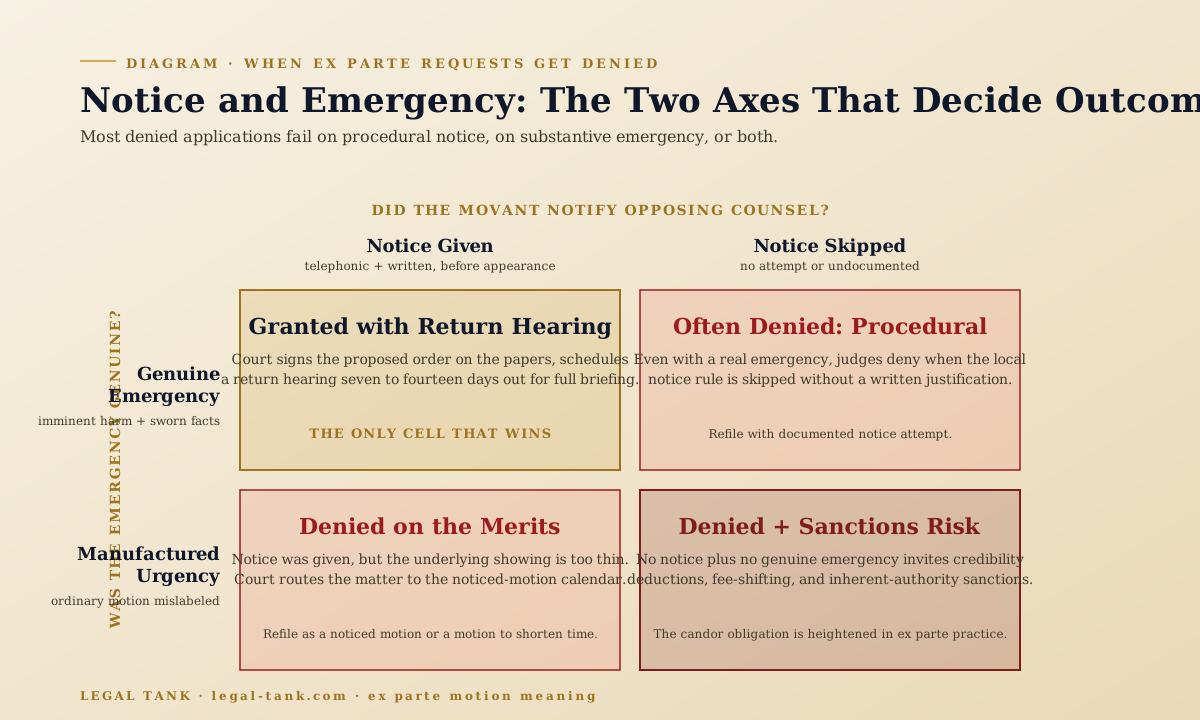
Across thousands of denied applications, a small set of recurring mistakes account for most of the losses. Avoiding these does not guarantee success, but committing any one of them almost guarantees denial. If the harm is real but the timeline allows for a noticed hearing, the right move is a noticed motion to file a motion for extension of time or to continue the deadline on a regular notice schedule, not an ex parte shortcut.
- Failing to Show True Emergency or Irreparable Harm
Most denials trace to a thin emergency showing. The declaration uses words like "urgent" and "imminent" without attaching dates or documents. The judge wants a foreclosure notice, an eviction filing, a custody pickup order, or a similar concrete trigger that fixes the timing of the harm. Adjectives without anchors lose.
- Skipping Required Notice to Opposing Counsel
The second-largest category of denials is procedural: failing to give the abbreviated notice the local rule requires before the ex parte appearance. Even pro se litigants are held to the notice rule, and the judge will not waive it absent a written showing that notice would defeat the relief. When in doubt, give notice and document the attempt.
- Insufficient Supporting Declaration or Evidence
Argumentative briefs paired with thin declarations also fail consistently. The motion brief is for legal argument; the declaration is for facts. When the brief asserts facts that the declaration does not support, the judge has no record to rule on, and the application is denied for want of evidentiary foundation.
- Requesting Relief Available Through Noticed Motion
Judges deny ex parte applications when the same relief is available through the ordinary motion calendar without prejudice to the moving party. If the harm is real but the timeline allows for a noticed hearing, the right move is a noticed motion to extend or continue the deadline on a regular notice schedule, not an ex parte shortcut.
Frequently Asked Questions
What is the meaning of ex parte motion?
What are the disadvantages of ex parte?
What happens when a case is ex parte?
What not to tell a judge?
More on Motion Practice
The ex parte motion sits inside a broader family of pretrial filings. The pages below cover adjacent tools that come up alongside emergency applications.
Motion in Limine Meaning
Pretrial evidentiary rulings that exclude testimony before the jury hears it.
Defining the Plaintiff's Default Judgment Motion
When a defendant fails to answer and the plaintiff seeks judgment without trial.
Motion to Modify a Divorce Decree
Post-judgment changes to support, custody, or property arrangements.
Template Motion to Dismiss
The sections drafters adapt for each jurisdiction when challenging a complaint.
Motion to Reconsider (Federal Court)
The Rule 59(e) and Rule 60(b) sections judges expect to see in a post-ruling reconsideration request.