Unlawful Detainer Complaint: The Court Action That Recovers Possession
Prepared by a licensed U.S. attorney
An unlawful detainer complaint is the summary lawsuit a landlord files to recover possession after a proper notice expires and the tenant has not cured or moved out. The notice comes first; this is the lawsuit that follows it.
This page explains what an unlawful detainer is, how it differs from the eviction notice that must precede it, what the complaint has to plead, the process and timeline, the defenses a tenant can raise, how the action varies by state, and how to file one.
Notice · Complaint · Writ
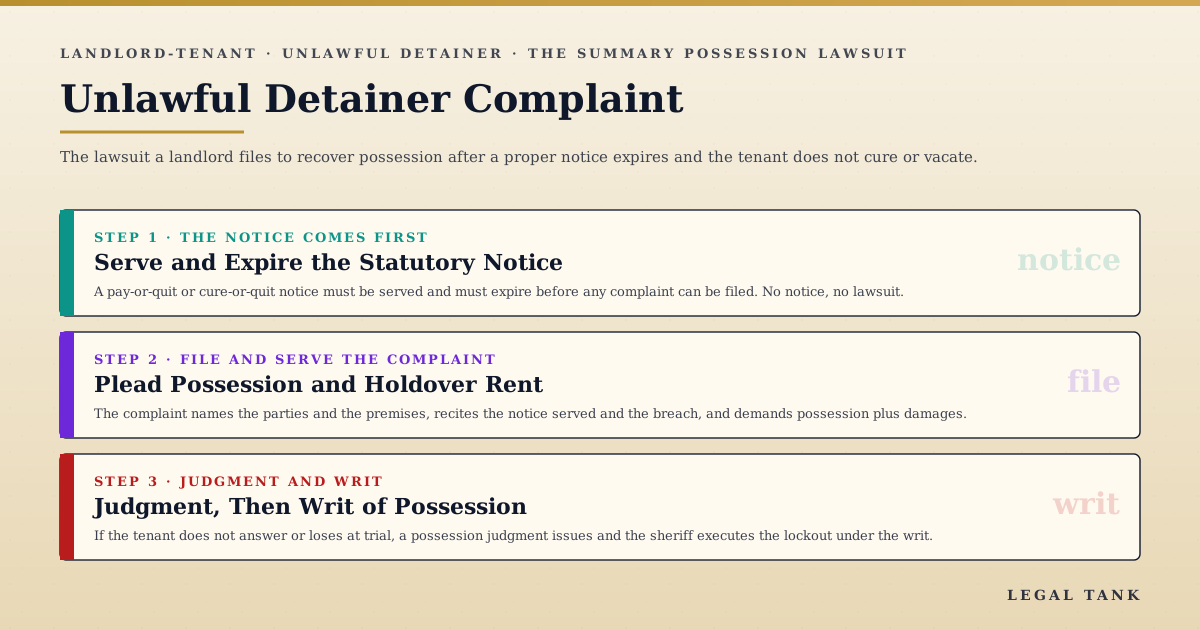
The notice comes first, then the lawsuit
What Is an Unlawful Detainer, the Summary Possession Action
An unlawful detainer is the lawsuit a landlord brings to remove a tenant who stays without the legal right to remain. The name describes the wrong it addresses: the tenant is unlawfully detaining, or holding onto, the premises. It is a summary proceeding, which means the court hears it on a compressed calendar with short deadlines, ahead of ordinary civil cases, because the central question is possession and possession cannot wait years to resolve.
The action does not begin the dispute. It ends it. Before an unlawful detainer can be filed, the landlord must have served a valid statutory notice giving the tenant a fixed period to pay overdue rent, cure a lease violation, or vacate. Only when that notice expires without the tenant curing or leaving does the right to file the complaint arise. The complaint then asks the court for one primary remedy, restitution of the premises, and usually for money damages alongside it.
The complaint is prepared as a court-ready pleading that the landlord's counsel of record signs and files, or that a pro se landlord files per local rules. It shares the structure of a civil complaint that opens a lawsuit, adapted to the fast, statute-driven track that governs possession cases.
Unlawful Detainer vs Eviction Notice: The Notice Comes First
The single most important thing to understand about an unlawful detainer is that it is the second step, not the first. The eviction notice and the unlawful detainer complaint are two different documents that do two different jobs, and skipping or rushing the first one is the surest way to lose the second.
The eviction notice is the pre-suit demand. The landlord serves it on the tenant to start the clock, giving a fixed window, such as a three-day pay-or-quit period, to cure the default or leave. No court is involved, and the notice by itself does not remove anyone. The rules for drafting and serving that notice, and the way a defect in it can sink everything downstream, are covered in full by our eviction notice template and drafting page for landlords.
The unlawful detainer complaint is what comes next, and only after the notice period has expired without the tenant curing or vacating. Filing the complaint opens the lawsuit, generates a summons, and puts the possession question in front of a judge. Because the notice is a prerequisite, the complaint stands or falls on it: a complaint filed with no notice, an invalid notice, or before the notice period runs is routinely dismissed, even when the rent is plainly owed.
What Goes in an Unlawful Detainer Complaint
An unlawful detainer complaint pleads six things: the parties, the premises, the notice that was served and expired, the tenancy and the breach, the demand for possession, and the money damages. Each block has to line up with the notice and the lease, because a summary court reads them together and any gap becomes a defense.
Caption
The Court and the Parties
The caption names the correct court of limited jurisdiction, the landlord as plaintiff, and every adult tenant and known occupant as a defendant. Naming an occupant who is not on the lease, and adding a Doe or unknown-occupant defendant where the state allows it, keeps a later occupant from defeating the writ.
The Premises
The Property in Dispute
The complaint identifies the rental by full street address and unit, and describes it as residential or commercial. Possession of this specific premises is the remedy the action exists to obtain, so the description has to match the lease and the notice exactly.
The Notice
The Notice Served and Expired
The complaint pleads the statutory notice by type, the date and manner it was served, and the date it expired without cure. A copy of the notice is attached as an exhibit. This element is where the whole case is won or lost, because a defective or unserved notice is the most common ground for dismissal.
The Breach
The Tenancy and the Default
The complaint states the lease or rental agreement, the rent and the due date, and the specific default: unpaid rent through a stated date, or the lease violation the tenant did not cure. The facts are pleaded with enough detail that the court can see the tenant no longer has the right to remain.
The Remedy
Possession of the Premises
The prayer asks first for restitution of the premises, the return of possession to the landlord. In a summary proceeding this is the primary and most urgent remedy, and it is the relief the writ of possession later enforces through the sheriff.
Damages
Holdover Rent and Money Damages
The complaint also demands damages: unpaid rent, holdover damages measured at the daily rental value for each day the tenant stayed past the notice, court costs, and attorney fees where the lease or statute allows them. The money judgment usually severs from possession and proceeds on its own track.
Where the tenancy is a business tenancy, the pleaded breach and the holdover measure are read against the negotiated terms of the commercial lease agreement rather than a residential statute, which changes what the complaint has to allege.
The Unlawful Detainer Process and Timeline
Once the notice has expired, the unlawful detainer runs on a tight, statute-driven calendar from filing to lockout. The six stages below describe the common track; the exact number of days at each stage is set by state law and varies, so the controlling local statute governs every deadline.
File the Complaint and Pay the Filing Fee
After the notice has expired without cure, the landlord files the unlawful detainer complaint with the clerk of the court of limited jurisdiction, along with the filing fee and any required civil cover sheet. Filing opens the case and, in states that require it, the complaint is verified, meaning the landlord swears the facts are true.
Summons Issues and Is Served
The clerk issues a summons directed to each tenant defendant. The summons and complaint are then served on the tenant, usually by a process server or sheriff, using the method the state allows. Clean service is what starts the tenant's short answer clock, so the proof of service is prepared to survive challenge.
The Tenant's Answer Window
The tenant has a short statutory window, measured in days rather than the weeks a general civil defendant gets, to file a written answer or a responsive motion. This compressed deadline is the defining feature of the summary proceeding and the reason the case moves quickly to resolution.
Default or Expedited Trial
If the tenant does not answer, the landlord requests a default and the court can enter judgment without a trial. If the tenant answers, the court sets an expedited trial, often within days or a few weeks, and hears the possession claim on a priority calendar ahead of ordinary civil matters.
Judgment for Possession
A landlord who prevails, by default or at trial, receives a judgment for restitution of the premises. In most states the court can also enter the money judgment for unpaid rent, holdover damages, and costs, though the money portion frequently severs and proceeds separately from possession.
Writ of Possession and Lockout
On the possession judgment the court issues a writ of possession, sometimes called a writ of restitution or a warrant of eviction. The writ goes to the sheriff or constable, who posts it and, after a short window, executes the lockout and returns possession to the landlord.
A tenant facing the final stage sometimes asks the court to pause the lockout, which is the office of a motion to stay the writ of possession, so the landlord's judgment package is drafted to withstand a late request to delay enforcement.
Tenant Defenses to an Unlawful Detainer
A well-drafted complaint anticipates the defenses a tenant is most likely to raise and closes them off in advance. The six below account for the majority of contested unlawful detainers, and each can defeat the case even when rent is genuinely owed.
Improper or Defective Notice
The most common and most effective defense. If the underlying notice misstated the rent, gave the wrong cure period, was served the wrong way, or the complaint was filed before the notice expired, the case is dismissed regardless of whether rent is owed. A clean notice is the foundation the complaint stands on.
Breach of the Warranty of Habitability
In most states a landlord's failure to keep the unit habitable, with serious uncured defects, can be raised against a nonpayment eviction. The tenant argues the rent obligation was reduced or excused by conditions, which turns a simple possession case into a contested one.
Retaliatory Eviction
Many states presume retaliation when a landlord files soon after a tenant complains to a code agency, requests repairs, or organizes with other tenants. A proven retaliation defense defeats the action and can expose the landlord to statutory penalties.
Acceptance of Rent and Waiver
Accepting rent after a pay-or-quit notice generally waives that notice and resets the clock in most jurisdictions. A tenant who can show the landlord took a payment after the notice issued often defeats the case and forces the landlord to start over with a fresh notice.
Procedural Defects in Service or Pleading
Defects in how the summons and complaint were served, a misnamed party, a wrong court, or a pleading that omits a required element can each stall or dismiss the action. Because the procedure is strict and summary, small errors carry outsized consequences.
Discrimination or Protected Status
A tenant may raise fair-housing protections or a state or local eviction-protection status, such as a protected class or a covered tenancy under a just-cause ordinance, as a defense to possession. These defenses are jurisdiction-specific and are checked before the complaint is drafted.
Unlawful Detainer by State: Fast and State-Specific
The possession action is state law, and both its name and its deadlines change at the state line. Some states call it unlawful detainer; others call it summary process, forcible entry and detainer, summary ejectment, or a dispossessory proceeding. What they share is speed: every version runs on a compressed calendar with a short answer window. The table below shows how the action is named and filed in a range of states; the controlling statute always governs the specifics.
| State | Name of the Action | Where It Is Filed |
|---|---|---|
| California | Unlawful detainer | Filed in superior court on a summary calendar; the tenant's answer window is short and just-cause limits apply to many tenancies. |
| Texas | Eviction suit (forcible detainer) | Filed in justice court; among the fastest tracks in the country, with a quick hearing and a short appeal window before the writ issues. |
| New York | Summary proceeding (holdover or nonpayment) | Holdover and nonpayment proceedings are filed separately in housing court, and the process is highly procedural. |
| Florida | Eviction (removal of tenants) | Filed in county court; the tenant generally must deposit disputed rent into the court registry to contest possession. |
| Massachusetts | Summary process | Filed in district or housing court; the term summary process is the state's name for the same expedited possession action. |
| North Carolina | Summary ejectment | Filed in small claims before a magistrate; appeals move to district court for a fresh hearing. |
| Illinois | Eviction (forcible entry and detainer) | Filed under the Eviction Act; local ordinances such as Chicago's add notice and process requirements over the state baseline. |
| Georgia | Dispossessory proceeding | Filed in magistrate court after a demand for possession; the tenant's answer window is very short. |
Because the statutory deadlines are strict and fast, and because a filing in the wrong court or under the wrong label stalls the case, the complaint is drafted to the specific state where the property sits before it is filed.
How to File an Unlawful Detainer Complaint
Six steps take an unlawful detainer from an expired notice to a writ of possession. The notice status is confirmed first, because everything downstream depends on it.
- 1
Confirm the notice has expired
The complaint cannot be filed until the statutory notice has been properly served and its cure period has run out without the tenant paying or vacating. This is checked first, because filing early is a dismissal ground on its own.
- 2
Prepare the complaint and summons
The complaint pleads the parties, the premises, the notice served, the breach, and the demand for possession plus holdover damages, with the notice attached as an exhibit. The summons is prepared to match. In verification states the landlord signs under oath.
- 3
File in the correct court
The action is filed in the court of limited jurisdiction that hears possession cases in that county, which may be a justice, magistrate, district, or housing court depending on the state. Filing in the wrong court delays or dismisses the case.
- 4
Serve the summons and complaint
The summons and complaint are served on each tenant defendant by the method the state authorizes, usually through a sheriff or licensed process server, and a proof of service is filed. Clean service starts the tenant's short answer clock.
- 5
Take default or try the case
If the tenant does not answer within the statutory window, the landlord requests a default judgment. If the tenant answers, the case is set for an expedited trial and the landlord proves the notice, the breach, and the right to possession.
- 6
Obtain judgment and the writ
On a judgment for possession, the landlord requests the writ of possession, which the sheriff or constable executes to complete the lockout. The money judgment for rent and damages is pursued on its own collection track.
Part of the landlord-tenant stack: the pay-or-quit and cure-or-quit notice that has to be served first, the broader civil complaint drafting practice for disputes outside the summary track, and the negotiated commercial lease that governs a business tenancy before any default arises.
Unlawful Detainer Complaint: Common Questions
What is an unlawful detainer?
What is the difference between an unlawful detainer and an eviction notice?
How long does an unlawful detainer case take?
What happens if a tenant does not respond to an unlawful detainer complaint?
What defenses can a tenant raise to an unlawful detainer?
Do I need a lawyer to file an unlawful detainer complaint?
Recover Possession Without a Fatal Filing Error
Tell us the property, the tenancy, and the notice you already served. We return a court-ready unlawful detainer complaint, summons, and exhibits, drafted to your state and court for your counsel of record to file, or for you to file per local rules.
Statutory deadlines are strict and fast, and they vary by state