
By the Legal Tank editorial team
What the Average Settlement for Unpaid Wages Tells You
The average settlement for unpaid wages under the Fair Labor Standards Act runs between the face value of the unpaid wages and double that amount once liquidated damages are added, which is exactly why a written demand letter is the right first move rather than a direct agency filing. The most common scenarios that call for a formal demand letter unpaid wages include unpaid overtime that the employer recorded but never paid, final paychecks withheld after resignation or termination, pay periods where the employer shorted regular hours, and off-the-clock work the employer required but refused to compensate.
The demand letter accomplishes three goals simultaneously. First, it puts the employer on written notice of the claim, which is a prerequisite for the employer's good-faith defense under 29 U.S.C. §260. An employer who refuses to pay after receiving a specific, documented demand faces mandatory liquidated damages equal to the unpaid wages unless it can prove both a subjective good-faith belief and an objectively reasonable basis for the underpayment. Second, it documents the statute of limitations position: the general FLSA window is two years from the date each underpaid pay period was due, extended to three years for willful violations under McLaughlin v. Richland Shoe Co. (1988). A timely demand letter preserves the full recovery window and signals to the employer that the claim is not stale. Third, it often resolves the matter without litigation, because employers weigh the fee-shifting exposure under 29 U.S.C. §216(b) when deciding whether to pay.
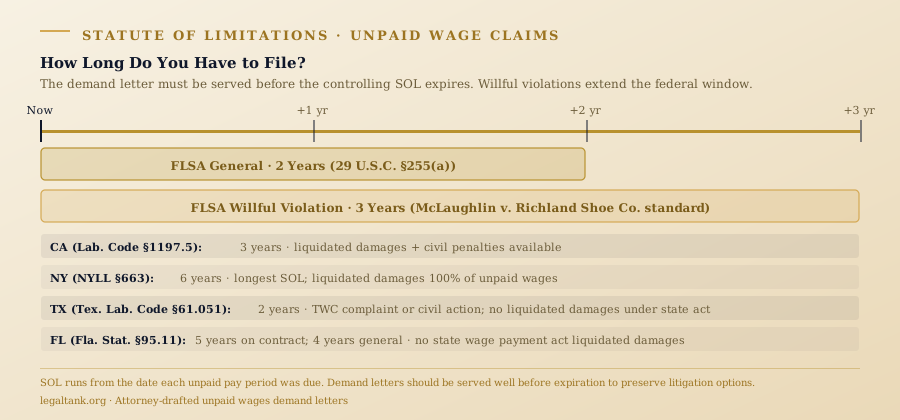
Texas Statute of Limitations on a Back-Pay Demand
Back-pay demands in Texas run on a two-year limitations period under Texas Labor Code §61.051 for Texas Workforce Commission complaints, and on the federal FLSA two-year window (three years for willful violations) measured from each unpaid payday. Texas employees pursuing overtime typically proceed under the FLSA because Texas has no independent state overtime statute. A demand letter for unpaid wages in Texas cites both the FLSA federal right and the TWC complaint pathway, giving the employer two separate enforcement mechanisms to weigh.
Demand Letter vs. Agency Filing, Timeline Compared
Most employers who receive a credible, documented demand letter unpaid wages respond within fourteen to thirty days. The Department of Labor Wage and Hour Division and state labor agencies take three to twelve months to investigate and resolve complaints through their administrative processes. A demand letter that bypasses the agency and goes directly to the employer's HR director and outside counsel typically produces a faster resolution, because it avoids the agency queue and places the liquidated-damages threat in front of the employer's cost-benefit analysis immediately.
Professionally Drafted vs. Free Template
A letter of demand for unpaid wages template available online can identify the basic claim, but it rarely includes the statutory citations, the liquidated-damages calculation, or the litigation-ready framing that signals seriousness to the employer's HR and legal team. A professionally drafted demand carries the implicit message that a complaint, a Wage and Hour Division referral, or a civil filing is already prepared and waiting. That positioning materially affects the employer's response. For workers with claims above a few thousand dollars, the cost of a professionally drafted unpaid wages demand letter is recovered many times over by the outcome it produces.
Ready to put the employer on formal notice?
Start Your Unpaid Wages DemandWhy a Demand Letter Goes Before the DOL Filing
A Wage and Hour Division complaint can take three to twelve months to resolve, while a professionally drafted demand letter sent directly to the employer typically produces a response within fourteen to thirty days. From intake to sign-ready unpaid wages demand letter, the process runs in five structured steps. Each step is designed to capture the full damages picture before the demand is sent, not after.
Submit Your Matter Details
Complete the intake form with your employment dates, pay periods in dispute, the wages owed per period, and any documentation you have: pay stubs, offer letters, time records, or text messages acknowledging the debt. The more documentation you provide, the stronger the pre-litigation demand.
We Calculate Total Exposure
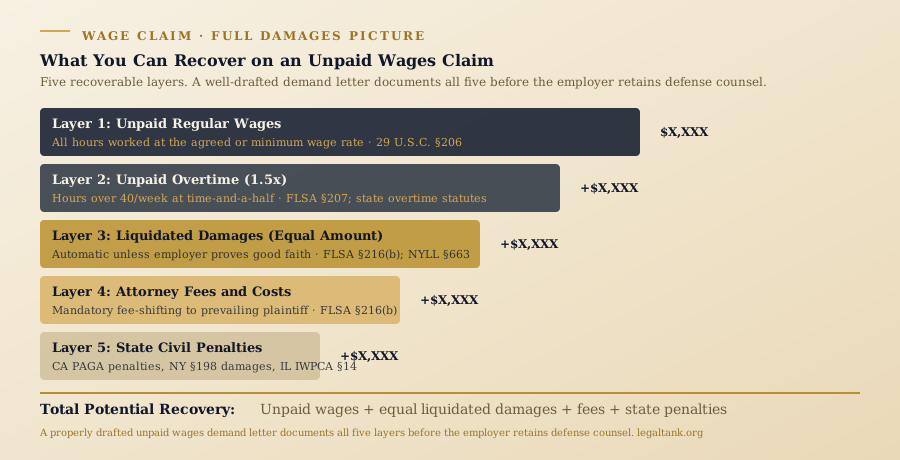
We calculate all five layers of recovery: unpaid regular wages, overtime at one-and-a-half times the regular rate, liquidated damages equal to the unpaid wages under 29 U.S.C. §216(b), attorney fees under the FLSA fee-shifting provision, and any applicable state civil penalties under your controlling state statute.
Draft Prepared and Cited
We draft the formal unpaid wages demand letter to your facts and the requirements of your state. The letter cites the controlling federal and state statutes, documents the pay periods and amounts by date, attaches or references the supporting exhibits, sets a response deadline, and frames the liquidated-damages exposure the employer faces if the matter proceeds to litigation.
Review and Revision Window
You receive the draft within the agreed turnaround window and have the opportunity to request revisions. Common revision requests include adding additional pay periods, adjusting the damages calculation to reflect new documentation, or modifying the response deadline. We incorporate revisions and deliver the final sign-ready package.
Deliver and Track the Demand
You or your retained trial counsel serve the demand letter by certified mail or another delivery method that creates a timestamped delivery record. The response deadline begins to run on the date of service. If the employer fails to respond or disputes the claim, the documented demand record positions you for a credible FLSA filing with minimal additional preparation.
Six Elements Every Demand Letter Unpaid Wages Case Requires
A complete demand letter unpaid wages case demands more than a single paragraph. The professionally drafted package includes six structured sections and supporting exhibits that document the claim from the employment relationship through the pre-litigation demand and response deadline.
Caption and Employment History
Full name and address of the employee, the employer's legal name and FEIN, the dates of employment, the job title, and the final compensation rate. Establishes the employment relationship and the employer's FLSA coverage before stating the claim.
Pay Period Damages Ledger
A line-by-line table itemizing each unpaid pay period: dates, hours worked, regular wages owed, overtime hours at one-and-a-half times the regular rate, and the total deficit. This format mirrors the damages calculation a court would perform and makes the demand difficult to dispute without producing the employer's own time records.
Federal and State Statutory Citations
The Fair Labor Standards Act, 29 U.S.C. §§206 and 207 for minimum wage and overtime; §216(b) for liquidated damages and fee shifting. Paired with the controlling state wage statute: California Labor Code §1194, New York Labor Law §663, Texas Labor Code §61.051, Illinois Wage Payment and Collection Act, or the equivalent in the employee's state.
Liquidated Damages Notice
Under 29 U.S.C. §216(b), a prevailing employee recovers liquidated damages equal to the unpaid wages in addition to the wages themselves, unless the employer proves it acted in good faith. The demand letter notifies the employer of this doubled exposure and explains that a post-demand refusal to pay will undermine any good-faith defense.
Response Deadline and Acceptance Mechanics
A specific response window of fourteen to thirty days, the address for payment or correspondence, and the acceptable form of payment or acknowledgment. A clear deadline prevents the employer from manufacturing ambiguity about whether the demand was received or accepted, and it anchors the statute of limitations analysis if the claim proceeds.
Certificate of Service
Documents the date and method of delivery, creating a legally reliable record that the demand was served. Combined with the employer's response or non-response, the certificate establishes the timeline that controls the employer's good-faith defense and any subsequent litigation.
Beyond the core demand letter, the full package includes a certificate of service and, where applicable, a summary exhibit of the pay-period damages ledger in spreadsheet format so the employer's HR team can immediately verify the calculation. For matters involving misclassification as independent contractors, the package adds an economic-reality test analysis documenting the employee-status factors under Rutherford Food Corp. v. McComb (1947) and the applicable circuit's control test. For state wage claims in California, New York, or Illinois, the package includes the state-specific civil penalty calculation and any required pre-suit notice language. We also draft a paired security deposit demand letter for former tenants who also have a pending security deposit dispute, and a paired defamation cease and desist letter for employees who have also been defamed by former employers during reference calls.
How Much Does a Demand Letter for Unpaid Wages Cost?
Pricing a demand letter for unpaid wages depends on the matter complexity, the number of pay periods in dispute, and the turnaround window. Two paths cover the majority of demand matters.
$249
Single matter, standard turnaround
- AI-generated demand letter with statutory citations
- FLSA overtime and liquidated damages calculation
- Professionally verified template and structure
- Certificate of service included
- PDF delivery within 24 hours
Custom Quote
Quoted within one business day
- Every line drafted to your facts and your state
- Pay-period damages ledger with exhibit attachments
- State civil penalty calculation for CA, NY, IL, FL
- Misclassification analysis if applicable
- Rush turnaround available (48 hours)
- Revisions included within 14-day window
Rush Options Available
For matters where the statute of limitations is approaching or the employer has announced layoffs, rush turnaround is available on professionally drafted demands. Rush pricing is quoted at the time of intake based on matter complexity. Work begins after payment is confirmed.
Frequently Asked Questions
Common questions about unpaid wages demand letters, the FLSA recovery framework, and the drafting process.