Scopist Services for Court Reporters
Per-page scoping in Case CATalyst, Eclipse, and DigitalCAT for solo reporters, agencies, and daily-copy teams.
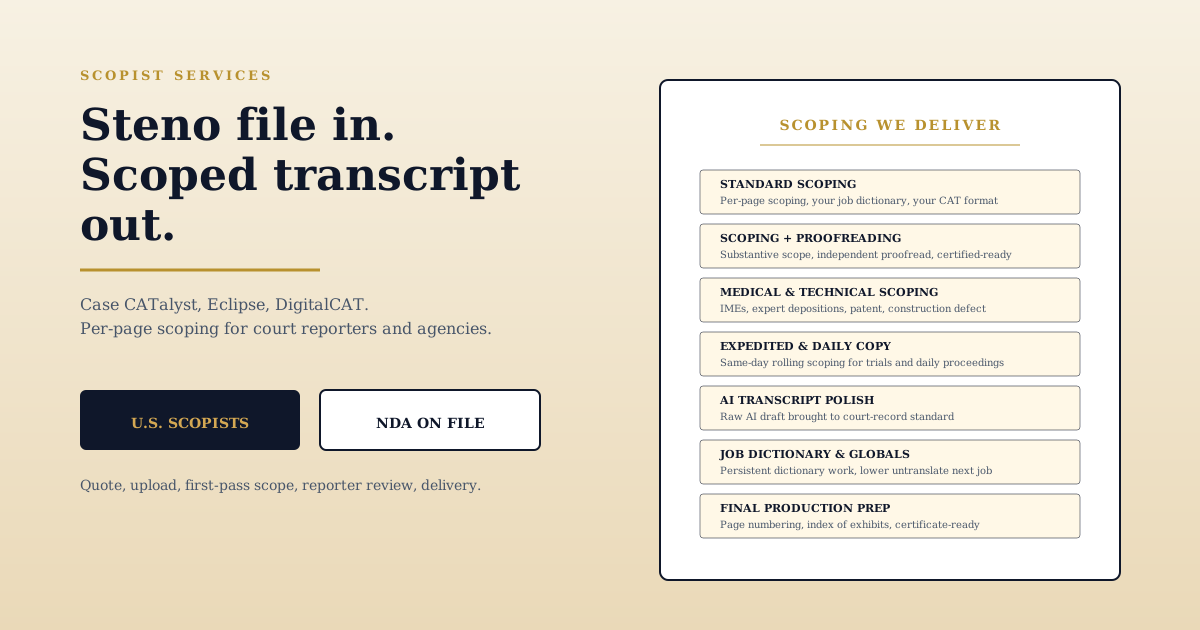
A scopist edits your raw steno against the audio: untranslates, parentheticals, speaker attribution, dictionary application. That is what lets your certificate page go on cleanly. A proofreader handles the second-pass read. A transcriber works from audio with no steno file at all. We work as scopists in Case CATalyst, Eclipse, and DigitalCAT for solo court reporters, reporting agencies, and daily-copy teams. Hire a scopist by the job or stand up a rolling engagement for daily copy and overflow. Per-page pricing. Named scopist and turnaround tier on the file before any work begins.
CATALYST · ECLIPSE · DIGITALCAT
Native CAT round-trip, your job dictionary respected
Types of Scoping Work We Deliver
Eight categories of scoping services, run for solo reporters and agencies. Most jobs are per-page scoping (the first card). The rest are specialty work for matter types or production stages where the picture is different.
Standard Scoping
Per-page scoping of your raw steno file in Case CATalyst, Eclipse, or DigitalCAT. We resolve untranslates, apply your job dictionary, fix punctuation, and clean speaker labels. Returned in your CAT software ready for a final pass.
Scoping Plus Proofreading
Standard scoping followed by an independent proofreading pass against the audio. Spelling, terminology consistency, and parenthetical accuracy verified. Suits transcripts going straight to certified production.
Medical Scoping
Medical scopist work on independent medical examinations, expert depositions, and medical malpractice testimony. Drug names, anatomy, procedure codes, and physician terminology handled by scopists with medical glossaries on file.
Technical & Patent Scoping
Engineering depositions, patent prosecution testimony, construction defect testimony, and technical expert hearings. Industry-specific job dictionaries built per matter for terminology accuracy across long transcripts.
Expedited & Daily Copy
Same-day or overnight scoping on rolling depositions and daily-copy proceedings. Page-by-page scoping returned per session so the next session opens with a clean prior-day transcript in your CAT software.
AI Transcript Polish
Raw AI transcript output (Whisper, Otter, Rev) scoped to courtroom standard. Speaker attribution, parentheticals, verbatim cleanup, and dictionary application bring a 85 percent draft up to a certifiable transcript.
Job Dictionary Build & Globals
Persistent job-dictionary and globals work across a matter or a recurring caseload. Reduces untranslate rate on subsequent jobs and stabilizes terminology across multi-day proceedings.
Final Production Prep
Page numbering, header and footer formatting, certificate page setup, index of exhibits, and concordance prep ready for your certifier signature. Print-ready PDF on request.
CAT Software We Work In Natively
Scopist software matters because scoping happens inside the reporter's CAT environment, not in Microsoft Word. We accept your native file format, work in your software at your version level, respect your job dictionary, and return the file in the same format so your certificate page and final production stay on your normal track.
Case CATalyst Scopist
v22 + earlier
Case CATalyst is the primary CAT environment our scopists work in day to day. Job dictionary work, globals, briefs, and finals all handled inside CATalyst. We accept .sgngl, .cat, and .cmp files, return scoped work in CATalyst-native format, and round-trip cleanly with your reporter dictionary.
.sgngl, .cat, .cmp, audio (.wav/.mp3)
Eclipse Scopist
Vox + Eclipse 12
Eclipse scopist support for both Eclipse and Eclipse Vox steno reporters. Block structure, parenthetical conventions, and Eclipse-specific punctuation handled in-environment. We accept .ecl files and return scoped transcripts in the Eclipse format your court accepts.
.ecl, .ept, audio (.wav/.mp3)
DigitalCAT Scopist
DigitalCAT 10 + 11
DigitalCAT environment for digital reporters working from audio-first capture. Untranslate resolution, speaker attribution from audio, and parenthetical insertion ready for your certifier. Round-trips cleanly with your DigitalCAT job dictionary.
.dca, .dgi, audio (.wav/.mp3)
Job dictionaries, globals, and untranslate hygiene
Across all three CAT environments, the same craft work runs underneath: dictionary application (your job dictionary, not a generic one), globals management across the matter, and untranslate resolution against the audio. On standing engagements, the scopist maintains persistent dictionary updates so the next job opens with a lower untranslate rate than the last one.
Confidentiality of Your Transcripts and Sealed Records
The recurring objection to outsourced scoping is who else sees the transcript. Four controls answer the question before any file moves through our portal, and they hold on sealed proceedings, family court matters, and medical depositions the same way they hold on routine commercial work.
NDA on file before any file moves
Every scopist who touches your file works under a non-disclosure agreement with Legal Tank that flows through to your engaging firm. Sealed proceedings, in camera testimony, and family court matters handled under explicit sealed-record protocols.
U.S.-based scopists, onshore work-product
Scopists sit onshore on U.S. labor and confidentiality standards. No offshore sub-contracting and no overseas data movement. The engagement assigns work product to you so the deliverable ships straight back to your CAT job for the certificate page.
Encrypted file transfer, named-user access
Steno files and audio move through SOC-2 Type II infrastructure. Access is provisioned to the named scopist on the matter and revoked on close. No public links, no shared drives, no email attachments on sealed material.
HIPAA-aligned handling on medical matters
Medical depositions, IME testimony, and medical malpractice transcripts move through a HIPAA-aligned workflow. Business Associate Agreement available on request through your engaging counsel. PHI never moves through unencrypted channels.
Scoping Accuracy, Untranslate Rate, and Certifiable Output
Reporters do not screen scopists on speed alone. The harder screen is whether the scoped transcript is ready for the certificate page on the first pass back. Three measures carry our work to that bar.
Untranslate rate brought to working floor
We resolve untranslates against the audio on the first pass and apply your job dictionary so the second pass opens with a working untranslate rate. Globals are applied across the full matter, not just per session.
Verbatim accuracy against the audio
The scoping pass verifies every parenthetical, every speaker attribution, and every audible utterance against the source audio. Inaudible portions stay marked so the certified transcript does not silently fabricate words.
Ready for your certificate page
The deliverable is your CAT job ready for the certificate page, not a Word document you have to re-import. Page numbering, header and footer formatting, and exhibit indexing all done inside the native CAT environment.
Where the certifying reporter sits
Our scopists prepare the transcript. The certifying reporter signs the certificate page and owns the judgment calls (sealed names, off-record asides, audio gaps) on the final read. Errata sheets under Federal Rules of Civil Procedure 30(e) flow back through the reporter, not the scopist. Self-authentication under Federal Rules of Evidence 902 rests on the reporter's certificate page, supported by the chain of work the scopist documents.
Frequently Asked Questions About Scopist Services
These are the questions reporters search before hiring a scopist. Pulled from Google People Also Ask, answered the way we would answer them on the first email back.
What do scopists charge per page?
How much do scopists charge?
How do scopists get paid?
Is AI replacing court stenographers?
How Our Scoping Workflow Runs from Quote to Delivery
The five-step flow below holds whether the engagement is a one-off scope on a single deposition or a standing daily-copy retainer with a named scopist on every job.
- 1
Quote intake
Send the page count, the CAT software (CATalyst, Eclipse, DigitalCAT), the turnaround tier you need, and the matter type through our quote form. We return a per-page quote, named scopist, and delivery date in one business day.
- 2
Steno file upload
Once the quote is accepted, upload the steno file (.sgngl, .ecl, .dca) and the audio through our encrypted matter portal. Job dictionary and any matter-specific globals file accepted at the same time.
- 3
First-pass scope
A named scopist works untranslates against the audio, applies your job dictionary, resolves speaker attribution, and fixes parentheticals, punctuation, and formatting. Notes and queries flagged inline for your review.
- 4
Reporter review pass
You review the scoped transcript in your CAT software, accept or reject the scopist's edits, and respond to inline queries. Revisions handled inside your CAT environment without breaking your job structure.
- 5
Delivery and final dictionary
Final scoped transcript delivered in your CAT software's native format, ready for your certificate page and final production. Persistent dictionary updates returned so the next job opens with a cleaner untranslate rate.
Court Reporter? Get Scopist Help on Your Next Transcript
Send the steno file, the audio, the matter type, and your turnaround tier through our quote form. We return per-page pricing, the named scopist, and the delivery date in one business day.
Quotes return same business day on intakes received before 5 PM ET