Interrogatories: What They Are, How FRCP 33 Limits Them, and How to Answer
Direct Answer
Interrogatories are written discovery questions one party serves on another in a civil lawsuit. The responding party must answer in writing, under oath, within thirty days of service under Federal Rule of Civil Procedure 33(b)(2). Each side is capped at twenty-five interrogatories (including discrete subparts) under Rule 33(a)(1), and the scope is tied to Rule 26(b)(1): relevant to a claim or defense, proportional to the needs of the case, not privileged. Late or evasive answers expose the responding party to a Rule 37 motion to compel and fee-shifting sanctions.
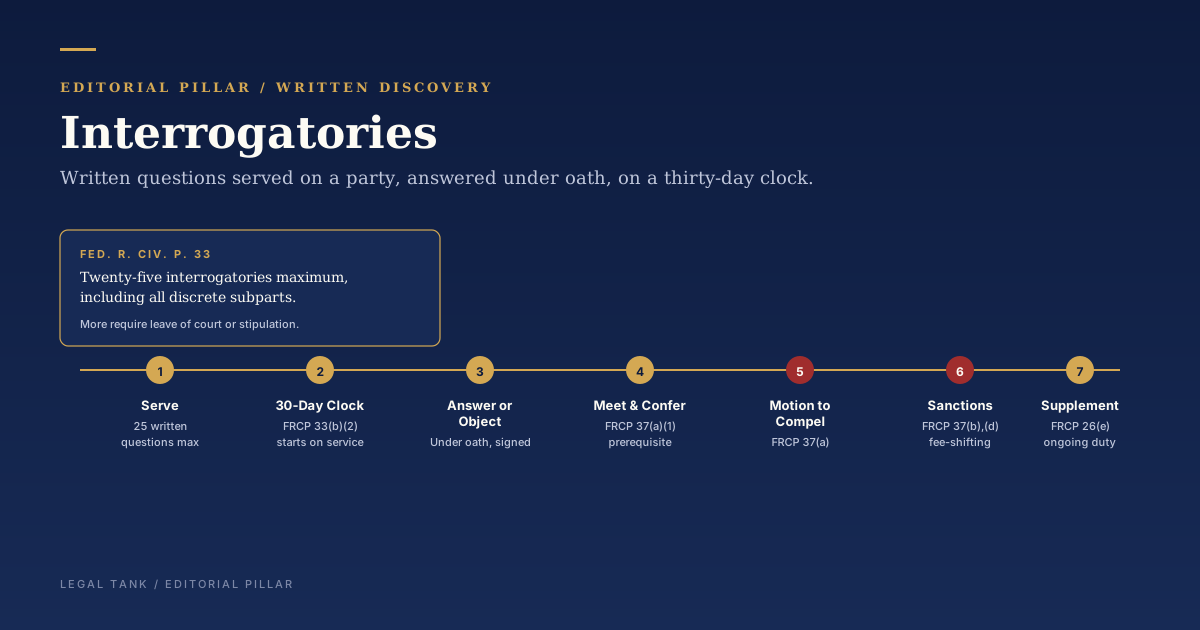
FRCP 33(b)(2)
Thirty days from service. Miss the clock and most objections are waived.
How Interrogatories Differ From Depositions, Document Requests, and Requests for Admission
Federal civil practice offers four written-discovery instruments under the Federal Rules of Civil Procedure. They share the same scope under Rule 26(b)(1) (relevant, proportional, not privileged) but each has its own mechanics, cap, and use case. A balanced discovery plan layers all four; substituting one for another is one of the most common drafting mistakes a pro se litigant makes.
Interrogatories are the cheapest tool to send and the most expensive tool to answer, because the response is drafted by counsel, reviewed by the party, and signed under oath. The other three tools push the cost the other way.
Authority: see Cornell LII on Federal Rule of Civil Procedure 33.
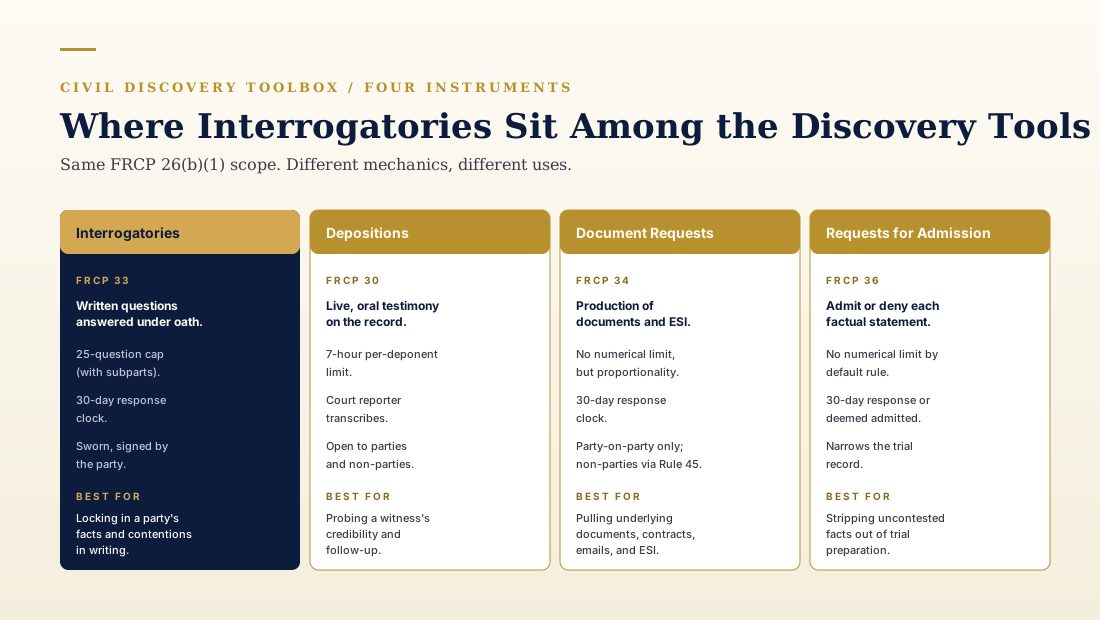
Interrogatories
FRCP 33- Answer type
- Written, under oath, signed by the party
- Cap
- 25 questions per side (including discrete subparts)
- Deadline
- 30 days from service
- Best for
- Locking a party into a written, sworn position on a specific fact or contention.
Depositions
FRCP 30- Answer type
- Live oral testimony, transcribed by a court reporter
- Cap
- Seven hours per deponent (Rule 30(d)(1))
- Deadline
- Scheduled by notice and agreement
- Best for
- Probing credibility, taking follow-up, and locking in a witness on the record.
Document Requests
FRCP 34- Answer type
- Production of documents and electronically stored information
- Cap
- No numerical cap by default, proportionality applies
- Deadline
- 30 days from service
- Best for
- Pulling underlying contracts, emails, ESI, and other documents in a party's custody.
Requests for Admission
FRCP 36- Answer type
- Admit or deny each statement
- Cap
- No numerical cap by default rule
- Deadline
- 30 days from service or deemed admitted
- Best for
- Stripping uncontested facts out of the trial record before pretrial.
The Federal Rule 33 Framework: Limits, Scope, and the 30-Day Clock
Federal Rule of Civil Procedure 33 governs interrogatories in every federal civil case and supplies the template that most state-court rules copy. Five pieces of the rule do the bulk of the work in practice.
State analogues vary. California Code of Civil Procedure section 2030.030 caps form interrogatories at thirty-five and special interrogatories at thirty-five. New York CPLR 3130 limits parties to one set absent leave. Illinois Supreme Court Rule 213 supplies a thirty-question default cap with a twenty-eight-day response window.
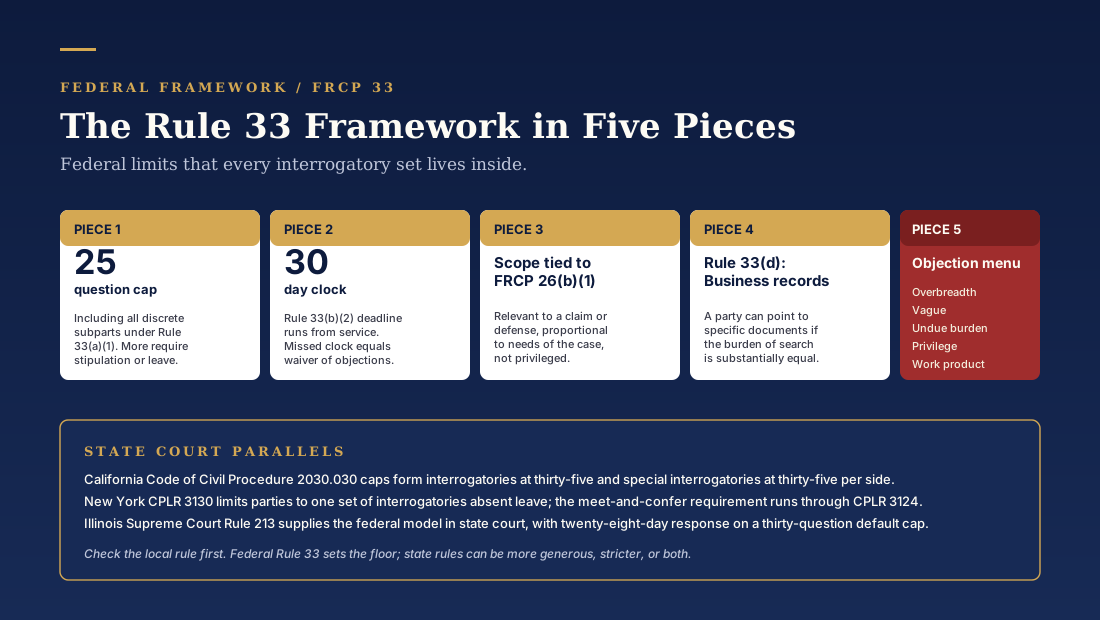
- 1
25-question cap
Federal Rule 33(a)(1) caps each side at twenty-five interrogatories, including all discrete subparts. More than that requires leave of court or a written stipulation between the parties.
- 2
30-day response clock
Rule 33(b)(2) gives the responding party thirty days from service to answer or object. A missed clock generally waives every objection that was not raised, with the narrow exception of privilege.
- 3
Scope tied to Rule 26(b)(1)
An interrogatory is proper only if the answer is relevant to a claim or defense, proportional to the needs of the case, and not protected by privilege or work-product immunity. A question that probes settlement value or trial strategy is out.
- 4
Rule 33(d): business records option
If the answer can be derived from business records and the burden of searching them is substantially the same for either side, the responding party may identify the records in lieu of summarizing them in a narrative answer.
- 5
Verification under oath
Under Rule 33(b)(3) and (b)(5) the responding party (not just counsel) must verify the answers under oath. The signed verification is what makes the answer usable at trial to impeach a shifting witness.
Special vs Form vs Contention Interrogatories: Three Types Lawyers Actually Use
Most discovery sets blend all three. A special interrogatory probes the specific facts of the matter; a form interrogatory covers the standard party-witness-insurance topics; and a contention interrogatory forces the responding party to commit to a legal theory.
Form interrogatories
Pre-printed, jurisdiction-issued questions covering standard topics (party identification, witnesses, prior accidents, insurance). California Judicial Council form DISC-001 is the leading example; the Family Law analogue is DISC-001-FL. Form interrogatories are time-efficient because the responding party recognizes the questions, but the canned format limits what counsel can probe.
Special interrogatories
Custom-drafted questions targeted at the specific facts of the matter. Under California Code of Civil Procedure section 2030.030, each side may serve thirty-five special interrogatories; Federal Rule 33 caps at twenty-five. A special interrogatory should ask one fact per question; compound or argumentative phrasing draws an objection.
Contention interrogatories
Questions that force the responding party to state the legal theory behind a claim or defense and the facts that support it. The Advisory Committee Note to Federal Rule 33 expressly endorses contention interrogatories, and a court can order them held until late in discovery (after document productions) so the contentions rest on a developed record.
Companion documents in the discovery file
Interrogatories rarely travel alone. A standard discovery package layers in document requests under Rule 34 keyed to the answers, a deposition notice under Rule 30 for the signing party, and requests for admission under Rule 36 calibrated to lock in uncontested facts. For pre-suit demand work that precedes the discovery phase, route the matter through our demand letter drafting service.
How to Answer Interrogatories: The Six-Step Response Process
A clean interrogatory response moves in six steps: calendar the clock, read every question twice, draft specific objections, draft narrative answers based on personal knowledge, verify under oath, and serve and supplement. For matters with a contested or evidence-heavy record, route the responses through a discovery attorney so the objections preserve every available ground.
Push Back on Deficient Responses- 1
Step 1
Calendar the 30-day clock
Federal Rule 33(b)(2) starts the response clock on the day of service. Local rules may add three days for mail service. Docket the deadline the day the requests arrive so the response is filed inside the window; a missed deadline generally waives objections under the well-known waiver rule.
- 2
Step 2
Read every interrogatory twice
Mark each question for the answer category (factual recitation, identification list, document reference, contention). Flag the questions that have objection grounds (overbroad, vague, undue burden, calls for legal conclusion, attorney-client privilege, work-product immunity).
- 3
Step 3
Draft objections with the basis stated
Rule 33(b)(4) requires that objections state the grounds with specificity. Boilerplate objections ("vague and overbroad") that do not explain why are disfavored and routinely overruled. If the responding party has knowledge but objects, the answer must be qualified as "subject to and without waiving the foregoing objection."
- 4
Step 4
Draft narrative answers based on personal knowledge
Answer in the first person, in narrative form, based on facts within the party's knowledge or reasonably available through inquiry. For damages, identify the calculation and the source documents. For witnesses, identify each by name, last-known address, and the substance of the testimony.
- 5
Step 5
Verify under oath, signed by the party
Under Rule 33(b)(5) the party signs the verification page under penalty of perjury. Counsel signs the objections. Both signatures are required for the response to be properly served.
- 6
Step 6
Serve and supplement
Serve the answers within the thirty-day window. Federal Rule 26(e) creates a continuing duty to supplement if the answer becomes incomplete or incorrect. A supplementation log inside counsel's matter file is the cleanest way to track this through the discovery period.
What Happens After Interrogatories: Motion to Compel and Sanctions
An interrogatory served on a party rarely returns complete answers on the first pass. The propounding party scores the response, identifies the questions that were answered with a boilerplate objection, and triggers the procedural aftermath under Federal Rule 37. The aftermath is where the high-CPC half of this practice area lives: every motion to compel, sanctions request, and fee-shifting application starts with a deficient interrogatory response.
Meet and confer first
Federal Rule 37(a)(1) requires the propounding party to certify a good-faith meet-and-confer before filing any motion to compel. A meet-and-confer letter that identifies the specific deficiency for each interrogatory is the standard prerequisite.
State analogues impose the same gate. California Code of Civil Procedure section 2030.300(b) requires a meet-and-confer declaration before a motion to compel further responses can be heard.
Motion to compel
If the meet-and-confer fails, Rule 37(a)(3)(B)(iii) authorizes a motion to compel an answer to a specific interrogatory. The motion must identify the interrogatory, the response, and why the response is evasive or incomplete.
Under Rule 37(a)(4), an evasive or incomplete answer is treated as a non-answer. The fee-shifting provision in Rule 37(a)(5) makes the losing side responsible for the moving party's costs.
Sanctions menu
Rule 37(b)(2)(A) lets the court strike pleadings, preclude evidence, treat designated facts as established, hold a non-compliant party in contempt, or enter default judgment for the most egregious discovery abuses.
The cleanest workflow puts the meet-and-confer record inside the matter file so it can be attached to the Rule 37(a)(5)(A) fee declaration if the responding party concedes only after the motion is on file.
Authority: see Cornell LII on Federal Rule of Civil Procedure 37. For drafting and motion-practice support on a deficient response, route the matter to motion to compel discovery drafting or for foundational document drafting, contract drafting services.
Frequently Asked Questions About Interrogatories
Sourced from the People Also Ask box for interrogatories and interrogatories meaning.
What are the disadvantages of interrogatories?
What's the difference between discovery and interrogatories?
What happens after interrogatories?
What is an advantage to using interrogatories?
What is the purpose of interrogatories?
Need Interrogatories Drafted or Defended?
Send the matter facts, the operative complaint, and the current scheduling order. The quote request returns a tailored discovery set, an objection plan keyed to the opposing side's likely responses, and the meet-and-confer schedule that preserves Rule 37 sanctions exposure.