Class Action Lawsuits: Rule 23 Requirements, How to Join, and What a Settlement Looks Like
Direct Answer
A class action lawsuit is a procedural device under Federal Rule of Civil Procedure 23 that lets one or more named plaintiffs sue on behalf of a larger class, when the court finds the class meets four prerequisites: numerosity, commonality, typicality, and adequacy of representation. The class must also fit into one of three types under Rule 23(b): limited fund, injunctive relief, or common-question predominance with mandatory notice and an opt-out right. Most large class actions sit in federal court under the Class Action Fairness Act (28 U.S.C. § 1332(d)) once the aggregate amount in controversy exceeds five million dollars.
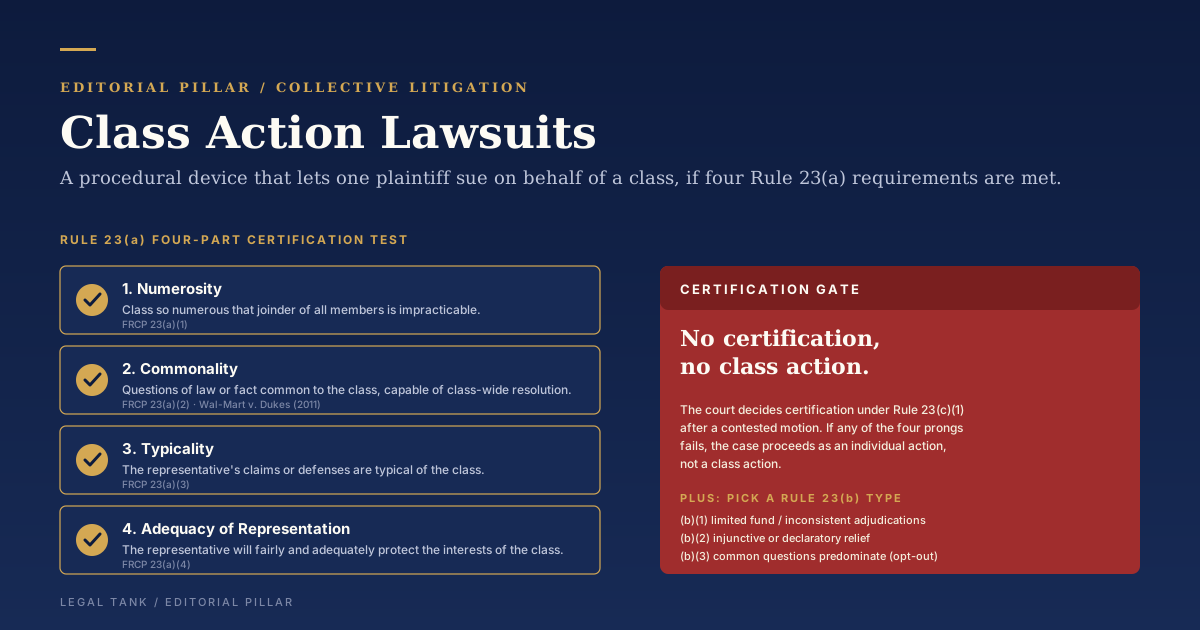
FRCP 23(c)(1)
No certification, no class action. The four-part test is the gate.
The Rule 23(a) Four-Part Certification Test
Every proposed class action lives or dies at certification. Before any class is certified under Federal Rule of Civil Procedure 23(c)(1), the named plaintiff bears the burden of demonstrating each of the four Rule 23(a) prerequisites. Miss any one and the case proceeds as an individual lawsuit, not a class action.
Authority: see Cornell LII on Federal Rule of Civil Procedure 23.
- 1
Numerosity
FRCP 23(a)(1)The class must be so numerous that joinder of all members is impracticable. Courts rarely set a fixed minimum but classes of forty or more are generally numerous; classes under twenty rarely qualify. Geographic dispersion, individual claim size, and judicial economy all weigh into the analysis.
- 2
Commonality
FRCP 23(a)(2)Questions of law or fact must be common to the class. Under Wal-Mart Stores, Inc. v. Dukes (2011), commonality requires more than a common question; it requires a common contention capable of class-wide resolution in one stroke. A defective product made identically for every buyer is paradigmatic; a policy administered differently across managers is not.
- 3
Typicality
FRCP 23(a)(3)The claims or defenses of the class representative must be typical of those of the class. The representative does not need identical claims but must share the same legal theory and the same general injury. Atypical defenses against the representative (a unique release, an unusual statute-of-limitations defense) defeat typicality.
- 4
Adequacy of representation
FRCP 23(a)(4)The class representative must fairly and adequately protect the interests of the class, and class counsel must be qualified. Conflicts of interest between the representative and absent class members (a separate side deal, an indemnification claim, antagonistic damages) defeat adequacy and require subclasses under Rule 23(c)(5).
The Wal-Mart commonality clarification
Before Wal-Mart Stores, Inc. v. Dukes, 564 U.S. 338 (2011), commonality was sometimes treated as satisfied by any shared question. The Supreme Court raised the bar: commonality requires that the class members have suffered the same injury, not just injuries that violate the same legal provision. The common contention must be capable of class-wide resolution in one stroke. This is the doctrinal hurdle most class actions actually fail at, because individualized injury inquiries defeat predominance under Rule 23(b)(3) as well.
The Three Types of Class Actions Under Rule 23(b)
Satisfying Rule 23(a) is necessary but not enough. Every class action must also fit into one of three boxes under Rule 23(b). The choice determines whether notice is mandatory, whether class members can opt out, and what kind of relief the court can order.
The most common consumer class action is a Rule 23(b)(3) damages class, where common questions predominate, the class action is superior to other methods, and each class member is entitled to written notice and an opt-out right under Rule 23(c)(2)(B).
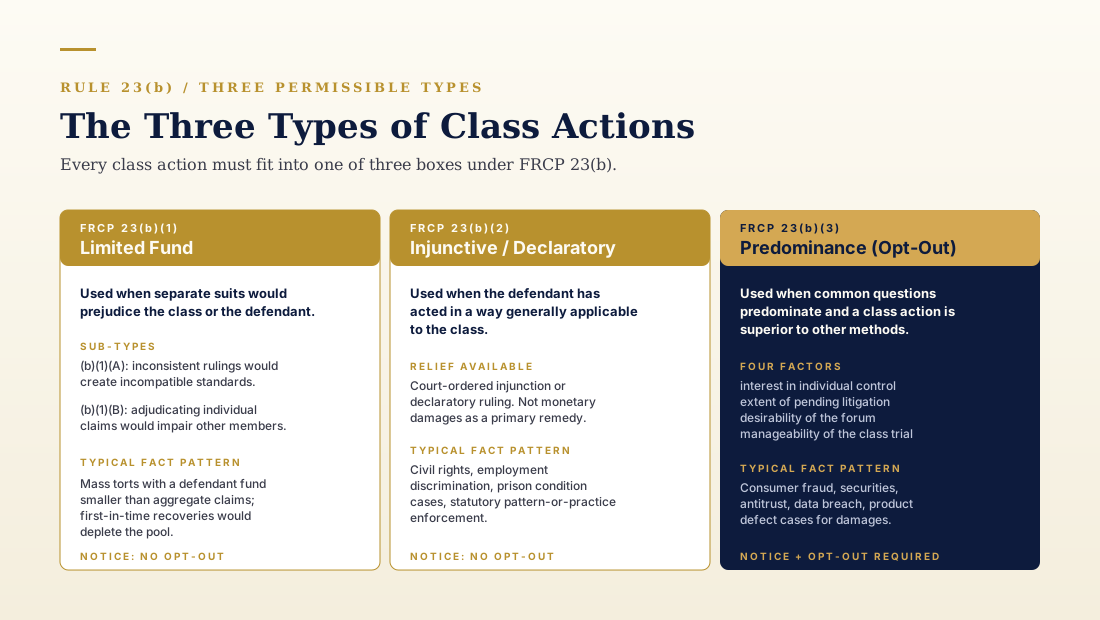
Limited fund or inconsistent adjudications
Sub-class (b)(1)(A) protects the defendant from inconsistent rulings; sub-class (b)(1)(B) protects absent class members from prejudice if individual claims were litigated first.
Fact pattern: Mass torts where the defendant's available funds are smaller than aggregate class claims and first-in-time recoveries would deplete the pool. Also used where prosecuting separate actions would create incompatible standards of conduct for the defendant.
Notice rule: Notice discretionary; no opt-out right
Injunctive or declaratory relief
Used when the defendant has acted (or refused to act) on grounds generally applicable to the class, so injunctive or declaratory relief is appropriate as to the class as a whole. Monetary damages cannot be the predominant relief.
Fact pattern: Civil rights, employment discrimination pattern-or-practice, prison condition challenges, and statutory enforcement actions seeking forward-looking equitable relief.
Notice rule: Notice discretionary; no opt-out right
Predominance and superiority (opt-out)
The court must find that common questions of law or fact predominate over individual questions and that a class action is superior to other methods of adjudication. Four factors guide the inquiry: interest in individual control, extent of pending litigation, desirability of the forum, and manageability of the class trial.
Fact pattern: Consumer fraud, securities fraud, antitrust, data breach, deceptive marketing, and product defect cases where the primary remedy is monetary damages.
Notice rule: Best notice practicable required; opt-out right under Rule 23(c)(2)(B)
The Class Action Lifecycle: From Complaint to Claims Distribution
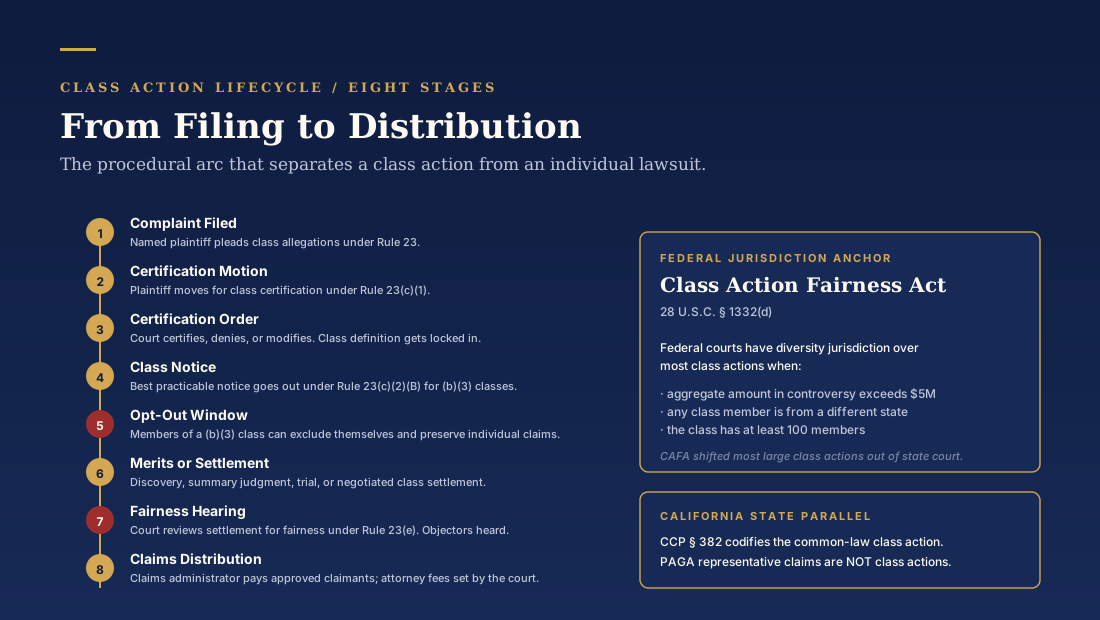
A class action moves through eight procedural stages from filing to final distribution. The certification stage is the most contested; the fairness hearing is the most procedurally formal; and the claims administration stage is where most absent class members actually interact with the case.
Roughly seventy percent of certified class actions resolve in negotiated settlement under Rule 23(e) rather than verdict, because the certification decision itself produces most of the settlement pressure. Discovery work in certified class actions is often heavy and routes through a drafted federal motion to compel discovery.
- 1
Class allegations in the complaint
The named plaintiff (the proposed class representative) files a complaint that pleads class allegations under Rule 23(a) and identifies which Rule 23(b) sub-section the class falls under. The complaint must define the class with enough precision that membership can be determined from objective criteria.
- 2
Pre-certification discovery
The parties take discovery limited to the Rule 23 requirements: class size (numerosity), common policies (commonality), the representative's transactions (typicality), and the adequacy of counsel. Discovery on the merits often runs in parallel because the certification record cannot be hermetically sealed from the merits inquiry under Amgen Inc. v. Conn. Retirement Plans (2013).
- 3
Motion for class certification
The named plaintiff moves for certification under Rule 23(c)(1) and bears the burden of demonstrating each of the four Rule 23(a) elements plus one Rule 23(b) sub-section. The motion is rigorously contested and is often the most consequential motion in the entire case.
- 4
Certification order
The court grants, denies, or modifies the proposed class definition. A certification order may be reviewed by the court of appeals on a discretionary Rule 23(f) petition within fourteen days. Denial of certification effectively ends the case as a class action; the named plaintiff may continue as an individual.
- 5
Class notice and opt-out window
For (b)(3) classes, the court must direct the best notice practicable to all members who can be identified through reasonable effort under Rule 23(c)(2)(B). The notice opens the opt-out window, during which any class member may exclude themselves from the class and preserve their right to bring an individual action.
- 6
Merits litigation or settlement negotiation
After the opt-out window closes, the case proceeds to merits discovery, summary judgment, trial, or negotiated class settlement. The vast majority of certified class actions resolve in negotiated settlement rather than verdict because the certification gate is the real pressure point.
- 7
Settlement approval and fairness hearing
Any class settlement requires court approval under Rule 23(e). The court reviews the settlement for fairness, reasonableness, and adequacy after a fairness hearing where objectors may be heard. The court also reviews attorney fees as a percentage of the common fund or under a lodestar method.
- 8
Claims administration and distribution
A claims administrator (a third-party vendor approved by the court) processes claim forms, verifies class membership, and distributes settlement shares. Unclaimed funds may revert to the defendant, be redistributed to claiming class members, or be paid cy pres to a court-approved charitable beneficiary aligned with the underlying claim.
How to Join, File a Claim, or Opt Out of a Class Action
Most class members never affirmatively join a class action. If you fall within a certified class definition, you are already a class member by default, and the only decisions you need to make are whether to file a claim when a settlement is reached, whether to opt out during the Rule 23(c)(2)(B) opt-out window, or whether to object at the fairness hearing under Rule 23(e). Joining a class action is free: class counsel are paid out of any recovery on a court-approved fee award.
If you received a class notice
Read the notice carefully. It will identify the class definition, the claims being released, the deadline to file a claim, the deadline to opt out, and the deadline to object. Filing a claim is free. The claims administrator's contact information is on the notice; verify it against the case docket on PACER if anything looks irregular.
If you want to opt out of a settlement
Opt-out is the only way to preserve your right to bring an individual action against the defendant. Send a timely written opt-out request to the claims administrator following the precise instructions on the notice. Opt-out deadlines are strictly enforced. If your individual damages exceed your estimated class share, opt-out plus an individual demand letter may recover more.
If you missed a claim deadline
Some claims administrators reopen the window for late claims if funds remain; many do not. If the class settlement has been finally approved and distribution completed, the claim is generally barred. The narrow exception is for class members who can show they did not receive notice and lacked actual knowledge of the settlement during the claim window.
If you think you should be a class representative
The class representative is selected by the lawyers who file the case, not chosen at large. Reach out to the plaintiff firm named on the complaint or, before any filing, route the facts through litigation counsel. The representative typically signs an engagement, sits for a deposition, and remains available through certification briefing.
Opt-out is usually the right call when individual damages are large
Class settlements pay an average claimant share. If your personal damages are substantially above that average (a high-value PI claim within an auto-defect class, a meaningful financial loss within a securities class), opting out and pursuing the matter individually through a tailored personal injury demand letter or a commercial demand letter often recovers more than the per-claimant class share would. Run the math against the released claims before the opt-out deadline closes.
California Class Action Procedure: CCP 382 and the PAGA Distinction
California state-court class actions follow a parallel but distinct framework. The substantive rules are codified in Code of Civil Procedure section 382 and procedurally elaborated in California Rules of Court rules 3.760 through 3.771. California is widely viewed as more plaintiff-friendly than federal Rule 23, which is one reason defendants frequently invoke CAFA removal to push cases into federal court.
CCP 382 community of interest
California requires an ascertainable class and a well-defined community of interest with predominance of common questions, class representatives whose claims are typical, and adequate representation. The community-of-interest test maps closely to Rule 23(a) but is administered more permissively.
Under Linder v. Thrifty Oil Co., 23 Cal. 4th 429 (2000), California rejected any requirement that the value of classwide relief exceed the aggregate value of individual claims.
PAGA is not a class action
California Labor Code section 2698 (the Private Attorneys General Act) is a qui tam representative action, not a class action. PAGA plaintiffs do not need to satisfy Rule 23 or CCP 382. Seventy-five percent of any PAGA recovery goes to the Labor and Workforce Development Agency.
Under Viking River Cruises v. Moriana, 596 U.S. 639 (2022), arbitration agreements can compel individual PAGA claims to arbitration even though the representative component cannot be waived.
CAFA removal pressure
The Class Action Fairness Act (28 U.S.C. § 1332(d)) gives federal courts diversity jurisdiction over class actions where the aggregate amount in controversy exceeds five million dollars, any class member is from a state different from any defendant, and the class has at least one hundred members.
Most large California class actions get removed to federal court under CAFA within thirty days of service. Carefully drafted complaints sometimes preserve state-court jurisdiction by pleading a non-diverse defendant or a sub-five-million-dollar class.
Authority on the federal jurisdictional anchor: see Cornell LII on 28 U.S.C. § 1332. For pre-filing contract drafting that may precede a commercial class action, contract drafting services handle the foundational instruments.
Frequently Asked Questions About Class Action Lawsuits
Sourced from the People Also Ask box for class action lawsuits, free class action lawsuits, and california class action lawsuit search.
What is the best class action lawsuit website?
Can you join a class action lawsuit for free?
How do I check if I'm part of a class action lawsuit?
How much money does it cost to file a class action lawsuit?
What are the requirements for a class action lawsuit in California?
Class Action Notice in Hand? Need to Decide What to Do?
Send the class notice, the operative complaint (or case caption), and a short note on the underlying facts of your individual exposure. The intake returns a tailored opt-out, claim, or objection analysis with the deadlines mapped and the released claims itemized so the decision is made before the window closes.