True Verbatim
Every word, every hesitation, every filler.
True verbatim or intelligent verbatim? Pick the right style before you send the audio.
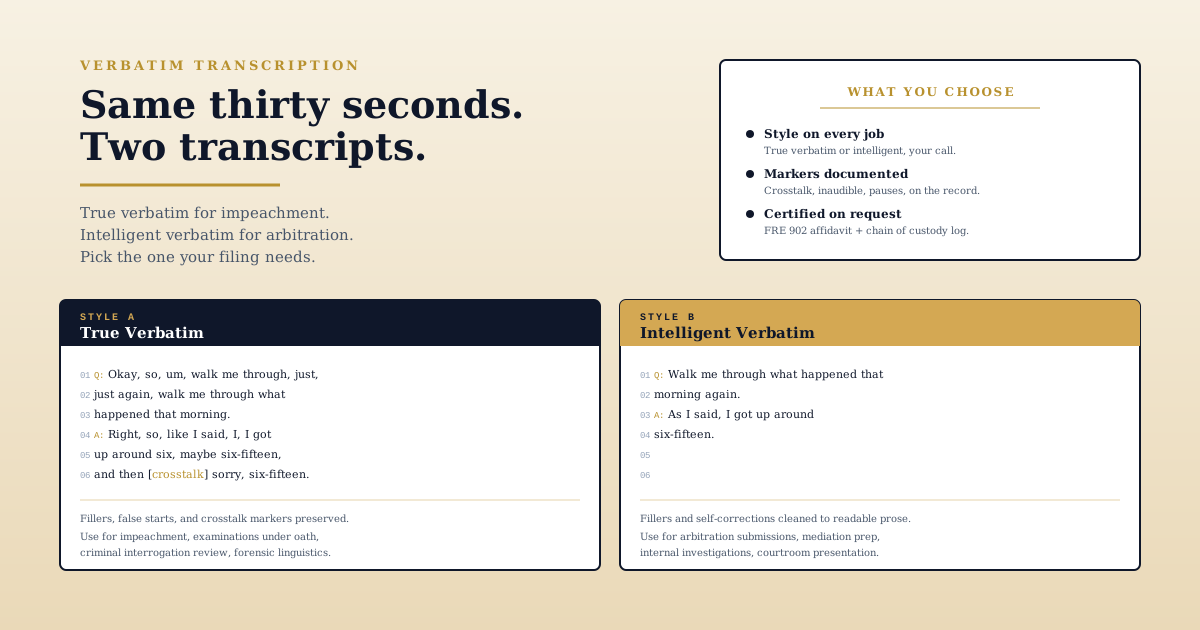
Two styles of verbatim transcription show up at law firms. True verbatim captures every word the speaker said, every filler, every false start, every pause, every moment of crosstalk. Intelligent verbatim preserves the substance and cleans the noise, the kind of transcript an arbitrator can read aloud or a board can review without wading through the cadence. The picture below shows the same thirty seconds of audio rendered in both styles, side by side. Read both, then send the recording with the style your filing actually needs.
TRUE · INTELLIGENT · CERTIFIED
Pick the style at intake. Lock it in the engagement letter.
Below is a hypothetical insurance examination under oath, transcribed first as true verbatim and then as intelligent verbatim. Same speakers, same source recording, same questions and answers. What differs is what survives onto the page.
Every word, every hesitation, every filler.
The substance, cleanly readable.
If counsel is preparing impeachment cross, the left version is the one to file. The witness's hesitation pattern is part of the evidence. If the transcript is going to an arbitrator to read at the hearing, or to a jury for trial designation, the right version reads cleanly without making a credible witness sound evasive. Same testimony. Two filings.
The choice rides on what the transcript has to do next. Five buying situations on each side.
The witness's hesitation pattern, the false starts, the 'I, I, I' stutter, are part of the evidence. Cleaning them strips the cross.
Insurance examinations under oath and recorded statements are valued precisely because they are unfiltered. The adjuster reviews the unedited record.
Miranda timing, voluntariness, coercive cadence. Every pause and false start is potentially load-bearing on a motion to suppress.
Voice identification, authorship analysis, deceptive-speech markers. The expert needs the unedited speech artifacts.
Where counsel argues a witness rehearsed, hedged, or evaded, the verbatim fillers are themselves the exhibit attached to the motion.
The arbitrator reads the transcript at the hearing. Fillers slow the read and make even a credible witness sound evasive.
Counsel designates the treating physician or expert's opinion testimony. The cadence does not move the case, the diagnosis does.
Board distribution and counsel memoranda. The substance is what survives onto the page, the speech habits do not.
Counsel digests for opposing-counsel exchange or mediator submission. Compact, readable, substantively faithful.
Jury legibility on a PowerPoint slide or trial board. True verbatim fillers read as evasive when displayed in the courtroom.
“Insurance defense practice with regular examinations under oath. True verbatim is the only style we accept on EUO transcripts because the unfiltered record is the point. Their transcribers preserve every hesitation, every false start, every 'I'm not sure' the adjuster needs to evaluate coverage. The certifier's affidavit on every transcript has stood up to every plaintiff challenge on admissibility.”
“Commercial arbitration practice in disputes that read out at the hearing. A true-verbatim transcript reads as evasive and rambling even when the witness was not. Their intelligent-verbatim work keeps the substance intact and the arbitrator actually finishes the read. Two recent awards in our column on the strength of the substance, not the cadence.”
Both styles use the same set of bracketed markers. What changes is what survives around them. Pauses and fillers stay in true verbatim and get stripped in intelligent verbatim; the substantive markers below appear in both.
Counsel can request a custom marker set on intake (sealed-name redaction style, exhibit-reference conventions, party-specific abbreviation handling). Custom conventions are documented in the engagement letter so the matter reads consistently across transcribers on multi-day proceedings.


Pulled straight from what counsel searches before sending audio for a verbatim transcript. Answered the way we would answer them on the quote call.
Send the source recording with the style noted at intake and the deadline. We return per-page or per-audio-hour pricing, the named transcriber, and a five-minute sample in each style so the choice is confirmed before the full transcript begins.
Quotes return same business day on intakes received before 5 PM ET.
Five-minute sample in each style on request before commitment.