Rough by morning. Certified by your deadline.
Verbatim deposition transcripts on two clocks: a working rough the next morning for cross-prep, the certified final on the day you need it on the record.
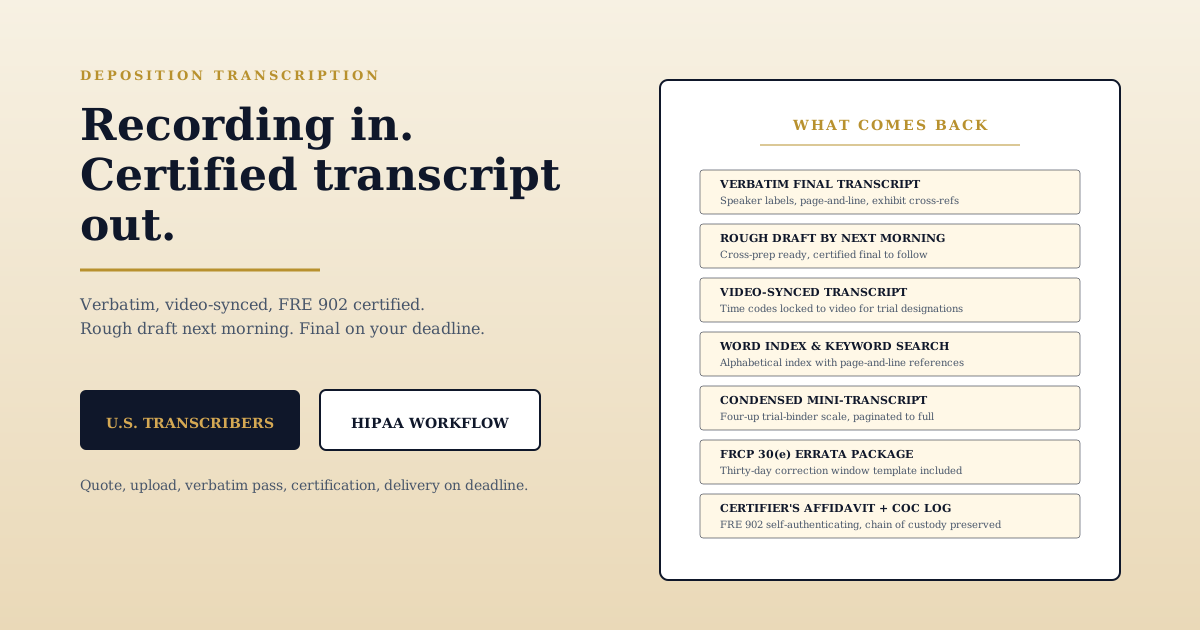
Send the audio or video the night of the deposition. A named U.S. transcriber returns the verbatim rough by 7 AM with speaker labels, page-and-line numbering, and exhibit cross-references. The certified final ships on your discovery cutoff or trial date with the FRE 902 certifier's affidavit, the chain of custody log, the word index, and the FRCP 30(e) errata template.
Rough by 7 AM the next morning
Working copy in counsel's hand before opening argument prep or the cross outline session. Verbatim, not summarized. No certification yet, no quality second-pass yet, but a real transcript a trial team can cite from.
Certified final on your deadline
FRE 902 certifier's affidavit, chain of custody log, word index, condensed mini, video sync time codes, and the FRCP 30(e) errata template. Files at trial without a custodian witness. Self-authenticating evidence.
In the Rough Tomorrow. Certified on the Deadline.
Same verbatim transcript at the core. What separates the rough from the certified final is the second-reviewer pass, the sworn certification, and the trial-ready companion pieces.
In the rough by morning
Working copy. Not certified, not for filing. For the cross outline, the motion draft, the trial-team huddle.
- Verbatim word-for-word transcript of every question, answer, and on-record objection
- Speaker labels for counsel, deponent, and any interpreter or videographer on the record
- Page-and-line numbering you can cite in a motion or in cross outlines that night
- Exhibit numbers cross-referenced where the deponent identified them in testimony
- Inaudible markers in brackets wherever the audio dropped instead of guessed-at words
Certified on the deadline
Everything from the rough plus the items below. Self-authenticating under FRE 902. Trial-designation ready.
- Certifier's affidavit signed by the transcriber under Federal Rules of Evidence 902
- Chain of custody log from intake hash through every access event to delivery
- Quality-review pass against the source recording by a second reviewer
- Word index of every spoken term with page-and-line pinpoints for the trial team
- FRCP 30(e) errata sheet template bundled for the deponent's thirty-day window
Time Codes Locked to Frames, So Designations Run Clean
Modern federal litigators run video designation for credibility reasons. The jury sees the deponent on the record, not just the words. Three pieces of the deliverable carry that into the courtroom.
Every page-and-line tied to a frame in the video file
During the transcription pass the transcriber sets a time code at every speaker change and at every page boundary. When the certified transcript ships, page 47 line 12 is not just an index entry, it is a frame reference in the source video. Trial-presentation systems (TrialDirector, Sanction, OnCue, and the major MDB courtroom kits) consume the synced transcript and pull the matching clip on designation.
Designated passages export as standalone video clips
Counsel marks page-and-line designations on the transcript. The sync metadata exports those designations as cut points the trial-presentation system uses to build standalone clips. Opposing counsel files counter-designations against the same time codes for completeness under Federal Rules of Evidence 106. The jury sees a coherent, edited sequence rather than a ninety-minute raw recording.
Multi-camera depositions sync against the primary witness angle
Most videographers capture witness-on-camera plus a wide-angle. The transcript syncs against the witness camera as the primary time base. The wide-angle and any document-camera capture stay available as alternates the trial team can switch to mid-clip. When the deposition was Zoom, the speaker-spotlight video stays as the primary base and the grid view stays available.
The Thirty-Day Window After the Transcript Lands
Federal Rules of Civil Procedure 30(e) gives the deponent thirty days to review the transcript and submit changes in form or substance. The certified delivery already bundles the errata template. The four-step path below is how we handle the corrections so the record stays defensible.
- 01
Transcript delivered, thirty-day clock starts
Certified final reaches engaging counsel and the deponent through the matter portal. Federal Rules of Civil Procedure 30(e) gives the deponent thirty days from notification to review the transcript and submit changes in form or substance.
- 02
Deponent reviews against the bundled errata template
The errata sheet template ships with the delivery. Each requested change records the page, the line, the original wording, the corrected wording, and the deponent's reason for the change. The transcriber does not edit the certified record on a phone call or an email.
- 03
Errata sheet signed and returned through counsel
The deponent signs the errata sheet, engaging counsel reviews, and the signed sheet returns to us. We log the changes against the certified transcript without altering the original certified pages, so the record preserves both the testimony as given and the deponent's corrections.
- 04
Errata package attached to the certified record
The signed errata sheet attaches to the certified transcript as part of the deposition record. Opposing counsel receives the same package. At trial, the original testimony and the errata are both in the record, available for impeachment if the corrections are material.
The certifier signs the verbatim record. The lawyer owns the strategy.
Our transcribers certify that the transcript is a true and accurate record of the source recording. Whether to push substantive errata, when to use a deposition designation at trial, and whether a passage qualifies for impeachment under Federal Rules of Evidence 613 are decisions for engaging counsel. Legal Tank produces drafted documents and certified transcripts. We do not appear in court.
Frequently Asked Questions About Deposition Transcripts
Pulled from what trial lawyers actually search before sending a recording. Answered the way we would answer them on the quote call.
What is a deposition transcript?
How long does it take to get a transcript back from a deposition?
What is the difference between a rough draft and a certified deposition transcript?
Can a deposition transcript be used at trial?
Why are deposition transcripts video-synced?
Are deposition transcripts available to the public?
Recording in tonight. Rough by morning. Certified by your deadline.
Send the audio or video and the deadline. We return per-page or per-audio-hour pricing, the named transcriber, and the certified-delivery date within one business day.
Quotes return same business day on intakes received before 5 PM ET