Affidavit: Definition, Examples & How to Write One
Direct Answer
An affidavit is a written statement of facts that the signer, called the affiant, swears or affirms is true, made voluntarily before a notary public or another officer authorized to administer oaths. The oath clause at the foot of the document, called the jurat, is what converts a written statement into a sworn affidavit and exposes the affiant to perjury liability if the statements are false. Courts and government agencies accept affidavits as written testimony in motion practice, probate, immigration, and recordable real estate documents.
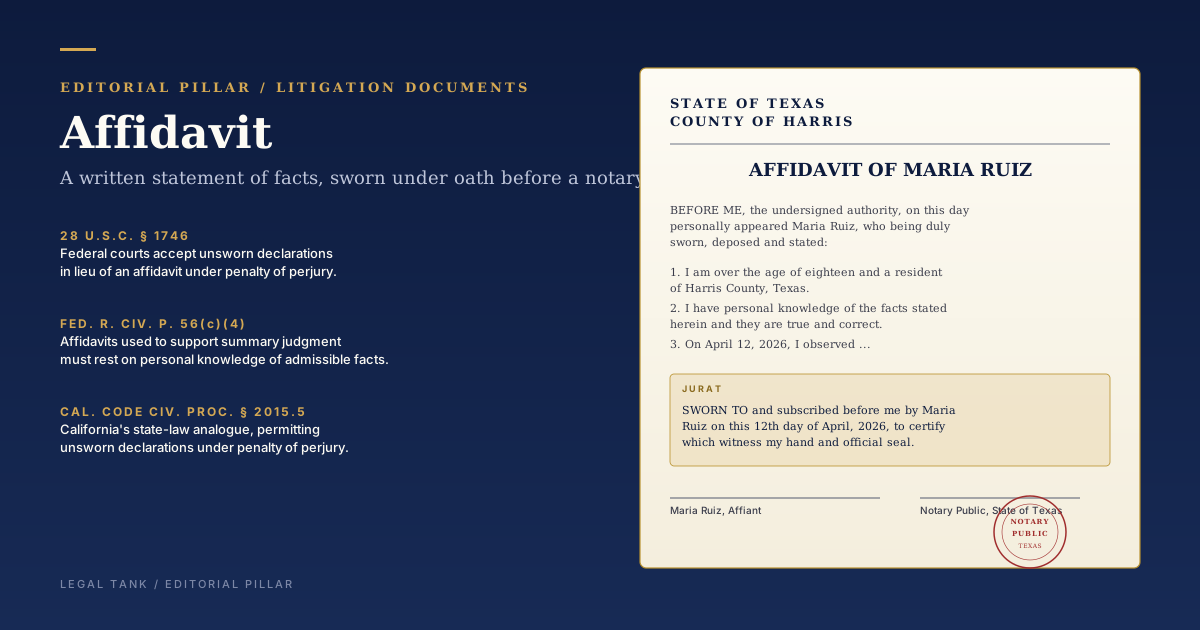
28 U.S.C. § 1746
Federal courts accept declarations in lieu of affidavits
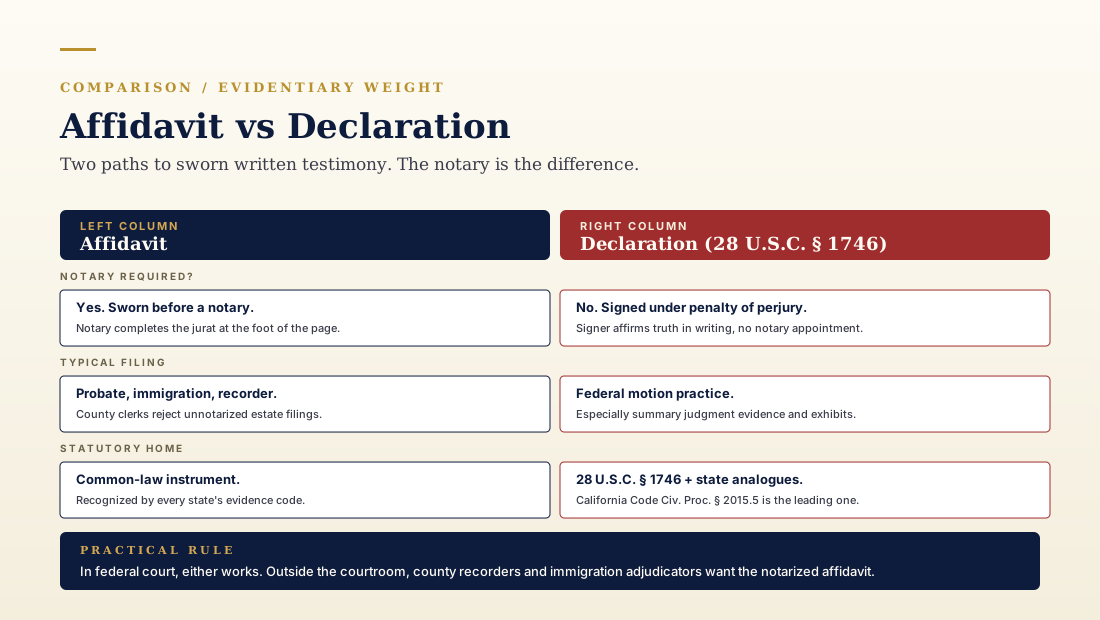
Affidavit vs Declaration: Which One Does the Court Want?
A sworn affidavit and a written declaration carry the same evidentiary weight in federal court. 28 U.S.C. § 1746 lets a litigant submit an unsworn declaration under penalty of perjury anywhere federal law would otherwise require an affidavit. The practical difference is the notary: an affidavit needs one, a declaration does not. State courts vary, so check the local rule before swapping one for the other.
California Code of Civil Procedure § 2015.5 is the state-law analogue most often cited. Outside the courtroom, county recorders, immigration adjudicators, and probate clerks usually demand the notarized affidavit version because the jurat is what makes the document recordable.
| Attribute | Affidavit | Declaration |
|---|---|---|
| Made under oath? | Yes. Sworn or affirmed in front of a notary public or court officer. | Yes, but unsworn. The signer affirms truth under penalty of perjury without a notary. |
| Notarization | Required. Notary completes the jurat at the foot of the document. | Not required in federal court (28 U.S.C. § 1746) or in California (Code Civ. Proc. § 2015.5). |
| Statutory home | Common-law instrument; recognized by every state's evidence code. | 28 U.S.C. § 1746 (federal) and parallel state statutes that allow declarations in lieu of an affidavit. |
| Typical filing | Probate petitions, real estate transfers, immigration filings, county recorder documents. | Federal motion practice (especially summary judgment), state civil procedure where allowed. |
| Risk if false | Perjury exposure under state false-swearing statutes. | Perjury exposure under 28 U.S.C. § 1621 or the parallel state perjury statute. |
Common Types of Affidavits Used in Practice
Most courts and recorders use a use-case label to name the affidavit (an affidavit of heirship, an affidavit of service, a financial affidavit) so the clerk indexing the filing knows which procedural rule the document is satisfying. The thirteen affidavits below are the ones that come up most often in family, probate, real estate, immigration, and litigation files.
Affidavit of heirship
A sworn statement that names the legal heirs of a person who died without a will, used by county recorders and title insurers to clear title to real property without a full probate.
Read the affidavit of heirship guideAffidavit of support
Filed with U.S. Citizenship and Immigration Services on Form I-864 to show a sponsor's income meets the federal poverty threshold for the sponsored immigrant.
Affidavit of residency
Verifies a person's current address for school enrollment, in-state tuition, voter registration, or government benefits when a utility bill or lease is not available.
Read the affidavit of residency guideAffidavit of service
Filed by the process server (or other person who delivered legal papers) to prove that a defendant or witness received the summons, subpoena, or motion.
Small estate affidavit
Used in many states to transfer a decedent's personal property when the estate falls under the state's small-estate threshold, avoiding formal probate.
Read the small estate affidavit guideAffidavit of domestic partnership
A sworn statement of a non-marital partnership, used by employers, insurers, and government agencies to extend partner benefits where state law recognizes the relationship.
Affidavit of non-prosecution
Signed by an alleged victim asking the prosecutor to drop charges. The decision still rests with the prosecutor's office, but the affidavit is part of the case file.
Affidavit of correction
Corrects a clerical error on a vital record, vehicle title, or recorded deed by stating the original error and the correct information under oath.
Affidavit of indigency
Filed with a fee-waiver application showing the affiant's income, expenses, and household size to qualify for waived court filing fees.
Financial affidavit
A sworn schedule of income, expenses, assets, and debts, required in family-court matters (divorce, child support, alimony) and in some bankruptcy and probate filings.
Read the financial affidavit guideAffidavit of paternity
Voluntarily acknowledges legal fatherhood when the child's parents are unmarried, replacing the need for a paternity-establishment court order.
Affidavit of identity
Used by banks, the post office, and real estate closings to confirm an affiant's identity when a name change, signature variation, or recordkeeping discrepancy needs to be resolved on the record.
Self-proving affidavit
Attached to a will so the witnesses can confirm execution under oath at the time of signing, sparing the executor from calling those witnesses to testify during probate.
More affidavit types with dedicated templates
General affidavit
The all-purpose sworn statement used when no use-case-specific form applies. The affiant lays out the relevant facts in numbered paragraphs and signs before a notary who completes the jurat.
General affidavit templateAffidavit of death
Confirms under oath that a named person has died. Recorded with a certified death certificate, it removes the decedent from title to real property held in joint tenancy or through a living trust.
Affidavit of death guideAffidavit of domicile
States the decedent's legal state of residence at the time of death. Transfer agents rely on it to release stocks, bonds, and other securities from an estate to the rightful heirs.
Affidavit of domicile guideName change affidavit
A sworn statement that two names refer to the same person, used to reconcile a name discrepancy across identity, banking, employment, or property records.
Name change affidavit templateLitigation companion documents
Affidavits also attach to procedural motions and process documents. An affidavit of service proves that a subpoena was delivered. A supporting affidavit accompanies an order to show cause. Sworn factual recitations underlie a motion to dismiss on jurisdictional grounds. For the procedural-motion side of that workflow, see motion to compel discovery drafting.
In estate practice, affidavits sit alongside the primary instrument: a self-proving affidavit attached to a last will and testament, an affidavit of death attached to a quitclaim deed, and an affiant's sworn statement supporting a power of attorney in jurisdictions that require notarized acknowledgment of the principal's capacity. For drafting help across estate instruments, route the matter through contract drafting services.
How to Write an Affidavit in Six Steps
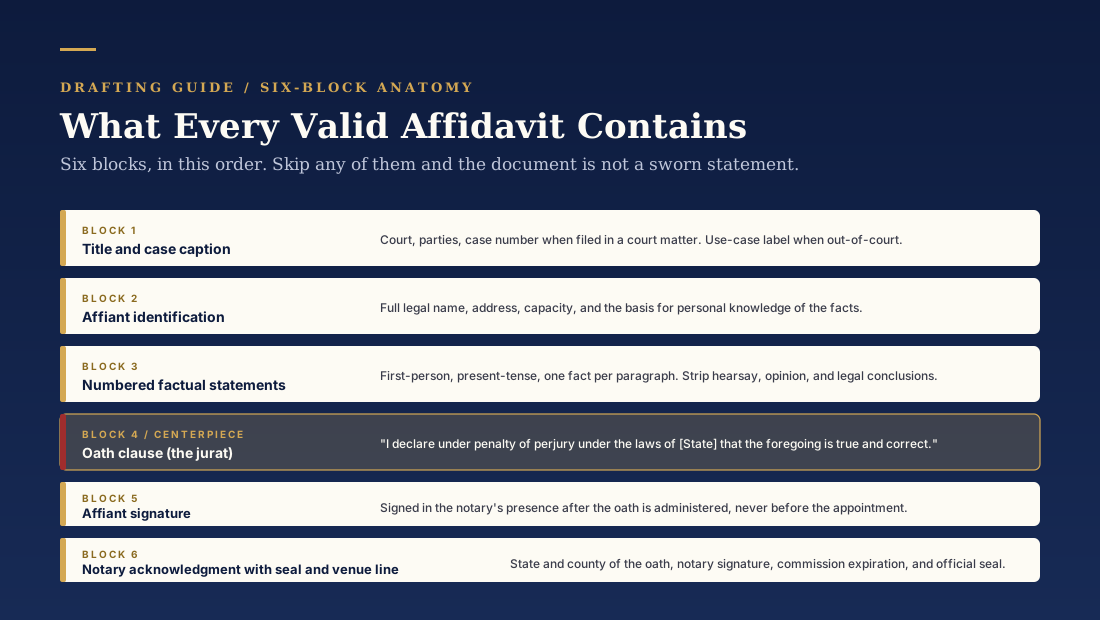
A valid affidavit needs six pieces in order: the title, the affiant identification, numbered factual statements, the oath clause (jurat), the affiant signature, and the notary acknowledgment. Strip conclusions of law, hearsay, and opinion before the affiant signs. If the affidavit will support a contested motion or attach to a court filing, route the draft through how to draft an affidavit review at /get-quote so the recitations can be checked against the rule the affidavit is meant to satisfy.
- 1
Step 1
Title and caption
Title the document. Use "Affidavit of [Name]" for an out-of-court affidavit, or the full case caption (court, parties, case number) when the affidavit is filed in a court matter. The title is what the clerk and recorder will index on, so match the use case exactly.
- 2
Step 2
Identify the affiant
State the affiant's full legal name, current address, age, occupation when relevant, and the basis for personal knowledge of the facts. The identification paragraph is what makes the affidavit admissible: a court will weigh whether the affiant could have known what the affidavit recites.
- 3
Step 3
State the facts as numbered paragraphs
Each fact gets its own numbered paragraph in the first person and present tense. Stick to facts the affiant personally observed; strip out conclusions of law, hearsay, and opinion. Attach exhibits where the facts reference documents, and call out each exhibit by letter (Exhibit A, Exhibit B) inside the paragraph that introduces it.
- 4
Step 4
Add the oath clause (jurat)
Close the body with the oath: "I declare under penalty of perjury under the laws of [State] that the foregoing is true and correct." In federal matters, mirror the language of 28 U.S.C. § 1746 so the document doubles as an unsworn declaration if notarization fails.
- 5
Step 5
Sign in front of a notary
Do not sign before the notary appointment. The notary watches the affiant sign, verifies identification, administers the oath, completes the jurat block, signs, and stamps the seal. Without a properly executed jurat, the document is not an affidavit; it is just a written statement.
- 6
Step 6
File or deliver
File the original with the court (when the affidavit supports a motion or petition), record it with the county (when it accompanies a deed transfer or estate document), or deliver it to the agency requesting it. Keep at least one notarized copy for the affiant's records, and a second copy for opposing counsel where service rules require it.
Does an Affidavit Need to Be Notarized?
An affidavit notary step is required for the document to be a sworn affidavit. The notary watches the affiant sign, verifies identification, administers the oath, completes the jurat block, signs, and stamps the seal. A signed but unnotarized affidavit is a written statement, not a sworn statement, and most courts and recorders will reject it. The narrow exception is the federal declaration under 28 U.S.C. § 1746, which permits an unsworn declaration under penalty of perjury anywhere federal law would require an affidavit.
Jurat vs acknowledgment
An affidavit takes a jurat. In a jurat the notary certifies that the affiant personally appeared, swore to the truth of the contents, and signed the document in the notary's presence. An acknowledgment does something narrower: it certifies only that the notary confirmed the signer's identity and that the signer executed the document willingly. An acknowledgment does not verify that anything stated in the document is true, which is why deeds and similar recordable instruments use an acknowledgment while affidavits use a jurat.
Remote online notarization. Many states now allow an affidavit to be notarized online, with the affiant and the notary connected by a live audio-video session through an approved remote online notarization platform.
Notarization required
- ·Probate and small-estate filings recorded with a county clerk
- ·Real estate documents (affidavit of death, affidavit of heirship, deed transfers)
- ·USCIS and immigration filings (Form I-864 affidavit of support, asylum corroboration)
- ·State court motion practice in jurisdictions that do not recognize unsworn declarations
Declaration in lieu of affidavit
- ·Federal civil litigation under 28 U.S.C. § 1746 (summary judgment evidence, motion exhibits)
- ·California state court under Code Civ. Proc. § 2015.5
- ·Other states with unsworn declaration statutes (verify locally; the rule varies)
Common notarization failures
- ·Affiant signed before the notary appointment (the notary must witness the signature)
- ·Notary used an acknowledgment block instead of a jurat (acknowledgment confirms identity, not oath)
- ·Notary commission expired or commission state does not match the venue line
- ·Missing or incomplete venue line (state and county where the oath was administered)
Affidavit Sample Forms and Templates
A working free affidavit sample uses the six-block layout below. Legal Tank publishes a generic, fillable starter that mirrors what most state courts and county recorders accept; download it, fill in the bracketed placeholders, and notarize the final version before filing. For use-case-specific forms (heirship, small-estate, financial, residency, service), each sub-instrument page above ships its own pre-filled template.
If the affidavit will support a contested motion, attach to a probate or immigration filing, or be served on opposing counsel, ask an attorney to review the recitations against the controlling rule before signing.
Sample Affidavit Form
- Caption
- STATE OF [State] / COUNTY OF [County] / Case No. [###]
- Identification
- I, [Affiant Name], being duly sworn, depose and state:
- Numbered facts
- 1. I reside at [address]. 2. On [date], I observed [fact]. 3. ...
- Oath clause (jurat)
- I declare under penalty of perjury under the laws of [State] that the foregoing is true and correct.
- Signature block
- Signed: ____________________ Date: __________
- Notary acknowledgment
- Sworn to and subscribed before me this ___ day of ___, 20__. Notary Public, My Commission Expires: ___
Frequently Asked Questions About Affidavits
Sourced from the People Also Ask box for affidavit, free affidavit sample, how to draft an affidavit, and examples of an affidavit.
Can anybody write an affidavit?
What is an example of an affidavit statement?
What is meant by affidavit?
What is the purpose of an affidavit?
Can I draft my own affidavit?
Can you download an affidavit form?
Can you draft your own affidavit?
How do you write a simple affidavit?
How to make a simple affidavit?
How to properly draft an affidavit?
Need an Affidavit Drafted or Reviewed?
Send the matter facts and the procedural rule the affidavit needs to satisfy. The quote request returns the sub-instrument fit, the controlling notarization rule, and a draft prepared to your facts for review before the affiant signs.